FPTB
Federal Polytechnic Bauchi – FPTB

Federal Polytechnic, Bauchi also widely known as Fed Poly Bauchi or FPTB  is a Federal Government-owned polytechnic located in Gwallameji Village, along the Bauchi-Dass Road, Bauchi State, Nigeria. Established in 1979, it is one of Nigeria’s pioneer federal polytechnics, offering National Diploma (ND), Higher National Diploma (HND), and Postgraduate Diploma programmes across six schools covering engineering, science, management, agriculture, environmental studies, and general studies. Fully accredited by the National Board for Technical Education (NBTE), FPTB is committed to producing skilled, entrepreneurial, and morally grounded graduates who contribute to Nigeria’s technological and economic advancement. The current Rector is Alh. Sani Usman.

History of the Institution

Federal Polytechnic, Bauchi began its journey in May 1979, with full academic activities commencing on 22nd November 1979. At inception, the polytechnic enrolled 245 students across eleven departments, with a dedicated staff strength of 138. The founding Rector was Engr. M.O. Anyiam, and the institution’s first Governing Council was appointed in February 1981, chaired by Alhaji Y.A. Olatunji.

In its early years, the polytechnic operated from rented buildings along Yandoka and Ran Roads in Bauchi. The Bauchi State Government also provided part of the Bauchi Teachers College for student use, including hostels, a cafeteria, lecture rooms, and a library. In 1980, the permanent site at Gwallameji Village — approximately 8km southwest of Bauchi Township — was acquired, covering about 750 hectares. By the 1982/83 academic session, all polytechnic units had relocated to this permanent campus, which was developed as a modern, self-contained institution with academic, residential, and recreational facilities.

The School of Agricultural Technology was established in August 2012, and the institution now runs six schools with a broad range of programmes at ND, HND, and Postgraduate Diploma levels. FPTB also maintains an academic affiliation with Abubakar Tafawa Balewa University (ATBU), Bauchi, for degree-affiliated programmes.

Location

Federal Polytechnic, Bauchi Off Dass Road, Gwallameji Village Bauchi-Tafawa Balewa, Bauchi State Nigeria

Phone: +234 708 720 3074 Email: info@fptb.edu.ng

List of Courses Offered by Federal Polytechnic, Bauchi

FPTB runs ND, HND, and Postgraduate Diploma programmes across six schools. All programmes are accredited by the NBTE.

School of Management Sciences

  • Accountancy
  • Business Administration and Management
  • Banking and Finance
  • Marketing
  • Office Technology and Management
  • Public Administration

School of Engineering Technology

  • Civil Engineering Technology
  • Electrical/Electronics Engineering Technology
  • Mechanical Engineering Technology
  • Agricultural and Bio-Environmental Engineering Technology
  • Computer Engineering Technology
  • Mechatronics Engineering Technology

School of Science and Technology

  • Science Laboratory Technology
  • Food Science and Technology
  • Computer Science
  • Mathematics and Statistics
  • Nutrition and Dietetics
  • Hospitality and Tourism Management
  • Tourism Management Technology

School of Environmental Technology

  • Architecture (Architectural Technology)
  • Estate Management
  • Surveying and Geo-informatics
  • Building Technology
  • Quantity Surveying

School of Agricultural Technology

  • Agricultural Technology
  • Animal Health and Production
  • Forestry

School of General Studies

  • General Studies and remedial/foundation programmes

For the complete and most up-to-date list of courses, please visit the official website or see the latest news below.

Admission Requirements

ND (National Diploma) Admission

  • A minimum of five (5) O’Level credit passes including English Language and Mathematics, obtained in not more than two sittings in WAEC, NECO, GCE O’Level, or NABTEB.
  • A valid JAMB UTME score is required. Candidates must select Federal Polytechnic, Bauchi as their institution of first choice. Second-choice applications are not accepted.
  • UTME subjects must include English Language, Mathematics, and two other relevant subjects for the chosen programme.
  • All eligible candidates must participate in the Post-UTME screening exercise and meet the departmental cut-off mark.
  • FPTB calculates aggregate scores using 40% from O’Level results, 30% from UTME scores, and 30% from Post-UTME scores.

HND (Higher National Diploma) Admission

  • A relevant National Diploma (ND) with a minimum of Lower Credit (CGPA 2.50) from an NBTE-accredited institution.
  • A minimum of one year of post-ND industrial training (SIWES/IT) is compulsory.
  • Five (5) O’Level credit passes including English Language and Mathematics, in not more than two sittings.
  • Candidates from other institutions must submit their official academic transcript to the Registrar, Federal Polytechnic, Bauchi.

Postgraduate Diploma Admission Please see the latest news below or visit the school website for the most current postgraduate admission requirements.

Admission Portal: portal.fptb.edu.ng/application

Check Admission Status: portal.fptb.edu.ng/admissions/checkStatus

Admission Checklist: portal.fptb.edu.ng/admissions/checkList

School Fees

The last known school fees for Federal Polytechnic, Bauchi are approximately ₦50,000 — ₦70,000 per session for fresh ND and HND students, and approximately ₦40,000 — ₦60,000 for returning students. Fees vary by programme and level of study. The acceptance fee for newly admitted students is approximately ₦5,000 and is non-refundable. Additional charges for registration, examination, and departmental levies may apply.

School fees are paid via the student portal at portal.fptb.edu.ng using the Remita payment system.

Please see the latest news below or visit the school website for the most current school fees schedule.

Cut-off Mark

The last known JAMB cut-off mark for Federal Polytechnic, Bauchi is 120 and above for all courses. Departmental cut-off marks may be higher than the general cut-off, particularly for competitive programmes. Candidates are advised to aim for higher scores to improve their chances of securing admission.

Please see the latest news below or visit the school website for the most current cut-off mark information.

Post-UTME / Screening Information

Federal Polytechnic, Bauchi conducts a Post-UTME screening exercise for all eligible JAMB candidates. The screening result accounts for 30% of a candidate’s total aggregate score for admission consideration. Candidates must register online and participate in the screening exercise to be considered for admission.

Apply for screening: portal.fptb.edu.ng/application

Please see the latest news below or visit the school website for the most current Post-UTME dates, requirements, and application links.

Hostel / Accommodation

Federal Polytechnic, Bauchi provides on-campus hostel accommodation for students. The last known hostel accommodation fee is approximately ₦6,000 — ₦15,000 per session. Accommodation is optional and allocated on a first-come, first-served basis. Students are required to complete the hostel allocation form via the portal and submit copies of their receipts to the Student Affairs division.

Please see the latest news below or visit the school website for the most current hostel fees and application procedures.

Notable Alumni

Please see the latest news below or visit the school website for information on notable alumni.

Official Website and Portal Links

Resource Link
Official Website fptb.edu.ng
Student Portal portal.fptb.edu.ng
Apply for Admission portal.fptb.edu.ng/application
Student Registration portal.fptb.edu.ng/registration
Check Admission Status portal.fptb.edu.ng/admissions/checkStatus
Admission Checklist portal.fptb.edu.ng/admissions/checkList
NYSC List portal.fptb.edu.ng/admissions/NYSCList

Contact Information

Federal Polytechnic, Bauchi Off Dass Road, Gwallameji Village Bauchi-Tafawa Balewa, Bauchi State Nigeria

Phone: +234 708 720 3074 Email: info@fptb.edu.ng

Frequently Asked Questions (FAQs)

Where is Federal Polytechnic, Bauchi located? The polytechnic is located in Gwallameji Village, along the Bauchi-Dass Road, approximately 8km southwest of Bauchi Township, Bauchi State, North-East Nigeria.

When was Federal Polytechnic, Bauchi established? The polytechnic was established in 1979, with full academic activities commencing on 22nd November 1979.

What programmes does Federal Polytechnic, Bauchi offer? FPTB offers ND, HND, and Postgraduate Diploma programmes across six schools covering engineering, science and technology, management sciences, agricultural technology, environmental technology, and general studies.

What is the JAMB cut-off mark for FPTB? The last known general cut-off mark is 120 and above. Competitive programmes may require higher scores. Please see the latest news below or visit the school website for the most current figure.

Does Federal Polytechnic, Bauchi accept second-choice candidates? No. Candidates must select Federal Polytechnic, Bauchi as their first choice on JAMB.

Does FPTB conduct Post-UTME screening? Yes. All eligible candidates must participate in the Post-UTME screening exercise. The screening score contributes 30% to the overall admission aggregate. Visit the portal to apply.

How do I check my admission status at FPTB? Visit portal.fptb.edu.ng/admissions/checkStatus to check your admission status online.

Does Federal Polytechnic, Bauchi have hostel accommodation? Yes. On-campus hostel accommodation is available. The last known fee is approximately ₦6,000 — ₦15,000 per session. Please see the latest news below or visit the school website for current hostel fees and availability.

TAGS

Federal polytechnic Bauchi post utme, Federal polytechnic Bauchi portal, Federal polytechnic Bauchi result, List of HND courses in Federal Polytechnic Bauchi, Federal polytechnic Bauchi courses, Federal polytechnic Bauchi courses and fees, Federal polytechnic Bauchi admission, Federal Polytechnic Bauchi school fees


FPTB Latest News

No post found

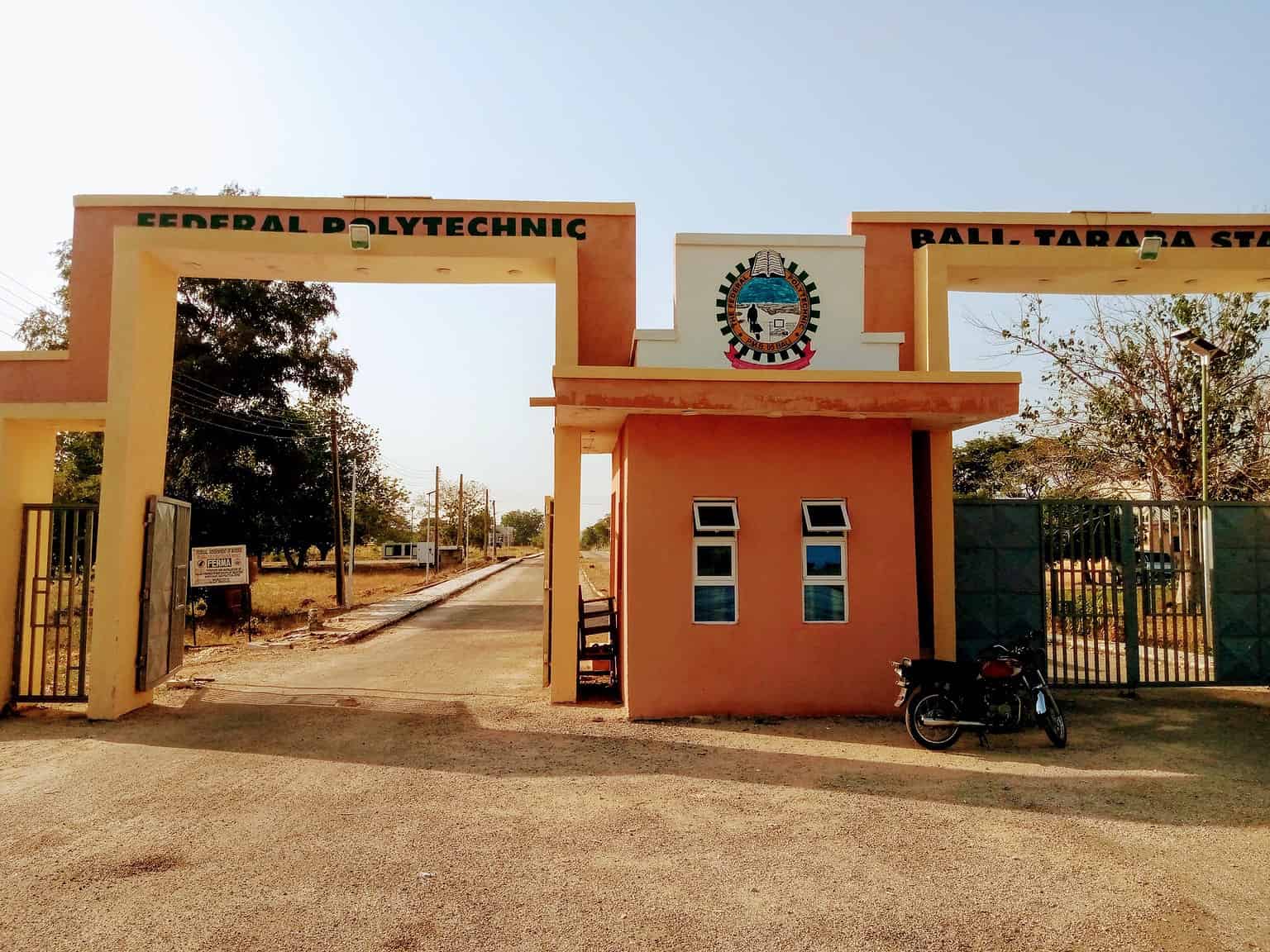
Federal Polytechnic Bali
Federal Polytechnic Bali – FEDPOLYBALI

Federal Polytechnic, Bali which is  also known as Bali Poly or FEDPOLYBALI  is a Federal Government-owned polytechnic situated in Bali, Bali Local Government Area, Taraba State, Nigeria. Established in 2007, it is one of Nigeria’s newer federal polytechnics, built around a strong focus on agriculture, technology, and entrepreneurship. Accredited by the National Board for Technical Education (NBTE), the institution offers National Diploma (ND) and Higher National Diploma (HND) programmes across science, engineering, business management, and general studies. The current Rector is Dr. Mohammed Usman.

History of the Institution

Federal Polytechnic, Bali was established following the approval of the Federal Executive Council on Wednesday, 14th March 2007. After the approval, the Federal Ministry of Education appointed a Ministerial Task Force under the chairmanship of Dr. Nuru Yakubu, the then immediate past Executive Secretary of the National Board for Technical Education (NBTE), to oversee the speedy take-off of the institution.

The Taraba State Government and the people of Bali actively supported the establishment of the polytechnic, which was envisioned to serve the technical and entrepreneurial education needs of the North-East region and Nigeria at large. Since its founding, the institution has grown steadily in student enrolment and academic capacity. In the 2024/2025 academic session alone, the polytechnic admitted 584 ND I students, 81 HND I students, and 149 HND II students, bringing its total intake to 814 students. The polytechnic’s motto, Agriculture, Technology and Entrepreneurship, reflects its mission of equipping graduates with practical skills for self-reliance and national development.

Location

Federal Polytechnic, Bali Bali Local Government Area Taraba State Nigeria

The polytechnic is located in Bali town, in Bali LGA, Taraba State, in North-East Nigeria.

List of Courses Offered by Federal Polytechnic, Bali

The polytechnic offers ND and HND programmes across three schools, with certificate and Pre-ND programmes also available.

School of Science and Technology

  • Computer Science
  • Science Laboratory Technology
  • Mathematics and Statistics

Programmes available: ND Computer Science, ND Science Laboratory Technology, ND Statistics, Certificate in Computer, Pre-ND Science

School of Engineering

  • Agricultural Technology
  • Civil Engineering Technology
  • Building Technology
  • Agricultural and Bio-Environmental Engineering Technology (proposed)

Programmes available: ND Agricultural Technology, Certificate in Civil Engineering Technology, Certificate in Building Technology, Certificate in Agricultural Technology

School of General Studies and Management Technology

  • Accountancy
  • Office Technology and Management
  • General Studies

Programmes available: ND Accountancy, ND Office Technology and Management, Certificate in Accountancy, Certificate in Office Technology and Management

For the complete and most current list of courses and accredited programmes, please visit the official website or see the latest news below.

Admission Requirements

ND (National Diploma) Admission

  • Candidates must possess a minimum of five (5) credit passes including English Language and Mathematics, obtained in not more than two sittings in WAEC/SSCE, NECO, GCE O’Level, or NABTEB.
  • A valid JAMB UTME score is required. Candidates must select Federal Polytechnic, Bali as their institution of choice.
  • UTME subjects must include English Language, Mathematics, and two other relevant subjects for the chosen programme.
  • All full-time ND candidates must participate in the Post-UTME screening exercise and meet the required cut-off mark.
  • All applicants must register online via the polytechnic portal at fedpobali.net or fedpolybali.edu.ng.

HND (Higher National Diploma) Admission

  • A relevant National Diploma (ND) certificate in a related field of study.
  • Minimum of Lower Credit (CGPA 2.50). Candidates with a Pass grade (CGPA 2.00 – 2.49) may be considered with at least two years of post-ND industrial work experience.
  • Five (5) credit passes in WAEC/SSCE, NECO, NABTEB, or GCE O’Level, including English Language and Mathematics, in not more than two sittings.
  • A minimum of one year of post-ND industrial training (IT) is compulsory for all HND candidates.
  • Candidates from other institutions must process and submit their official academic transcript directly to the Registrar, Federal Polytechnic, Bali.

Online Application Portal: fedpobali.net — visit to sign up and apply for ND, HND, or Certificate programmes.

Please see the latest news below or visit the school website for the most current admission requirements and application deadlines.

School Fees

The last known school fees for Federal Polytechnic, Bali are in the range of approximately ₦50,000 per session for ND and HND programmes, which is broadly in line with most federal polytechnics in Nigeria. Fees vary slightly depending on the programme and level of study. Additional charges for registration, examination, and departmental levies may apply.

Please see the latest news below or visit the school website for the most current and official school fees schedule, as figures are subject to change each academic session.

Cut-off Mark

The last known general JAMB cut-off mark for Federal Polytechnic, Bali is 140. Departmental cut-off marks may vary. Admission is strictly on merit.

Please see the latest news below or visit the school website for the most current cut-off mark information.

Post-UTME / Screening Information

Federal Polytechnic, Bali conducts a Post-UTME screening exercise for eligible JAMB candidates seeking ND admission. All candidates who obtain the UTME admission for National Diploma must visit the polytechnic portal to complete their online screening registration.

Candidates are advised to regularly check the official website and portal for screening dates, requirements, and application links.

Online Screening Portal: fedpobali.net

Please see the latest news below or visit the school website for the most current Post-UTME information.

Hostel / Accommodation

Federal Polytechnic, Bali provides on-campus hostel accommodation for students. The polytechnic library is also available as a key facility for both students and staff, with access restricted to registered users.

Please see the latest news below or visit the school website for current hostel fees, availability, and application procedures.

Notable Alumni

Please see the latest news below or visit the school website for information on notable alumni.

Official Website and Portal Links

Resource Link
Official Website fedpolybali.edu.ng
Student Portal fedpobali.net
Student Portal Login fedpobali.net/login
ND Programmes fedpolybali.edu.ng/nd-programmes
About the Polytechnic fedpolybali.edu.ng/welcome

Contact Information

Federal Polytechnic, Bali Bali Local Government Area Taraba State Nigeria

Please visit the official website for current phone and email contact details.

Frequently Asked Questions (FAQs)

Where is Federal Polytechnic, Bali located? The polytechnic is located in Bali, Bali Local Government Area, Taraba State, North-East Nigeria.

When was Federal Polytechnic, Bali established? It was established following Federal Executive Council approval on 14th March 2007.

What programmes does Federal Polytechnic, Bali offer? The polytechnic offers ND and HND programmes in science and technology, engineering, and business management, as well as certificate and Pre-ND programmes.

What is the JAMB cut-off mark for FEDPOLYBALI? The last known general cut-off mark is 140. Please see the latest news below or visit the school website for the most current figure.

Does Federal Polytechnic, Bali conduct Post-UTME screening? Yes. All eligible JAMB candidates must complete the online screening exercise. Visit fedpobali.net for registration details and dates.

How do I apply for admission at Federal Polytechnic, Bali? Prospective students are required to sign up and apply online via fedpobali.net. Both ND, HND, and certificate programme applications are processed through this portal.

Does Federal Polytechnic, Bali have hostel accommodation? Yes. On-campus accommodation is available for students. Please see the latest news below or visit the school website for current hostel fees and allocation procedures.

TAGS

Federal Polytechnic Bali student portal login, fedpobali.net login, Bali Poly admission status 2024 2025, Federal Polytechnic Bali Post UTME screening date, Federal Polytechnic Bali school fees for ND and HND, Federal Polytechnic Bali courses and departments, FEDPOLYBALI JAMB cut off mark, Bali Poly ND admission form, Federal Polytechnic Bali HND admission requirements, latest news Federal Polytechnic Bali Taraba State, Federal Polytechnic Bali result checking portal, fedpolybali.edu.ng student portal, Bali Poly hostel accommodation fee, Federal Polytechnic Bali Taraba State Nigeria


Fed Poly Bali Latest News

No post found

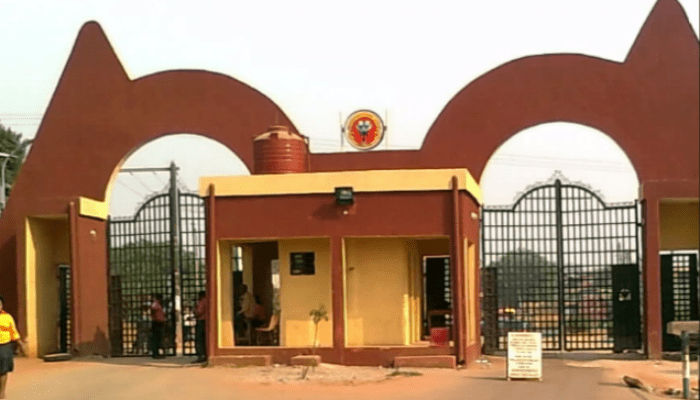
Federal Polytechnic Ado-Ekiti FEDPOLYADO
Federal Polytechnic Ado-Ekiti – FEDPOLYADO

Federal Polytechnic, Ado-Ekiti, popularly known as Adopoly or FedPoly Ado  is a Federal Government-owned polytechnic located in Ado-Ekiti, Ekiti State, Nigeria. Established in 1977, it is one of Nigeria’s leading second-generation federal polytechnics, offering National Diploma (ND) and Higher National Diploma (HND) programmes across engineering, science, business, environmental studies, and agriculture.

Accredited by the National Board for Technical Education (NBTE), the institution is widely respected in South-West Nigeria for its practical, industry-oriented training and its commitment to technological development. The current Rector is Engr. Dr. Temitope John Alake.

History of the Institution

Federal Polytechnic, Ado-Ekiti traces its origins to January 1977, when it was established as a College of Technology in Jos, Plateau State, with an initial intake of 350 National Diploma students. The following year, the institution was relocated to Akure, Ondo State, where it operated under the name Federal College of Technology, Akure. It was formally converted into a full polytechnic under Decree No. 33 of July 1979, which harmonised all Federal Government-owned polytechnics in Nigeria.

In 1982, the Federal Government established the Federal University of Technology at the Akure site, which necessitated the relocation of the polytechnic. The relocation to its permanent site in Ado-Ekiti, Ekiti State began in 1983 and was fully completed by 1986.

The institution has since grown significantly, expanding from 7 academic departments and 350 students at inception to over 10,000 students and approximately 2,000 staff across 29 academic departments in five schools. It also maintains collaborative academic partnerships with institutions including Adekunle Ajasin University (AAUA), Federal University of Technology Minna (FUT-Minna), Federal University Oye-Ekiti (FUOYE), Aberystwyth University (UK), and the International Institute of Tropical Agriculture (IITA).

Location

Federal Polytechnic, Ado-Ekiti Ijan Ekiti Road Ado-Ekiti, Ekiti State Nigeria

The polytechnic is located along the Ijan Ekiti Road in Ado-Ekiti, the capital city of Ekiti State in South-West Nigeria.

List of Courses Offered by Federal Polytechnic, Ado-Ekiti

The polytechnic runs ND and HND programmes across five schools. Part-time and evening programmes are also available through the Continuing Education Centre (CEC).

School of Engineering

  • Civil Engineering Technology
  • Electrical/Electronics Engineering Technology
  • Mechanical Engineering Technology
  • Agricultural and Bio-Environmental Engineering Technology
  • Mineral Resources and Petroleum Engineering Technology (MPRET)

School of Business Studies

  • Accountancy
  • Banking and Finance
  • Business Administration and Management
  • Marketing
  • Mass Communication
  • Office Technology and Management
  • Purchasing and Supply
  • Taxation

School of Environmental Studies

  • Architectural Technology
  • Building Technology
  • Estate Management
  • Quantity Surveying
  • Surveying and Geo-informatics
  • Urban and Regional Planning

School of Science and Computer Studies

  • Computer Science
  • Food Technology
  • Glass and Ceramics Technology
  • Mathematics and Statistics
  • Science Laboratory Technology (Biology/Microbiology, Chemistry options)
  • Art and Industrial Design

School of Agriculture and Agricultural Technology

  • Agricultural Technology
  • Fisheries Technology
  • Horticultural Technology

For the full and most up-to-date list of courses and departments, visit the official website.

Admission Requirements

ND (National Diploma) Admission

  • Minimum of five (5) O’Level credit passes including English Language and Mathematics, obtained in not more than two sittings in WAEC, NECO, GCE, or NABTEB.
  • A valid JAMB UTME score is required. Candidates must select Federal Polytechnic, Ado-Ekiti as their institution of first choice.
  • UTME subjects must include English Language, Mathematics, and two other relevant subjects for the chosen programme.
  • All full-time applicants must participate in the Post-UTME screening exercise and meet the departmental cut-off mark.
  • Candidates with NABTEB qualifications applying for Engineering or Agricultural programmes must also present a core subject from the Trade Related Area (TRA).
  • Online O’Level results or NABTEB printouts must not be more than 12 months old for clearance purposes.

HND (Higher National Diploma) Admission

  • A relevant National Diploma (ND) with a minimum of Lower Credit (CGPA 2.50) from an NBTE-accredited programme.
  • Lower Credit holders must have completed at least one year of post-ND industrial work experience (IT); Pass grade holders require two years.
  • Five (5) credit passes in relevant O’Level subjects, including English Language and Mathematics, in not more than two sittings.
  • An official academic transcript must be sent directly from the candidate’s previous institution to the Registrar, Federal Polytechnic, Ado-Ekiti.

Apply for Admission: career.fedpolyado.edu.ng/apply

Please see the latest news below or visit the school website for the most current information on admission procedures and deadlines.

School Fees

The last known school fees for Federal Polytechnic, Ado-Ekiti are as follows:

  • Acceptance Fee (Fresh Students): approximately ₦25,000 — ₦45,000
  • ND Fresh Students (Tuition): approximately ₦45,000 — ₦65,000 per session, depending on department
  • HND Fresh Students (Tuition): slightly higher than ND fees, depending on programme
  • Returning Students: approximately ₦28,000 — ₦35,000 per session
  • Departmental Charges: approximately ₦5,000 — ₦10,000 depending on course

By faculty, the last known tuition ranges for fresh students are:

  • Engineering: ₦50,000 — ₦60,000
  • Business and Management: ₦45,000 — ₦55,000
  • Applied Sciences: ₦48,000 — ₦58,000
  • Environmental Studies: ₦47,000 — ₦56,000
  • Agricultural Technology: ₦46,000 — ₦54,000

School fees are paid online via the student portal at students.fedpolyado.edu.ng using the Remita payment system. Payment can also be made at any commercial bank using the generated Remita Retrieval Reference (RRR) code.

Please see the latest news below or visit the school website for the most current school fees schedule, as figures may change each academic session.

Cut-off Mark

The last known JAMB cut-off mark for Federal Polytechnic, Ado-Ekiti is 140. Competitive programmes such as Computer Science, Science Laboratory Technology, and Accountancy may require scores between 150 and 170 or above, depending on departmental demand.

Please see the latest news below or visit the school website for the most current cut-off mark information.

Post-UTME / Screening Information

Federal Polytechnic, Ado-Ekiti conducts a Post-UTME screening exercise for all eligible JAMB candidates. Candidates are required to apply online and participate in the screening process. A screening fee may be applicable.

The Post-UTME form is typically released between July and August. Candidates are advised to monitor the official portal and the polytechnic’s verified social media channels for screening dates, requirements, and application links.

Apply via: career.fedpolyado.edu.ng/apply

Please see the latest news below or visit the school website for the most current Post-UTME information.

Hostel / Accommodation

Federal Polytechnic, Ado-Ekiti provides on-campus hostel accommodation for students. Hostel allocation is based on availability and a completed application. The last known hostel accommodation fee ranges from approximately ₦20,000 — ₦32,000 per session, irrespective of gender or hostel block.

Please see the latest news below or visit the school website for the most current hostel fees and application procedures.

Notable Alumni

Please see the latest news below or visit the school website for information on notable alumni.

Official Website and Portal Links

Resource Link
Official Website fedpolyado.edu.ng
Student Portal students.fedpolyado.edu.ng
Admission Application career.fedpolyado.edu.ng/apply
Career Portal career.fedpolyado.edu.ng
About the Polytechnic fedpolyado.edu.ng/about-fpa
Academics / Education fedpolyado.edu.ng/education
Research fedpolyado.edu.ng/research

Contact Information

Federal Polytechnic, Ado-Ekiti Ijan Ekiti Road Ado-Ekiti, Ekiti State Nigeria

Please visit the official website for current phone and email contact details.

Frequently Asked Questions (FAQs)

Where is Federal Polytechnic, Ado-Ekiti located? The polytechnic is located along Ijan Ekiti Road in Ado-Ekiti, Ekiti State, South-West Nigeria.

When was Federal Polytechnic, Ado-Ekiti established? It was founded in 1977 as a College of Technology in Jos, Plateau State. It was converted to a full polytechnic in 1979 and relocated to its permanent site in Ado-Ekiti by 1986.

What programmes does Federal Polytechnic, Ado-Ekiti offer? The polytechnic offers ND and HND programmes in engineering, science, business, environmental studies, and agriculture. Part-time and evening programmes are also available through the Continuing Education Centre.

What is the JAMB cut-off mark for FedPoly Ado? The last known general cut-off mark is 140. Competitive programmes may require 150 — 170 or above. Please see the latest news below or visit the school website for the most current cut-off mark.

Does FedPoly Ado conduct Post-UTME screening? Yes. All eligible JAMB candidates must participate in the Post-UTME screening exercise. The form is typically released between July and August. Visit the official portal for current dates.

How do I pay my school fees at FedPoly Ado? Log in to the student portal at students.fedpolyado.edu.ng, select your programme and level, generate a Remita invoice, and pay online or at any commercial bank.

Does FedPoly Ado have on-campus hostels? Yes, hostel accommodation is available. The last known fee ranges from ₦20,000 — ₦32,000 per session. Please see the latest news below or visit the school website for current hostel fees and availability.

Does Federal Polytechnic, Ado-Ekiti accept second-choice candidates? No. The polytechnic requires candidates to select it as their first-choice institution on JAMB for full-time ND admission.

TAGS

Federal Polytechnic Ado-Ekiti student portal login, Adopoly admission status 2024 2025, FedPoly Ado school fees for ND and HND, Federal Polytechnic Ado-Ekiti Post UTME form and screening date, Federal Polytechnic Ado-Ekiti cut off mark for all courses, Federal Polytechnic Ado-Ekiti courses and departments, Adopoly result checking portal, Federal Polytechnic Ado-Ekiti HND admission requirements, students.fedpolyado.edu.ng login, latest news Federal Polytechnic Ado-Ekiti, Federal Polytechnic Ado-Ekiti hostel accommodation fee, FedPoly Ado-Ekiti JAMB subject combination, Federal Polytechnic Ado Ekiti Ekiti State Nigeria


FEDPOLYADO Latest News

No post found


Auchi Polytechnic Degree
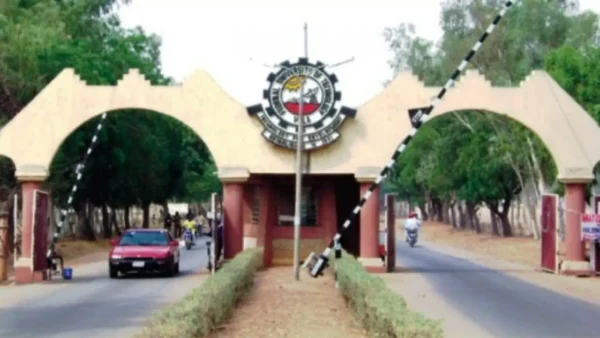
Federal Polytechnic Auchi – Auchi Poly

Auchi Polytechnic is one of Nigeria’s oldest and most reputable federal polytechnics, located in Auchi, Etsako West Local Government Area, Edo State. Founded in 1963, it holds the distinction of being one of the first four polytechnics established in Nigeria. With over 8,000 students and more than 50 academic departments spread across ten schools, Auchi Polytechnic offers National Diploma (ND), Higher National Diploma (HND), Post-HND, and Degree programmes in engineering, science, technology, arts, business, and environmental studies. The institution’s motto — “Hands and Brain for Development” — reflects its long-standing commitment to producing practically skilled, self-reliant graduates.

History of the Institution

Auchi Polytechnic was founded in 1963, initially as a technical college. It was later upgraded to a full polytechnic in 1973, making it one of the pioneer tertiary technical institutions in Nigeria. The polytechnic was established to produce well-trained, highly skilled middle-level manpower for the national economy across engineering technology, sciences, environmental studies, management studies, and arts and design.

Over the decades, the institution has steadily expanded its academic scope, introducing entrepreneurial courses across most programmes to prepare graduates for self-employment and job creation. It has also embraced digital learning through its TERAS Blackboard Learning Management System (LMS) and has established a dedicated Online Distance Flexible e-Learning (ODFeL) platform for remote learners.

The current Rector is Dr. S. S. Umar, who has been in office since 2022.

Location

Auchi Polytechnic Auchi, Etsako West LGA Edo State, Nigeria

Auchi Polytechnic is situated in Auchi, one of the most vibrant and cosmopolitan towns in Edo State, South-South Nigeria.

CAMPUS ONE


CAMPUS TWO

Schools and Departments

Auchi Polytechnic is organised into ten schools, offering programmes at ND, HND, Post-HND, and Degree levels:

School of Administration, Business & Management Studies (SABS) Accountancy, Banking & Finance, Business Administration & Management, Cooperative Economics & Management, Human Resources Management, Marketing, Microfinance & Enterprise Development, Office Technology & Management, Public Administration, Procurement & Supply Chain Management, Taxation

School of Agricultural Technology (SATE) Agricultural Engineering Technology, Agricultural Extension & Management, Crop Production & Management, Agric & Bio-Environmental Engineering Technology

School of Applied Science & Technology (SAST) Biological Science Laboratory Technology, Chemical Engineering Technology, Computer Science, Food Technology, Geological Technology, Physical Science Laboratory Technology, Polymer Technology, Science Laboratory Technology, Statistics

School of Arts & Industrial Design (SAID) Ceramics & Glass Technology, Fashion Design & Clothing Technology, General Art & Industrial Design, Graphics & Textile, Painting, Photography Technology, Printing Technology, Sculpture

School of Engineering Technology (SENG) Civil Engineering Technology, Computer Engineering Technology, Electrical/Electronics Engineering Technology, Mechanical Engineering Technology, Mechatronics Engineering Technology, Minerals & Petroleum Resources Engineering Technology, Welding & Fabrication Engineering Technology

School of Environmental Studies (SENV) Architectural Technology, Building Technology, Estate Management, Quantity Surveying, Survey & Geo-informatics, Urban & Regional Planning

School of Financial Studies (SFINS) Banking & Finance, Taxation, related financial programmes

School of Information & Communication Technology (SICT) Computer Science, Computer Engineering Technology, related ICT programmes

School of Evening Studies (SES) ND and HND programmes offered in the evening for working professionals

Online Programme (ODFeL) Flexible distance learning programmes accessible via odfel.auchipoly.edu.ng

For the complete and most current list of departments and courses, visit the official academic departments page.

Admission Requirements

ND (National Diploma) Admission

  • Minimum of five (5) O’Level credit passes including English Language and Mathematics, in not more than two sittings (WAEC, NECO, or NABTEB).
  • A valid JAMB UTME score is required. Candidates must select Auchi Polytechnic as their institution of choice on JAMB.
  • Candidates must meet the minimum departmental cut-off mark.

HND (Higher National Diploma) Admission

  • A relevant National Diploma (ND) with at least a Lower Credit pass from a recognised institution.
  • A minimum of one year post-ND industrial work experience (IT).
  • Departmental entry requirements apply.

Degree Programme Admission Auchi Polytechnic runs degree programmes in affiliation with Nasarawa State University (NAU) and Federal University Lokoja (FUL).

Post-HND Admission Please check the official website or Latest News below for updated Post-HND requirements and availability.

Apply Now: auchipoly.edu.ng/ap/admissions/apply-now

School Fees

Please check the official website or Latest News below for the most current school fees schedule.

Fees vary by programme level and school. ICT, registration, and departmental charges may apply.

Cut-off Mark

Please check the official website or Latest News below for updated JAMB cut-off marks for Auchi Polytechnic.

Post-UTME / Screening Information

Auchi Polytechnic conducts a post-admission screening exercise for eligible JAMB candidates. Candidates are advised to:

  • Monitor the official website and JAMB portal for screening dates and requirements.
  • Register and complete the online screening application.
  • Note that a screening fee may be applicable.

Please check the official website or Latest News below for the current Post-UTME schedule and portal link.

Hostel / Accommodation

Auchi Polytechnic provides on-campus accommodation for students. Allocation is based on availability and a completed application.

Please check the official website or Latest News below for current hostel fees and application procedures.

Notable Alumni

Please check the official website or Latest News below for information on notable alumni.

Official Website and Portal Links

Resource Link
Official Website auchipoly.edu.ng
Student Portal portal.auchipoly.edu.ng
Online Student Portal (Auchipoly-Online) auchipoly-online.com
Student Login (Online Portal) Student Login
Degree Programme Portal portal.auchipoly.edu.ng/degree
Apply for Admission Apply Now
Academic Departments View Departments
Contact Page Contact Us
ODFeL (Online Learning) odfel.auchipoly.edu.ng

Contact Information

Auchi Polytechnic Auchi, Etsako West LGA Edo State, Nigeria

Please check the official contact page or the official website for current phone and email details.

Frequently Asked Questions (FAQs)

Where is Auchi Polytechnic located? Auchi Polytechnic is located in Auchi, Etsako West LGA, Edo State, South-South Nigeria.

When was Auchi Polytechnic established? It was founded in 1963 as a technical college and upgraded to a polytechnic in 1973, making it one of Nigeria’s first four polytechnics.

What programmes does Auchi Polytechnic offer? The polytechnic offers ND, HND, Post-HND, and Degree programmes across engineering, sciences, arts and design, business, environmental studies, ICT, and more.

Does Auchi Polytechnic offer degree programmes? Yes. Auchi Polytechnic runs degree programmes in affiliation with Nasarawa State University (NAU) and Federal University Lokoja (FUL). Apply via portal.auchipoly.edu.ng/degree.

Does Auchi Polytechnic have an online learning option? Yes. The ODFeL (Online Distance Flexible e-Learning) platform offers flexible learning for remote students. Visit odfel.auchipoly.edu.ng.

Does Auchi Polytechnic conduct Post-UTME screening? Yes. Eligible candidates are required to complete a post-admission screening process. Check the official website for current dates and requirements.

How do I check my result or admission status at Auchi Polytechnic? Log in to the student portal at portal.auchipoly.edu.ng or the online portal at auchipoly-online.com to access your results and admission status.

TAGS

Auchi Polytechnic student portal login, Auchi Polytechnic result checking portal, Auchipoly admission status 2024 2025, Auchi Polytechnic HND admission requirements, Auchi Polytechnic school fees, Auchi Polytechnic Post UTME screening date, Auchi Polytechnic courses and departments, Auchipoly ND admission form, www.auchipoly-online.com student login, Auchi Polytechnic degree programme NAU FUL, latest news Auchi Polytechnic Auchi, Auchipoly ODFeL online portal, Auchi Polytechnic JAMB cut off mark, Auchi Polytechnic Edo State Nigeria


Auchi Poly Latest News

No post found

The Offline-First Study Kit: How Nigerian Students Can Study Without Data or Network

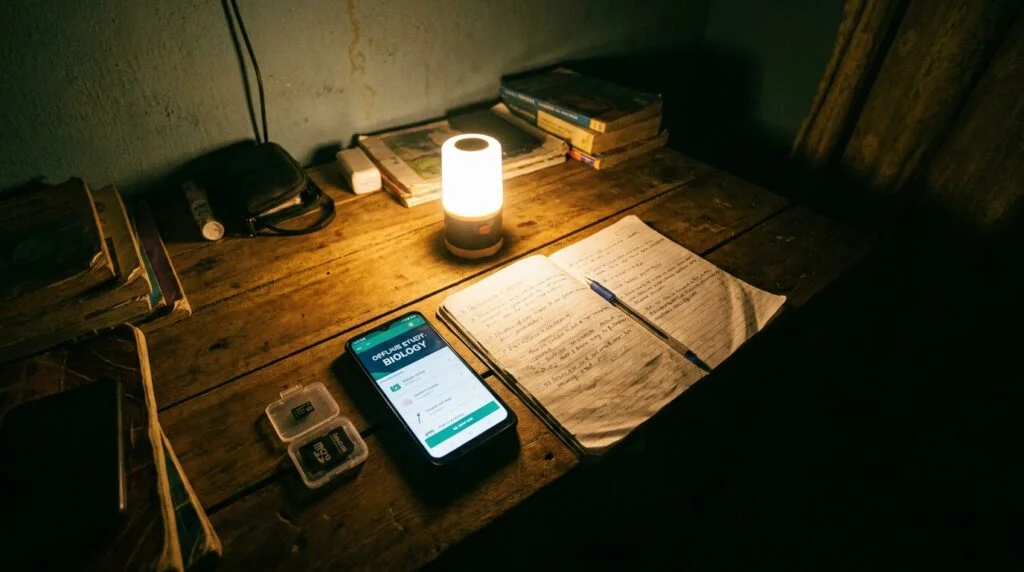
You open your data plan app and see zero balance three days before a test. Every Nigerian student and every parent paying for a phone plan has felt that specific kind of panic, the one where NEPA takes light, your data finishes, and the only WiFi within reach belongs to a cafe that closed an hour ago. This guide gives you a complete, priced, offline study setup that keeps working the moment you switch your phone to airplane mode, built from real tools that cost little or nothing beyond what you spend once.

My name is Amakor Vitalis. I have spent the last five years building and testing low-cost digital learning setups for students in areas with weak network coverage, from Kogi to Cross River. I am not writing this from a place of theory. I have loaded ZIM files on cracked-screen Tecno phones, watched SD cards fail mid-download, and argued with shop owners who tried to sell 32GB cards labeled as 128GB. What follows is what actually works, not what looks good in a tech blog written by someone who has never sat with a student trying to revise Chemistry with zero bars of network.

Why “Offline-First” Beats “Data-Saving” Advice

Most advice you find online about studying cheaply in Nigeria tells you to “use data-saving mode” or “download videos when you get free WiFi.” That advice treats network access as the default and offline as the backup plan. It’s backward. If you build your study kit assuming the network will fail (because it will), you stop wasting airtime chasing a browser that keeps buffering and start using tools that were built to work without a signal in the first place.

The generic advice also tends to recommend apps that claim to be “offline” but actually still ping a server to check login status, load ads, or verify a subscription. A lot of students download what they think is an offline app, put the phone in airplane mode during a real blackout, and find the app refuses to open because it can’t reach its login server. That single detail, whether an app truly works air-gapped, is the difference between a study kit that helps you and one that just wastes storage.

The Complete Kit: What You Actually Need

Here is the full kit broken into four parts. Every part below has a real function, and none of them is optional if you want genuine offline coverage rather than a partial one.

Component What It Does Realistic Price Range (Naira)
Budget Android phone (or old phone you already own) Runs every offline app and stores your files ₦90,000 to ₦150,000 new; ₦25,000 to ₦60,000 UK-used or fairly used
MicroSD card, 64GB to 128GB, genuine Holds your ZIM files, past questions, and saved videos ₦6,000 to ₦15,000
Kiwix app/Teesas + downloaded ZIM packs Offline encyclopedia and subject libraries Free (app and content), only data cost is the one-time download
Past-question CBT app (JAMB/WAEC/NECO) Practice questions, timed mock exams, explanations, all offline after install Free to download; some charge a one-time activation fee of ₦500 to ₦3,000
Kolibri app (optional but recommended) Offline lesson videos, exercises, and simulations across subjects Free

That table alone is your shopping list. You do not need a fancy phone. You need one that can hold a memory card and has enough internal space to install two or three apps comfortably.

Picking the Right Budget Android Device

You don’t need a flagship phone to run any of this. Here’s what actually matters when you’re choosing:

  • RAM: 3GB minimum, 4GB is comfortable. Kiwix and CBT apps are light, but Android itself needs breathing room. A 2GB phone will lag badly once you add a browser and a WhatsApp in the background.
  • Storage: 64GB internal minimum, with a microSD slot. Many of the cheapest phones only have 32GB internal, and once the operating system takes its share, you’re left with almost nothing. A phone with SD card support lets you keep your ZIM files and videos separate from the system storage, so app updates don’t crash because of low space.
  • Battery: 5000mAh or higher. If you’re studying somewhere with unreliable electricity, battery life matters more than camera quality.
  • Android version: 10 or newer if you can get it, mainly because Kiwix and Kolibri run more smoothly and get security patches for longer.

New sealed phones with a warranty from brands like Tecno, Infinix, and Itel currently start around ₦90,000 and climb toward ₦150,000 for something with 6GB RAM and 128GB storage. If your budget genuinely cannot stretch that far, a well-inspected UK-used or fairly-used phone in the ₦25,000 to ₦60,000 range will run this entire kit without trouble, since none of these apps demand serious processing power. The one thing I’d caution against is buying an unbranded “China phone” advertised far below ₦20,000. I’ve seen too many of these fail to hold a charge past six months, which defeats the whole point of an offline kit that’s supposed to outlast your data plan.

Loading Real Offline Content: What to Download and How Much Space It Takes

This is the part most guides skip. They tell you to “download offline content” without telling you which content, where to get it, or how big it is. Here’s the specific breakdown.

1. Kiwix and ZIM Files (Your Offline Encyclopedia)

Kiwix is a free, open-source reader built specifically to open compressed offline archives called ZIM files. It was built by a nonprofit team and doesn’t show ads or collect your data, and it runs on basically any Android phone from version 6 upward. Once you install the Kiwix app and download a ZIM pack, that content lives entirely on your phone. No login, no server check, nothing to break in airplane mode.

The size of your download depends on which version of Wikipedia (or which subject pack) you choose:

ZIM Pack Type What’s Included Approximate Size
Wikipedia “mini” (all articles, text only) Introduction and infobox of every article Around 12GB for full English Wikipedia
Wikipedia “nopic” (full text, no images) Complete article text, no pictures Roughly 11 to 15GB depending on edition
Wikipedia “maxi” (full text with images) Everything, including photos and diagrams Can run past 100GB for the complete English edition
Subject-specific packs (Chemistry, Biology, Computer Science, etc.) Focused article sets on one topic Usually under 1GB to a few GB each
Wiktionary (dictionary) Word definitions and etymology Under 1GB

My honest recommendation for a student on a budget phone with a 64GB card: skip the full “maxi” Wikipedia. It’s overkill for exam prep and eats storage you need for other things. Go for the “nopic” full edition if your card has room, or pick two or three subject packs relevant to your syllabus if space is tight. You lose the pictures, but you keep every word of every article, which is what actually matters when you’re reading up on a topic the night before a test.

2. Past-Question and CBT Practice Apps

For JAMB, WAEC, and NECO preparation, there are several apps built by Nigerian companies that store thousands of past questions locally on your device after one download. Apps like the Myschool CBT app, O3Schools, Edubaloo, and Class54 all let you practice full mock exams, see explanations, and track your score history without needing a live connection once the questions are downloaded.

A word of caution from experience: some of these apps require an internet connection the first time you open them, to activate your license or pull an update, even though later use is genuinely offline. Do this activation step while you still have data or WiFi, then confirm the app opens and loads questions with your WiFi turned off before you consider your kit complete. Storage-wise, these apps with their full question banks typically take up somewhere between 200MB and 1.5GB, small compared to your ZIM files.

3. Teesas or Similar Offline Lesson Libraries

Teesas is a free, open-source learning platform built by a nonprofit called Learning Equality. It works completely offline once you’ve loaded content into it, and it includes video lessons, exercises, simulations, and books across a wide range of subjects. Unlike a raw downloaded video file sitting in your gallery, Teesas organizes lessons by subject and tracks what you’ve completed, which makes revision more structured. It also lets devices share content with each other over a local WiFi network with no internet required at all, useful if a classmate already has the content loaded and you don’t want to burn your own data downloading it again.

Storage for Teesas depends entirely on which “channels” (subject packs) you import. A handful of core secondary school subjects with video lessons can range from 2GB to 10GB. Start with the two or three subjects you’re weakest in rather than trying to load everything at once.

4. Saved Past Lesson Videos

If you already have YouTube videos, teacher recordings, or downloaded tutorial videos, keep them in a dedicated folder on your SD card, not your internal storage. A single hour of decent-quality video (720p) typically runs 300MB to 700MB depending on compression. If you’re saving many of these, this is usually the single biggest storage consumer in your whole kit, bigger than your ZIM files in most cases. Be selective. Save videos that explain the exact topics your syllabus covers, not everything you come across.

Total Storage Budget: A Realistic Example

Here’s what a genuinely useful, non-bloated kit looks like on a 64GB card:

Content Space Used
Wikipedia “nopic” full English edition ~12GB
4 to 5 subject ZIM packs (Chemistry, Biology, Physics, English literature notes) ~4GB
Myschool or similar past-question app with full question bank ~1GB
Kolibri with 3 core subjects loaded ~6GB
15 to 20 saved lesson videos ~10GB
Total ~33GB, leaving over half the card free for personal files

If your card is only 32GB, drop the full Wikipedia edition for two or three subject-specific ZIM packs instead, and keep your saved videos to the ones you’ll actually rewatch.

The Assembly Checklist: Build Your Kit in This Order

Follow this sequence. Doing it out of order (like downloading huge files before confirming your card even works) is the most common way students waste their data.

  1. Choose and test your device. Confirm the phone boots properly, the SD card slot reads a card, and the battery holds a charge for at least a few hours of screen-on use.
  2. Buy and format your microSD card. Buy from a shop you trust, not a random roadside vendor, since fake cards that report false capacity are common. Format it as “portable storage” so your phone treats it as external, separate from internal memory.
  3. Install Kiwix from the Play Store while you have network access.
  4. Download your chosen ZIM packs directly to the SD card if the app allows you to set that storage location. Do this on a strong WiFi connection if you can find one, since these are large files.
  5. Install your past-question CBT app, complete any one-time activation step while online, then close your data connection and reopen the app to confirm the questions load without a network.
  6. Install Kolibri (optional) and import two or three subject channels relevant to your exams.
  7. Move or download your saved lesson videos onto the SD card in a clearly labeled folder.
  8. Run the airplane-mode test (below) before you consider the kit finished.

The Airplane-Mode Test: Confirm It Actually Works

This step matters more than any other on this list, because it’s the one most students skip, and it’s the one that catches every app that secretly needs a server ping to function.

  • Turn on airplane mode.
  • Open Kiwix and search for a random topic. Confirm the article loads with full text.
  • Open your past-question app and start a mock exam. Confirm questions load and you can submit answers and see your score.
  • Open Kolibri (if installed) and play a lesson video from start to finish.
  • Open your saved video folder and play one video fully.

If every one of those steps works with the network switched off, your kit is genuinely offline-first. If any step fails, go back and check whether that specific app needs a one-time online activation you missed, or whether the content download actually completed.

Being Honest About the Limits of an Offline Kit

I won’t pretend this setup replaces a live connection completely, and any guide that tells you it does is not being straight with you. Here’s what an offline kit cannot do:

  • No live updates. Your Wikipedia content, past questions, and lesson videos are frozen at the point you downloaded them. If JAMB changes its syllabus or WAEC releases a new past-question set, your kit won’t know until you go online again.
  • No new practice questions until your next sync. If you’ve worked through the entire question bank in your CBT app, you’re done until you reconnect and check for an update.
  • No real-time clarification. You can’t ask a live tutor a question or search a brand-new topic that wasn’t included in your downloaded content. You’re working from what you saved, not the open internet.
  • Storage limits mean some tradeoffs. You likely won’t have space for every subject, every past year’s questions, and hours of video all at once on a budget phone. You’ll need to rotate content occasionally.

None of this makes the kit less worth building. It just means you should treat it as your daily study base, not your only source of information forever.

The Monthly Re-Sync Habit

Because the kit is frozen content, build a simple monthly habit to keep it useful:

  • Pick one day a month, ideally right after you’ve topped up data or found free WiFi (school, library, or a relative’s house), to check for updates.
  • Update your CBT app first, since past-question apps often add newly released exam questions after each sitting.
  • Check Kiwix’s built-in catalog for newer versions of your ZIM packs. You don’t need to redownload everything each month, just the packs tied to subjects you’re actively revising.
  • Swap out videos you’ve already mastered for new ones covering topics you’re currently struggling with, rather than letting old videos pile up and eat storage.
  • Delete what you no longer need. If you’ve finished revising a subject, remove its ZIM pack or video folder to make room for the next one.

Ten to fifteen minutes once a month is enough. This isn’t a daily task, and treating it as one will just burn data you don’t need to spend.

Common Mistakes Students Make Building This Kit

  • Buying a card based on price alone. A ₦3,000 “128GB” card from an unverified seller is almost always fake and will corrupt your files partway through use. Buy from a shop that lets you test the card in front of them.
  • Downloading the full “maxi” Wikipedia with images on a 32GB phone. It eats nearly all your space and leaves no room for past questions or videos, the things you’ll actually revise from daily.
  • Skipping the airplane-mode test. Assuming an app is offline because it says so in the Play Store description, without ever actually confirming it, is how students find out mid-exam-week that their “offline” app needs a server ping to open.
  • Never rotating content. Loading everything once and never updating it means you’re revising from a static snapshot months after new past questions or syllabus changes were released.
  • Ignoring battery health. A kit that works perfectly offline is useless if your phone can’t hold charge through a full study session during a power outage.

Frequently Asked Questions

Do I need to pay for Kiwix or Kolibri or Teesas? No. they are free, open-source tools built by nonprofit organizations, and neither requires a subscription to use their downloaded content offline.

Can I use this kit on a basic phone without a memory card slot? You can install lighter subject-specific ZIM packs and a CBT app directly on internal storage if the phone has at least 32GB free, but a card slot gives you far more room to work with and I’d recommend prioritizing that feature when choosing a device.

Will my past-question app show me new WAEC or JAMB questions automatically? No. New questions get added to these apps only when the developer releases an update, which usually requires a network connection to download. This is exactly why the monthly re-sync habit matters.

Is it safe to download ZIM files or CBT apps from unofficial APK sites instead of the Play Store? Stick to the Play Store or the official Kiwix and Learning Equality websites where possible. Unofficial APK sites carry a real risk of bundled malware, and a corrupted or malicious file defeats the entire purpose of a trustworthy study tool.

How often should I completely refresh my offline content? Monthly for active past-question updates, and every school term or so for full ZIM pack refreshes, unless a specific syllabus change or new past-question release gives you reason to update sooner.

Bringing It All Together

A genuinely offline-first study kit isn’t about owning an expensive phone. It’s about choosing the right free tools, loading them properly before you need them, and testing that they hold up the moment your network disappears. Between a modest Android device, a properly formatted memory card, Kiwix, a past-question CBT app, and an optional Kolibri library, you can build a setup that costs a fraction of a year’s worth of data bundles and keeps working through every blackout and every zero-balance moment.

Build it once, test it with airplane mode on, and give it a short refresh once a month. That’s the whole system.

Have you tried building your own offline study setup, or run into an app that claimed to work offline but didn’t? Tell me what worked and what didn’t in the comments, I read every one and I’ll fold the real answers into future updates of this guide.


JAMB CBT Centre
JAMB CBT Registration: Step by Step Complete Guide for 2027 Exams

Key Takeaways

  • Every step in JAMB’s 2027 registration sequence has a hard prerequisite. Skipping any one of them does not just cause a delay; it produces a specific error that blocks every step after it.
  • Your NIN must be verified and correct at NIMC before you send a single SMS. Anything wrong there freezes the chain at the very first link.
  • The phone number you use to generate your profile code becomes your permanent JAMB identity for results, admission, and all future correspondence.
  • You cannot buy an e-PIN without a profile code. You cannot register at a CBT centre without both. You cannot print your exam slip without a completed CBT registration. These are locked gates, not suggestions.
  • Your biodata is sealed the moment your profile code is generated. If your NIN details are incorrect, you’ll need to correct them through NIMC before proceeding with any approved JAMB data correction process.

If you’re planning to register for JAMB CBT 2027, the correct sequence is simple but must be followed carefully. First, verify your National Identification Number (NIN) with NIMC. Next, generate your JAMB Profile Code, purchase an official e-PIN, complete your registration at an accredited CBT centre, collect your registration slip, and later print your examination slip before your UTME date. Every step depends on the previous one, making the registration order just as important as the registration itself.

What Is JAMB CBT Registration?

JAMB CBT Registration is the official application process for candidates seeking admission into Nigerian universities, polytechnics, colleges of education, and other approved tertiary institutions through the Unified Tertiary Matriculation Examination (UTME).

During registration, candidates provide their personal information, complete biometric verification, choose their preferred institutions and courses, and receive a registration slip confirming that the process has been completed successfully.

Unlike many online application systems, JAMB registration follows a strict sequence. Missing one requirement prevents you from completing the next stage. Understanding this dependency chain can save you from unnecessary delays, rejected registrations, and costly corrections.

Who Can Register for JAMB 2027?

JAMB registration is open to candidates who intend to seek admission into Nigerian tertiary institutions through UTME or Direct Entry.

This includes:

  • First-time UTME candidates
  • Students awaiting WAEC, NECO, or NABTEB results
  • Candidates rewriting JAMB to improve their scores
  • Direct Entry applicants
  • Applicants seeking admission into federal, state, or private universities
  • Candidates applying to polytechnics or colleges of education

Before registering, always confirm that you meet the latest eligibility requirements announced by JAMB.

JAMB Registration Requirements

Preparing your documents before registration will make the entire process smoother.

You’ll generally need:

  • A valid National Identification Number (NIN)
  • An active phone number linked to your NIN
  • A working email address
  • Your JAMB Profile Code
  • JAMB e-PIN
  • O’Level details (WAEC, NECO, or NABTEB), if available
  • Preferred institution and course choices
  • The approved registration fee

Having these ready before visiting a CBT centre reduces delays and minimizes the chances of registration errors.

I’ve sat in a JAMB-accredited CBT centre and watched a registration operator try to pull up a candidate’s form while the student stood there sweating because his e-PIN had arrived, but his Profile Code was tied to a SIM card he had stopped using months earlier.

The operator couldn’t continue.

The student left without completing his registration.

He hadn’t skipped the process. He had simply completed some steps in the wrong order using the wrong phone number.

That’s the problem with most guides on JAMB CBT Registration 2027. They tell you what to do but rarely explain why the order matters.

Each registration step depends on the previous one. If one requirement isn’t completed correctly, the next stage becomes inaccessible. This guide focuses on that dependency chain so you understand not only the process but also the reasons behind it.

How the Registration Sequence Actually Works

Think of JAMB CBT Registration 2027 as six security gates in a single corridor.

You cannot unlock Gate 2 until Gate 1 has been completed successfully. The same applies throughout the registration journey.

Instead of displaying a generic checklist, it’s easier to understand the process as a dependency map where each completed step unlocks the next.

The Dependency Map (AS IT IS)

[NIN verified at NIMC]

[Profile Code generated via SMS]

[e-PIN purchased from an authorised vendor]

[CBT Centre Registration

Biometrics • Institution Choice • Subject Combination]

[Registration Slip Printed]

[Exam Slip Printed Before UTME]

Many articles present these as six independent tasks.

They’re not.

They’re six connected stages.

Trying to skip ahead doesn’t speed up registration—it simply produces an error because the previous requirement hasn’t been completed.

For example:

  • No Profile Code means no e-PIN.
  • No e-PIN means no CBT registration.
  • No completed CBT registration means no examination slip.

Understanding this sequence is the easiest way to avoid delays and unnecessary frustration.

Gate 1: Verify Your NIN Before Anything Else

Where this happens: NIMC Office or through your existing NIN records.

This is the only stage that happens entirely outside JAMB’s registration system, which is why it’s often overlooked.

Before generating a Profile Code, every candidate should ensure their National Identification Number (NIN) is active and that the personal information stored by the National Identity Management Commission (NIMC) is completely accurate.

JAMB retrieves your biodata directly from the NIMC database when your Profile Code is generated. If your name, date of birth, or other personal details are incorrect in the NIMC records, those errors are carried into your JAMB profile.

Correcting them later is far more difficult than fixing them before registration begins.

For example, if your name appears differently on your NIN than on your academic records, that inconsistency may continue through your registration, examination records, and admission screening until it’s officially corrected.

Common Issues That Stop Registration

Your registration may be blocked if:

  • Your NIN record contains unsupported special characters.
  • Your date of birth is incorrect.
  • Your NIN is still being processed.
  • Your personal information doesn’t match official NIMC records.

If any of these issues occur, resolve them through NIMC before attempting to generate your Profile Code.

Gate 2: Generate Your JAMB Profile Code

Where this happens: On your personal mobile phone

Once your NIN details have been verified, the next step is generating your JAMB Profile Code. This unique code links your NIN to your JAMB profile and is required before you can purchase an e-PIN.

To generate it, send your 11-digit NIN via SMS to the official JAMB shortcode using the format:

NIN 12345678901

(Leave a space between NIN and your number.)

The Profile Code sent back to you becomes your permanent registration identity. The same phone number will be used for important updates, including your registration status, examination details, results, and admission notifications.

For this reason, always use a personal SIM card that you intend to keep active throughout the admission process.

If you’re unsure about the SMS process or common errors, our detailed guide on JAMB Profile Code Generation 2027 explains each step in greater detail.

Common Profile Code Errors

SMS Response What It Means What You Should Do
Wrong Parameter SMS format is incorrect Send the message again using the correct format.
Number Already Registered The SIM has already been used for JAMB Use the original SIM or follow JAMB’s recovery process.
Unable to Verify NIN Temporary verification issue Wait and try again later.
Record Not Found NIN is unavailable in the database Visit a NIMC office for verification.
Special Characters Error Unsupported characters in your NIN record Correct your details at NIMC before trying again.

If you’ve registered with JAMB in a previous year, you should continue using the same phone number whenever possible. This makes recovering your Profile Code or e-PIN much easier if you misplace them.

Gate 3: Purchase Your JAMB e-PIN

Where this happens: Approved banks, mobile money operators, USSD platforms, or other authorised vendors.

After receiving your Profile Code, you’re ready to purchase the official JAMB e-PIN. This electronic PIN authorises your CBT registration and cannot be generated without a valid Profile Code.

Only use payment channels approved by JAMB. Buying an e-PIN from unofficial agents or third-party vendors can lead to payment issues or invalid registration.

Before Paying, Decide Whether You Want the Mock Exam

JAMB typically offers two e-PIN options:

  • UTME registration only
  • UTME registration with the optional mock examination

Choose carefully before making payment, as the selected option generally cannot be changed after purchase.

Typical Registration Costs

Although fees may change each year, they usually include:

Fee Component Purpose
JAMB Application Fee UTME registration
Reading Text Required reading material
CBT Registration Service Registration processing
CBT Service Charge Computer-based testing service
Bank Charges Payment processing
Mock Examination (Optional) Practice examination

Always confirm the latest approved fees through official JAMB announcements before making payment.

What Happens After Payment?

Once your payment is successful, your e-PIN is sent to the same phone number used to generate your Profile Code.

If your payment is successful but your e-PIN is delayed, follow our JAMB Payment Confirmation guide to verify your transaction before requesting support.

Keep both your Profile Code and e-PIN in a safe place. You’ll need them when visiting an accredited CBT centre. If you lose your e-PIN, JAMB provides an official recovery option using the same registered phone number.

Why These Three Steps Matter

Many registration problems begin long before candidates reach a CBT centre.

For example:

  • An incorrect NIN prevents Profile Code generation.
  • No Profile Code means you cannot purchase an e-PIN.
  • Without an e-PIN, the CBT centre cannot access your registration form.

This is why following the registration sequence in the correct order saves both time and unnecessary expenses.

Think of the first three gates as the foundation of your registration. Once they’re completed successfully, the remaining steps become much more straightforward.

Quick Checklist Before Visiting a CBT Centre

Before leaving home, confirm that you have:

  • A verified NIN
  • Your JAMB Profile Code
  • A valid e-PIN
  • An active email address
  • Your preferred institution and course choices
  • O’Level details (or confirmation that you’ll register with awaiting results)
  • Your registered phone number

Having everything ready helps the registration process at the CBT centre go smoothly and reduces the risk of avoidable delays.

Complete Your Registration at an Accredited CBT Centre

Where this happens: An accredited JAMB CBT centre.

This is the only stage that requires your physical presence. Even if you’ve completed every previous step successfully, your registration isn’t complete until you visit an accredited CBT centre.

At the centre, the registration officer will use your Profile Code and e-PIN to access your application. Since your biodata has already been retrieved from NIMC, you won’t need to re-enter basic personal information.

You’ll complete the following:

  • Capture your passport photograph
  • Complete biometric verification (all ten fingerprints)
  • Provide your email address
  • Enter your O’Level results or select “Awaiting Result”
  • Choose your preferred institutions and courses
  • Select the correct UTME subject combination
  • Choose your examination town

Before confirming the registration, carefully review every detail displayed on the screen. Pay close attention to your subject combination, institution choices, email address, and examination town.

Once your fingerprints are used to confirm submission, correcting mistakes may require additional procedures.

Important Tips

  • Register only at accredited CBT centres.
  • Never allow someone else to complete registration on your behalf.
  • Remove henna or substances that may interfere with fingerprint capture before your appointment.
  • If you have difficulty with biometric verification, report the issue immediately to the centre or the nearest JAMB office.

Gate 5: Collect Your Registration Slip

Once your registration has been completed successfully, the CBT centre will print your JAMB Registration Slip.

Do not leave the centre without checking it carefully.

Verify that the following information is correct:

  • Full name
  • Date of birth
  • Institution choices
  • Course selection
  • Subject combination
  • Examination town

If you notice any errors, report them immediately while you’re still at the registration centre.

Remember, the Registration Slip confirms that your registration has been completed. It is not your examination slip.

Gate 6: Print Your Examination Slip Before UTME

A few days before the examination, JAMB releases the Examination Slip.

This document contains:

  • Your assigned CBT centre
  • Examination date
  • Examination time
  • Candidate details
  • Registration number

You can print it online through the official JAMB portal or at an accredited CBT centre. Unlike the registration slip, the examination slip allows you to enter the examination hall.

If you fail to print it before your exam date, you may not know your assigned CBT centre or reporting time.

Common Registration Mistakes to Avoid

Many registration issues can be avoided with proper preparation.

Avoid these common mistakes:

  • Using an incorrect or unverified NIN
  • Registering with someone else’s phone number
  • Purchasing an e-PIN before generating a Profile Code
  • Choosing the wrong subject combination
  • Registering at an unaccredited CBT centre
  • Leaving the registration centre without checking your registration slip
  • Waiting until the registration deadline to begin the process

Starting early gives you enough time to resolve unexpected issues before registration closes.

JAMB Pre-Registration Checklist

Before beginning registration, make sure you can answer Yes to each of the following:

Before Generating Your Profile Code

  • NIN is active and verified.
  • Name and date of birth match your official records.
  • Registered phone number is active.
  • Phone has sufficient airtime.

Before Buying Your e-PIN

  • Profile Code received.
  • Decided whether to take the optional mock exam.
  • Buying only through an approved payment channel.

Before Visiting the CBT Centre

  • Profile Code available.
  • e-PIN available.
  • Institution and course choices decided.
  • Subject combination confirmed.
  • O’Level details ready.
  • No substances affecting fingerprint capture.

What Happens After Registration?

Completing your registration is only the first step toward admission.

After registration, you should:

  1. Keep your registration slip in a safe place.
  2. Begin studying with the latest JAMB syllabus.
  3. Using effective best study techniques for exams can help you prepare more efficiently before your UTME.
  4. Practice regularly using CBT mock software.
  5. Print your examination slip once it’s available.
  6. Sit for the UTME on your scheduled date.
  7. Check your result after release.
  8. Participate in Post-UTME screening if required.
  9. Monitor your admission status through JAMB CAPS.
  10. Accept your admission offer and print your admission letter if admitted.

Staying organized throughout these stages helps ensure you don’t miss important deadlines.

FAQ’s

Q: Is the JAMB portal open for 2027?

JAMB announces registration dates through its official channels. Always rely on official updates for the latest registration schedule.

Q: How do I register for JAMB CBT 2027?

Start by verifying your NIN, generate your Profile Code, purchase an official e-PIN, and complete your registration at an accredited CBT centre.

Q: Can I register with awaiting WAEC or NECO results?

Yes. Candidates awaiting WAEC, NECO, or NABTEB results can usually register by selecting the awaiting result option, subject to JAMB’s current guidelines.

Q: How long is the JAMB CBT exam?

The exam duration is determined by JAMB for each examination cycle. Candidates should arrive early and manage their time carefully during the test.

Q: Can I change my institution or course after registration?

Yes. JAMB normally allows candidates to apply for changes of institution or course through approved procedures after registration.

Q: What is a JAMB Profile Code?

A Profile Code is a unique code generated from your NIN that allows you to purchase an e-PIN and begin the JAMB registration process.

Q: What is an e-PIN?

An e-PIN is an electronic registration token issued after payment through an approved channel. It is required to complete your registration at an accredited CBT centre.

Q: Has anyone scored 400 in JAMB?

A perfect score is extremely rare. Instead of focusing on achieving 400, concentrate on meeting or exceeding the admission requirements for your preferred institution and course.

Conclusion

Successfully completing JAMB CBT Registration 2027 is about more than following a checklist—it’s about following the correct sequence. Every stage, from verifying your NIN to printing your examination slip, depends on the previous one being completed accurately.

By preparing your documents early, using only accredited CBT centres, confirming every detail before submission, and keeping your Profile Code and e-PIN safe, you can avoid the most common registration problems.

Most importantly, don’t wait until the final days of registration. Starting early gives you enough time to resolve any NIN, payment, or verification issues without unnecessary pressure. Once your registration is complete, focus on effective preparation, practice with CBT mock tests, and stay updated through official JAMB announcements as you work toward securing admission into your preferred Nigerian tertiary institution.

University of Offa, UNIOFFA
University of Offa – UNIOFFA

The University of Offa (UNIOFFA) is a private university located in Offa, Kwara State, Nigeria. It was established to provide quality tertiary education that blends academic excellence with entrepreneurial and leadership training.

UNIOFFA focuses on preparing graduates who can contribute meaningfully to society by combining theoretical knowledge with practical skills. The university has gradually expanded its academic programmes to include sciences, management, social sciences, and arts.

Location

University of Offa
Offa
Kwara State
Nigeria

Faculties / Colleges / Schools

The university operates through the following faculties:

  • Faculty of Sciences

  • Faculty of Management and Social Sciences

  • Faculty of Arts and Humanities

  • Faculty of Law

  • Faculty of Education

List of Courses Offered by University of Offa (UNIOFFA)

Courses offered include:

Sciences

  • Computer Science

  • Microbiology

  • Biochemistry

  • Industrial Chemistry

  • Mathematics

Management and Social Sciences

  • Accounting

  • Business Administration

  • Economics

  • Mass Communication

  • Political Science

  • Public Administration

Arts and Humanities

  • English Language

  • History and International Studies

  • Islamic Studies

  • Linguistics

Law

  • Law (LL.B)

Education

  • Education and Biology

  • Education and Chemistry

  • Education and Mathematics

  • Education and English Language

Please check School Website or Latest News Below for updated info.

Admission Requirements

Undergraduate Admission

  • Candidates must have at least five O’Level credits including English Language and Mathematics.

  • UTME (JAMB) may be required depending on the programme.

  • Applicants must meet the required departmental cut-off marks.

  • Candidates apply online via the university admission portal.

Admission Portal
https://unioffa.edu.ng/public/admission

Direct Entry Admission

  • Candidates with ND, HND, NCE, or equivalent qualifications may apply for Direct Entry.

  • Departmental requirements apply.

Postgraduate Admission

Please check School Website or Latest News Below for updated info.

School Fees

The last known school fees include:

  • Undergraduate programmes: approximately ₦300,000 – ₦450,000 per session depending on programme.

  • Additional charges may apply for ICT, registration, and departmental levies.

Please check School Website or Latest News Below for updated info.

Cut-off Mark

  • The last known general cut-off mark: 120 – 160 depending on the programme.

Please check School Website or Latest News Below for updated info.

Post-UTME Information

UNIOFFA conducts its own post-admission screening process for eligible candidates.

  • Candidates must register online

  • Screening fee may apply

Admission Portal
https://unioffa.edu.ng/public/admission

Please check School Website or Latest News Below for updated info.

Hostel / Accommodation

The university provides on-campus accommodation.

  • Hostel fees: approximately ₦50,000 – ₦80,000 per session

  • Allocation is based on availability and application

Please check School Website or Latest News Below for updated info.

Notable Alumni

Please check School Website or Latest News Below for updated info.

Official Website/Login Portal Links

Contact Information

University of Offa
Offa
Kwara State
Nigeria

  • Phone: Please check School Website or Latest News Below for updated info.

  • Email: info@unioffa.edu.ng

Please check School Website or Latest News Below for updated info.

TAGS

UNIOFFA portal, UNIOFFA recruitment portal, University of Offa school fees, Unioffa portal admission, Unioffa courses and fees, UNIOFFA school fees payment, Unioffa portal results, Unioffa cut off mark

Frequently Asked Questions (FAQs)

Where is UNIOFFA located?
The university is located in Offa, Kwara State, Nigeria.

When was UNIOFFA established?
Please check School Website or Latest News Below for updated info.

What courses are offered at UNIOFFA?
UNIOFFA offers programmes in sciences, arts, management, law, and education.

Does UNIOFFA conduct Post-UTME screening?
Yes. Candidates may be required to participate in post-admission screening.

What is the cut-off mark for UNIOFFA?
The general cut-off mark ranges from 120 – 160 depending on the programme. Please check School Website or Latest News Below for updated info.


UNIOFFA Latest News

No post found

Modibbo Adama University, Yola MAUTECH
Modibbo Adama University of Technology, Yola -MAUTECH

The Modibbo Adama University of Technology, Yola (MAUTECH) was established in 1981 by the Federal Government of Nigeria as the Federal University of Technology, Yola.

The university was created to promote technological advancement and scientific development in Nigeria, with a strong emphasis on engineering, agriculture, and applied sciences. In 2011, the institution was renamed in honour of Modibbo Adama, a historical figure and founder of the Adamawa Emirate.

Over the years, MAUTECH has expanded its academic programmes to include management sciences, environmental studies, and health-related disciplines. It is recognized as one of Nigeria’s leading universities of technology, contributing to research, innovation, and manpower development.

Location

Modibbo Adama University of Technology
Yola
Adamawa State
Nigeria

Faculties / Colleges / Schools

The university operates through the following faculties:

  • Faculty of Agriculture

  • Faculty of Engineering

  • Faculty of Environmental Sciences

  • Faculty of Science

  • Faculty of Management Sciences

  • Faculty of Education

  • Faculty of Life Sciences

List of Courses Offered by Modibbo Adama University of Technology, Yola (MAUTECH)

Courses are offered across faculties and include:

Agriculture and Environmental

  • Agricultural Economics and Extension

  • Animal Science and Range Management

  • Crop Production and Horticulture

  • Forestry and Wildlife Management

  • Fisheries and Aquaculture

Engineering

  • Civil Engineering

  • Mechanical Engineering

  • Electrical/Electronics Engineering

  • Chemical Engineering

  • Agricultural and Environmental Engineering

Sciences

  • Biochemistry

  • Microbiology

  • Chemistry

  • Physics

  • Mathematics

  • Computer Science

  • Biotechnology

  • Industrial Chemistry

Environmental Sciences

  • Architecture

  • Building

  • Urban and Regional Planning

  • Surveying and Geoinformatics

Management and Social Sciences

  • Accounting

  • Business Administration

  • Economics

  • Banking and Finance

  • Management Technology

Education

  • Education and Biology

  • Education and Chemistry

  • Education and Mathematics

  • Education and Physics

  • Technical Education

Health and Related Programmes

  • Medicine and Surgery

  • Nursing Science

  • Medical Laboratory Science

  • Radiography

Please check School Website or Latest News Below for updated info.

Admission Requirements

Undergraduate Admission

  • Candidates must sit for UTME conducted by JAMB.

  • Applicants must have at least five O’Level credits including English Language and Mathematics.

  • Candidates must select MAUTECH as first choice or apply for a change of institution.

  • Applicants must meet the required cut-off mark.

  • Candidates must participate in the Post-UTME screening exercise.

Admission Portal
https://mautech.edu.ng/

Direct Entry Admission

  • Candidates with ND, HND, NCE, IJMB, or equivalent qualifications can apply through JAMB Direct Entry.

  • Applicants must meet departmental requirements.

Postgraduate Admission

The university offers postgraduate programmes (PGD, Master’s, PhD).

Please check School Website or Latest News Below for updated info.

School Fees

The last known school fees include:

  • Fresh students: approximately ₦37,300 – ₦61,340 depending on course

  • Returning students: approximately ₦45,000 – ₦101,000 depending on programme

Additional charges may include acceptance fee and departmental levies.

Please check School Website or Latest News Below for updated info.

Cut-off Mark

The last known cut-off marks include:

  • General JAMB cut-off: 160

Examples of departmental cut-off marks:

  • Medicine and Surgery: 220+

  • Veterinary Medicine: 230

  • Medical Laboratory Science: 200

  • Engineering courses: 160+

Please check School Website or Latest News Below for updated info.

Post-UTME Information

Candidates seeking admission into MAUTECH must participate in the Post-UTME screening exercise.

  • Screening is conducted online

  • Candidates must upload required credentials

  • Screening fee: approximately ₦2,000

Admission Portal
https://mautech.edu.ng/

Please check School Website or Latest News Below for updated info.

Hostel / Accommodation

The university provides on-campus hostel accommodation.

The last known details include:

  • Hostel fees: approximately ₦10,000 – ₦20,000 per session

  • Allocation is based on availability

  • Usually processed after payment of school fees

Please check School Website or Latest News Below for updated info.

Notable Alumni

Please check School Website or Latest News Below for updated info.

Official Website/Login Portal Links

Contact Information

Modibbo Adama University of Technology
Yola
Adamawa State
Nigeria

  • Phone: Please check School Website or Latest News Below for updated info.

  • Email: info@mautech.edu.ng

Please check School Website or Latest News Below for updated info.

TAGS

Srms Portal login mautech, Student portal MAUTECH, Mautech registration portal, MAUTECH Admission portal, Mautech admission, MAUTECH result checker student portal, Www MAUTECH edu ng result, MAUTECH postgraduate portal

Frequently Asked Questions (FAQs)

Where is MAUTECH located?
The university is located in Yola, Adamawa State, Nigeria.

When was MAUTECH established?
MAUTECH was established in 1981.

What courses are offered at MAUTECH?
The university offers programmes in engineering, sciences, agriculture, management, and health sciences.

Does MAUTECH conduct Post-UTME screening?
Yes. Candidates must participate in the Post-UTME screening exercise.

What is the cut-off mark for MAUTECH?
The general cut-off mark is 160, while competitive courses like Medicine require higher scores. Please check School Website or Latest News Below for updated info.


MAUTECH Latest News

No post found

NOUN, Enugu
National Open University of Nigeria, Abuja – NOUN

The National Open University of Nigeria (NOUN) was first established in 1983 but was later suspended by the government. It was re-established in 2002 as Nigeria’s premier open and distance learning institution.

NOUN was created to provide flexible, accessible, and affordable education to Nigerians who may not be able to attend conventional universities. It operates a distance learning system supported by numerous study centres across the country.

The university has grown significantly over the years, becoming one of the largest tertiary institutions in Nigeria, with thousands of students enrolled in undergraduate and postgraduate programmes. It is known for its flexible learning model, which allows students to study at their own pace.

Location

National Open University of Nigeria
Abuja
Federal Capital Territory (FCT)
Nigeria

Faculties / Colleges / Schools

The university operates through the following faculties:

  • Faculty of Agricultural Sciences

  • Faculty of Arts

  • Faculty of Education

  • Faculty of Health Sciences

  • Faculty of Law

  • Faculty of Management Sciences

  • Faculty of Sciences

  • Faculty of Social Sciences

List of Courses Offered by National Open University of Nigeria (NOUN)

Courses are offered across faculties and include:

Arts and Humanities

  • English

  • French

  • Arabic

  • Philosophy

  • Religious Studies

Education

  • Early Childhood Education

  • Primary Education

  • Educational Management

  • Guidance and Counselling

Management and Social Sciences

  • Accounting

  • Business Administration

  • Economics

  • Political Science

  • Public Administration

  • Criminology and Security Studies

Sciences

  • Computer Science

  • Information Technology

  • Mathematics

  • Environmental Science

  • Data Management

Health Sciences

  • Public Health

  • Nursing Science

Law

  • Law

Agricultural Sciences

  • Agricultural Economics

  • Agricultural Extension

Please check School Website or Latest News Below for updated info.

Admission Requirements

Undergraduate Admission

  • NOUN operates an open admission system with flexible entry requirements.

  • Candidates must have at least five O’Level credits including English Language and Mathematics.

  • UTME (JAMB) is generally not compulsory for most programmes.

  • Candidates apply directly through the university portal.

Application Guide
https://nou.edu.ng/procedure-on-how-to-apply-for-admission/

Direct Entry Admission

  • Candidates with ND, HND, NCE, IJMB, or equivalent qualifications can apply directly.

  • Applicants must meet programme-specific requirements.

Postgraduate Admission

The university offers postgraduate programmes including PGD, Master’s, and PhD.

Postgraduate Portal
https://spgs.nou.edu.ng/

School Fees

The last known school fees include:

Undergraduate Programmes:

  • Sciences: ₦36,000 – ₦50,000

  • Education: ₦30,000 – ₦45,000

  • Arts: ₦35,000 – ₦40,000

  • Law: ₦45,000 – ₦70,000

  • Health Sciences: ₦40,000 – ₦60,000

Additional charges:

  • Registration and ICT-related fees: about ₦24,500 (excluding tuition)

  • Exam fees: about ₦1,000 per course

Postgraduate Programmes:

  • PGD: ₦55,000 – ₦75,000

  • Master’s: ₦85,000 – ₦120,000

  • PhD: ₦150,000 – ₦180,000

Please check School Website or Latest News Below for updated info.

Cut-off Mark

The last known cut-off mark is:

  • General cut-off: around 160 – 180 depending on programme

However, NOUN operates flexible admission and may admit candidates without strict UTME competition.

Please check School Website or Latest News Below for updated info.

Post-UTME Information

NOUN does not conduct the conventional Post-UTME screening.

  • Admission is processed directly online

  • Candidates apply and upload credentials

  • No screening test is usually required

Application Portal
https://nounmisapp.org/

Please check School Website or Latest News Below for updated info.

Hostel / Accommodation

NOUN does not provide regular on-campus hostel accommodation because it operates a distance learning system.

Students study remotely and may only visit study centres for facilitation or examinations.

Notable Alumni

Please check School Website or Latest News Below for updated info.

Official Website/Login Portal Links

Contact Information

National Open University of Nigeria
Abuja
FCT
Nigeria

Please check School Website or Latest News Below for updated info.

TAGS

NOUN student portal, Noun examples, NOUN University, NOUN SMS, NOUN application form, NOUN registration, NOUN SMS Login, NOUN admission

Frequently Asked Questions (FAQs)

Where is NOUN located?
The university is headquartered in Abuja, Nigeria, with study centres nationwide.

When was NOUN established?
NOUN was originally established in 1983 and re-established in 2002.

What courses are offered at NOUN?
The university offers programmes in sciences, law, education, management, agriculture, and social sciences.

Does NOUN conduct Post-UTME screening?
No. NOUN does not conduct Post-UTME; admission is processed directly online.

What is the cut-off mark for NOUN?
The cut-off mark ranges around 160 – 180 depending on the programme. Please check School Website or Latest News Below for updated info.


NOUN Latest News

No post found

Federal University Dutsin-ma FUDustinma FUDMA
Federal University, Dutsin-Ma – FUDUTSINMA

The Federal University, Dutsin-Ma (FUDUTSINMA) was established in 2011 by the Federal Government of Nigeria as part of a national effort to expand access to university education across the country.

The university was created to serve Katsina State and the North-West region, with a strong focus on science, agriculture, technology, and entrepreneurship. Since its establishment, FUDMA has grown significantly in terms of academic programmes, infrastructure, and student population.

Over the years, the institution has expanded into professional and health-related programmes such as engineering, medical sciences, and environmental studies, positioning itself as one of the fast-growing federal universities in Nigeria.

Location

Federal University, Dutsin-Ma
Dutsin-Ma
Katsina State
Nigeria

Faculties / Colleges / Schools

The university operates through the following faculties:

  • Faculty of Agriculture and Agricultural Technology

  • Faculty of Science

  • Faculty of Social Sciences

  • Faculty of Arts

  • Faculty of Education

  • Faculty of Engineering

  • Faculty of Environmental Sciences

  • Faculty of Basic Medical Sciences

  • Faculty of Health Sciences

List of Courses Offered by Federal University, Dutsin-Ma (FUDMA)

Courses offered include:

Agriculture and Environmental

  • Agriculture

  • Fisheries and Aquaculture

  • Forestry and Wildlife

  • Environmental Management

Sciences

  • Biochemistry

  • Microbiology

  • Chemistry

  • Physics

  • Mathematics

  • Computer Science

  • Biotechnology

Engineering

  • Civil Engineering

  • Mechanical Engineering

  • Electrical/Electronics Engineering

  • Chemical Engineering

  • Agricultural Engineering

Social and Management Sciences

  • Accounting

  • Economics

  • Political Science

  • Sociology

  • Library and Information Science

Arts and Education

  • English Language

  • History and International Studies

  • Islamic Studies

  • Education and Biology

  • Education and Chemistry

  • Education and Mathematics

  • Education and English

Medical and Health Sciences

  • Human Anatomy

  • Human Physiology

  • Nursing Science

  • Medical Laboratory Science

  • Radiography

Please check School Website or Latest News Below for updated info.

Admission Requirements

Undergraduate Admission

  • Candidates must sit for the UTME conducted by JAMB.

  • Applicants must have at least five O’Level credits including English Language and Mathematics.

  • Candidates must select FUDMA as first choice or apply for a change of institution.

  • Applicants must meet the required cut-off mark.

  • Candidates must participate in the Post-UTME screening exercise.

Admission Portal
https://portal.fudutsinma.edu.ng/

Direct Entry Admission

  • Candidates with ND, HND, NCE, IJMB, or equivalent qualifications can apply through JAMB Direct Entry.

  • Applicants must meet departmental requirements.

Postgraduate Admission

The university offers postgraduate programmes (PGD, Master’s, PhD) through its School of Postgraduate Studies.

Postgraduate Portal
https://pgs.fudutsinma.edu.ng/

School Fees

The last known school fees for undergraduate students are approximately:

  • Fresh students: ₦50,000 – ₦80,000 per session

  • Returning students: ₦40,000 – ₦60,000 per session

Additional charges may include:

  • Acceptance fee: approximately ₦10,000 – ₦20,000

  • ICT and departmental levies

Please check School Website or Latest News Below for updated info.

Cut-off Mark

The last known cut-off marks include:

  • General JAMB cut-off: 140 – 150

Examples of departmental cut-off marks:

  • Engineering courses: 160 – 180

  • Nursing / Medical Laboratory Science: 180 and above

  • Social sciences: 150 – 160

Please check School Website or Latest News Below for updated info.

Post-UTME Information

Candidates seeking admission into FUDMA must participate in the Post-UTME screening exercise.

  • Screening is conducted online

  • Candidates must upload credentials

  • Screening fee: approximately ₦2,000

Admission Portal
https://myportal.fudutsinma.edu.ng/

Please check School Website or Latest News Below for updated info.

Hostel / Accommodation

The university provides on-campus hostel accommodation.

The last known details include:

  • Hostel fees: approximately ₦15,000 – ₦25,000 per session

  • Allocation is based on availability

  • Usually processed after payment of school fees

Please check School Website or Latest News Below for updated info.

Notable Alumni

Please check School Website or Latest News Below for updated info.

Official Website/Login Portal Links

Contact Information

Federal University, Dutsin-Ma
Katsina State
Nigeria

Please check School Website or Latest News Below for updated info.

TAGS

Fudutsinma tuition fees, Fudutsinma fees, FUDMA portal, Fudutsinma courses and fees, Fudutsinma courses, Fudutsinma admissions, FUDMA admission portal, FUDMA portal 2

Frequently Asked Questions (FAQs)

Where is Federal University, Dutsin-Ma located?
The university is located in Dutsin-Ma, Katsina State, Nigeria.

When was FUDMA established?
FUDMA was established in 2011.

What courses are offered at FUDMA?
The university offers programmes in agriculture, engineering, sciences, social sciences, education, and health sciences.

Does FUDMA conduct Post-UTME screening?
Yes. Candidates must participate in the Post-UTME screening exercise.

What is the cut-off mark for FUDMA?
The general cut-off mark ranges from 140 to 150, while competitive courses require higher scores. Please check School Website or Latest News Below for updated info.


FUDUTSINMA Latest News

No post found