Dominican University Ibadan - DUI
Dominican University, Ibadan – DUI

Dominican University, Ibadan  widely known as DUI  is a private Catholic university located in Samonda, Ibadan, Oyo State, South-West Nigeria. It holds the remarkable distinction of being the first university established by the Order of Preachers (Dominican Order) on the African continent. The university was established on the 800th anniversary of the foundation of the Dominican Order — an order with more than 800 years of global university education heritage, having counted the philosopher-scientists Albert the Great and Thomas Aquinas among its most illustrious members. Founded and promoted by the Dominican Order in Nigeria, DUI is fully accredited by the National Universities Commission (NUC) and offers undergraduate programmes across four faculties, alongside postgraduate programmes through its Directorate of Postgraduate Studies, a Conversion Programme for HND/BSc holders, and the Aquinas Faculty of Theology. With its philosophy of developing every student’s potential to the fullest, DUI has positioned itself as one of the most unique and intellectually rigorous private universities in Nigeria.

History of the Institution

The story of Dominican University, Ibadan is inseparable from the 800-year history of the Order of Preachers worldwide. The Order was founded in 1216 by Spanish priest Dominic de Guzman (Saint Dominic) with the approval of Pope Innocent III. For over eight centuries, the Order has been actively involved in university education, with illustrious Dominicans such as Albert the Great and his student Thomas Aquinas serving as pioneering intellectuals in the great medieval universities of Paris, Bologna, Oxford, and Cologne.

In 1951, with a mandate from the Holy See during the pontificate of Pope Pius XII, three members of the Order of Preachers — Fathers Edward Lawton, Michael Dempsey, and Arthur Kinsella — arrived in Lagos, Nigeria from Chicago, Illinois, to found the Dominican presence in Nigeria. Their initial mission was to establish and administer the Catholic Prefecture in Sokoto, but upon arrival they were asked by Archbishop Leo Taylor of Lagos to take charge of St. Patrick’s Church in Yaba, Lagos (later renamed St. Dominic’s). While in Lagos, the Dominicans established a Thomistic Institute introducing young Nigerians to the thought of Thomas Aquinas — the intellectual forerunner of what would become Dominican University.

In 1968, the Dominicans chose Ibadan as the site for the formation of Nigerian and Ghanaian candidates for the Order. Ibadan’s reputation as a leading intellectual and cultural centre in West Africa made it an ideal location. From 1999, the Dominican Institute in Ibadan — operating on the same campus that would later become the university — ran a Philosophy degree programme fully accredited by the NUC for 23 years. This gave the university a head start: it emerged from a position of strength, with excellent existing facilities, highly experienced human resources, and an already robust academic framework.

Dominican University, Ibadan was formally established on the 800th anniversary of the founding of the Dominican Order, making the founding date not only an institutional milestone but a deeply symbolic moment in the history of Catholic higher education in Africa. DUI continues rolling admissions throughout each academic cycle and offers scholarships to deserving students. Its scholarship programme includes opportunities advertised through the Postgraduate School for M.A. Philosophy students.

Location

Dominican University, Ibadan (DUI) Plot 10A Educational Layout, Samonda P.M.B. 5361, Ibadan Oyo State, Nigeria

Phone: 0905-558-8867 | 0905-558-8866 | 0903-000-1712 Email: info@dui.edu.ng (General) | pgadmissions@dui.edu.ng (Postgraduate)

The university is located in the Samonda area of Ibadan, one of Nigeria’s largest and most culturally significant cities, and the capital of Oyo State, South-West Nigeria.

List of Courses Offered by Dominican University, Ibadan

DUI offers undergraduate and postgraduate programmes across four faculties, the Aquinas Faculty of Theology, and the Directorate of Postgraduate Studies. A Conversion Programme for HND/BSc holders and Short ICT Certification Courses are also available.

Faculty of Humanities, Management and Social Sciences

  • Accounting (B.Sc.)
  • Business Administration (B.Sc.)
  • Christian Religious Studies (B.A.)
  • Economics (B.Sc.)
  • Philosophy (B.A.)

Faculty of Science

  • Botany (B.Sc.)
  • Chemical Sciences / Chemistry (B.Sc.)
  • Computer Science (B.Sc.)
  • Mathematics (B.Sc.)
  • Physics (B.Sc.)
  • Statistics (B.Sc.)
  • Zoology (B.Sc.)

Faculty of Communication and Media Studies

  • Mass Communication (B.Sc.)
  • Films and Multimedia (B.Sc.)

Aquinas Faculty of Theology (for ordained ministers and religious)

  • Theology (B.Th.)
  • Licentiate in Theology (S.T.L.)
  • Doctorate in Theology (S.T.D.)

Directorate of Postgraduate Studies

  • M.A. Philosophy
  • Master in Philosophy and Computing (Professional)

Conversion Programme (HND/BSc to Degree)

Short ICT Certification Courses

For the complete and most up-to-date list of programmes, please visit dui.edu.ng/undergraduate or see the latest news below.

Admission Requirements

UTME (Undergraduate) Admission

  • A minimum of five (5) O’Level credit passes including English Language and Mathematics, obtained in not more than two sittings in WAEC, NECO, GCE O’Level, or NABTEB.
  • A valid JAMB UTME score meeting the minimum cut-off mark of 160 is required.
  • All eligible candidates must participate in the DUI Post-UTME screening exercise.
  • Required subjects vary by faculty — science-based courses require credit passes in relevant science subjects.

Direct Entry Admission

  • Candidates with A’Level passes, JUPEB, IJMB, NCE, or equivalent qualifications may apply for Direct Entry into 200 Level.
  • Relevant O’Level credit requirements apply in addition.

Transfer of External Candidates

Conversion Programme (HND/BSc)

Postgraduate Admission

  • A Bachelor’s degree with a minimum of Second Class Lower Division from an NUC-accredited university.
  • NYSC Discharge or Exemption certificate.
  • Admission is open for the 2025/2026 academic session.
  • Apply via: pgsadmissions.dui.edu.ng

Apply for Undergraduate Admission: dui.edu.ng/apply

Please see the latest news below or visit the school website for the most current admission requirements and deadlines.

School Fees

Dominican University, Ibadan is widely regarded as one of the most affordable private universities in South-West Nigeria. The official 2025/2026 fee schedule, published directly on the university website, confirms the following structure:

One-Time Fees (Payable Once — All Programmes, New Students Only):

  • Result Verification Fee: ₦10,000
  • Admission Processing Fee: ₦10,000
  • Acceptance Fee: ₦40,000
  • Medical Examination Fee: ₦35,000
  • Sub-Total (One-Time): ₦95,000

Sessional Fees for Key Undergraduate Programmes (100 Level — 2025/2026):

  • Accounting (100L): Tuition ₦340,000 + course registration ₦10,500 + examination fee ₦32,000 + library and other fees = approximately ₦440,000 — ₦500,000 total per session
  • Business Administration (100L): approximately ₦440,000 — ₦500,000 per session (similar structure to Accounting)
  • Chemistry / Science Courses: slightly higher than Humanities due to lab fees
  • Philosophy: typically the most affordable undergraduate programme at DUI
  • Computer Science: approximately ₦440,000 — ₦520,000 per session

Estimated Grand Total for Fresh Students (including one-time fees):

  • Humanities and Management Sciences: approximately ₦535,000 — ₦595,000 first session
  • Science programmes: approximately ₦550,000 — ₦620,000 first session (including one-time fees)

Returning Students (200 Level and above): Pay only the sessional tuition and fees (no one-time fees), estimated at approximately ₦400,000 — ₦490,000 per session.

Payment Notes:

  • Students may pay in two instalments: 60% before course registration, and 40% before the first semester examination.
  • Fees are paid via GTBank transfer or cheque to: Account Name — Dominican University Ibadan | Account Number — 0245293873 | Bank — Guaranty Trust Bank PLC.
  • Full registration (including fees) is a condition for attending lectures.

Please see the latest news below or visit dui.edu.ng/fees-schedule for the most current and officially confirmed fees schedule.

Cut-off Mark

The last known JAMB cut-off mark for Dominican University, Ibadan is 160 for all undergraduate programmes. Candidates must score a minimum of 160 in JAMB and participate in the DUI Post-UTME screening exercise to be considered for admission.

Please see the latest news below or visit the school website for the most current cut-off mark information.

Post-UTME / Screening Information

Dominican University, Ibadan conducts a Post-UTME screening exercise for all eligible JAMB candidates seeking undergraduate admission. Candidates must have scored the minimum cut-off mark to qualify. The university also conducts rolling admissions throughout the academic cycle, meaning applications are accepted across extended periods.

Apply for Undergraduate Admission: dui.edu.ng/apply

Please see the latest news below or visit the school website for the most current Post-UTME dates, fees, and requirements.

Hostel / Accommodation

Dominican University, Ibadan provides on-campus hostel accommodation for students. Accommodation is optional and available in separate hostels for male and female students. Hostel rooms are furnished with essential amenities including internet access, shared bathrooms, and study areas. The last known hostel accommodation fee is approximately ₦60,000 — ₦80,000 per academic session.

Please see the latest news below or visit dui.edu.ng/student_hostels.php for the most current hostel fees and accommodation application procedures.

Notable Alumni

Dominican University, Ibadan is a relatively young institution and has not yet produced widely documented notable alumni in major public sources. Please see the latest news below or visit the school website for information on distinguished graduates.

Official Website and Portal Links

Resource Link
Official Website dui.edu.ng
Undergraduate Programmes dui.edu.ng/undergraduate
Apply for Undergraduate Admission dui.edu.ng/apply
Fees Schedule dui.edu.ng/fees-schedule
Postgraduate School pgs.dui.edu.ng
Apply for Postgraduate Admission pgsadmissions.dui.edu.ng
Conversion Programme (HND/BSc) conversionprogrammes.dui.edu.ng
Conversion Fees conversionprogrammes.dui.edu.ng/fees.php
Student Portal (Course Registration) portal.dui.edu.ng
E-Classroom du-online.org
Moodle LMS moodle.dui.edu.ng
Postgraduate E-Classroom pgclassroom.du-online.org
Transcript Application transcript.dui.edu.ng
Attendance Portal attendance.du-online.org
Student Profile studentprofile.du-online.org/admin
Admissions Office Contact dui.edu.ng/admissions_office_contact
Research Journals journals.dui.edu.ng
Open Educational Resources (OER) oer.dui.edu.ng
Scholarships dui.edu.ng/scholarship.php
News and Events dui.edu.ng/news.php
Student Hostels dui.edu.ng/student_hostels.php
Short ICT Courses dui.edu.ng/ict-certification
Demas Nwoko Chair dui.edu.ng/demasnwokochair.php

Contact Information

Dominican University, Ibadan (DUI) Plot 10A Educational Layout, Samonda P.M.B. 5361, Ibadan, Oyo State, Nigeria

Phone: 0905-558-8867 | 0905-558-8866 | 0903-000-1712 Email: info@dui.edu.ng Postgraduate Email: pgadmissions@dui.edu.ng Website: www.dui.edu.ng

Frequently Asked Questions (FAQs)

Where is Dominican University, Ibadan located? DUI is located at Plot 10A Educational Layout, Samonda, P.M.B. 5361, Ibadan, Oyo State, South-West Nigeria.

Who owns Dominican University, Ibadan? Dominican University, Ibadan is owned and promoted by the Order of Preachers in Nigeria, popularly known as the Dominican Order. The Order was founded in 1216 by Saint Dominic de Guzman. The Dominican Order — not any individual — is the proprietor of the university.

Is Dominican University, Ibadan accredited? Yes. Dominican University, Ibadan is fully accredited and licensed by the National Universities Commission (NUC). All its undergraduate programmes have received NUC accreditation. The university’s Philosophy programme, in particular, has 23 years of NUC accreditation history through the predecessor Dominican Institute.

What is special about Dominican University, Ibadan? DUI is the first university established by the Dominican Order (Order of Preachers) on the African continent. It was founded on the 800th anniversary of the Dominican Order, carrying a tradition of intellectual excellence that includes Saint Albert the Great and Saint Thomas Aquinas — two of history’s greatest philosopher-theologians.

What courses does Dominican University, Ibadan offer? DUI offers undergraduate programmes in Accounting, Business Administration, Christian Religious Studies, Economics, Philosophy, Chemistry, Computer Science, Mathematics, Physics, Statistics, Botany, Zoology, Mass Communication, and Films and Multimedia. Postgraduate programmes (M.A. Philosophy and Master in Philosophy and Computing) are also available.

What is the JAMB cut-off mark for DUI? The last known JAMB cut-off mark for Dominican University, Ibadan is 160 for all programmes. Please see the latest news below or visit the school website for the most current cut-off mark.

How much are Dominican University school fees? For the 2025/2026 session, fresh students pay a one-time fee of ₦95,000 (result verification, admission processing, acceptance, and medical fees), plus sessional tuition of approximately ₦340,000 — ₦500,000 depending on the programme, bringing the estimated total first session cost to approximately ₦535,000 — ₦620,000. Returning students pay only the sessional fees, estimated at ₦400,000 — ₦490,000. Please see the latest news below or visit the official fees page for current figures.

Can DUI school fees be paid in instalments? Yes. Students may pay 60% of fees before course registration and 40% before the first semester examination. Fees are paid via GTBank (Account: Dominican University Ibadan, Account No. 0245293873).

Does Dominican University offer postgraduate programmes? Yes. DUI offers M.A. Philosophy and Master in Philosophy and Computing (Professional) through its Directorate of Postgraduate Studies. Admissions are open for 2025/2026. Apply via pgsadmissions.dui.edu.ng.

Does Dominican University accept HND holders? Yes. DUI has a Conversion Programme that allows HND and related degree holders to convert their qualifications to a Bachelor’s degree. Apply via conversionprogrammes.dui.edu.ng.

Does DUI have hostel accommodation? Yes. On-campus accommodation is available for both male and female students. The last known hostel fee is approximately ₦60,000 — ₦80,000 per session. Please see the latest news below or visit the hostel page for current fees.

TAGS

Dominican University Ibadan portal, Dominican university ibadan school fees, Dominican University Ibadan Address, Who owns Dominican university ibadan, Is Dominican University Ibadan accredited, Dominican University ibadan courses and fees, Dominican University Ibadan postgraduate COURSES, Dominican University Ibadan postgraduate COURSES and Fees


Dominican University Latest News

No post found

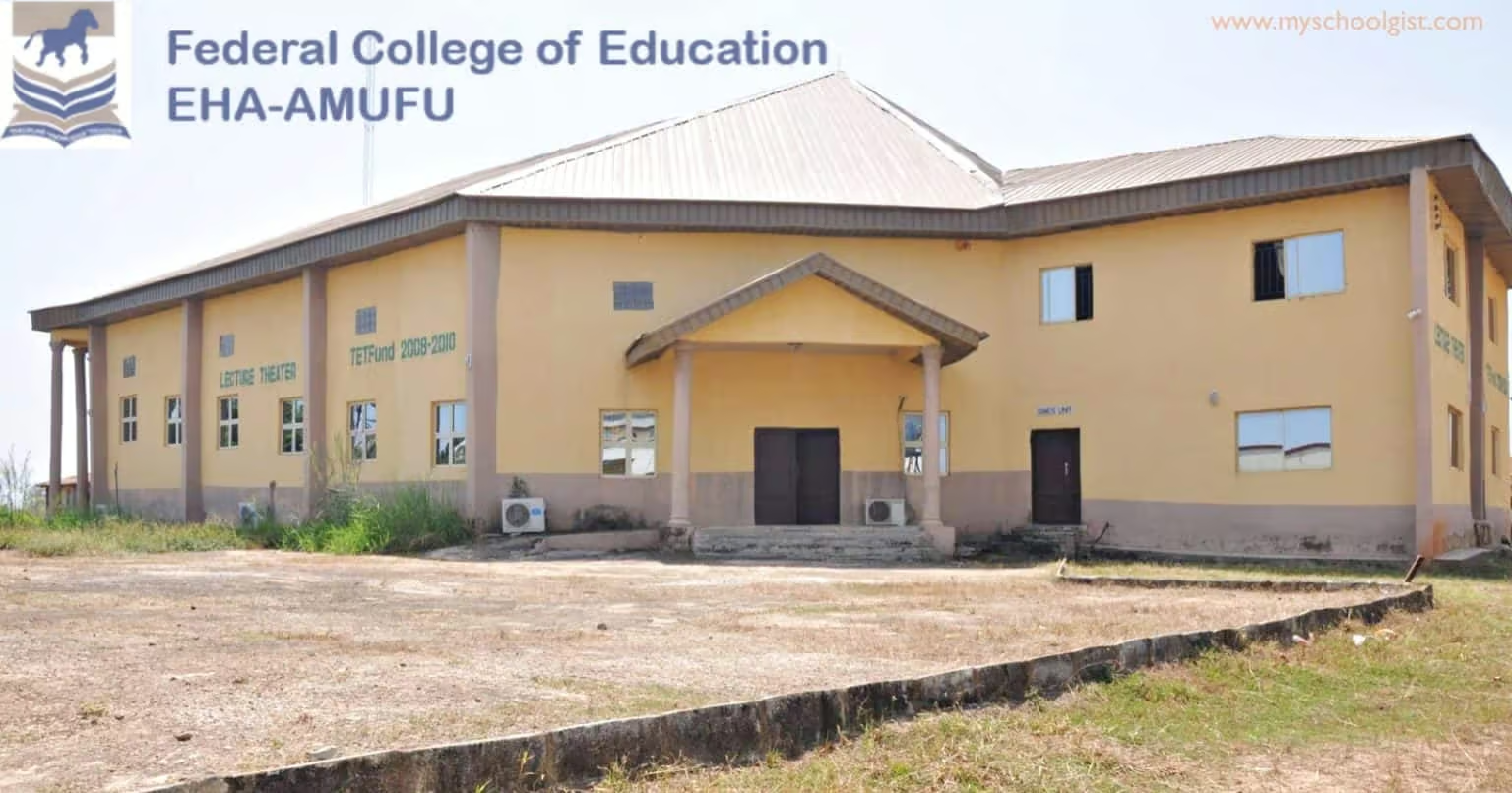
FCE Eha-Amufu
Federal College of Education, Eha-Amufu – FCE Eha-Amufu

Federal College of Education, Eha-Amufu  commonly known as FCE Eha-Amufu, FCEEHAAMUFU, or FC-AMUFU  is a Federal Government-owned College of Education located in Eha-Amufu, Enugu State, South-East Nigeria. Established in 1981, the institution is one of Nigeria’s recognised Federal Colleges of Education dedicated to training qualified teachers for the country’s education sector. The college offers National Certificate in Education (NCE), Degree, Sandwich, Part-Time, and Professional programmes across various schools and departments. FCE Eha-Amufu is affiliated with the University of Nigeria for its Bachelor’s Degree programmes. The institution is regulated by the National Commission for Colleges of Education (NCCE) and funded by the Federal Government of Nigeria. The current Provost is Dr. Pauline Ngozi Ikwuegbu.

History of the Institution

Federal College of Education, Eha-Amufu was established on 21st February 1981 by the then Anambra State Government under the administration of Chief Jim Ifeanyichukwu Nwobodo. The institution was created through the “College of Education, Eha-Amufu Law 1982,” which was deemed to have taken effect from February 1981.

Initially, the college operated temporarily from offices around the former Anambra Television (ATV) complex at Independence Layout, Enugu, before moving permanently to its present site in Eha-Amufu later in 1981. The site had previously housed the Federal Government Teachers’ Training College (TTC), Eha-Amufu.

Following the creation of Enugu State in 1991, the institution became part of the Enugu State educational system until it was officially taken over by the Federal Government in April 1993, with financial effect from January 1994. Through Federal Decrees No. 4 of 1986, No. 34 of 1993, and No. 6 of 1993, the institution became the Federal College of Education, Eha-Amufu — the 20th Federal College of Education in Nigeria.

Since its establishment, the college has expanded academically and infrastructurally, developing into one of the leading teacher-training institutions in South-East Nigeria. It offers programmes in Arts, Sciences, Vocational Education, Languages, Technical Education, and Degree Education in affiliation with the University of Nigeria, Nsukka (UNN).

Location

Federal College of Education, Eha-Amufu

Eha-Amufu, Enugu State, Nigeria

Website: Federal College of Education Eha-Amufu Official Website
Portal: FCE Eha-Amufu Portal

Eha-Amufu is located in Isi-Uzo Local Government Area of Enugu State, South-East Nigeria, approximately 64 kilometres north-east of Enugu city.

List of Programmes Offered by Federal College of Education, Eha-Amufu

Federal College of Education, Eha-Amufu offers NCE, Degree, Sandwich, Part-Time, and Professional Education programmes across multiple academic schools and departments.

School of Arts and Social Sciences

  • Economics
  • Political Science
  • Social Studies
  • History
  • Christian Religious Studies
  • Music
  • Fine and Applied Arts

School of Languages

  • English Language
  • French
  • Hausa
  • Igbo
  • Yoruba

School of Sciences

  • Mathematics
  • Integrated Science
  • Biology
  • Chemistry
  • Physics
  • Agricultural Science
  • Computer Education
  • Computer Science Education

School of Vocational and Technical Education

  • Business Education
  • Home Economics
  • Technical Education
  • Agricultural Education

School of Education

  • Primary Education Studies
  • Physical and Health Education
  • Guidance and Counselling related education courses

NCE Combined Courses

Some popular NCE combinations include:

  • Biology/Integrated Science
  • Chemistry/Integrated Science
  • Chemistry/Mathematics
  • Computer Education/Biology
  • Computer Education/Chemistry
  • Computer Education/Physics
  • Economics/English
  • Economics/Mathematics
  • Economics/Political Science
  • Christian Religious Studies/English
  • Christian Religious Studies/Social Studies
  • History/English
  • English/French
  • Agricultural Science (Double Major)

Degree Programmes (Affiliation with UNN)

FCE Eha-Amufu runs Degree programmes in affiliation with the University of Nigeria including:

  • B.A. (Ed.) English Education
  • B.A. (Ed.) Christian Religious Studies
  • B.Ed. Social Studies
  • B.Sc. (Ed.) Economics
  • B.Sc. (Ed.) Physics
  • B.Sc. (Ed.) Mathematics
  • B.Sc. (Ed.) Chemistry
  • B.Sc. (Ed.) Biology
  • B.Ed. Integrated Science
  • B.Sc. (Ed.) Agriculture
  • B.Ed. Business Education

Other Programmes

  • NCE Regular Programme
  • NCE Sandwich Programme
  • Pre-NCE Programme
  • Part-Time Studies
  • Professional Diploma in Education (PDE/PDGE)

For the complete and most updated list of courses, please visit FCE Eha-Amufu Official Website or Student Portal or see the latest news below.

Admission Requirements

NCE Regular Admission

Candidates seeking admission into the NCE programme must possess:

  • WAEC, NECO, GCE, or equivalent with at least four credit passes including English Language and Mathematics
  • Relevant credits related to the chosen course
  • JAMB UTME score of at least 100
  • Candidates who did not initially choose the college may still apply through Change of Institution.

Degree Programme Admission

For Degree programmes affiliated with UNN:

  • Candidates must possess at least five O’Level credits including English Language and a Science subject
  • UTME candidates generally require a minimum score of 160
  • Direct Entry candidates must meet UNN admission standards.

Sandwich and Part-Time Programmes

  • Available for working-class students and teachers
  • Flexible academic calendar structure

Please see the latest news below or visit the school website for the most current admission requirements and deadlines.

School Fees

As a Federal institution, school fees at FCE Eha-Amufu are relatively affordable compared to many universities and private colleges.

Estimated recent fee ranges include:

  • Fresh NCE Students: approximately ₦45,000 – ₦60,000 per session
  • Returning NCE Students: approximately ₦15,000 – ₦25,000 per session
  • Degree Students: approximately ₦60,000 and above
  • Acceptance Fee: approximately ₦5,000 – ₦10,000 for newly admitted students.

Please check school website or latest news below for newest update.

Cut-off Mark

The general JAMB cut-off mark for NCE admission into Federal College of Education, Eha-Amufu is 100 and above. Degree candidates applying through the UNN affiliation programme generally require a minimum score of 160.

Please check school website or latest news below for newest update.

Post-UTME / Screening Information

FCE Eha-Amufu conducts admission screening exercises for both NCE and Degree candidates.

For Degree admissions:

  • Minimum UTME score requirement is usually 160
  • Screening is often based on JAMB score and O’Level results
  • Candidates who did not initially choose the institution may apply after changing institution on JAMB CAPS.

For NCE admissions:

  • Minimum JAMB score requirement is 100
  • Candidates must meet departmental subject requirements.

Please check school website or latest news below for newest update.

Hostel / Accommodation

Federal College of Education, Eha-Amufu provides hostel accommodation for students within the campus environment. Separate accommodation is available for male and female students. Hostel spaces are limited and allocated based on availability.

Please check school website or latest news below for newest update.

Ranking and Reputation

Federal College of Education, Eha-Amufu is recognised as one of the notable Federal Colleges of Education in South-East Nigeria. The institution is respected for teacher education, affordable tuition, and its long-standing affiliation with the University of Nigeria for Degree programmes. While Nigerian Colleges of Education are not commonly ranked globally in the same way universities are, FCE Eha-Amufu remains academically recognised under the NCCE framework.

Official Website and Portal Links

Resource Link
Official Website fceehamufu.edu.ng
Student Portal portal.fceehamufu.edu.ng
About the College About FCE Eha-Amufu
History and Tradition History and Tradition
Contact Page Contact FCE Eha-Amufu
Campus Locations Campus Locations

Contact Information

Federal College of Education, Eha-Amufu

Eha-Amufu, Enugu State, Nigeria

Website: Official Website
Portal: Student Portal

Frequently Asked Questions (FAQs)

Where is Federal College of Education, Eha-Amufu located?
FCE Eha-Amufu is located in Eha-Amufu, Isi-Uzo Local Government Area of Enugu State, South-East Nigeria.

When was FCE Eha-Amufu established?
The college was established on 21st February 1981 by the then Anambra State Government. It became a Federal institution in 1993/1994.

What courses are offered at Federal College of Education, Eha-Amufu?
The college offers programmes in Sciences, Arts, Languages, Education, Vocational and Technical Education, Computer Education, Agricultural Education, and Degree Education affiliated with UNN.

Does FCE Eha-Amufu offer Degree programmes?
Yes. The institution offers Degree programmes in affiliation with the University of Nigeria.

What is the cut-off mark for Federal College of Education, Eha-Amufu?
The NCE cut-off mark is generally 100, while Degree candidates usually require at least 160 in JAMB.

How much are school fees at FCE Eha-Amufu?
Estimated fees range from ₦45,000 to ₦60,000 for fresh NCE students, while Degree students may pay slightly higher fees.

Is Federal College of Education, Eha-Amufu federally owned?
Yes. The institution is owned and funded by the Federal Government of Nigeria.

Does the college provide hostel accommodation?
Yes. Hostel facilities are available for students on campus, subject to availability.

TAGS

Courses offered in Federal College of Education Eha-Amufu, Federal College of Education Eha-Amufu ranking, Federal College of Education Eha-Amufu address, Federal College of Education Eha-Amufu tuition fees, Federal College of Education Eha-Amufu recruitment portal, Federal College of Education Eha-Amufu Degree Admission List, Federal College of Education Eha-Amufu school fees, Federal College of Education Eha-Amufu logo

FCE Eha-Amufu Latest News

No post found

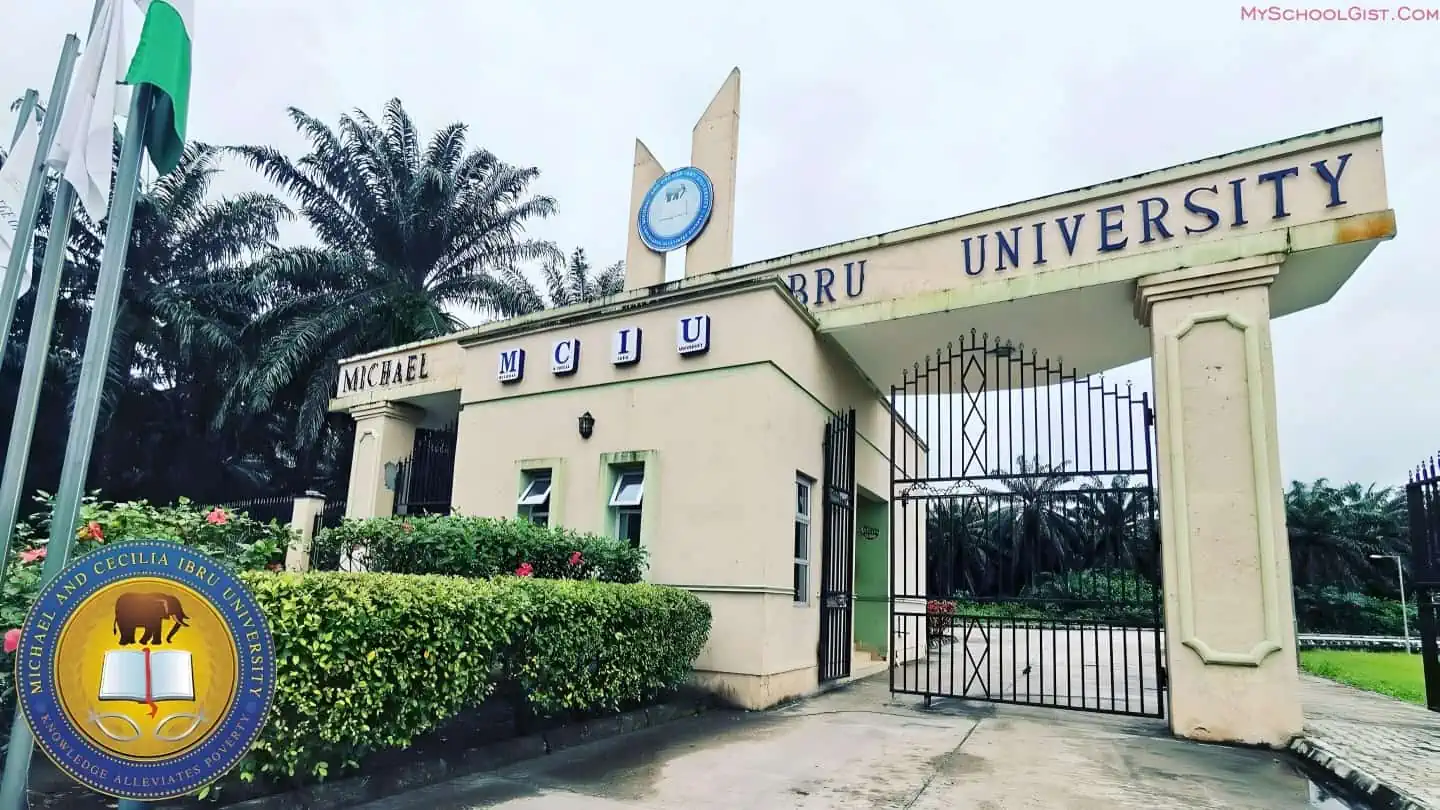
Michael and Cecilia Ibru University
Michael and Cecilia Ibru University – MCIU

Michael and Cecilia Ibru University is a private university located in Delta State, Nigeria. The institution was established with a strong focus on academic excellence, innovation, entrepreneurship, moral values, and practical learning. The university aims to produce graduates who are globally competitive and capable of contributing meaningfully to society through research, leadership, and professional competence.

The university operates a modern learning environment designed to support quality teaching, digital learning, entrepreneurship development, and student-centered education. Over the years, Michael and Cecilia Ibru University has gained recognition among private universities in Nigeria for its serene academic environment, growing academic programmes, and commitment to discipline and innovation.

The institution offers undergraduate and postgraduate programmes across various disciplines including sciences, social sciences, management sciences, humanities, and allied professional fields. Students benefit from relatively smaller class sizes, accessible lecturers, modern facilities, and a learning culture that emphasizes both academic and character development.

The university also places importance on entrepreneurship and practical exposure, ensuring students graduate with employable and entrepreneurial skills suitable for Nigeria’s evolving economy.

History of the Institution

Michael and Cecilia Ibru University was founded in honor of Chief Michael Ibru and his wife Cecilia Ibru, both of whom are widely known for their contributions to business, philanthropy, education, and national development in Nigeria. The university was established to promote quality higher education and to contribute to human capital development within Nigeria and beyond.

The institution was created with the vision of becoming a center of excellence where innovation, creativity, and leadership are nurtured. Since its establishment, the university has steadily expanded its academic programmes, infrastructure, and student population.

The management of the university has continued to invest in academic facilities, hostel accommodation, digital learning resources, and research development to improve the quality of education delivered to students.

The university’s philosophy centers on raising graduates who are intellectually competent, morally upright, and professionally equipped for leadership positions in different sectors of society.

Location

Michael and Cecilia Ibru University is located in Agbara-Otor, Ughelli North Local Government Area of Delta State, Nigeria. The institution is situated in a peaceful environment suitable for learning and academic concentration.

Its location provides students with a relatively calm atmosphere away from the congestion commonly associated with larger urban centers. The university environment supports focused academic activities, research, campus life, and extracurricular engagement.

The institution is accessible through major roads connecting Delta State to neighboring states in the South-South region of Nigeria.

List of Courses Offered

Michael and Cecilia Ibru University offers programmes across different faculties and departments. Courses may vary as the university expands its academic offerings.

Some of the major courses offered include:

  • Accounting
  • Banking and Finance
  • Business Administration
  • Economics
  • Political Science
  • Mass Communication
  • English and Literary Studies
  • International Relations
  • Computer Science
  • Cyber Security
  • Software Engineering
  • Information Technology
  • Biochemistry
  • Biotechnology
  • Microbiology
  • Industrial Chemistry
  • Physics
  • Mathematics
  • Public Administration
  • Sociology
  • Criminology and Security Studies
  • Hospitality and Tourism Management

The university also offers postgraduate programmes in selected disciplines for students seeking advanced academic and professional qualifications.

Please check school website or latest news below for newest update.

Admission Requirements

Admission into Michael and Cecilia Ibru University is available through UTME, Direct Entry, and postgraduate admission channels.

For undergraduate admission, candidates are generally expected to possess at least five credit passes in relevant O’Level subjects including English Language and Mathematics obtained in not more than two sittings in WAEC, NECO, GCE, or equivalent examinations.

UTME candidates are also expected to:

  • Sit for the Unified Tertiary Matriculation Examination (UTME)
  • Select Michael and Cecilia Ibru University as first choice or apply for change of institution
  • Meet the required departmental cut-off mark
  • Participate in the university’s screening or Post-UTME process where applicable

Direct Entry applicants are expected to possess relevant qualifications such as OND, HND, IJMB, JUPEB, or A-Level certificates depending on the programme.

For postgraduate admission, applicants are generally required to possess a relevant bachelor’s degree from a recognized institution.

Please check school website or latest news below for newest update.

School Fees

Michael and Cecilia Ibru University tuition fees vary depending on the programme, faculty, and level of study. Courses in sciences, technology, and professional disciplines may attract higher fees compared to arts and social science programmes because of laboratory, equipment, and practical requirements.

School fees commonly cover:

  • Tuition
  • Registration charges
  • ICT fees
  • Examination fees
  • Library fees
  • Medical fees
  • Development levies

Students may also pay separate charges for accommodation, laboratory use, professional certifications, departmental dues, and acceptance fees.

As a private university, the institution generally offers structured payment systems that may allow installment payment options for eligible students.

Postgraduate programme fees also vary according to programme duration and specialization.

Please check school website or latest news below for newest update.

Cut-off Mark

The general UTME cut-off mark for admission into Michael and Cecilia Ibru University may vary depending on the programme and admission year.

Competitive courses often require higher scores, while some programmes may admit students with lower UTME scores provided they meet other admission conditions.

Candidates are advised to aim for higher scores to improve their chances of admission, especially for courses with strong competition.

Please check school website or latest news below for newest update.

Post-UTME / Screening Information

Michael and Cecilia Ibru University conducts admission screening for eligible candidates seeking undergraduate admission.

The screening process may involve:

  • Online application
  • Document verification
  • O’Level result submission
  • UTME score assessment
  • Direct Entry credential verification where applicable

Candidates are usually expected to complete their screening application through the university admission portal and upload required documents correctly.

Applicants should ensure their subject combinations align with their intended course of study.

Please check school website or latest news below for newest update.

Hostel / Accommodation

The university provides hostel accommodation for students within or around the campus environment. Hostel facilities are designed to provide students with a comfortable and secure living environment that supports academic activities.

Accommodation options may vary according to room capacity, facilities, and hostel category. Hostel features may include:

  • Furnished rooms
  • Electricity supply
  • Water supply
  • Security services
  • Reading areas
  • Internet access in selected areas

The university environment promotes organized student living with regulations aimed at maintaining discipline, safety, and cleanliness.

Accommodation fees may differ depending on room type and hostel facilities available.

Please check school website or latest news below for newest update.

Student Portal

The university provides an online student portal that enables students and applicants to manage various academic and administrative activities online.

The portal is commonly used for:

  • Admission applications
  • School fees payment
  • Course registration
  • Result checking
  • Hostel application
  • Student profile management
  • Clearance procedures

Applicants and students are advised to keep their login credentials secure and regularly monitor the portal for academic updates and announcements.

Acceptance Rate (if applicable)

Michael and Cecilia Ibru University maintains a relatively accessible admission process compared to many highly competitive public universities in Nigeria. As a private institution, admission opportunities are often broader for qualified candidates who meet the institution’s academic requirements.

However, acceptance rates may still vary depending on the course, available admission slots, and yearly application volume.

Ranking and Reputation

Michael and Cecilia Ibru University is gradually building its reputation within Nigeria’s private university sector. The institution is recognized for its commitment to quality education, entrepreneurship, discipline, and academic development.

The university’s reputation continues to improve through investment in infrastructure, technology-driven learning, and practical academic training.

Within the South-South region of Nigeria, the institution is increasingly becoming known among students seeking private university education in a calm and structured learning environment.

The university also emphasizes moral values, leadership development, and innovation as part of its educational philosophy.

Please check school website or latest news below for newest update.

Reviews and Student Experience

Students of Michael and Cecilia Ibru University often describe the institution as having a peaceful and conducive learning environment. The relatively smaller student population compared to larger public universities allows for closer interaction between lecturers and students.

The university environment encourages discipline, academic seriousness, and participation in extracurricular activities.

Students also benefit from:

  • Reduced academic disruptions
  • More stable academic calendar
  • Personalized academic support
  • Entrepreneurial development opportunities
  • Campus security and organized administration

Some students appreciate the university’s modern approach to education and digital systems, while others note that tuition costs may be higher than public universities due to its private ownership structure.

Campus life generally includes social activities, student organizations, academic clubs, and entrepreneurship programs designed to support holistic student development.

Accreditation

Michael and Cecilia Ibru University operates under approval from the relevant Nigerian educational authorities. Its programmes are subject to accreditation processes conducted by regulatory bodies such as the National Universities Commission (NUC).

Accreditation helps ensure that the institution maintains required academic standards in curriculum delivery, staffing, facilities, and programme quality.

Students are advised to verify the accreditation status of specific programmes before admission, especially for professional and specialized courses.

Please check school website or latest news below for newest update.

Official Website and Portal Links

Resource Link
Official University Website Michael and Cecilia Ibru University Official Website
Undergraduate Fees Undergraduate Fees Portal
Postgraduate Application Postgraduate Application Portal
Undergraduate Admissions Admissions Portal
Apply for Admission Apply Here
Contact Page Official Contact Information

Contact Information

For inquiries relating to admissions, screening, postgraduate applications, fees, accommodation, and academic programmes, prospective students can contact the university through its official website and contact channels.

The institution provides official communication channels for applicants, students, parents, and guardians seeking information regarding admissions and student services.

Frequently Asked Questions (FAQs)

Is Michael and Cecilia Ibru University a private university?

Yes. Michael and Cecilia Ibru University is a privately owned university located in Delta State, Nigeria.

Does Michael and Cecilia Ibru University offer postgraduate programmes?

Yes. The university offers postgraduate programmes in selected disciplines through its postgraduate admission portal.

How can I apply for admission into Michael and Cecilia Ibru University?

Applicants can apply through the university’s official admission portal using the online application system.

Does Michael and Cecilia Ibru University accept Direct Entry candidates?

Yes. Qualified Direct Entry candidates with approved credentials may apply for admission into relevant programmes.

Are hostel accommodations available?

Yes. The university provides accommodation options for students subject to availability and payment.

Can students pay school fees online?

Yes. The institution provides online payment systems through its student and admission portals.

What is the cut-off mark for Michael and Cecilia Ibru University?

The cut-off mark may vary depending on the programme and admission year.

Please check school website or latest news below for newest update.

Does Michael and Cecilia Ibru University conduct Post-UTME screening?

Yes. Eligible candidates are usually required to participate in the admission screening process.

Please check school website or latest news below for newest update.

TAGS

Michael and Cecilia Ibru University admission portal, Michael and Cecilia Ibru University post UTME, Michael and cecilia ibru university tuition fees, Michael and Cecilia Ibru University cut off mark, Michael and Cecilia Ibru University school Fees payment, Michael and cecilia ibru university courses, Michael and cecilia ibru university ranking, Michael and cecilia ibru university courses and fees

MCIU Latest News

No post found

Baze University
Baze University, Abuja

Baze University is a private, non-denominational university located at Jabi Airport Road Bypass, Kuchigoro, Abuja, Federal Capital Territory, Nigeria. Established in April 2011 and granted a provisional licence by the National Universities Commission (NUC) on 7th March 2011, Baze University was founded by Senator Yusuf Datti Baba-Ahmed — an educationist, economist, and politician — with the vision of providing university education to international standards in Nigeria at approximately half the cost of studying abroad. What does “Baze” mean? Baze is derived from a combination of the names Baba-Ahmed and Zara — the founder’s family name and first daughter’s name respectively, forming the acronym BAZE. The university is ranked among the top 3 of 5 universities in Abuja and 83rd out of 157 universities in Nigeria by EduRank. It is organised into 11 faculties and schools, offering 43 undergraduate degree programmes and a broad range of postgraduate programmes. The current Vice-Chancellor continues to lead the institution’s vision of world-class education within Nigeria’s capital.

History of the Institution

Baze University began academic operations in April 2011, starting with a Foundation class and three pioneer faculties — Management and Social Sciences, Law, and Computing and Applied Sciences — with just 17 students all in one building on its 50,000 square-metre campus, 6km from Abuja Central Area on Jabi Airport Road Bypass Ring Road.

The university was deliberately modelled on British university standards and practices, employing experienced international academic staff, using overseas external examiners, and equipping its facilities with high-quality teaching technology and infrastructure. Its core value proposition is simple: to provide the same quality of education a Nigerian student would receive abroad, but within Nigeria and at approximately half the international cost.

In 2016, the Sokoto State Government transferred 39 state-sponsored students from various universities in the United Arab Emirates to Baze University as part of cost-reduction measures during the Nigerian economic recession — a testament to the university’s growing reputation for quality. By 2017, Baze had established a dedicated Student Support Unit responsible for the educational, personal, vocational, and emotional wellbeing of all students.

Today, Baze University has expanded to 11 faculties and schools, offering 43 undergraduate and numerous postgraduate programmes. Its research infrastructure includes a Centre for Clean Energy and Climate Change, an Artificial Intelligence and Blockchain Technology Centre, and a Peace and Conflict Studies Centre. The university also has a development site at Bwari for future expansion, and two semesters per academic year plus a summer session.

Location

Baze University, Abuja (BAZE) Plot 686, Cadastral Zone C00 Jabi Airport Road Bypass (Ring Road) Behind National Judicial Institute, Kuchigoro, Jabi Abuja, FCT, Nigeria

Phone: +234 808 227 0738 | +234 813 376 9658 | +234 704 550 2424 Website: bazeuniversity.edu.ng

The university is located approximately 6km from Abuja’s Central Area, off the Jabi Airport Road Bypass (Ring Road), behind the National Judicial Institute in Kuchigoro. It is easily accessible from major Abuja districts and the Nnamdi Azikiwe International Airport axis.

List of Courses Offered by Baze University, Abuja

Baze University currently offers 43 undergraduate degree programmes across 11 faculties and schools, plus postgraduate programmes through the Postgraduate School.

Faculty of Computer Science and Information Technology

  • Computer Science (B.Sc.)
  • Cyber Security (B.Sc.)
  • Information Technology (B.Sc.)
  • Software Engineering (B.Sc.)

Faculty of Engineering

  • Civil Engineering (B.Eng.)
  • Computer Engineering (B.Eng.)
  • Electrical and Electronics Engineering (B.Eng.)
  • Mechanical Engineering (B.Eng.)
  • Chemical Engineering (B.Eng.)

Faculty of Environmental Sciences

  • Architecture (B.Sc.)
  • Building Technology (B.Sc.)
  • Estate Management (B.Sc.)
  • Quantity Surveying (B.Sc.)
  • Urban and Regional Planning (B.Sc.)

Faculty of Law

  • Law (LL.B.)

Faculty of Management and Social Sciences

  • Accounting (B.Sc.)
  • Banking and Finance (B.Sc.)
  • Business Administration (B.Sc.)
  • Economics (B.Sc.)
  • International Relations and Diplomacy (B.Sc.)
  • Mass Communication (B.Sc.)
  • Political Science (B.Sc.)
  • Public Administration (B.Sc.)
  • Sociology (B.Sc.)
  • Intelligence and Global Security (B.Sc.)

Faculty of Natural and Applied Sciences

  • Biochemistry (B.Sc.)
  • Chemistry (B.Sc.)
  • Environmental Science (B.Sc.)
  • Microbiology (B.Sc.)
  • Parasitology (B.Sc.)
  • Physics (B.Sc.)

Faculty of Medical and Health Sciences (Allied Health)

  • Medical Laboratory Science (B.Sc.)
  • Nursing Science (B.Sc.)
  • Public Health (B.Sc.)
  • Physiotherapy (B.Sc.)
  • Radiography (B.Sc.)

School of Medicine

  • Medicine and Surgery (MBBS) — 6-year programme

Faculty of General Studies

  • General Studies (B.Sc. / Foundation programmes)

Postgraduate School

  • M.Sc. Animal and Environmental Science
  • M.Sc. Chemistry
  • M.Sc. Computer Science
  • M.Sc. Economics
  • M.Sc. International Relations and Diplomacy
  • M.Sc. Management (MMAN)
  • M.Sc. Mass Communication (MMAC)
  • M.Sc. Parasitology (MPAR)
  • M.Sc. Public Administration
  • M.Sc. Sociology (MSOC)
  • M.Sc. Intelligence and Global Security
  • M.Sc. Security, Leadership and Society
  • PGD, MBA, and Ph.D. programmes across select disciplines

For the complete and most up-to-date list of programmes, please visit bazeuniversity.edu.ng or see the latest news below.

Admission Requirements

UTME (Undergraduate) Admission

  • A minimum of five (5) O’Level credit passes including English Language and Mathematics, obtained in not more than two sittings in WAEC, NECO, GCE O’Level, or NABTEB.
  • A valid JAMB UTME score is required. Candidates are advised to change their institution to Baze University as their first choice through the JAMB portal.
  • All eligible candidates must participate in Baze University’s Post-UTME screening exercise. The Post-UTME cut-off scores at Baze may be higher than the national JAMB minimum of 150.
  • Passing the Post-UTME screening is a prerequisite for admission.
  • The university has no religious affiliation and is open to students of all backgrounds.

Postgraduate Admission

  • A Bachelor’s degree with a minimum of Second Class Lower Division.
  • NYSC Discharge or Exemption certificate.
  • Relevant departmental requirements and references apply.

Apply: bazeuniversity.edu.ng

Please see the latest news below or visit the school website for the most current admission requirements and deadlines.

School Fees

Baze University is positioned as a premium private university offering international-standard education. Its fees are among the highest of any private university in Nigeria and reflect the quality of its facilities, international academic staff, overseas external examiners, and modern infrastructure. Fees are paid per session (not per semester), though payment can be structured across semesters. Full tuition payment is required before the commencement of examinations.

The last known school fees for Baze University for the 2024/2025 and 2025/2026 sessions are as follows:

Faculty of Management and Social Sciences (all programmes and all levels):

  • Tuition: approximately ₦2,043,916.88 per session
  • Programmes: Accounting, Banking and Finance, Business Administration, Economics, International Relations and Diplomacy, Mass Communication, Political Science, Public Administration, Sociology, Intelligence and Global Security

Faculty of Computer Science and Information Technology (all programmes and all levels):

  • Tuition: approximately ₦2,043,916.88 per session
  • Programmes: Computer Science, Cyber Security, Information Technology, Software Engineering

Faculty of Engineering (all programmes and all levels):

  • Tuition: approximately ₦2,271,018.75 per session
  • Programmes: Civil, Computer, Electrical and Electronics, Mechanical, Chemical Engineering

Faculty of Law (all levels):

  • Tuition: approximately ₦2,271,018.75 per session

Faculty of Environmental Sciences (all programmes and all levels):

  • Tuition: approximately ₦2,271,018.75 per session
  • Programmes: Architecture, Building Technology, Estate Management, Quantity Surveying, Urban and Regional Planning

Faculty of Natural and Applied Sciences (all programmes and all levels):

  • Tuition: approximately ₦2,271,018.75 per session

Faculty of Medical and Health Sciences (Allied Health):

  • Nursing Science: approximately ₦2,886,528.13 per session (all levels)
  • Other Allied Health programmes: approximately ₦2,271,018.75 — ₦2,886,528.13 per session

School of Medicine (Medicine and Surgery — MBBS):

  • 100 Level: approximately ₦2,271,018.75 per session
  • Increases progressively by level, reaching approximately ₦9,065,306.25 at 400 Level
  • 500 Level and 600 Level: approximately ₦5,892,449.06 per session

General Studies (Foundation) Programmes:

  • Tuition: approximately ₦1,000,000 — ₦1,400,000 per session

For the 2026/2027 session, tuition fees across most faculties range from approximately ₦3,000,000 to ₦5,000,000 per session, reflecting an increase.

Hostel Accommodation:

  • Shared rooms: approximately ₦357,706.25 per semester
  • Private rooms: approximately ₦715,412.50 per semester

Additional Notes:

  • Baze University offers merit-based scholarships and financial aid to deserving students. Prospective students can inquire about these during the admission process.
  • The university has three academic terms per year: two main semesters and a summer session.
  • School fees are paid online through the official Baze University payment portal at portal.bazeuniversity.edu.ng/student.

Please see the latest news below or visit the school website for the most current and officially confirmed school fees schedule, as fees are subject to annual review.

Cut-off Mark

The last known JAMB cut-off mark for Baze University is 150 as the general minimum, though the university’s internal Post-UTME cut-off scores may be higher than the national minimum for specific programmes, particularly for Medicine and Surgery, Law, and Engineering. Candidates who meet the JAMB minimum are still required to pass the Baze University Post-UTME screening exercise.

Please see the latest news below or visit the school website for the most current departmental cut-off marks.

Post-UTME / Screening Information

Baze University conducts its own Post-UTME screening exercise for all eligible candidates. Passing this screening is compulsory for admission. Candidates should ensure Baze University is their institution of first choice on JAMB before applying for the Post-UTME.

Apply and register for Post-UTME via: bazeuniversity.edu.ng

Please see the latest news below or visit the school website for the most current Post-UTME dates, fees, and requirements.

Hostel / Accommodation

Baze University provides on-campus hostel accommodation for students. The last known hostel fees are approximately ₦357,706.25 per semester for shared rooms and ₦715,412.50 per semester for private rooms. Accommodation costs are separate from tuition fees and are paid via the student portal.

Please see the latest news below or visit the school website for the most current hostel fees and accommodation application procedures.

Notable Alumni

Baze University was established in 2011 and is still a relatively young institution. No widely documented notable alumni are currently recorded in major public sources. Please see the latest news below or visit the school website for information on distinguished graduates.

Official Website and Portal Links

Resource Link
Official Website bazeuniversity.edu.ng
Student Portal portal.bazeuniversity.edu.ng/student
School of Medicine bazeuniversity.edu.ng/faculty/school-of-medicine
Postgraduate School bazeuniversity.edu.ng/faculty/postgraduate-school
About Baze bazeuniversity.edu.ng/about/about-baze
Contact Us bazeuniversity.edu.ng/contact/contact-us

Contact Information

Baze University, Abuja Plot 686, Cadastral Zone C00 Jabi Airport Road Bypass (Ring Road) Behind National Judicial Institute, Kuchigoro, Jabi Abuja, FCT, Nigeria

Phone: +234 808 227 0738 | +234 813 376 9658 | +234 704 550 2424 Website: bazeuniversity.edu.ng

Frequently Asked Questions (FAQs)

Where is Baze University located? Baze University is located at Plot 686, Cadastral Zone C00, Jabi Airport Road Bypass (Ring Road), behind the National Judicial Institute, Kuchigoro, Jabi, Abuja, FCT, Nigeria — approximately 6km from Abuja’s Central Area.

What is the full meaning of Baze University? “Baze” is derived from the founder’s family name Baba-Ahmed and his first daughter’s name Zara, forming the acronym BAZE. The university was founded by Senator Yusuf Datti Baba-Ahmed in 2011.

Who founded Baze University? Baze University was founded by Senator Yusuf Datti Baba-Ahmed, a Nigerian educationist, economist, and politician. He serves as Chancellor and Chairman of the Board of Trustees of the university.

When was Baze University established? Baze University was established in April 2011 and received its NUC provisional licence on 7th March 2011. It began with 17 students across three faculties.

Does Baze University offer Medicine and Surgery? Yes. Baze University has a School of Medicine that offers Medicine and Surgery (MBBS). The fees for Medicine and Surgery range from approximately ₦2,271,018.75 at 100 Level to approximately ₦9,065,306.25 at 400 Level per session.

What is the JAMB cut-off mark for Baze University? The last known general cut-off mark is 150. However, Baze University’s internal Post-UTME scores may be higher for competitive programmes. Passing the Post-UTME is compulsory for all candidates.

How much are Baze University school fees? Fees vary by programme. The last known fees range from approximately ₦2,043,916.88 per session for Social Sciences and Computing, to ₦2,271,018.75 for Engineering, Law, Architecture, and Sciences, ₦2,886,528.13 for Nursing, and up to ₦9,065,306.25 per session for Medicine and Surgery at 400 Level. Hostel fees are additional (₦357,706.25 — ₦715,412.50 per semester). Please see the latest news below or visit the school website for current figures.

Does Baze University offer scholarships? Yes. Baze University offers merit-based scholarships and financial aid to deserving students. Prospective students can inquire about available opportunities during the admission process.

How do I pay Baze University school fees? Log in to the Baze University student portal at portal.bazeuniversity.edu.ng/student, select your user type (new or returning student), and follow the payment process. Full tuition must be paid before sitting for examinations.

Is Baze University a religious university? No. Baze University has no religious affiliation and welcomes students from all backgrounds, faiths, and nationalities.

TAGS

Baze university abuja school fees, Baze university abuja courses and fees, Baze university abuja courses, Baze University courses and fees PDF, Baze University medicine, Full meaning of Baze University, Baze University Admission Portal, Location of Baze University Abuja


Baze University Latest News

No post found

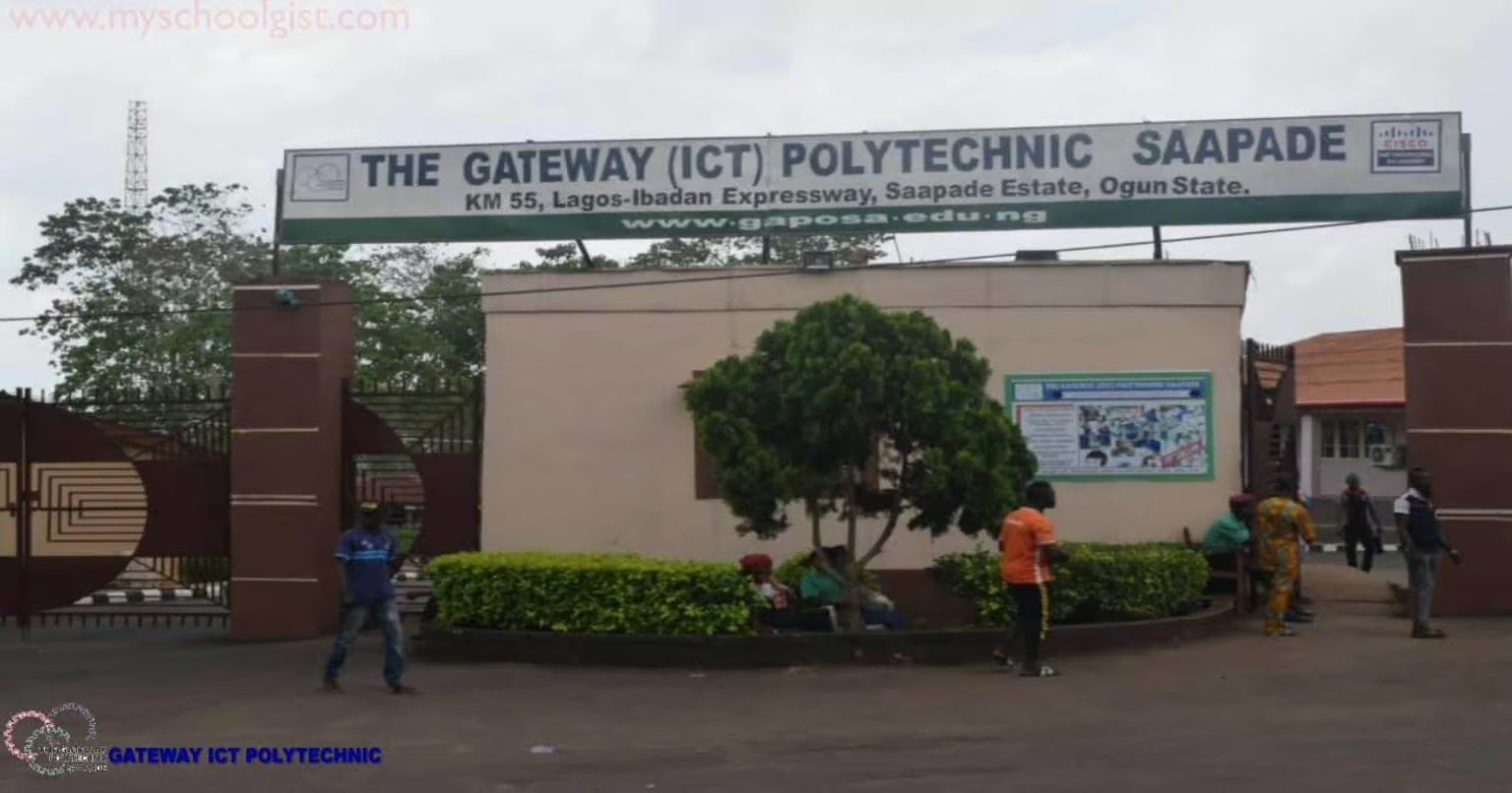
Gateway ICT Polytechnic, Saapade (GAPOSA)
Gateway ICT Polytechnic, Saapade – GAPOSA

Gateway ICT Polytechnic, Saapade (GAPOSA) is a state-owned tertiary institution located along the Lagos–Ibadan Expressway in Saapade, Ogun State, Nigeria. The polytechnic was established in 2006 to provide technical, vocational, and ICT-driven education aimed at producing skilled manpower for industry and entrepreneurship development. It is accredited by the National Board for Technical Education (NBTE) and offers National Diploma (ND) and Higher National Diploma (HND) programmes across Engineering, Science, Management, Environmental Studies, and ICT-related disciplines. GAPOSA is widely recognized for its strong ICT infrastructure, modern learning facilities, and emphasis on practical and industry-oriented training.

Official Website: https://new.gaposa.edu.ng/
Student Portal: https://studentportal.gaposa.edu.ng/

History of the Institution

Gateway ICT Polytechnic, Saapade was established in 2006 by the Ogun State Government as part of its strategy to expand access to technical and vocational education in the state. The institution was designed with a focus on ICT and innovation-based learning, making it one of the more technology-oriented polytechnics in Nigeria.

Since its establishment, GAPOSA has grown steadily in academic structure and infrastructure. It started with a few foundational programmes and later expanded into multiple schools covering Engineering, Science, Environmental Studies, Management, and ICT-related disciplines.

The polytechnic has undergone several NBTE accreditation exercises, leading to the approval of additional ND and HND programmes. It has also invested heavily in digital transformation, introducing online systems for admission, registration, fee payment, and academic management.

Today, GAPOSA is recognized as one of the prominent ICT-focused polytechnics in Southwestern Nigeria.

Location

Gateway ICT Polytechnic, Saapade (GAPOSA)
Km 55, Lagos–Ibadan Expressway
Saapade, Remo North Area
Ogun State, Nigeria

List of Courses Offered by GAPOSA

GAPOSA offers accredited ND and HND programmes across several academic schools.

School of Engineering

  • Civil Engineering Technology
  • Electrical/Electronic Engineering Technology
  • Mechanical Engineering Technology
  • Computer Engineering Technology

School of Science and Technology

  • Computer Science
  • Science Laboratory Technology
  • Statistics
  • Hospitality Management
  • Food Technology

School of Environmental Studies

  • Architectural Technology
  • Building Technology
  • Estate Management
  • Quantity Surveying
  • Urban and Regional Planning

School of Management Studies

  • Accountancy
  • Banking and Finance
  • Business Administration and Management
  • Public Administration
  • Marketing
  • Office Technology and Management

School of Agriculture (selected programmes)

  • Agricultural Technology
  • Horticultural Technology
  • Crop Production Technology
  • Agribusiness Management

Full programme list: https://new.gaposa.edu.ng/

Admission Requirements

ND (National Diploma)

  • Five (5) credit passes in WAEC/NECO/NABTEB including English Language and Mathematics
  • Relevant subject combinations depending on course
  • Must sit for JAMB UTME
  • Minimum JAMB score (commonly around 120–140 depending on course)
  • Participation in Post-UTME screening

HND (Higher National Diploma)

  • ND in a relevant discipline from an NBTE-accredited institution
  • Minimum of Lower Credit
  • One-year Industrial Training (IT/SIWES) experience
  • Five O’Level credit passes including English and Mathematics

GAPOSA Post-UTME / Admission Process

Admission into GAPOSA involves an online application and screening process:

  • Fill online biodata form
  • Pay screening/application fee
  • Login to application portal using application number and surname
  • Upload O’Level results
  • Participate in screening exercise
  • Check admission result online

Application Portal: https://onlineappsaapade.gaposa.edu.ng/OnlineApp/Instruction

GAPOSA Student Portal

The student portal is used for:

  • Course registration
  • Fee payment
  • Result checking
  • Admission status
  • Academic records management

Portal Login: https://studentportal.gaposa.edu.ng/

School Fees

GAPOSA operates an affordable state-subsidised fee structure.

Estimated fees:

  • ND programmes: ₦60,000 — ₦85,000 per session
  • HND programmes: ₦65,000 — ₦90,000 per session
  • Acceptance fee: ₦15,000 — ₦30,000
  • Part-time programmes: slightly higher

Payment is done via the official student portal.

Please check school website or latest news below for newest update.

Cut-off Mark

The general JAMB cut-off mark for GAPOSA is typically 120 and above, though competitive courses such as Engineering, Computer Science, and Accountancy may require higher scores.

Hostel / Accommodation

GAPOSA provides limited on-campus accommodation. Many students also live in private hostels around Saapade and nearby communities along the Lagos–Ibadan Expressway. Hostel allocation depends on availability.

Admission List & Status Checking

Admission status is checked via the application portal:
https://studentportal.gaposa.edu.ng/

Students log in using their application number and password (usually surname) to view admission results.

Reviews and Reputation

Gateway ICT Polytechnic, Saapade is regarded as one of the more ICT-driven polytechnics in Nigeria, known for its structured academic system, modern digital portals, and focus on practical technical training. It continues to improve infrastructure and expand academic programmes.

Official Website and Portal Links

Contact Information

Gateway ICT Polytechnic, Saapade (GAPOSA)
Km 55, Lagos–Ibadan Expressway
Saapade, Ogun State, Nigeria

Email: info@gaposa.edu.ng
Phone: +234 806 793 7140

Frequently Asked Questions (FAQs)

Where is GAPOSA located?
It is located in Saapade along the Lagos–Ibadan Expressway in Ogun State.

When was GAPOSA established?
It was established in 2006 by the Ogun State Government.

What courses are offered?
Courses include Engineering, Science, ICT, Management, Environmental Studies, and Agriculture-related programmes.

What is the cut-off mark?
The general cut-off mark is usually 120 and above.

How do I apply for admission?
Applications are done online via the official application portal.

Does GAPOSA offer HND programmes?
Yes, it offers HND programmes across several disciplines.

How do I check admission status?
Through the student portal login page.

TAGS

GAPOSA student portal, Gateway student portal login, Gateway student portal login password, Gateway ICT Polytechnic Saapade location, Gateway Polytechnic portal, Gateway Polytechnic admission portal, Gateway ICT Polytechnic Saapade photos, GAPOSA application portal


GAPOSA Latest News

No post found

KSCOE Ankpa
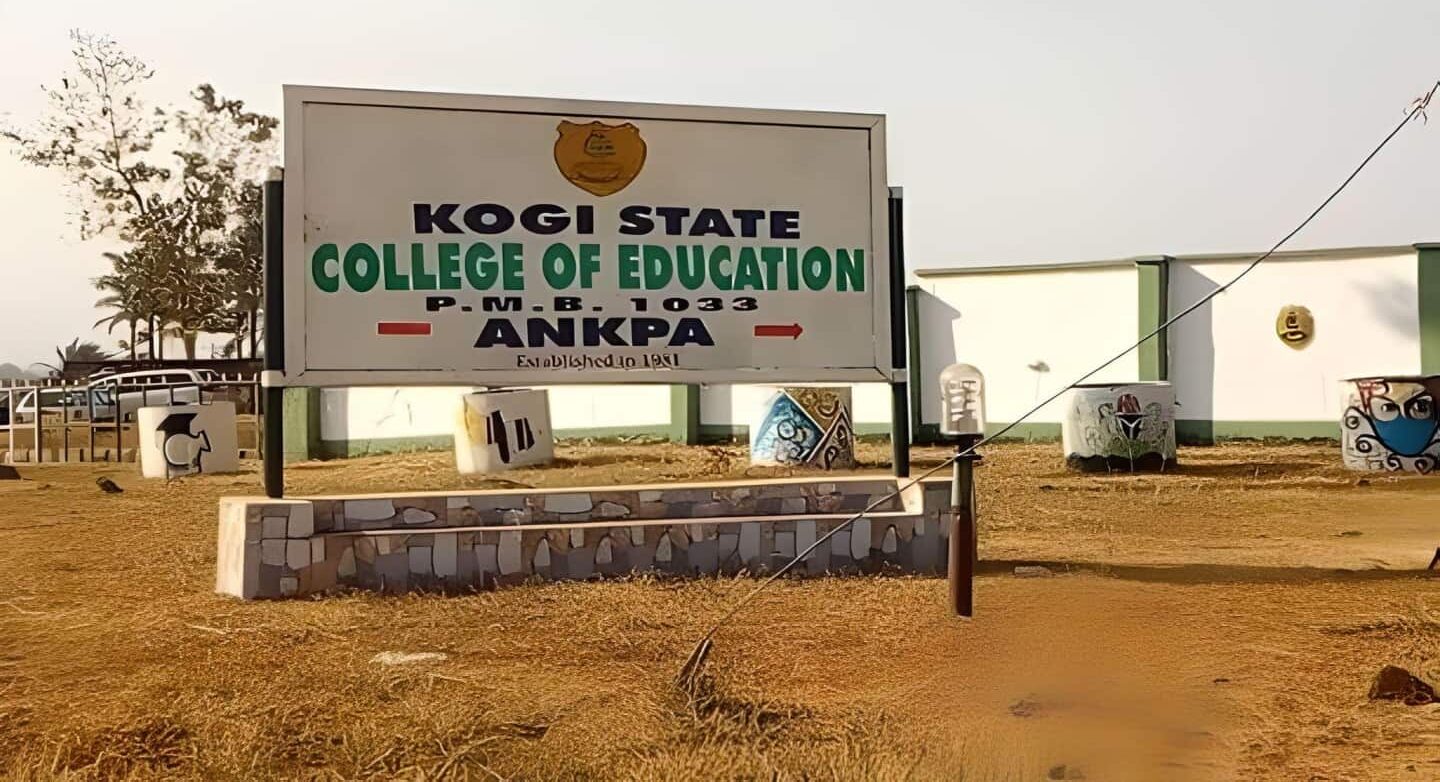
Kogi State College of Education, Ankpa – KSCOE Ankpa

Kogi State College of Education, Ankpa  widely known as KSCOE Ankpa, COE Ankpa, or Kogi State College of Education Ankpa  is a state government-owned College of Education located in Ankpa, Kogi State, North-Central Nigeria. Established in 1981, the institution was created to provide professional teacher education and manpower development for Nigeria’s education sector. The college offers National Certificate in Education (NCE), Degree, and Professional Diploma in Education (PDE) programmes across various schools and departments. It is funded and managed by the Kogi State Government and admits students from different parts of Nigeria irrespective of religion or ethnicity.
Official website: Kogi State College of Education, Ankpa

History of the Institution

Kogi State College of Education, Ankpa was established in July 1981 by Edict No. 20 of 1981 as an Advanced Teachers’ College. Academic activities initially began at the premises of Government Teachers’ College, Ankpa before the institution later occupied the site permanently after the Teachers’ College relocated to Abejukolo. The college officially commenced academic activities in November 1981 with an initial intake of 185 students across 11 departments offering 14 subject combinations.

In 1982, the institution gained affiliation with Ahmadu Bello University for degree programmes after satisfying affiliation requirements. In 1986, its name changed from Advanced Teachers’ College to College of Education to strengthen its teacher training mandate. Following the creation of Kogi State, the institution became officially known as Kogi State College of Education, Ankpa.

The college now operates several schools and academic programmes including NCE, Degree, and Professional Diploma in Education (PDE) programmes. It continues to expand its infrastructure and academic offerings while focusing on teacher education and vocational development.

Location

Kogi State College of Education, Ankpa (KSCOE Ankpa)
Ankpa, Kogi State
Nigeria

Phone: 09032194940
Email: info@kscoeankpa.edu.ng

Official Website: KSCOE Ankpa Website
Student Portal: KSCOE Ankpa Portal

Ankpa is one of the major towns in eastern Kogi State and serves as an important educational and commercial centre in the region.

List of Courses Offered by Kogi State College of Education, Ankpa

KSCOE Ankpa offers NCE, Degree, and PDE programmes across several schools.

School of Arts and Social Sciences

  • Christian Religious Studies / Economics
  • Christian Religious Studies / History
  • Christian Religious Studies / Political Science
  • Christian Religious Studies / Social Studies
  • Islamic Studies / Political Science
  • Islamic Studies / Economics
  • Islamic Studies / Social Studies
  • Social Studies / Geography
  • Social Studies / History
  • Social Studies / Theatre Arts
  • Political Science / Social Studies
  • Theatre Arts combinations

School of Education

  • Primary Education Studies
  • Adult and Non-Formal Education
  • Primary Education / Social Studies
  • Primary Education / Political Science
  • Primary Education / Economics
  • Adult and Non-Formal Education combinations
  • Primary Education (Double Major)

School of Science

  • Computer Science / Biology
  • Computer Science / Chemistry
  • Computer Science / Physics
  • Computer Science / Mathematics
  • Mathematics / Physics
  • Mathematics / Chemistry
  • Mathematics / Biology
  • Mathematics / Geography
  • Integrated Science combinations
  • Physical and Health Education

School of Languages

  • Arabic / Islamic Studies
  • Arabic / English
  • English / CRS
  • English / Theatre Arts
  • English / History
  • French / English
  • French / Social Studies
  • Hausa / English
  • Hausa / Yoruba
  • Igala / English
  • Igbo / Igala

Degree Programmes

  • Biology Education
  • Chemistry Education
  • Computer Science Education
  • Mathematics Education
  • Physics Education
  • Library and Information Science
  • Agricultural Technology Education
  • Automobile Technology Education
  • Business Education Technology
  • Metal Work Technology
  • Production Technology

Professional Diploma in Education (PDE)

  • Professional teacher training programme for degree holders seeking education qualifications.

For the complete and updated list of programmes, visit: KSCOE Academic Programmes

Admission Requirements

NCE Admission

  • Minimum of five (5) O’Level credits including English Language obtained in WAEC, NECO, GCE, or NABTEB
  • JAMB UTME score meeting the college cut-off mark
  • Participation in the institution’s screening process
  • Awaiting result candidates may apply in some cases

Degree Programme Admission

  • Requirements depend on the affiliated university and department
  • Direct Entry admission available for qualified NCE holders

PDE Admission

  • Bachelor’s degree or HND from a recognised institution

Apply through the student portal:
KSCOE Student Portal Login

Please see the latest news below or visit the school website for the most current admission requirements and deadlines.

School Fees

Kogi State College of Education, Ankpa is a state-owned institution with relatively affordable tuition subsidised by the Kogi State Government.

The last known estimated fee ranges include:

  • NCE Fresh Students: approximately ₦25,000 — ₦60,000 per session
  • Returning Students: lower than fresh students
  • Degree Students: slightly higher depending on programme
  • Acceptance Fee: usually compulsory for newly admitted students

Additional charges may include:

  • ICT fees
  • Departmental dues
  • Examination fees
  • Hostel accommodation fees

Please see the latest news below or visit the school website for the most current and officially confirmed school fees schedule.

Cut-off Mark

The last widely reported JAMB cut-off mark for Kogi State College of Education, Ankpa is:

  • 100 and above for NCE programmes

Some unofficial sources have also reported higher ranges for certain sessions and programmes. Candidates are advised to confirm directly from the institution before applying.

Please see the latest news below or visit the school website for the most current cut-off mark information.

Post-UTME / Screening Information

KSCOE Ankpa conducts screening exercises for eligible candidates seeking admission into its NCE and degree programmes. Candidates must:

  • Meet the minimum cut-off mark
  • Possess required O’Level credits
  • Upload results on JAMB CAPS where applicable

Portal: KSCOE Admission Portal

Please see the latest news below or visit the school website for the most current Post-UTME dates and requirements.

Hostel / Accommodation

The college provides hostel accommodation for students within the campus environment. Hostel allocation is usually based on availability and first-come-first-served arrangements. Students may also secure off-campus accommodation around Ankpa town.

Please see the latest news below or visit the school website for the most current hostel fees and accommodation procedures.

Notable Alumni

Please see the latest news below or visit the school website for information on notable alumni of Kogi State College of Education, Ankpa.

Official Website and Portal Links

Resource Link
Official Website KSCOE Ankpa Official Website
Student Portal KSCOE Ankpa Portal
Student Login KSCOE Student Login
Academic Programmes KSCOE Programmes

Contact Information

Kogi State College of Education, Ankpa
Ankpa, Kogi State
Nigeria

Phone: 09032194940
Email: info@kscoeankpa.edu.ng

Website:
Portal:

Frequently Asked Questions (FAQs)

Where is Kogi State College of Education, Ankpa located?
The college is located in Ankpa, Kogi State, Nigeria.

When was KSCOE Ankpa established?
The institution was established in 1981 as an Advanced Teachers’ College.

What courses are offered at Kogi State College of Education, Ankpa?
The college offers programmes in sciences, arts, social sciences, languages, education, vocational, and technical fields.

What is the cut-off mark for KSCOE Ankpa?
The commonly reported minimum JAMB cut-off mark is 100 for NCE programmes.

Does KSCOE Ankpa offer degree programmes?
Yes. The college runs degree programmes in education and technology-related disciplines.

How do I access the KSCOE Ankpa student portal?
Students can log in through: KSCOE Portal Login

Is KSCOE Ankpa a federal or state institution?
It is a state government-owned College of Education under the Kogi State Government.

Does KSCOE Ankpa provide hostel accommodation?
Yes. Hostel accommodation is available for students subject to availability.

TAGS

Kogi state college of education ankpa portal login, Kogi State College of Education Ankpa portal, Kogi state college of education ankpa address, Kogi state college of education ankpa courses, Kogi state college of education ankpa logo, Kogi State College of Education Ankpa cut-off mark, List of College of Education in Kogi State, Kogi State College of Education Courses


KSCOE Ankpa Latest News

No post found

KENPOLY
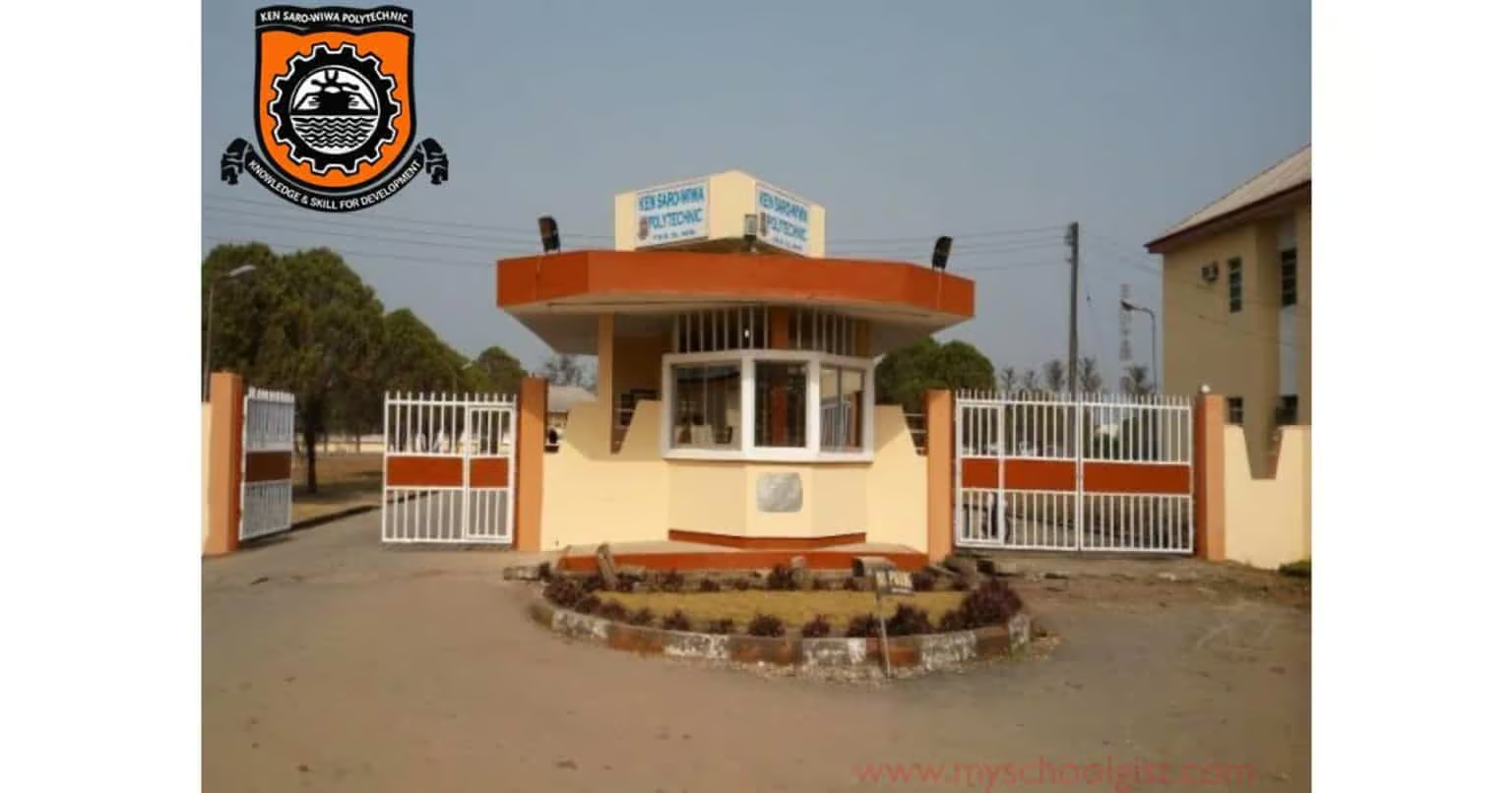
Kenule Beeson Saro-Wiwa Polytechnic, Bori – KENPOLY

Kenule Beeson Saro-Wiwa Polytechnic  widely known as KENPOLY  is a state government-owned polytechnic located in Bori City, Khana Local Government Area, Rivers State, South-South Nigeria . The institution was established on 13 May 1988 by the Rivers State Government and was originally known as Rivers State Polytechnic (RIVPOLY) . In 2015, the polytechnic was renamed after the late environmental activist and writer, Kenule Beeson Saro-Wiwa, by the Rivers State Government . The institution is fully accredited by the National Board for Technical Education (NBTE) . Kenule Beeson Saro-Wiwa Polytechnic offers National Diploma (ND) and Higher National Diploma (HND) programmes across four schools: Applied Sciences, Engineering, Environmental Technology, and Management Sciences . The institution has two campuses: one for the School of Management Sciences and another for the School of Engineering . The current Rector is Engr. Dr. Ledum Suanu Gwarah . The polytechnic’s motto is “knowledge and skill development” .

History of the Institution

Kenule Beeson Saro-Wiwa Polytechnic was established by the Rivers State Government on 13 May 1988 to provide instruction and research in applied science, technology, commerce, and business management . The Military Governor, Anthony Ukpo, inaugurated the provisional council, and his successor, Group Captain Ernest Adeleye, signed the edict establishing the polytechnic on 28 March 1989. The formal ceremony of the institution took place on 19 May 1990 in Bori, the traditional headquarters of the Ogoni people .

In 2007, Senator Lee Ledogo Maeba obtained approval in principle from the Federal Government to upgrade the polytechnic to a Federal institution, but the Rivers State Government did not follow up on the opportunity at that time .

On 9 July 2015, the Rivers State Government announced the renaming of Rivers State Polytechnic to Kenule Beeson Saro-Wiwa Polytechnic in honour of the late environmental activist and writer, Ken Saro-Wiwa .

In August 2009, the acting provost spoke about the problem of cultism among students and described the decisive actions the polytechnic was taking to combat it . In November 2009, Governor Rotimi Amaechi stated that educational institutes including the polytechnic would assist in ensuring the success of environmental clean-up programs in the region .

Location

Kenule Beeson Saro-Wiwa Polytechnic (KENPOLY)
P.M.B. 20, Bori
Khana Local Government Area
Rivers State, Nigeria

Kenule beeson saro wiwa polytechnic address: The polytechnic is located in Bori City, Khana Local Government Area, Rivers State, South-South Nigeria. Bori is the traditional headquarters of the Ogoni people. The polytechnic has two campuses: one for the School of Management Sciences and another for the School of Engineering .

Coordinates: 4°40′09″N 7°22′14″E / 4.66917°N 7.37056°E

Official Website: https://www.kenpoly.edu.ng/

eCampus Portal: https://ecampus.kenpoly.edu.ng/

Kenule beeson saro wiwa polytechnic email address: Contact information is available through the official website at https://www.kenpoly.edu.ng/. For specific inquiries, it is recommended to use the contact forms available on the official website.

Facebook Page: https://www.facebook.com/kensarowiwapolytechnic/


List of courses offered by Kenule Beeson Saro-Wiwa Polytechnic

Kenule Beeson Saro-Wiwa Polytechnic offers National Diploma (ND) and Higher National Diploma (HND) programmes across four schools :

School of Applied Sciences

ND Programmes:

  • Computer Science

  • Science Laboratory Technology

  • Statistics

HND Programmes:

  • Computer Science (HND)

  • Statistics (HND)

  • Science Laboratory Technology (HND) with specialisation options in:

    • Biology/Microbiology

    • Chemistry/Biochemistry

    • Physics/Electronics

School of Engineering

ND Programmes:

  • Civil Engineering

  • Electrical/Electronic Engineering

  • Mechanical Engineering

  • Architectural Engineering

HND Programmes:

  • Civil Engineering (HND)

  • Electrical/Electronic Engineering (HND) with options in:

    • Telecommunication and Electronics

    • Power and Machine

  • Mechanical Engineering (HND) with options in:

    • Manufacturing

    • Power plant

School of Environmental Technology

  • Estate Management (ND and HND)

  • Urban and Regional Planning

  • Industrial Safety and Environmental Engineering Technology

School of Management Sciences

  • Accountancy (ND and HND)

  • Banking and Finance (ND and HND)

  • Business Administration and Management (ND and HND)

  • Marketing (ND and HND)

  • Office Technology and Management (OTM) (ND and HND)

  • Insurance (ND and HND)

  • Mass Communication (ND and HND)

  • Public Administration

For the complete and most up-to-date list of courses, please visit the official website at https://www.kenpoly.edu.ng/.

Admission Requirements

ND (National Diploma) Full-Time Admission

  • A minimum of five (5) O’Level credit passes including English Language and Mathematics, obtained in not more than two sittings in WAEC, NECO, GCE O’Level, or NABTEB

  • A valid JAMB UTME score meeting the polytechnic’s cut-off mark

  • Candidates must select Kenule Beeson Saro-Wiwa Polytechnic as their institution of first choice

  • All eligible candidates must participate in the polytechnic’s Post-UTME screening exercise

HND (Higher National Diploma) Admission

  • A relevant ND with a minimum of Lower Credit (CGPA 2.50) from an NBTE-accredited institution

  • A minimum of one year of post-ND industrial training (SIWES/IT) is compulsory

  • Five O’Level credit passes including English Language and Mathematics in not more than two sittings

Please visit the official website for the most current admission requirements and deadlines.

Ken Saro-Wiwa Polytechnic School Fees

Ken Saro Wiwa Polytechnic school fees for the 2025/2026 academic session are estimated as follows :

ND & HND Full-Time Students

  • Year 1 (Freshers): ₦45,000 – ₦65,000 per session

  • Returning Students: ₦35,000 – ₦50,000 per session

  • Acceptance Fee: ₦15,000 – ₦20,000 (one-off, non-refundable)

  • Hostel Fee: ₦10,000 – ₦20,000 (if allocated)

Part-Time Students

  • ₦55,000 – ₦75,000 per session

Engineering and science-based programmes may attract additional laboratory, workshop, and practical levies above the base tuition. Fees may be slightly higher for non-indigenes than for Rivers State indigenes.

School fees are paid via the official payment portal through the eCampus portal at https://ecampus.kenpoly.edu.ng/. Students should confirm account numbers from official sources only before making any payment.

Please visit the official website at https://www.kenpoly.edu.ng/ for the most current and officially confirmed school fees schedule, as fees are subject to annual review.

Ken Saro-Wiwa Polytechnic Courses and Cut-Off Mark

Ken Saro-Wiwa Polytechnic courses and cut-off mark information is as follows:

The general JAMB cut-off mark for Kenule Beeson Saro-Wiwa Polytechnic is set by the Joint Admissions and Matriculation Board (JAMB) for polytechnics. Candidates who meet the cut-off and select KENPOLY as their first choice institution are eligible for admission consideration.

Bori Polytechnic cut off mark (referring to Ken Saro-Wiwa Polytechnic, Bori) is the minimum JAMB score required for admission into ND programmes. Candidates who meet the cut-off must still participate in the polytechnic’s Post-UTME screening exercise and meet any departmental requirements for their chosen course.

Please visit the official website for the most current and officially confirmed cut-off mark and departmental requirements.

Ken Saro-Wiwa Polytechnic Part-Time Courses

Ken Saro-Wiwa Polytechnic Part-time courses are available through the institution’s part-time programme. The polytechnic has designated two key centres for its part-time educational endeavours :

Centres:

  • Bori Centre – Offers a weekend programme

  • Port-Harcourt Centre (located at Government Technical College) – Offers an evening programme

Duration of Programmes :

  • ND and HND Programmes at Bori Centre: Minimum of three academic sessions, each having two semesters

  • Programmes at Port-Harcourt Centre: Minimum of two academic sessions on a trimester system

Part-Time Courses Offered :

School of Applied Sciences

  • Computer Science (ND and HND)

  • Science Laboratory Technology (ND)

  • Science Laboratory Technology HND options: Biology/Microbiology, Chemistry/Biochemistry, Physics/Electronics

  • Statistics (ND and HND)

School of Engineering

  • Civil Engineering (ND and HND)

  • Electrical/Electronic Engineering (ND)

  • Electrical/Electronic Engineering HND options: Telecommunication and Electronics, Power and Machine

  • Mechanical Engineering (ND)

  • Mechanical Engineering HND options: Manufacturing, Power plant

School of Environmental Technology

  • Estate Management (ND and HND)

School of Management Sciences

  • Accountancy (ND and HND)

  • Banking and Finance (ND and HND)

  • Business Administration and Management (ND and HND)

  • Marketing (ND and HND)

  • Office Technology and Management (OTM) (ND and HND)

  • Insurance (ND and HND)

  • Mass Communication (ND and HND)

Part-Time Admission Requirements :

  • Five (5) credit passes in relevant subjects including English Language and Mathematics obtained at not more than two sittings

  • For HND applicants: ND with minimum Lower Credit plus one year of post-ND Industrial Training Experience

Ken Saro-Wiwa Polytechnic Admission List

Ken Saro-Wiwa Polytechnic admission list for the 2025/2026 academic session has been released for National Diploma (ND) programmes (full-time and part-time) .

How to Check Admission Status :

Method 1: School Notice Board
The admission list has been made available on the school’s notice board. Candidates are to visit the notice board to check their names.

Method 2: JAMB CAPS Portal
Candidates can check their admission status online through the JAMB Central Admission Processing System (CAPS):

  1. Visit the JAMB admission portal at https://efacility.jamb.gov.ng/

  2. Log in with your registered email address and password

  3. Click on “Check Admission Status”

  4. Click on “Access my CAPS”

  5. Click on “Admission Status” to see if you have been offered admission

Next Steps for Admitted Candidates :

  • Candidates who have been offered admission are to proceed to “ACCEPT” or “REJECT” to indicate acceptance or rejection of the admission offer

  • For HND admission announcements, the management approved the sale of application forms for HND programmes for the 2025/2026 session 

Student Portal (eCampus Portal)

Student Portal Access: https://ecampus.kenpoly.edu.ng/

The eCampus portal is the official online platform for Kenule Beeson Saro-Wiwa Polytechnic students. The portal is used for:

  • Admission application and checking admission status

  • Payment and confirmation of school fees, acceptance fees, and accommodation fees

  • Course registration for fresh and returning students

  • Checking of student profiles and results

  • Invoice generation

How to Access the Portal:

  • Visit https://ecampus.kenpoly.edu.ng/

  • Enter your username (matriculation number for returning students or JAMB registration number for new applicants)

  • Enter your password

  • Click on Login to access your profile

Hostel / Accommodation

Kenule Beeson Saro-Wiwa Polytechnic provides on-campus hostel accommodation for students. The estimated hostel fee is approximately ₦10,000 – ₦20,000 per session (if allocated) . Hostel accommodation is optional, and students may also choose to rent private accommodation in Bori town.

Please visit the official website for the most current hostel fees and accommodation application procedures.

Official Website and Portal Links

| Resource | Link |
| Official Website | https://www.kenpoly.edu.ng/ |
| eCampus Student Portal | https://ecampus.kenpoly.edu.ng/ |
| Wikipedia Page | https://en.wikipedia.org/wiki/Kenule_Beeson_Saro-Wiwa_Polytechnic |
| Facebook Page | https://www.facebook.com/kensarowiwapolytechnic/ |
| PMB Address | P.M.B. 20, Bori, Rivers State |

Contact Information

Kenule Beeson Saro-Wiwa Polytechnic (KENPOLY)
P.M.B. 20, Bori
Khana Local Government Area
Rivers State, Nigeria

Website: https://www.kenpoly.edu.ng/
eCampus Portal: https://ecampus.kenpoly.edu.ng/
Facebook: https://www.facebook.com/kensarowiwapolytechnic/

Kenule beeson saro wiwa polytechnic email address: For specific inquiries, please use the contact forms available on the official website at https://www.kenpoly.edu.ng/.

Frequently Asked Questions (FAQs)

Where is Kenule Beeson Saro-Wiwa Polytechnic located?
The polytechnic is located in Bori City, Khana Local Government Area, Rivers State, South-South Nigeria.

What is the Kenule beeson saro wiwa polytechnic address?
P.M.B. 20, Bori, Khana Local Government Area, Rivers State, Nigeria.

What is the Kenule beeson saro wiwa polytechnic email address?
Contact information is available through the official website at https://www.kenpoly.edu.ng/.

What are the Kenule beeson saro wiwa polytechnic courses?
Courses include Computer Science, Science Laboratory Technology, Statistics, Civil Engineering, Electrical/Electronic Engineering, Mechanical Engineering, Estate Management, Accountancy, Business Administration, Mass Communication, and many more across ND and HND levels.

When was the polytechnic established?
The polytechnic was established on 13 May 1988 by the Rivers State Government .

What was the former name of the polytechnic?
The polytechnic was formerly known as Rivers State Polytechnic (RIVPOLY) before being renamed in 2015 .

Who is the current Rector?
The current Rector is Engr. Dr. Ledum Suanu Gwarah .

How much are the school fees?
Estimated ND/HND fees range from ₦35,000 – ₦65,000 per session for full-time students. Part-time fees range from ₦55,000 – ₦75,000 per session .

What is the Bori Polytechnic cut off mark?
The general JAMB cut-off mark for polytechnics applies. Candidates should check the official website for current cut-off marks.

How do I check the Ken Saro-Wiwa Polytechnic admission list?
Visit the school notice board or check JAMB CAPS at https://efacility.jamb.gov.ng/ .

Does the polytechnic offer part-time courses?
Yes. Part-time courses are available at the Bori Centre (weekend programme) and Port-Harcourt Centre (evening programme) in various disciplines .

What are Ken Saro-Wiwa Polytechnic Part-time courses?
Part-time courses include Computer Science, Civil Engineering, Electrical/Electronic Engineering, Estate Management, Accountancy, Business Administration, Mass Communication, and many more .

Is Kenule Beeson Saro-Wiwa Polytechnic a federal or state institution?
KENPOLY is a state government-owned institution, fully funded and controlled by the Rivers State Government. It is not a federal polytechnic .

Does the polytechnic have accreditation?
Yes, the polytechnic is fully accredited by the National Board for Technical Education (NBTE) .

TAGS

Kenule beeson saro wiwa polytechnic address, Kenule beeson saro wiwa polytechnic courses, Kenule beeson saro wiwa polytechnic email address, Ken Saro Wiwa Polytechnic school fees, Ken Saro-Wiwa Polytechnic courses and cut-off mark, Ken Saro-Wiwa Polytechnic Part-time courses, Ken Saro-Wiwa Polytechnic admission list, Bori Polytechnic cut off mark, KENPOLY portal, KENPOLY student portal, KENPOLY eCampus, Rivers State Polytechnic, RIVPOLY, Ken Saro-Wiwa Polytechnic Bori, KENPOLY ND admission, KENPOLY HND admission, KENPOLY part-time programmes, KENPOLY school fees 2025, Bori polytechnic courses


KENPOLY Latest News

No post found

Federal College of Education (FCE), Abeokuta
Federal College of Education, Abeokuta – FCE Abeokuta

Federal College of Education, Abeokuta  widely known as FCEA or FCE Abeokuta  is a Federal Government-owned College of Education located at 10 Osiele Face 1 Street, Osiele, Abeokuta, Ogun State, South-West Nigeria. Established in 1976 as the Federal Advanced Teachers College — the fourth of its kind alongside similar colleges at Okene, Pankshin, and Yola — it is the first tertiary institution in Ogun State. The college is funded and managed by the Federal Government through the National Commission for Colleges of Education (NCCE) and was granted the power to award not only the National Certificate in Education but also diplomas and degree certificates in 2023. FCE Abeokuta commences its long-awaited degree programme in 29 courses for the 2025/2026 academic session. The college also offers degree programmes in affiliation with the University of Ibadan (UI) and Sandwich Degree programmes through Lagos State University (LASU). The institution has a motto of Moulding for Excellence and a student population of over 5,000, with over 700 academic staff. The Acting Provost is Dr. Soyele Rafiu Adekola.

History of the Institution

The Federal College of Education, Abeokuta was established in 1976 as the Federal Advanced Teachers College, in addition to three other similar Colleges previously in existence at Okene, Pankshin and Yola. It is the first tertiary institution in Ogun State. The College started at the then Abeokuta Grammar School, Isale-Igbein right in the centre of Abeokuta. The College at inception shared the site with Abeokuta Grammar School until early January, 1978 when the school moved to its new site.

The foundation day of the College is 27th January, 1977, the day the first set of 86 students were registered after about four months of preparatory activities and assembling staff and equipment on site. The founding principal was Alhaji Gani A. Bello, who successfully steered the ship of the College for fifteen years from January 1976 to 1991.

In 1982, the then President-in-Council approved the autonomy of the College along with others under the name Federal College of Education. The legal instrument for this autonomy was effected through Decree 4 (now Act) of March 14, 1986 and the Federal Colleges of Education (Amendment) Decree 6 of January 1, 1993. The College moved to its permanent site in 1983 and presently occupies a land area of 632.95 hectares along the Abeokuta-Ibadan Road at Osiele, which the Federal Government vested to it via Gazette No. 4164 of 25th August, 1977.

The College’s library, named the Gani Belo Library, was established in 1977. FCE Abeokuta presently consists of six schools, prior to the old five schools in the College. In 2020, the institution was temporarily shut down for two weeks following a COVID-19-related staff death and two positive cases — a challenging but brief setback in the college’s otherwise consistent academic growth.

A landmark development came in the 2025/2026 academic session when FCE Abeokuta formally commenced its own degree programmes in 29 courses — a historic milestone that reflects the college’s growing institutional capacity and its dual mandate as a provider of both NCE and degree-level education.

Location

Federal College of Education, Abeokuta (FCEA) 10, Osiele Face 1 Street Osiele, Abeokuta Ogun State, Nigeria

Phone: +234 813 382 4050 Email: info@fce-abeokuta.edu.ng Website: fce-abeokuta.edu.ng

The town’s geographical location makes it easily accessible. Lagos is 104 kilometres to the South, while Ibadan, the largest city in the country, is 77 kilometres to the North.

List of Programmes Offered by Federal College of Education, Abeokuta

Federal College of Education, Abeokuta offers full-time (3 years), part-time (4 years) and Sandwich (5 years) programmes. The same NCE certificate is given to graduates of all these programmes irrespective of the programme duration. FCE Abeokuta also offers UI-affiliated degree programmes, LASU Sandwich Degree programmes, and from 2025/2026, its own standalone degree programmes in 29 courses.

School of Arts and Social Sciences (established from the defunct School of Humanities in 1992)

  • Christian Religious Studies / Social Studies
  • History / Social Studies
  • Economics / Social Studies
  • Geography / Social Studies
  • Political Science / Social Studies
  • Fine and Applied Arts / Social Studies
  • Music / Social Studies
  • Civic Education combinations

School of Languages

  • English Language / French
  • English Language / Yoruba
  • English Language / Hausa
  • English Language / Igbo
  • Arabic combinations
  • Linguistics combinations

School of Sciences

  • Mathematics / Physics
  • Mathematics / Computer Science
  • Biology / Chemistry
  • Biology / Agricultural Science
  • Chemistry / Integrated Science
  • Physics / Computer Science
  • Home Economics combinations

School of Vocational Studies (Technical and Vocational Education)

  • Woodwork Technology
  • Metalwork Technology
  • Electrical Installation and Maintenance Works
  • Auto Mechanics
  • Building Technology
  • Technical Drawing
  • Home Management
  • Garment Making and Textile (NABTEB results accepted for Vocational and Technical combinations)

School of Education

  • Guidance and Counselling combinations
  • Curriculum and Instruction
  • Educational Foundations combinations

School of Early Childhood Care, Primary and Adult and Non-Formal Education (ECPAE)

  • Early Childhood Care and Education (ECCE)
  • Primary Education Studies (PED)
  • Adult and Non-Formal Education (ANFE)
  • Integrated Science (Primary orientation)

NCE Part-Time Programme

  • Same course combinations as full-time, run over 4 years

NCE Sandwich Programme

  • For serving in-service teachers, run over 5 years

Degree Programmes (from 2025/2026 — FCE Abeokuta’s own 29 degree courses)

  • 29 standalone degree courses commencing 2025/2026 academic session. Download the Degree Advert for the full list at fce-abeokuta.edu.ng.

UI-Affiliated Degree Programme (CEDEP)

  • B.Ed. programmes affiliated with the University of Ibadan. Apply via fce-cedep.com.

LASU Sandwich Degree Programme

  • Sandwich degree in affiliation with Lagos State University for NCE holders and serving teachers

For the complete and most up-to-date list of all courses, visit fce-abeokuta.edu.ng or see the latest news below.

Admission Requirements

NCE Full-Time Admission Applicants desiring to be considered for admission into the full-time NCE programme must enrol for and write the JAMB UTME and attain a minimum cut-off mark of at least 120. Candidates must also have five O’Level credit passes including English Language and at least one other relevant subject from WAEC, NECO, or NABTEB in not more than two sittings. NABTEB results are accepted for Vocational and Technical Education courses only.

NCE Part-Time Admission

  • Available for working teachers. JAMB may not be required.

NCE Sandwich Admission

  • For serving classroom teachers seeking NCE qualification while working.

UI Degree Programme (CEDEP)

  • For candidates applying to study any of the degree programmes run in affiliation with the University of Ibadan, the cut-off mark is 200.
  • NCE or ND holders may apply for Direct Entry into 200 Level of the affiliated degree programmes.

FCEA Own Degree Programme (2025/2026)

  • Interested candidates who sat for the 2025 JAMB-UTME and scored 150 marks and above are eligible to apply for the 2025/2026 degree programme.
  • Download the Degree Advert form from the official website.

Check Admission Status: via the JAMB CAPS portal or the official FCE Abeokuta website.

Please see the latest news below or visit the school website for the most current admission requirements and deadlines.

School Fees

As a Federal institution, tuition at FCE Abeokuta is highly subsidised. The last known school fees for Federal College of Education, Abeokuta are as follows:

  • Fresh NCE Students (Indigenes): ₦45,000 — ₦60,000 per session
  • Fresh NCE Students (Non-Indigenes): ₦35,000 — ₦50,000 per session
  • Returning Students (Indigenes): ₦15,000 — ₦20,000 per session
  • Returning Students (Non-Indigenes): ₦20,000 — ₦25,000 per session
  • Acceptance Fee (fresh students only): approximately ₦15,000 — ₦20,000 (non-refundable)
  • Portal/ICT Charge: ₦3,000 — ₦3,500 per session
  • Hostel fee is below ₦20,000 per session for students on campus

The college has separate fee platforms for NCE and Degree programmes. The NCE Payment Platform and Degree Payment Platform are accessible from the official website.

Please see the latest news below or visit the school website for the most current and officially confirmed school fees schedule.

Cut-off Mark

The JAMB cut-off mark for all NCE courses is 120. For candidates applying to degree programmes affiliated with the University of Ibadan (UI), the cut-off mark is 200. For FCE Abeokuta’s own 2025/2026 standalone degree programme, candidates must have scored 150 marks and above in the 2025 JAMB UTME.

Please see the latest news below or visit the school website for the most current and officially confirmed cut-off marks.

Post-UTME / Screening Information

FCE Abeokuta conducts a Post-UTME screening exercise for all eligible NCE and degree programme candidates. For NCE, candidates must have scored at least 120 in JAMB. For the UI-affiliated degree programme, the required JAMB score is 200. For the college’s own degree programme, 150 is the minimum.

Post-UTME fees are non-refundable and payable via the NCE or degree admission portal on the official website.

NCE Admission Portal: fce-abeokuta.edu.ng

Please see the latest news below or visit the school website for the most current Post-UTME dates and requirements.

Hostel / Accommodation

Yes, Federal College of Education Abeokuta offers hostel accommodation, and the hostel fee is below ₦20,000 per session. Hostel availability is limited and usually allocated on a first-come, first-served basis. Students are advised to apply early.

Please see the latest news below or visit the school website for the most current hostel fees and accommodation application procedures.

Notable Alumni

Federal College of Education, Abeokuta has produced generations of highly skilled Nigerian teachers across primary, junior secondary, and senior secondary schools. Please see the latest news below or visit the school website for information on notable alumni.

Official Website and Portal Links

Resource Link
Official Website fce-abeokuta.edu.ng
NCE Student Portal nce-portal.fce-abeokuta.edu.ng
Degree Programme Portal degree.fce-abeokuta.edu.ng
NCE Admission Info fce-abeokuta.edu.ng/nce-programme-2022-2023
Degree Programme (2025/2026) fce-abeokuta.edu.ng/degree-programme
School of Arts and Social Sciences fce-abeokuta.edu.ng/school-of-arts-and-social-sciences
Staff and Model Schools fce-abeokuta.edu.ng/fce-staff-and-model-schools
UI Degree (CEDEP) fce-cedep.com
LASU Sandwich Admission fce-abeokuta.edu.ng
Contact Us fce-abeokuta.edu.ng/contact-us
Hostel Info fce-abeokuta.edu.ng/hostel
Library (Gani Belo Library) fce-abeokuta.edu.ng
College Journal (OJMR) fce-abeokuta.edu.ng/journal
News fce-abeokuta.edu.ng/news
Alumni fce-abeokuta.edu.ng/alumni

Contact Information

Federal College of Education, Abeokuta (FCEA) 10, Osiele Face 1 Street, Osiele, 110119 Abeokuta, Ogun State, Nigeria

Phone: +234 813 382 4050 Email: info@fce-abeokuta.edu.ng Website: fce-abeokuta.edu.ng

Frequently Asked Questions (FAQs)

Where is Federal College of Education, Abeokuta located? FCE Abeokuta is located at 10, Osiele Face 1 Street, Osiele, Abeokuta, Ogun State, South-West Nigeria. Lagos is 104 kilometres to the South, while Ibadan is 77 kilometres to the North.

When was FCE Abeokuta established? FCE Abeokuta was established in 1976 as the Federal Advanced Teachers College. It is the first tertiary institution in Ogun State. The foundation day is 27th January, 1977, when the first 86 students were registered.

Does FCE Abeokuta now offer degree programmes? Yes. FCE Abeokuta commenced its long-awaited degree programme in 29 courses for the 2025/2026 academic session. It also continues to offer UI-affiliated B.Ed. degree programmes through CEDEP and LASU Sandwich Degree programmes.

What is the JAMB cut-off mark for FCE Abeokuta? The JAMB cut-off mark for all NCE courses is 120. For UI-affiliated degree programmes, the cut-off mark is 200. For the college’s own degree programme commencing 2025/2026, candidates must have scored 150 and above in the 2025 JAMB UTME.

How much are school fees at FCE Abeokuta? Fresh NCE indigene students pay ₦45,000 — ₦60,000 per session. Non-indigene fresh students pay ₦35,000 — ₦50,000. Returning indigene students pay ₦15,000 — ₦20,000, and returning non-indigenes pay ₦20,000 — ₦25,000. Hostel fees are below ₦20,000 per session.

Does FCE Abeokuta offer part-time and sandwich programmes? Yes. FCE Abeokuta offers full-time (3 years), part-time (4 years), and Sandwich (5 years) NCE programmes. The same NCE certificate is awarded for all these programmes.

Does FCE Abeokuta have hostel accommodation? Yes. FCE Abeokuta provides hostel accommodation for students, though availability is limited and usually allocated on a first-come, first-served basis. The hostel fee is below ₦20,000 per session.

Can I check my admission status online? Yes. Admitted students are published on the official FCE Abeokuta website and on the JAMB CAPS portal. Visit the official portal or JAMB CAPS to check your status.

Is NABTEB accepted at FCE Abeokuta? Yes, NABTEB results are accepted specifically for Vocational and Technical Education course combinations.

TAGS

Federal College of Education Abeokuta school fees, Federal college of education abeokuta tuition fees, Federal College of Education Abeokuta student portal, Federal college of education abeokuta courses, Federal college of education abeokuta ranking, Federal College of Education Abeokuta school fees payment, Federal college of education abeokuta portal, Federal College of Education Abeokuta Admission portal


FCE Abeokuta Latest News

No post found

WDU
Western Delta University – WDU

Western Delta University (WDU) is a private non-religious university located in Oghara, Ethiope West Local Government Area, Delta State, South-South Nigeria. Established in 2007 and licensed by the National Universities Commission (NUC), the university was founded by a group of distinguished Urhobo scholars under the auspices of the Urhobo Advancement Foundation (UAF), who envisioned a privately funded institution that would expand access to quality higher education in the Niger Delta wetlands. Academic activities officially commenced in January 2008 with an initial intake of 149 students across two colleges. Over the years, WDU has grown into one of Delta State’s leading private universities, operating multiple colleges including Applied Health Sciences, Computing, Law, Natural and Applied Sciences, and Social and Management Sciences. The university is known for its stable academic calendar, modern learning environment, expanding professional programmes, and increasing focus on technology-driven education. The current Vice-Chancellor is Professor Augustine O. Ikelegbe.

History of the Institution

The idea for Western Delta University emerged from the desire of Urhobo intellectuals and community leaders to establish a world-class private university that would serve the educational needs of Delta State and the wider Niger Delta region. The founders believed that sustainable development in the oil-rich wetlands of the South-South region depended heavily on access to quality university education, research, and professional training. This vision led to the establishment of the university under the Urhobo Advancement Foundation (UAF).

The National Universities Commission granted WDU its operational licence in May 2007, and the university commenced academic activities in January 2008. The pioneer set of 149 students matriculated in April 2008 into 21 academic programmes housed within two pioneer colleges — the College of Natural and Applied Sciences and the College of Social and Management Sciences.

Over time, the institution expanded rapidly in infrastructure, staffing, and programme offerings. The university established additional colleges including the College of Applied Health Sciences, College of Computing, College of Law, and the School of Postgraduate Studies. WDU’s main campus sits on a 152-acre property along the Benin-Sapele Road in Oghara, featuring paved roads, academic buildings, laboratories, libraries, hostels, and recreational facilities.

Recent institutional milestones include NUC approval for Nursing Science and the establishment of the College of Computing, reflecting the university’s growing investment in health sciences and ICT education. The university has also expanded into postgraduate education and distance learning programmes. In 2024, WDU hosted its 14th Convocation Ceremony and continued strengthening its scholarship initiatives through programmes such as the Otemu Educational Foundation Scholarship Scheme.

Western Delta University emphasizes academic stability, entrepreneurship, research, and community engagement. One of its major attractions is its relatively stable academic calendar, allowing students to graduate on schedule without prolonged interruptions.

Location

Western Delta University (WDU)
KM 10 Benin-Sapele Road
P.M.B. 10, Oghara
Delta State, Nigeria

Phone: +234 703 859 2752
Email: info@wdu.edu.ng

Oghara is located in Ethiope West Local Government Area of Delta State and is accessible via the Benin-Sapele Expressway. The town is known for hosting several educational institutions and lies within the Niger Delta region.

List of Courses Offered by Western Delta University

Western Delta University currently offers undergraduate and postgraduate programmes across several colleges and academic divisions.

College of Natural and Applied Sciences

  • Biochemistry
  • Industrial Chemistry
  • Microbiology
  • Physics with Electronics
  • Industrial Mathematics
  • Environmental Management and Toxicology
  • Geology and Petroleum Studies
  • Computer Science

College of Computing

  • Cyber Security
  • Information Technology
  • Software Engineering

College of Social and Management Sciences

  • Accounting
  • Business Management
  • Economics
  • International Relations
  • Mass Communication
  • Political Science and Public Administration
  • Public Administration
  • Sociology
  • Criminology and Security Studies

College of Applied Health Sciences

  • Nursing Science
  • Medical Laboratory Science

College of Law

  • Law (LL.B.)

Postgraduate School

  • PGD programmes
  • Master’s degree programmes
  • Doctoral degree programmes across select disciplines

Distance Learning Programmes

  • Various flexible and online-supported academic programmes

For the complete and most up-to-date list of courses, please visit the official programmes page at Western Delta University Programmes or see the latest news below.

Admission Requirements

UTME (Undergraduate) Admission

  • A minimum of five (5) O’Level credit passes including English Language and Mathematics obtained in WAEC, NECO, GCE, or NABTEB in not more than two sittings
  • A valid JAMB UTME score meeting the university’s minimum cut-off mark
  • Participation in the university screening process
  • Candidates are expected to upload their credentials during admission processing

Direct Entry Admission

  • ND, NCE, HND, JUPEB, IJMB, or A’Level qualifications in relevant disciplines
  • Minimum Lower Credit or Merit where applicable
  • Relevant O’Level requirements also apply

Postgraduate Admission

  • Bachelor’s degree from a recognized university
  • Programme-specific departmental requirements apply

Apply Online:
WDU Undergraduate Admission

Please see the latest news below or visit the school website for the most current admission requirements and deadlines.

School Fees

Western Delta University is regarded as one of the relatively affordable private universities in Delta State. Tuition fees vary depending on the programme and level of study.

The last known fee estimates for recent academic sessions include:

Undergraduate Programmes

  • Tuition: approximately ₦230,000 per session for many undergraduate programmes
  • Acceptance Fee: approximately ₦40,000 (one-time payment for fresh students)
  • Examination Fee: approximately ₦10,000
  • ICT and Portal Charges: approximately ₦10,000
  • Entrepreneurial Studies Fee: approximately ₦5,000
  • Student Handbook and Verification Charges: additional institutional levies apply

Professional and Science-Based Courses

  • Nursing Science and Medical Laboratory Science programmes may attract higher fees due to laboratory and clinical training requirements
  • Geology and Petroleum-related programmes may include fieldwork fees

Estimated Total

  • Fresh students: approximately ₦280,000 — ₦350,000 excluding accommodation
  • Returning students: approximately ₦240,000 — ₦270,000 excluding accommodation

The university also offers scholarship opportunities and flexible payment options for eligible students.

Please see the latest news below or visit the official fees page at Western Delta University Fees Page for the most current and officially confirmed fees schedule.

Cut-off Mark

The last known JAMB cut-off mark for Western Delta University is approximately 140 and above for most programmes. Competitive programmes may require higher scores.

Please see the latest news below or visit the school website for the most current and officially confirmed departmental cut-off marks.

Post-UTME / Screening Information

Western Delta University conducts admission screening for eligible UTME and Direct Entry candidates. Candidates are expected to meet the minimum cut-off mark and submit all required credentials during the screening process.

Apply Online:
WDU Admission Portal

Please see the latest news below or visit the school website for the most current Post-UTME dates, requirements, and application procedures.

Hostel / Accommodation

Western Delta University provides on-campus hostel accommodation for students. Hostel facilities are designed to provide a conducive academic and residential environment within the university community.

Accommodation fees vary depending on hostel type and availability. Students are encouraged to apply early as hostel allocation may be limited.

Please see the latest news below or visit the school website for the most current hostel fees and accommodation procedures.

Campus Facilities

Western Delta University provides several facilities to support learning and student life, including:

  • Modern classrooms and lecture halls
  • Science and ICT laboratories
  • Medical and health science laboratories
  • E-library and physical library
  • Student hostels
  • Sporting and recreational facilities
  • Research and innovation centres

The university also operates Open Educational Resources (OER) services for academic support.

Student Life

Student life at WDU combines academics with extracurricular development. The university encourages participation in:

  • Student associations and clubs
  • Entrepreneurship training
  • Leadership and community development activities
  • Sports and recreational programmes
  • Research and innovation initiatives

WDU emphasizes discipline, professionalism, and industry exposure as part of its educational philosophy.

Notable Alumni

Western Delta University has a growing alumni network across business, public administration, media, technology, and health sectors. However, there are currently limited widely documented individual notable alumni in major public sources.

Please see the latest news below or visit the school website for information on distinguished graduates.

Official Website and Portal Links

Resource Link
Official Website wdu.edu.ng
Programmes Page WDU Programmes
Undergraduate Admissions WDU Undergraduate Admissions
School Fees Page WDU Fees Page
Open Educational Resources WDU OER Platform
Contact Page WDU Contact Page

Contact Information

Western Delta University (WDU)
KM 10 Benin-Sapele Road
P.M.B. 10, Oghara
Delta State, Nigeria

Phone: +234 703 859 2752
Email: info@wdu.edu.ng
Website: Western Delta University Official Website

Frequently Asked Questions (FAQs)

Where is Western Delta University located?
Western Delta University is located at KM 10 Benin-Sapele Road, Oghara, Ethiope West Local Government Area, Delta State, Nigeria.

When was Western Delta University established?
WDU was established in 2007 after receiving its licence from the National Universities Commission (NUC). Academic activities officially commenced in January 2008.

Who owns Western Delta University?
The university was founded by a group of Urhobo scholars under the Urhobo Advancement Foundation (UAF).

Is Western Delta University accredited?
Yes. Western Delta University is licensed and accredited by the National Universities Commission (NUC).

Does Western Delta University offer Nursing?
Yes. WDU offers Nursing Science under the College of Applied Health Sciences, following NUC approval for the programme.

Does Western Delta University offer Medicine and Surgery?
As of the latest available information, WDU offers Nursing Science and Medical Laboratory Science, but Medicine and Surgery (MBBS) is not currently listed among its approved programmes. Please see the latest news below or visit the official programmes page for updates.

What is the cut-off mark for Western Delta University?
The last known JAMB cut-off mark is approximately 140 and above for most programmes. Please see the latest news below or visit the school website for the newest update.

How much are Western Delta University school fees?
Recent estimates place undergraduate fees between approximately ₦230,000 and ₦350,000 depending on programme and level, excluding hostel accommodation. Nursing and health-related programmes may cost more. Please check school website or latest news below for newest update.

Does Western Delta University have a student portal?
Yes. WDU operates an online admission and student portal system through its official website.

TAGS

Western Delta University admission Portal, Western Delta University Portal login, Western delta university fees, Western Delta University courses and Fees, Western Delta University Oghara School Fees, Western delta university ranking, Western Delta University Nursing School Fees, Does Western Delta University offer medicine

WDU Latest News

No post found

College of Nursing Sciences FMC Asaba - CONSOU
College of Nursing Sciences, FMC Asaba – CONSOU

College of Nursing Sciences, Asaba  widely known as CONSOU  is a public nursing training institution located in Onicha-Uku, Delta State, Nigeria. The college operates under the Federal Medical Centre (FMC) Asaba and is accredited by the Nursing and Midwifery Council of Nigeria (NMCN). It is dedicated to training competent registered nurses and midwives through structured academic learning, clinical exposure, and professional healthcare practice. The institution offers Basic Nursing, Basic Midwifery, and related professional nursing programmes designed to meet national healthcare workforce needs.

CONSOU combines classroom instruction with hospital-based clinical training at Federal Medical Centre, Asaba and other approved healthcare facilities. Admission is competitive and requires candidates to meet both academic and regulatory standards set by the NMCN. The school also emphasizes discipline, professional ethics, and practical competence in nursing education.

History of the Institution

College of Nursing Sciences, Asaba was established to address the shortage of qualified nurses and midwives in Delta State and Nigeria at large. The institution is tied to the Federal Medical Centre, Asaba and operates under its health training mandate, with accreditation from the Nursing and Midwifery Council of Nigeria.

The school evolved from earlier midwifery and nursing training initiatives within Delta State’s healthcare system, which began as part of efforts to strengthen primary and secondary healthcare delivery after the creation of Delta State in 1991. Over time, the institution expanded its training capacity to include Basic Nursing and Basic Midwifery programmes, with structured three-year professional training for student nurses.

Today, CONSOU continues to grow as a key nursing education institution in Delta State, producing healthcare professionals who serve in hospitals, clinics, and community health systems across Nigeria.

Location

College of Nursing Sciences, Asaba (CONSOU)
Off Okpanam Road,
Onicha-Uku, Asaba,
Delta State, Nigeria.

Phone: +234 816 174 7019, +234 708 542 5421
Website: https://consou.edu.ng/
Contact Page: https://consou.edu.ng/contact

The school is located in Onicha-Uku, Asaba, Delta State, within the Federal Medical Centre training environment.

List of Courses Offered by College of Nursing Sciences, Asaba

CONSOU offers professional nursing and midwifery training programmes accredited by the Nursing and Midwifery Council of Nigeria.

Basic Nursing Programme

  • Registered Nurse (RN) training
  • Duration: 3 years
  • Leads to RN qualification after council examination

Basic Midwifery Programme

  • Midwifery professional training
  • Duration: 3 years
  • Leads to Registered Midwife (RM) qualification

Post-Basic Nursing Programmes

  • Specialized nursing training (availability varies by session)
  • Advanced clinical and professional practice training

All programmes include intensive clinical rotations at Federal Medical Centre, Asaba and affiliated health facilities.

For updated programme availability, visit https://consou.edu.ng/

Admission Requirements

Basic Nursing / Midwifery Admission

  • Five (5) O’Level credit passes in:
    • English Language
    • Mathematics
    • Biology
    • Chemistry
    • Physics
  • Results accepted: WAEC, NECO, or NABTEB (not more than two sittings)
  • Minimum age requirement is typically 17 years and above
  • Candidates must pass the school entrance screening examination
  • Must present medical fitness report upon admission

Important Admission Conditions

  • Applicants must pass all internal tests and examinations
  • Students must maintain good conduct throughout training
  • Any failure in mandatory assessments may lead to withdrawal
  • Pregnancy is restricted during training (with strict institutional policy)
  • Clinical attendance is compulsory

Apply via: https://consou.edu.ng/apply

Please check school website or latest news below for newest update.

School Fees

Based on official fee structure information published by the institution:

  • Application Form Fee: ₦20,000
  • Acceptance Fee: ₦50,000
  • Annual School Fees: ₦800,000 (covers tuition, accommodation, medicals, uniforms, curriculum, and handbook)
  • Estimated First Year Total: ₦870,000

Additional possible charges:

  • Uniforms and clinical kits
  • Examination and registration fees
  • Professional body fees (NMCN indexing, etc.)

Payment is made only through official channels provided by the school portal: https://consou.edu.ng/feestructure

Please check school website or latest news below for newest update.

Cut-off Mark

College of Nursing Sciences, Asaba does not publish a single fixed JAMB cut-off mark in most cases.

  • Admission is primarily based on:
    • Entrance examination performance
    • O’Level results
    • Screening interview

Candidates are generally advised to aim for strong academic performance in science subjects to increase admission chances.

Please check school website or latest news below for newest update.

Post-UTME / Screening Information

CONSOU conducts an internal screening/entrance examination for applicants.

  • Candidates apply online via the school portal
  • Screening includes written/CBT entrance examination
  • Successful candidates proceed to admission list and registration
  • Notification is usually sent via the official website or email

Apply here: https://consou.edu.ng/apply

Please check school website or latest news below for newest update.

Hostel / Accommodation

The annual school fee structure includes accommodation as part of the first-year package.

  • Hostel accommodation is typically included in fees
  • Students are expected to comply with hostel rules and regulations
  • Clinical training schedule influences hostel allocation

Please check school website or latest news below for newest update.

List of Nursing Schools in Asaba (Delta State Area)

  • College of Nursing Sciences, Asaba (CONSOU) – Federal Medical Centre affiliated
  • Delta State College of Nursing Sciences, Asaba
  • Anchor College of Nursing Sciences, Asaba (private institution)

Notable Notes / Student Conduct

CONSOU maintains strict training regulations:

  • No strike action during training
  • Mandatory attendance for clinical postings
  • Strict academic progression rules
  • Medical fitness is compulsory
  • Professional discipline is enforced throughout training

Official Website and Portal Links

Resource Link
Official Website https://consou.edu.ng/
Admission Portal https://consou.edu.ng/apply
Contact Page https://consou.edu.ng/contact
Fee Structure https://consou.edu.ng/feestructure
News / Updates https://consou.edu.ng/news

Contact Information

College of Nursing Sciences, Asaba (CONSOU)
Off Okpanam Road,
Onicha-Uku, Asaba, Delta State, Nigeria.

Phone: +234 816 174 7019, +234 708 542 5421
Email: info@consou.edu.ng
Website: https://consou.edu.ng/

Frequently Asked Questions (FAQs)

Where is College of Nursing Sciences, Asaba located?
It is located at Off Okpanam Road, Onicha-Uku, Asaba, Delta State, Nigeria.

Is College of Nursing Sciences, Asaba a federal or state school?
It operates under the Federal Medical Centre, Asaba and is regulated by the Nursing and Midwifery Council of Nigeria.

What courses are offered at CONSOU?
Basic Nursing, Basic Midwifery, and Post-Basic Nursing programmes.

How much are school fees at College of Nursing Asaba?
Annual school fees are approximately ₦800,000 including accommodation and other charges.

How much is the application form?
The application form fee is ₦20,000.

Does CONSOU require JAMB?
JAMB requirements may depend on the programme; most admissions rely on entrance screening.

How many years is nursing in Asaba College of Nursing Sciences?
Basic Nursing and Midwifery programmes typically run for 3 years.

Is College of Nursing Asaba form out?
Admission forms are released periodically; candidates should check the official portal.

TAGS

College of nursing sciences Asaba tuition fees, College of nursing sciences Asaba fees, College of nursing sciences Asaba courses, College of Nursing Asaba school fees, College of Nursing Asaba location, College of nursing sciences Asaba address, School of Nursing Asaba form, List of Nursing school in Asaba, College of Nursing Science cut off mark


CONSOU Latest News

No post found