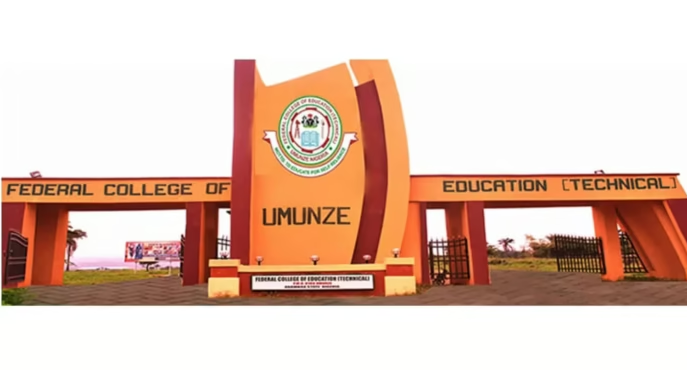
Federal College of Education (Technical), Umunze
Federal College of Education (Technical), Umunze – FCET Umunze

Federal College of Education (Technical), Umunze  widely known as FCET Umunze or FCE(T) Umunze  is a Federal Government-owned College of Education located in Umunze, Orumba South Local Government Area, Anambra State, South-East Nigeria . The college was established in 1989 to produce teachers with requisite skills and competencies for teaching at all levels of the educational system, with particular emphasis on technical education . The college is funded and managed by the Federal Government through the National Commission for Colleges of Education (NCCE). FCET Umunze offers NCE programmes, degree programmes in affiliation with the University of Nigeria, Nsukka (UNN), and its own autonomous degree programmes . The current Provost is Dr. Mrs. Theresa Obumneme Okafor (Provost’s Profile) .

History of the Institution

The Federal College of Education (Technical), Umunze was established in 1989 by the Federal Government of Nigeria . The college was created to address the need for qualified technical and vocational teachers in the Nigerian educational system, particularly in the South-East geopolitical zone.

The institution is located in Umunze town, Orumba South Local Government Area of Anambra State, South-East Nigeria. The college was established as a Federal College of Education (Technical) with the mission to produce technical teachers for the nation’s schools and to contribute to the development of technical and vocational education in Nigeria .

The college maintains affiliation with the University of Nigeria, Nsukka (UNN) for its degree programmes . A significant milestone was the approval of a full-time Bachelor’s Degree programme (Dual Mode) for the college, expanding its academic offerings .

The institution hosted a programme on “Current Trends and Issues in the Management of Tertiary Institutions for Sustainability” in 2024 organized by the Academic Staff Union of Colleges of Education (ASCOE), demonstrating its commitment to ongoing educational development .

Location

Federal College of Education (Technical), Umunze (FCET Umunze)
Umunze, Orumba South Local Government Area
Anambra State, Nigeria
South-East Nigeria

Website: fcetumunze.edu.ng

The college is situated in Umunze, a town in the Orumba South Local Government Area of Anambra State, in the South-East region of Nigeria.

List of Programmes Offered by Federal College of Education (Technical), Umunze

FCET Umunze offers NCE programmes, degree programmes in affiliation with the University of Nigeria, Nsukka (UNN), and autonomous degree programmes .

NCE Programmes

The institution offers the following NCE courses :

  • Agricultural Education

  • Biology Education

  • Chemistry Education

  • Physics Education

  • Computer Education

  • Integrated Science Education

  • Mathematics Education

  • Business Education

  • Home Economics Education

  • Fine and Applied Arts Education

  • Technical Education (with options in Electrical/Electronics, Building/Woodwork, Metalwork, Automobile Technology)

  • English Education

  • Social Studies Education

  • Economics Education

  • Political Science Education

  • Geography Education

  • History Education

  • Igbo Education

  • French Education

  • Christian Religious Studies Education

  • Islamic Studies Education

  • Early Childhood Care Education

  • Primary Education Studies

Degree Programmes (Affiliation with University of Nigeria, Nsukka — UNN)

The institution is affiliated with the University of Nigeria, Nsukka to offer Bachelor of Education (B.Ed.) degree programmes in :

  • B.Ed. Agricultural Education

  • B.Ed. Biology Education

  • B.Ed. Business Education

  • B.Ed. Chemistry Education

  • B.Ed. Computer Science Education

  • B.Ed. Economics Education

  • B.Ed. English Education

  • B.Ed. Fine and Applied Arts Education

  • B.Ed. French Education

  • B.Ed. Geography Education

  • B.Ed. History Education

  • B.Ed. Home Economics Education

  • B.Ed. Igbo Education

  • B.Ed. Integrated Science Education

  • B.Ed. Islamic Studies Education

  • B.Ed. Mathematics Education

  • B.Ed. Physics Education

  • B.Ed. Political Science Education

  • B.Ed. Social Studies Education

  • B.Ed. Technical Education (with options)

Autonomous Degree Programmes (Dual Mode)

The college has been approved to run full-time Bachelor’s Degree programmes (Dual Mode) . For the complete list of autonomous degree programmes and entry requirements, please visit the official degree page at fcetumunze.edu.ng/degree/ .

For the complete and most up-to-date list of all courses, visit the official website at fcetumunze.edu.ng or see the latest news below.

Admission Forms

FCE (Tech.) Umunze Admission Form 2026/2027 Is Out

The Federal College of Education (Technical), Umunze, Anambra State, has announced that admission applications are ongoing for various programmes for the 2026/2027 academic session. The available options include the three-year National Certificate in Education (NCE), two-year Direct Entry (DE) and five-year Dual Mandate Degree programmes.

For the NCE programme, applicants are required to have at least four relevant O’Level credits, while admission is available without a JAMB examination. Candidates with NCE qualifications can also apply for the two-year Direct Entry route into the degree programme. The five-year Dual Mandate Degree programme is also open to eligible candidates without a JAMB examination, with graduates eligible for the NYSC scheme and placement on Level 8 in the Civil Service, according to the institution.

The college also highlighted several benefits available to students, including NELFUND-supported school fees and free hostel accommodation, subject to the applicable student loan scheme. Students undertaking Teaching Practice are also eligible for a ₦30,000 monthly stipend, while graduates may obtain up to four certificates covering NCE, degree, ICT and vocational skills. The programmes combine academic training with technical, professional and practical skills development.

Interested candidates are advised to visit the Admissions Unit, Campus II of the College to begin the application process. Further enquiries can be made through 0813 975 0405, 0814 002 8375, 0703 453 1403, 0706 422 7257 and 0813 588 7263. The college’s website is www.fceumunze.edu.ng.

School Fees

As a Federal institution, tuition at FCET Umunze is subsidised. The college has a dedicated portal for fee payments and other financial transactions .

School fees generally range from ₦50,000 to ₦100,000 for both new and returning students across all programmes, as is typical for Federal Colleges of Education in Nigeria.

Please see the latest news below or visit the school website for the most current and officially confirmed school fees schedule.

Cut-off Mark

Programme Minimum JAMB Score
NCE Programmes As specified by NCCE
UNN-Affiliated Degree Programmes As specified by UNN
Autonomous Degree Programmes As specified by the college

Hostel / Accommodation

Information on hostel accommodation at FCET Umunze is not explicitly detailed on official sources. The college may provide on-campus accommodation for students, with preference typically given to fresh students and those from outside Anambra State.

Please contact the college directly or visit the official website for the most current hostel fees and accommodation application procedures.

Notable Alumni

Federal College of Education (Technical), Umunze has produced generations of qualified technical and vocational teachers across Nigeria, particularly in the South-East region .

Please see the latest news below or visit the school website for information on distinguished alumni.

Job Vacancies

FCET Umunze occasionally advertises job vacancies for academic and non-academic staff positions. Interested candidates should:

  • Monitor the official website: fcetumunze.edu.ng

  • Check the National Commission for Colleges of Education (NCCE) recruitment portals

  • Follow announcements from the Federal Ministry of Education

Official Website and Portal Links

Resource Link
Official Website fcetumunze.edu.ng
Student Portal portal.fcetumunze.edu.ng
Degree Programmes fcetumunze.edu.ng/degree/
Admission Application fcetumunze.edu.ng/admission-application-form/
Contact Us fcetumunze.edu.ng/contact-us/
Location fcetumunze.edu.ng/location/

Contact Information

Federal College of Education (Technical), Umunze (FCET Umunze)
Umunze, Orumba South Local Government Area
Anambra State, Nigeria
South-East Nigeria

Phone: (Information not explicitly listed on official sources — see contact page)
Email: (Information not explicitly listed on official sources — see contact page)
Website: fcetumunze.edu.ng

Contact Page: fcetumunze.edu.ng/contact-us/

Frequently Asked Questions (FAQs)

Where is Federal College of Education (Technical), Umunze located?
FCET Umunze is located in Umunze, Orumba South Local Government Area, Anambra State, South-East Nigeria .

When was FCET Umunze established?
The college was established in 1989 .

What is unique about FCET Umunze?
FCET Umunze is a technical college of education focused on producing technical, vocational, and science teachers. It offers both NCE and degree programmes (dual mode) .

Which university is FCET Umunze affiliated with?
FCET Umunze is affiliated with the University of Nigeria, Nsukka (UNN) for its degree programmes .

Does FCET Umunze offer degree programmes?
Yes. The college offers degree programmes in affiliation with UNN and has also been approved to run full-time autonomous Bachelor’s Degree programmes (Dual Mode) .

How much are the school fees at FCET Umunze?
School fees are subsidised as a Federal institution, typically ranging from ₦50,000 to ₦100,000 per session. Check the official website for exact figures.

What is the JAMB cut-off mark for FCET Umunze?
The cut-off mark is as specified by NCCE for NCE programmes and by the college for degree programmes. Check the official website for current requirements.

How do I apply for admission to FCET Umunze?
Visit the admission application portal at fcetumunze.edu.ng/admission-application-form/ and follow the instructions.

How do I check my admission status?
Admitted candidates can check their status via the JAMB CAPS portal or by logging into the college student portal at portal.fcetumunze.edu.ng.

Does FCET Umunze have a student portal?
Yes. The student portal is accessible at portal.fcetumunze.edu.ng.

What is the contact information for FCET Umunze?
Contact details are available on the official contact page at fcetumunze.edu.ng/contact-us/.

TAGS

Fcet Umunze portal login, Federal college of education technical umunze reviews, Federal college of education technical umunze fees, Federal College of Education Umunze Admission List, Federal College of Education (Technical) Umunze portal, Federal college of education technical umunze courses, Federal College of Education (Technical) Umunze recruitment, Federal College of Education (Technical Umunze photos), FCET Umunze degree programmes, FCET Umunze UNN affiliation, FCET Umunze dual mode, FCET Umunze Post-UTME screening

Nigerian Institute of Leather and Science Technology Zaria - NILEST
Nigerian Institute of Leather and Science Technology Zaria – NILEST

The Nigerian Institute of Leather and Science Technology (NILEST), Zaria is a Federal Government research, training and technology institution located in Samaru, Zaria, Kaduna State, North-West Nigeria. The institute specialises in leather technology, leather products development, polymer technology, science laboratory technology, computer science and other applied science-based programmes. It operates under the supervision of the Federal Ministry of Science and Technology and plays an important role in developing skilled manpower for Nigeria’s leather and allied industries.

Established in 1964, NILEST has grown from a leather research centre into a specialised tertiary institution offering National Diploma (ND), Higher National Diploma (HND), professional training and research programmes. The institute combines academic training with industrial research, product development and entrepreneurship, particularly in leather processing, footwear production and related technologies.

NILEST is recognised as one of Nigeria’s leading institutions for leather science and technology education. Through its academic programmes and research activities, the institute contributes to the development of Nigeria’s leather value chain by training professionals in leather production, quality control, laboratory science, polymer materials and emerging technologies.

The institution admits students into ND and HND programmes through JAMB and its admission portal. Available programmes include Leather Technology, Polymer Technology, Computer Science, Science Laboratory Technology and other specialised courses related to science and technology.

History 

The Nigerian Institute of Leather and Science Technology was established in 1964 as a research and training institution focused on improving Nigeria’s leather industry. It was created to provide technical expertise in leather processing, tanning, product development and quality improvement.

Over the years, the institute expanded its mandate beyond leather research to include science and technology education. It developed academic programmes that provide students with practical skills required in industries such as leather manufacturing, footwear production, chemical processing, laboratory services and information technology.

NILEST has contributed significantly to the growth of Nigeria’s leather sector by carrying out research, providing technical support to manufacturers and training professionals who work within the leather value chain.

The institute’s headquarters is located in Samaru, Zaria, Kaduna State, where it operates laboratories, workshops and training facilities designed to support teaching, research and industrial development.

Location 

Nigerian Institute of Leather and Science Technology (NILEST)
3 Leather Research Road,
Off Sokoto Road, Samaru,
Zaria, Kaduna State, Nigeria

NILEST is located close to Ahmadu Bello University (ABU), Zaria, making it part of the academic and research environment within the Samaru area of Kaduna State.

Official Website:
https://nilest.edu.ng/

Admission Portal:
https://nilest.admissions.cloud/

List of Programmes Offered by Nigerian Institute of Leather and Science Technology (NILEST)

NILEST offers National Diploma (ND), Higher National Diploma (HND) and specialised technology programmes. The institute’s programmes are designed around applied science, technology and industry-focused training.

School / Department of Leather Technology

Programmes include:

National Diploma (ND) Leather Technology

The programme provides training in leather production processes, tanning technology, leather finishing, quality control and leather product development.

Higher National Diploma (HND) Leather Technology

The HND programme provides advanced training in leather science, manufacturing processes, product design and industrial management.

Leather and Leather Products Technology

The programme focuses on modern leather production techniques, footwear manufacturing and value addition within the leather industry.

Department of Polymer Technology

  • ND Polymer Technology
  • HND Polymer Technology

Students are trained in polymer materials, plastics technology, material processing and industrial applications of polymer science.

Department of Science Laboratory Technology

Programmes include:

  • ND Science Laboratory Technology
  • HND Science Laboratory Technology (Biochemistry Option)
  • HND Science Laboratory Technology (Chemistry Option)
  • HND Science Laboratory Technology (Microbiology Option)

The programmes prepare students for laboratory analysis, scientific research, quality control and industrial laboratory services.

Department of Computer Science and Digital Technology

Programmes include:

  • ND Computer Science
  • HND Computer Science
  • HND Software and Web Design

The programmes provide training in computer systems, programming, software development, web technologies and digital solutions.

Footwear Design and Innovation

Programme:

  • Higher Diploma in Footwear Design and Innovation

This programme focuses on footwear design, production techniques, creativity and entrepreneurship within the footwear industry.

Admission Forms

NILEST ND Admission Form 2026/2027 Released

The Nigerian Institute of Leather and Science Technology (NILEST), Zaria, has opened applications for admission into its National Diploma (ND) programmes for the 2026/2027 academic session. Interested candidates who meet the admission requirements can apply for available programmes in Leather Technology, Polymer Technology, Computer Science and Science Laboratory Technology.

Admission into the ND programmes will be processed through the Central Admission Processing System (CAPS). Candidates are required to select NILEST as their first choice institution on JAMB and meet the minimum UTME score and O’Level requirements before applying.

The available NILEST National Diploma programmes include National Diploma in Leather Technology, National Diploma in Polymer Technology, National Diploma in Computer Science and National Diploma in Science Laboratory Technology.

Applicants must score at least 120 in the relevant subjects in the 2026 JAMB UTME. Candidates are also required to possess five O’Level credit passes obtained in not more than two sittings, including English Language and Mathematics, alongside three other relevant subjects. Applicants must also ensure that their O’Level results are uploaded to the JAMB portal.

Eligible candidates can complete the application process through the NILEST admission portal. Applicants seeking further information about the programmes or admission process can visit the official NILEST website or contact the institute through info@nilest.edu.ng for assistance.

NILEST HND Admission Form 2026/2027 is Out: Programmes, Requirements and Application

The Nigerian Institute of Leather and Science Technology (NILEST) has commenced admission into its Higher National Diploma (HND) programmes for the 2026/2027 academic session. Interested candidates who meet the admission requirements can apply for the available programmes covering Leather Technology, Polymer Technology, Science Laboratory Technology, Software and Web Design, and Footwear Design and Innovation.

The HND admission is open to candidates with the required National Diploma (ND) qualifications, valid JAMB admission letter and relevant O’Level credits. Applicants are advised to carefully review the admission conditions before submitting their applications through the NILEST admission portal.

Programme Programme Code/Option
Higher National Diploma in Leather Technology HNDLT
Higher National Diploma in Polymer Technology HNDPLT
Higher National Diploma in Software and Web Design HNDSWD
Higher National Diploma in Science Laboratory Technology (Microbiology Option) HNDSLT MCB
Higher National Diploma in Science Laboratory Technology (Biochemistry Option) HNDSLT BCH
Higher National Diploma in Science Laboratory Technology (Chemistry Option) HNDSLT CHEM
Higher Diploma in Footwear Design and Innovation HDFDI

Applicants for the NILEST HND programmes are required to possess a valid JAMB admission letter, National Diploma certificate or statement of result from a recognised institution, and at least five credit passes in relevant O’Level subjects. Candidates should ensure that their submitted academic records meet the requirements for their chosen programme.

Interested applicants can complete the application process online through the NILEST admission portal. Applicants who require additional information about the programmes or admission process can visit the official NILEST website or contact the institute through info@nilest.edu.ng for further enquiries.

NILEST Diploma and Certificate Admission Form 2026/2027 is Out

The Nigerian Institute of Leather and Science Technology (NILEST) has commenced admission into its Diploma and Certificate programmes for the 2026/2027 academic session. The available programmes are designed to provide technical and professional skills in footwear production, leather development, environmental science, chemical engineering technology and related areas.

The admission opportunity is open to interested candidates who meet the required academic conditions. Applicants seeking admission into the listed Diploma and Certificate programmes are required to possess at least five credit passes in relevant O’Level subjects.

The available NILEST Diploma programmes include Diploma in Footwear Design and Innovation, Diploma in Footwear Technology, Diploma in Environmental Science and Management Technology, Diploma in Chemical Engineering Technology and Diploma in Production Management. The Certificate programmes available are Certificate in Footwear Manufacture and Certificate in Hide and Skin Improvement.

Eligible candidates can complete their applications online through the NILEST admission portal. Applicants who need additional information about the programmes and admission process can visit the official NILEST website or contact the institute through info@nilest.edu.ng for further enquiries.

School Fees

NILEST school fees vary depending on the programme, academic level and approved institutional charges.

As a Federal Government-owned specialised institute, NILEST fees are generally structured to remain affordable compared with many private technology institutions.

Students may be required to pay charges covering:

  • Registration fees
  • Examination fees
  • Laboratory charges
  • ICT charges
  • Student development fees
  • Other approved institutional charges

Prospective students should confirm the latest school fees schedule through the official admission portal before making payment.

Cut-Off Mark

The required JAMB cut-off mark for NILEST admission depends on the admission session and programme.

Recent admission information indicates that ND applicants may require a minimum UTME score set by the institute and JAMB guidelines, with some programmes having different departmental requirements.

Candidates should confirm the latest cut-off mark for their chosen course before applying.

Admission Portal:
https://nilest.admissions.cloud/

Hostel / Accommodation

NILEST provides student support services for learners enrolled in its academic programmes.

Information about hostel accommodation, hostel fees and allocation procedures is provided by the institution during admission and registration periods.

Students should contact the institute directly for current accommodation arrangements.

Notable Alumni

NILEST has trained numerous professionals in leather technology, footwear production, tanning, chemical processing, entrepreneurship and related fields, many of whom contribute to Nigeria’s leather industry. However, there are limited publicly available records of individual alumni who have gained national recognition.

Official Website and Portal Links

Resource Link
Official Website https://nilest.edu.ng/
Admission Portal https://nilest.admissions.cloud/

Contact Information

Nigerian Institute of Leather and Science Technology (NILEST)
P.M.B. 1034,
Samaru, Zaria, Kaduna State, Nigeria

Official Website:
https://nilest.edu.ng/

For current phone numbers, email addresses and admission enquiries, students should visit the official institute website.

Frequently Asked Questions (FAQs)

What is the full meaning of NILEST?
NILEST means Nigerian Institute of Leather and Science Technology.

Where is NILEST located?
NILEST is located in Samaru, Zaria, Kaduna State, Nigeria.

Is NILEST a federal institution?
Yes. NILEST is a Federal Government institution under the Federal Ministry of Science and Technology.

When was NILEST established?
NILEST was established in 1964.

What courses does NILEST offer?
NILEST offers courses in Leather Technology, Polymer Technology, Computer Science, Science Laboratory Technology and other applied science and technology fields.

Does NILEST offer ND programmes?
Yes. The institute offers National Diploma programmes in several technology-related disciplines.

Does NILEST offer HND programmes?
Yes. NILEST offers Higher National Diploma programmes including Leather Technology, Polymer Technology, Science Laboratory Technology and Software and Web Design.

What is NILEST cut-off mark?
The cut-off mark depends on the admission year and programme requirements. Candidates should confirm the latest requirement from the institute before applying.

How do I apply for NILEST admission?
Candidates can apply through the official NILEST admission portal after meeting the required admission conditions.

TAGS

Nigerian Institute of Leather and Science Technology Zaria, NILEST Zaria, NILEST courses, NILEST admission, NILEST school fees, NILEST cut off mark, NILEST admission portal, NILEST Post UTME, NILEST ND programmes, NILEST HND programmes, Leather Technology Nigeria, Polymer Technology Nigeria, Science Laboratory Technology NILEST, Federal institutions in Kaduna State, NILEST 2026/2027 admission

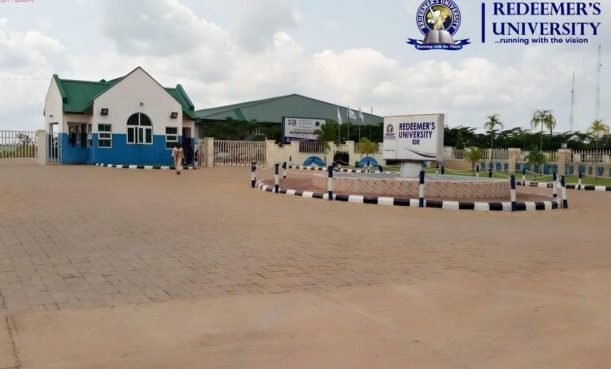
Redeemer's University
Redeemer’s University, Ede – RUN

Redeemer’s University  widely known as RUN  is a private Christian university located in Ede, Osun State, Nigeria. It was established in 2005 by the Redeemed Christian Church of God (RCCG), under the leadership of Pastor Enoch Adejare Adeboye, the General Overseer of RCCG. The university was officially licensed by the Federal Government of Nigeria on May 6, 2005, and began academic activities shortly thereafter. Redeemer’s University is owned by the Redeemed Christian Church of God and is part of the RCCG’s network of educational institutions. RUN is a member of the Association of Commonwealth Universities (ACU). The university’s motto is Knowledge with Character and Impact. The current Vice-Chancellor is Professor Akinola S. Fasuba. The university is located adjacent to the Redemption Camp along the Lagos-Ibadan Expressway.

History of the Institution

Redeemer’s University was conceived as a tertiary institution that would raise a new generation of leaders who would be God-fearing, academically excellent, and have a passion for positive societal impact. The university was established by the Redeemed Christian Church of God, one of the largest evangelical churches in the world, under the visionary leadership of Pastor E.A. Adeboye.

In 2005, the university obtained its license from the Federal Government and commenced academic operations. The university started with a handful of faculties and has since grown into a comprehensive institution offering undergraduate and postgraduate degrees across multiple disciplines. RUN has continued to expand its infrastructure, academic programs, and research output. The university is recognized for its serene environment, strong moral values, and commitment to academic excellence. Over the years, Redeemer’s University has produced graduates who have excelled in various fields both within Nigeria and internationally. The university maintains strong ties with the RCCG, which provides spiritual and institutional support.

Location

Redeemer’s University (RUN)
Km 46, Lagos-Ibadan Expressway
Redemption Camp, Ede
Osun State, 232101
Nigeria

Mailing Address:
P.M.B. 230, Ede
Osun State, Nigeria

Phone: +234 701 887 9893, +234 814 467 1176, +234 809 007 2243
Email: info@run.edu.ng
Website: run.edu.ng

Redeemer’s University is located along the Lagos-Ibadan Expressway, adjacent to the Redemption Camp (Kamp), making it easily accessible from both Lagos and Ibadan.

List of Courses Offered by Redeemer’s University, Ede

Redeemer’s University offers a wide range of NUC-accredited undergraduate and postgraduate programmes across several colleges and faculties. The university currently operates six colleges.

College of Humanities, Management and Social Sciences

Department of Accounting, Banking and Finance

  • Accounting (B.Sc.)

  • Banking and Finance (B.Sc.)

Department of Business Administration and Marketing

  • Business Administration (B.Sc.)

  • Marketing (B.Sc.)

Department of Economics and Tourism Studies

  • Economics (B.Sc.)

  • Tourism Studies (B.Sc.)

Department of Mass Communication and Media Studies

  • Mass Communication (B.A.)

Department of Political Science and Public Administration

  • Political Science (B.Sc.)

  • Public Administration (B.Sc.)

Department of Sociology and Psychology

  • Psychology (B.Sc.)

  • Sociology (B.Sc.)

Department of Languages and General Studies

  • English Language (B.A.)

  • History and International Studies (B.A.)

  • Philosophy (B.A.)

  • Religious Studies (B.A.)

College of Law

  • Law (LL.B.)

College of Natural and Applied Sciences

Department of Biological Sciences

  • Biology (B.Sc.)

  • Biotechnology (B.Sc.)

  • Microbiology (B.Sc.)

Department of Chemical Sciences

  • Biochemistry (B.Sc.)

  • Chemistry (B.Sc.)

  • Industrial Chemistry (B.Sc.)

Department of Computer and Mathematical Sciences

  • Computer Science (B.Sc.)

  • Mathematics (B.Sc.)

  • Statistics (B.Sc.)

Department of Physics and Earth Sciences

  • Geology (B.Sc.)

  • Physics (B.Sc.)

  • Physics with Electronics (B.Sc.)

College of Health Sciences

Department of Medicine and Surgery

  • Medicine and Surgery (MBBS)

Department of Nursing

  • Nursing Science (B.N.Sc.)

Department of Public and Allied Health

  • Public Health (B.Sc.)

College of Environmental Design and Management

  • Architecture (B.Sc.)

College of Engineering

  • Agricultural Engineering (B.Eng.)

  • Chemical Engineering (B.Eng.)

  • Civil Engineering (B.Eng.)

  • Computer Engineering (B.Eng.)

  • Electrical and Electronics Engineering (B.Eng.)

  • Mechanical Engineering (B.Eng.)

For the complete and most up-to-date list of accredited courses, please visit run.edu.ng.

Admission Requirements

UTME (Undergraduate) Admission

  • A minimum of five (5) O’Level credit passes including English Language and Mathematics, obtained in not more than two sittings in WAEC, NECO, GCE O’Level, or NABTEB.

  • A valid JAMB UTME score meeting RUN’s minimum cut-off mark is required.

  • Candidates must be at least 16 years of age at the time of admission.

  • Candidates must participate in the Redeemer’s University Post-UTME screening exercise.

  • Candidates must select Redeemer’s University as their first choice institution in JAMB. However, candidates who did not choose RUN as first choice can apply for a JAMB change of institution form.

Note: Candidates awaiting O’Level results may also apply, provided the results are released before admission is finalized.

Direct Entry Admission

Candidates with relevant A’Level passes, ND (Upper Credit), HND, NCE, or JUPEB qualifications may apply for Direct Entry into 200 Level. Relevant O’Level credit requirements apply in addition.

Direct Entry Requirements by Program:

Program Direct Entry Requirements
College of Law Two (2) A’Level passes in Arts or Social Sciences subjects (minimum of 1 sitting)
College of Health Sciences (Medicine) Two (2) A’Level passes in Chemistry, Physics, and Biology/Zoology
College of Health Sciences (Nursing) ND (Upper Credit) in Nursing or two A’Level passes in Biology, Chemistry, and Physics
College of Natural and Applied Sciences ND (Upper Credit) in relevant Science disciplines or two A’Level passes in relevant subjects
College of Engineering ND (Upper Credit) in related Engineering disciplines or two A’Level passes in Mathematics, Physics, and Chemistry
College of Environmental Design ND (Upper Credit) in Architecture, Building, Quantity Surveying, Urban & Regional Planning, or related fields
College of Humanities ND (Upper Credit) in relevant courses or two A’Level passes in relevant Arts or Social Sciences subjects

Apply Online: reg.run.edu.ng

Please visit the school website for the most current admission requirements and deadlines.

School Fees

Redeemer’s University publishes a comprehensive and transparent fees schedule directly on its official website. All fees listed below are from the official RUN fees schedule for the 2025/2026 academic session.

Important Notes:

  • Fees are payable per semester (50% of total fees per semester)

  • Accommodation is compulsory for all students (except married students or those with documented extenuating circumstances)

  • All fees are subject to annual review

Official RUN School Fees Schedule (2025/2026 Session) – Total Per Session

College / Faculty Tuition (₦) Development Levy (₦) Facility Enhancement (₦) ICT (₦) Other Charges (₦) Accommodation (₦) Total (₦)
College of Health Sciences (Medicine & Surgery) 2,500,000 200,000 100,000 50,000 185,000 250,000 3,285,000
College of Health Sciences (Nursing) 1,500,000 100,000 50,000 50,000 185,000 250,000 2,135,000
College of Law 1,000,000 100,000 50,000 50,000 185,000 250,000 1,635,000
College of Natural & Applied Sciences 750,000 75,000 50,000 30,000 185,000 250,000 1,340,000
College of Engineering 750,000 75,000 50,000 30,000 185,000 250,000 1,340,000
College of Environmental Design (Architecture) 750,000 75,000 50,000 30,000 185,000 250,000 1,340,000
College of Humanities, Management & Social Sciences 650,000 50,000 50,000 30,000 185,000 250,000 1,215,000

Breakdown of Other Charges (Included in totals above):

Charge Amount (₦)
Laboratory/Studio Workshop Fee (Science & Engineering students only) 50,000
Medical/Health Insurance 50,000
Sports/Recreation 20,000
Library 20,000
Examination 20,000
Student Welfare/ID Card 15,000
Matriculation/Graduation 10,000
Total Other Charges 185,000

One-Time Charges (New Students Only):

Charge Amount (₦)
Acceptance Fee 50,000
Verification of Credentials 50,000
Total One-Time 100,000

Payment Structure:

  • All fees are payable per semester

  • Accommodation fee is compulsory and is charged per session

  • New students pay acceptance and verification fees in addition to first-semester fees

Please visit the official fees page at run.edu.ng/fees-schedule for the most current fees schedule, as fees are subject to annual review.

Cut-off Mark

The last known JAMB cut-off mark for Redeemer’s University is 160 for most programmes. However, due to high competition, candidates with higher scores (180 and above) have a significantly better chance of admission. Professional programmes like Medicine and Surgery, Nursing, and Law may have higher effective cut-off marks.

Candidates must also participate in the RUN Post-UTME screening exercise and achieve a satisfactory score. All candidates must be at least 16 years of age.

Please visit the school website for the most current and officially confirmed departmental cut-off marks.

Hostel / Accommodation

Hostel accommodation is compulsory for all students at Redeemer’s University, except married students or those with documented extenuating circumstances. The accommodation fee for the 2025/2026 session is ₦250,000 per session and is included in the total fees listed above.

Redeemer’s University provides well-maintained on-campus residential facilities separated by gender. The hostels are designed to provide a conducive living and learning environment. Hostel facilities typically include:

  • Bed and mattress

  • Study table and chair

  • Wardrobe

  • Common areas

  • Bathroom and toilet facilities (shared)

  • 24-hour security

  • Regular power supply

  • Water supply

Hostel accommodation is allocated on a first-come, first-served basis. Students are required to pay the accommodation fee along with their school fees to secure a bed space.

Please visit the school website for current hostel pictures and accommodation procedures.

Notice Board

Redeemer’s University Gets NUC Approval for 10 New Programmes

Redeemer’s University, Ede, Osun State, has received approval from the National Universities Commission (NUC) to commence 10 new full-time undergraduate programmes from the 2026/2027 academic session. The approval followed a resource verification exercise conducted by a panel constituted by the NUC to assess the university’s available human and material resources.

The programmes approved for commencement at the university’s main campus are B.Sc. Broadcasting, B.Sc. Public Relations, B.Sc. Advertising, B.Sc. Information and Media Studies, B.Sc. Journalism and Media Studies, B.A. Film Production, B.Sc. Criminology and Security Studies, B.Sc. Biotechnology, B.Sc. Software Engineering, and B.Sc. Information Systems.

According to the NUC, the approval is limited to the full-time mode of study. The Commission conveyed the approval in a letter signed by its Director, Academic Planning, Abubakar M. Girei, on behalf of the Executive Secretary.

The Vice-Chancellor of Redeemer’s University, Prof. Shadrach Olufemi Akindele, described the approval as a significant development in the university’s academic expansion. He said the new programmes would broaden opportunities for prospective students while providing training in areas linked to emerging global trends, industry needs and technological development.

Notable Alumni

Redeemer’s University, established in 2005, has produced a growing number of graduates making impacts in various fields. Notable alumni include:

  • Adebowale “Debo” Adedayo (Mr Macaroni) – Nigerian comedian, actor, content creator and activist. He is a graduate of Redeemer’s University.
  • Ayoola Oladapo Agboola (Kiddominant/KDDO) – Nigerian music producer, songwriter, DJ and recording artist, known for producing several major Afrobeats and international songs.
  • Judikay (Judith Kanayo) – Nigerian gospel singer and songwriter known for songs such as More Than Gold and Song of Victory. She is listed among Redeemer’s University alumni.
  • Elma Mbadiwe – Nigerian actress and media personality, known for her work in Nollywood. She is listed among Redeemer’s University alumni.

The university has also produced graduates working in law, medicine, engineering, business, and academia across Nigeria and internationally. For a complete list of distinguished alumni, please visit the school website.

Official Website and Portal Links

Resource Link
Official Website run.edu.ng
Admissions/Registration Portal reg.run.edu.ng
Fees Schedule run.edu.ng/fees-schedule
Undergraduate Programmes run.edu.ng/full-time-undergraduate-programmes
Postgraduate Programmes run.edu.ng/post-graduate-programmes
Contact Us run.edu.ng/contact-us

Contact Information

Redeemer’s University (RUN)
Km 46, Lagos-Ibadan Expressway
Redemption Camp, Ede
Osun State, Nigeria

Mailing Address:
P.M.B. 230, Ede
Osun State, Nigeria

Phone: +234 701 887 9893, +234 814 467 1176, +234 809 007 2243

Email: info@run.edu.ng

Website: run.edu.ng

Frequently Asked Questions (FAQs)

Where is Redeemer’s University located?
Redeemer’s University is located at Km 46, Lagos-Ibadan Expressway, Redemption Camp, Ede, Osun State, Nigeria.

When was Redeemer’s University established?
RUN was established in 2005 and licensed by the Federal Government of Nigeria on May 6, 2005.

Who owns Redeemer’s University?
Redeemer’s University is owned by the Redeemed Christian Church of God (RCCG).

Does Redeemer’s University offer Medicine and Surgery?
Yes. RUN offers Medicine and Surgery (MBBS) through its College of Health Sciences. The total fee for Medicine and Surgery is ₦3,285,000 per session.

Does Redeemer’s University offer Nursing?
Yes. Nursing Science is offered at RUN. The total fee for Nursing is ₦2,135,000 per session.

Does Redeemer’s University offer Law?
Yes. Law (LL.B.) is offered at RUN. The total fee for Law is ₦1,635,000 per session.

What is the JAMB cut-off mark for Redeemer’s University?
The last known JAMB cut-off mark for RUN is 160. However, candidates with scores of 180 and above have a better chance of admission.

How much are Redeemer’s University school fees?
Fees range from ₦1,215,000 (Humanities, Management & Social Sciences) to ₦3,285,000 (Medicine and Surgery) per session. All fees include compulsory accommodation (₦250,000).

Is hostel accommodation compulsory at RUN?
Yes. Hostel accommodation is compulsory for all students except married students or those with documented extenuating circumstances.

Who are some notable alumni of Redeemer’s University?
Notable alumni include Grammy Award-winning singer Tems, musician Adekunle Gold, and singer Seyi Vibes.

Does Redeemer’s University have a postgraduate school?
Yes. RUN offers various postgraduate programmes. Please visit run.edu.ng/post-graduate-programmes for details.

How can I apply for admission to RUN?
Apply online at reg.run.edu.ng.

TAGS

Redeemer’s University school fees, Redeemer’s University Ede courses, Redeemer’s University RUN fees schedule, Redeemer’s University admission portal, Redeemer’s University postgraduate programmes, Redeemer’s University hostel fees, Redeemer’s University cut off mark, Redeemer’s University notable alumni, Tems Redeemer’s University, Adekunle Gold Redeemer’s University, RUN Ede Osun State

Federal College of Education, Ididep (FCEI)
Federal College of Education, Ididep – FCE Ididep

The Federal College of Education, Ididep (FCE Ididep) is a Federal Government-owned teacher training institution located in Ididep, Ibiono Ibom Local Government Area of Akwa Ibom State, South-South Nigeria. The college was established to provide professional teacher education and produce qualified educators who can contribute to the development of Nigeria’s basic and secondary education system.

FCE Ididep offers the Nigeria Certificate in Education (NCE) programme, which is the minimum professional qualification for teachers in many basic education settings in Nigeria. The institution focuses on modern teacher preparation, educational innovation, research and practical teaching skills through various schools and academic departments.

The college was approved by the Federal Government of Nigeria in 2023 as part of efforts to establish more Federal Colleges of Education across the country and strengthen teacher development. It is regulated by the National Commission for Colleges of Education (NCCE), the body responsible for overseeing teacher education institutions in Nigeria.

FCE Ididep admits students into full-time NCE programmes across areas such as Education, Sciences, Arts and Social Sciences, Languages, Early Childhood and Primary Education, and Vocational and Technical Education.

History 

The Federal College of Education, Ididep, Akwa Ibom State, was established by the Federal Government of Nigeria in May 2023 to support the national goal of producing more qualified teachers for the basic and post-basic education sectors. The establishment of the college aligns with Nigeria’s education policy objective of improving teacher quality through professional training.

The institution was created as part of the Federal Government’s plan to establish at least one Federal College of Education in each state of the federation. Since its establishment, the college has focused on building academic structures, developing programmes and creating an environment suitable for teacher training.

As a newly established institution, FCE Ididep is gradually expanding its academic departments, facilities and student services. The college’s vision is centred on providing world-class teacher education, promoting innovation and preparing educators who can positively impact schools and communities.

Location 

Federal College of Education, Ididep (FCE Ididep)
P.M.B. 1001,
Ididep, Ibiono Ibom,
Akwa Ibom State, Nigeria

The college is located in Ididep, Ibiono Ibom Local Government Area of Akwa Ibom State, in the South-South region of Nigeria.

Official Website:
https://www.fceididep.edu.ng/

Admission Portal:
https://portal.fceididep.edu.ng/

List of Programmes Offered by Federal College of Education, Ididep

Federal College of Education, Ididep offers Nigeria Certificate in Education (NCE) programmes across different academic schools. The NCE programme generally runs for three years and combines teaching methodology with subject specialisation.

School of Education

  • Curriculum and Teaching
  • Educational Foundations
  • Educational Psychology

School of Secondary Education: Arts and Social Science Programmes

  • Political Science Education
  • Social Studies Education
  • Christian Religious Studies Education
  • Geography Education
  • Economics Education
  • Theatre Arts Education
  • History Education

School of Secondary Education: Science Programmes

  • Biology Education
  • Chemistry Education
  • Integrated Science Education
  • Computer Science Education
  • Mathematics Education

School of Secondary Education: Language Programmes

  • English Education
  • French Education
  • Ibibio Education

School of Secondary Education: Vocational and Technical Education Programmes

  • Business Education
  • Agricultural Education

School of Early Childhood and Primary Education

  • Primary Education
  • Early Childhood Care and Education

School of General Studies in Education

The school provides foundational education courses that support students across different NCE programmes. It covers areas such as communication skills, ICT, civic education and general educational foundations.

Admission Forms

FCE Ididep NCE Admission Form 2026/2027 is Out: Courses, Requirements and Registration

Federal College of Education, Ididep, Ibiono Ibom, Akwa Ibom State, has commenced admission into its National Certificate in Education (NCE) programmes for the 2026/2027 academic session. Interested candidates who meet the admission requirements can apply for available courses across Arts and Social Sciences, Languages, Sciences, Early Childhood Education and Vocational and Technical Education.

The College stated that admission into the NCE programmes does not require a JAMB/UTME examination or UTME score. Applicants are expected to possess the required O’Level qualifications and complete their registration through the JAMB Professional Registration Centre located at the College Admissions Office.

School Available NCE Courses
School of Arts and Social Sciences Christian Religious Studies/Social Studies, Economics, Geography, History, Political Science, Social Studies and Theatre Arts combinations
School of Early Childhood Care and Primary Education Early Childhood Care Education, Primary Education
School of Languages English Language and Ibibio Language combinations with subjects such as CRS, Geography, French, History, Political Science, Social Studies and Theatre Arts
School of Sciences Biology, Chemistry, Computer Science, Integrated Science and Mathematics combinations
School of Vocational and Technical Education Agricultural Education and Business Education

Applicants are required to have at least four relevant O’Level credit passes from WAEC, NECO, NABTEB or equivalent examinations. The required credits must be obtained in not more than two sittings. English Language is required for Arts and Social Science programmes, while Mathematics and other relevant subjects are required for Science, Vocational and Technical Education programmes.

Registration for the FCE Ididep NCE admission exercise will be completed at the College’s JAMB Professional Registration Centre. Candidates are expected to provide their National Identification Number (NIN), original credentials, passport photographs, JAMB access code and other required documents during registration. For enquiries, applicants can contact the College through 08032546039 or 08100781557.

Direct Entry / Advanced Admission

Candidates with relevant qualifications such as:

  • NCE certificates
  • Diploma qualifications
  • Other recognised educational qualifications

may be considered for admission into appropriate programmes depending on approved admission guidelines.

School Fees

Federal College of Education, Ididep school fees vary depending on the academic session, programme and approved institutional charges.

As a Federal College of Education, the institution’s fees are generally structured to remain affordable compared with many private teacher training institutions.

Students may be required to pay charges covering:

  • Registration
  • Tuition-related services
  • ICT fees
  • Examination fees
  • Student development charges
  • Other approved institutional fees

Prospective students should confirm the latest school fees schedule through the official college portal before making payment.

Cut-Off Mark

The required JAMB cut-off mark for Federal College of Education, Ididep admission depends on the admission session and guidelines approved by the institution.

Candidates should meet the minimum JAMB requirement for NCE admission and ensure they satisfy the subject requirements for their selected programme.

Applicants are advised to check the latest admission announcement from the college before applying.

Hostel / Accommodation

Federal College of Education, Ididep provides student support services for learners enrolled in its NCE programmes.

Information about hostel accommodation, fees and allocation procedures is released through the college management when available. Students should contact the institution for the latest accommodation updates.

Notable Alumni

Federal College of Education, Ididep (FCE Ididep) does not yet have widely recognised notable alumni. The institution is relatively new, and its graduates are still establishing themselves in education and related professional fields.

Official Website and Portal Links

Resource Link
Official Website https://www.fceididep.edu.ng/
Admission Portal https://portal.fceididep.edu.ng/
Applicant Portal https://portal.fceididep.edu.ng/Applicant

Contact Information

Federal College of Education, Ididep
P.M.B. 1001,
Ididep, Ibiono Ibom,
Akwa Ibom State, Nigeria

Phone:
+234 911 355 1944

Email:
info@fceididep.edu.ng

Official Website:
https://www.fceididep.edu.ng/

Frequently Asked Questions (FAQs)

What is the full meaning of FCE Ididep?
FCE Ididep means Federal College of Education, Ididep.

Where is Federal College of Education Ididep located?
The college is located in Ididep, Ibiono Ibom, Akwa Ibom State, Nigeria.

Is FCE Ididep a federal institution?
Yes. Federal College of Education, Ididep is owned by the Federal Government of Nigeria.

When was FCE Ididep established?
The institution was established in 2023.

What programmes does FCE Ididep offer?
The college offers NCE programmes in Education, Sciences, Arts and Social Sciences, Languages, Vocational Education, Early Childhood Education and related areas.

Does FCE Ididep offer NCE programmes?
Yes. The college offers Nigeria Certificate in Education (NCE) programmes.

How long is the NCE programme at FCE Ididep?
The NCE programme generally lasts three years.

How do I apply for FCE Ididep admission?
Applicants can apply through the official college admission portal after meeting the required admission conditions.

TAGS

Federal College of Education Ididep, FCE Ididep, FCE Ididep courses, FCE Ididep admission, FCE Ididep school fees, FCE Ididep cut off mark, Federal College of Education Ididep portal, FCE Ididep NCE programmes, FCE Ididep Post UTME, Colleges of Education in Akwa Ibom State, Federal Colleges of Education in Nigeria, FCE Ididep 2026/2027 admission

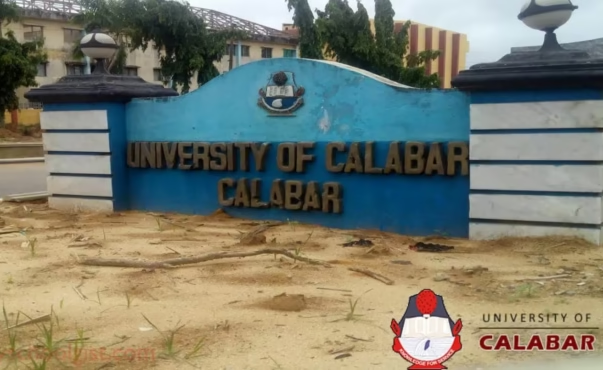
University of Calabar (UNICAL)
University of Calabar – UNICAL

The University of Calabar (UNICAL) is a federal university located in Calabar, Cross River State, Nigeria. The university was established in 1975 by the Federal Government of Nigeria as part of the country’s efforts to expand access to higher education and promote academic excellence.

UNICAL was originally a campus of the University of Nigeria, Nsukka, before it became an independent university in 1975. Since its establishment, the university has grown into one of Nigeria’s prominent higher institutions, offering undergraduate and postgraduate programmes in diverse fields such as sciences, social sciences, humanities, education, engineering, medicine, and management sciences.

The university is known for its strong research culture, academic programmes, and contributions to national development.

Location

University of Calabar
Calabar
Cross River State
Nigeria

Faculties / Colleges / Schools

The University of Calabar operates several faculties and academic units including:

  • Faculty of Agriculture

  • Faculty of Allied Medical Sciences

  • Faculty of Arts

  • Faculty of Basic Medical Sciences

  • Faculty of Biological Sciences

  • Faculty of Education

  • Faculty of Engineering and Technology

  • Faculty of Environmental Sciences

  • Faculty of Law

  • Faculty of Management Sciences

  • Faculty of Pharmacy

  • Faculty of Physical Sciences

  • Faculty of Social Sciences

  • Faculty of Dentistry

  • Faculty of Clinical Sciences

List of Courses Offered by University of Calabar (UNICAL)

Some of the major undergraduate programmes offered at UNICAL include:

  • Accounting

  • Adult Education

  • Agricultural Economics

  • Agricultural Extension and Rural Sociology

  • Animal Science

  • Architecture

  • Banking and Finance

  • Biochemistry

  • Botany

  • Business Management

  • Chemistry

  • Computer Science

  • Dentistry

  • Economics

  • Education and Biology

  • Education and Chemistry

  • Education and English

  • Electrical and Electronics Engineering

  • English and Literary Studies

  • Environmental Protection and Resources Management

  • Geography and Environmental Science

  • Geology

  • Guidance and Counselling

  • History and International Studies

  • Human Anatomy

  • Human Physiology

  • Law

  • Library and Information Science

  • Linguistics and Communication Studies

  • Mathematics

  • Mechanical Engineering

  • Medicine and Surgery

  • Microbiology

  • Nursing Science

  • Pharmacy

  • Physics

  • Political Science

  • Public Administration

  • Sociology

  • Statistics

  • Theatre Arts

  • Zoology

Admission Requirements

Undergraduate Admission

  • Candidates must sit for the UTME conducted by the Joint Admissions and Matriculation Board (JAMB).

  • Applicants must obtain at least five O’Level credits, including English Language and Mathematics, in relevant subjects.

  • Candidates must choose the University of Calabar as their preferred institution during UTME registration.

  • Applicants must participate in the UNICAL Post-UTME screening exercise conducted by the university.

Admissions portal
https://www.unical.edu.ng/admissions.php

Direct Entry Admission

Candidates with advanced qualifications such as ND, HND, NCE, IJMB, or equivalent may apply through the JAMB Direct Entry admission process into appropriate levels of undergraduate programmes.

Postgraduate Admission

The University of Calabar offers postgraduate programmes including Postgraduate Diploma (PGD), Master’s degrees (MSc), and Doctor of Philosophy (PhD) across many faculties and departments.

Cut-off Mark

The last known minimum JAMB cut-off mark is around 160 for eligibility to participate in the UNICAL admission screening exercise. Competitive programmes such as Medicine, Law, and Pharmacy may require higher scores.

Please check School Website or Latest News Below for updated info.

Hostel / Accommodation

The university provides on-campus hostel accommodation for students.

The last known hostel accommodation fees range between ₦35,000 – ₦60,000 per session depending on hostel type and availability. Hostel allocation is usually completed through the student portal after payment of the required fees.

Please check School Website or Latest News Below for updated info.

Notice Board

UNICAL Declares Degree Certificate Collection Free, Warns Against Illegal Charges

The University of Calabar (UNICAL) has announced that degree certificate collection by former students is free of charge. The university has also warned Faculty Officers, Deans and Institute Directors against imposing unauthorised fees on graduates seeking to collect their certificates.

In a memo dated 4 October 2026, the Directorate of SERVICOM said it had received complaints from former students, particularly prospective National Youth Service Corps (NYSC) members, over alleged certificate collection charges ranging from ₦16,000 to ₦45,000.

The Director of SERVICOM, Prof. Bassey Oben, described the alleged charges as illegal and unacceptable, reiterating that certificate collection at UNICAL is free. The memo further warned Deans and Directors that they would be held personally responsible for any unauthorised charges imposed on graduates.

SERVICOM also announced plans to publish the amounts allegedly being collected by faculties and institutes under the guise of certificate collection. The university reiterated that certificate collection should not attract any fee and advised graduates to report any unauthorised charges through the appropriate channels.

Notable Alumni

Some notable alumni of the University of Calabar include:

  • Emmanuel Ibe Kachikwu – Former Minister of State for Petroleum Resources

  • Joke Silva – Nigerian actress and theatre director

  • Kate Henshaw – Nigerian actress and politician

  • Uti Nwachukwu – Nigerian actor and media personality

  • Donald Duke – Former Governor of Cross River State

Official Website/Login Portal Links

Official Website
https://www.unical.edu.ng/

Admissions Portal
https://www.unical.edu.ng/admissions.php

Post-UTME Portal
https://myunical.edu.ng/post-utme/

Online Learning Portal
https://unicalonline.edu.ng/

Contact Information

University of Calabar
Calabar
Cross River State
Nigeria

Phone: +234-803-123-4567 (last known)

Email: info@unical.edu.ng (last known)

Please check School Website or Latest News Below for updated info.

Frequently Asked Questions (FAQs)

Where is the University of Calabar located?

The university is located in Calabar, Cross River State, Nigeria.

When was UNICAL established?

The University of Calabar was established in 1975.

What courses are offered at UNICAL?

UNICAL offers programmes in agriculture, engineering, sciences, law, management sciences, humanities, social sciences, medicine, and education.

Does UNICAL conduct Post-UTME screening?

Yes. Candidates seeking admission must participate in the UNICAL Post-UTME screening exercise.

What is the cut-off mark for UNICAL?

The last known minimum JAMB cut-off mark is around 160. Please check School Website or Latest News Below for updated info.

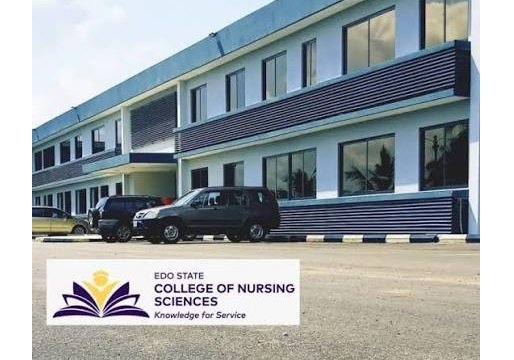
Edo State College of Nursing Sciences, Benin City - EDOCNS
Edo State College of Nursing Sciences, Benin City – EDOCNS

Edo State College of Nursing Sciences  widely known as EDOCNS  is a public nursing college located in Benin City, Edo State, South-South Nigeria. The institution is fully accredited by the Nursing and Midwifery Council of Nigeria (NMCN) and operates with a commitment to producing competent, skilled, and compassionate nursing professionals equipped to meet the healthcare needs of local, national, and global communities. The college offers National Diploma (ND) and Higher National Diploma (HND) programmes in Nursing Sciences, as well as other health-related courses.

The college is situated in Benin City, the capital of Edo State. EDOCNS maintains a student portal for online applications, fee payments, course registration, and result checking. The institution is dedicated to academic excellence, research, and community service in the field of nursing education.

Please check the school website or latest news below for the most current information about the college’s leadership, current Provost/Principal, and recent developments.

History of the Institution

Edo State College of Nursing Sciences was established by the Edo State Government to address the critical need for qualified nurses in the state and the South-South region of Nigeria. As a state-owned college of nursing sciences, EDOCNS has grown steadily, expanding its academic offerings and infrastructure.

The institution has maintained a focus on nursing education while also developing modern facilities and clinical affiliation with healthcare facilities for practical training. The college has produced thousands of nursing graduates who are serving in healthcare facilities across Edo State, Nigeria, and beyond.

Over the years, EDOCNS has modernised its operations, implementing an online portal for student applications, fee payments, course registration, and result checking. The college also conducts Post-UTME screening exercises for eligible candidates seeking admission.

Please check the school website or latest news below for more detailed historical information and institutional milestones.

Location

Edo State College of Nursing Sciences (EDOCNS)
Benin City, Edo State
Nigeria

Postal Code: Please check the school website or latest news below for the current postal code.

Phone Numbers: Please check the school website or latest news below for current contact numbers.

Email: Please check the school website or latest news below for current email addresses.

Official Website: edocns.edu.ng

List of Courses Offered by Edo State College of Nursing Sciences

EDOCNS offers nursing programmes accredited by the Nursing and Midwifery Council of Nigeria (NMCN). Please check the school website or latest news below for the most current and complete list of courses (Edo state college of nursing sciences courses).

National Diploma (ND) in Nursing Sciences

  • Two-year programme (four semesters)

  • Accredited by the Nursing and Midwifery Council of Nigeria (NMCN)

  • Includes classroom instruction, laboratory practice, and clinical rotations

  • Graduates are eligible to take the NMCN licensing examination

Higher National Diploma (HND) in Nursing Sciences

  • Two-year programme (four semesters) for ND holders

  • Advanced training in nursing theory and clinical practice

  • Includes research methodology, community health nursing, and specialised nursing courses

  • Graduates are eligible for advanced practice roles and further education

Other Health-Related Courses

  • Please check the school website or latest news below for other programmes offered at EDOCNS

For the complete and most up-to-date list of programmes, please visit edocns.edu.ng/programmes/nursing/ or see the latest news below (Edo state college of nursing sciences courses).

Admission Requirements

ND (National Diploma) Nursing Programme Admission

  • A minimum of five (5) O’Level credit passes including English Language, Mathematics, Biology, Chemistry, and Physics, obtained in not more than two sittings in WAEC, NECO, GCE O’Level, or NABTEB

  • A valid JAMB UTME score meeting the minimum cut-off mark is required

  • All eligible candidates must participate in the EDOCNS Post-UTME screening exercise

  • Candidates can check their admission status on the JAMB CAPS portal and the college website

HND (Higher National Diploma) Nursing Programme Admission

  • Possession of an ND in Nursing Sciences from an NMCN-accredited institution

  • Minimum of Lower Credit classification

  • One year of post-ND clinical experience (internship) may be required

  • Relevant O’Level requirements apply as for ND admission

  • Candidates must hold a valid practicing license from NMCN (or be eligible to obtain one)

  • Please check the school website or latest news below for current HND admission requirements

Please see the latest news below or visit the school website for the most current admission requirements, deadlines, and application procedures.

Apply for Admission: edocns.edu.ng/admissions/ | portal.edocns.edu.ng/putme-login

School Fees

Edo State College of Nursing Sciences provides a fee structure for ND and HND programmes in Nursing Sciences. Fees vary by programme and level of study. Please check the school website or latest news below for the most current and officially confirmed fees (Edo State College of Nursing Sciences School fees payment, Edo State College of Nursing school fees, How much is Edo State College of Nursing School fees per semester).

ND Nursing Programme Fees (per session or per semester)
Please check the school website or latest news below for current ND programme fees.

HND Nursing Programme Fees (per session or per semester)
Please check the school website or latest news below for current HND programme fees.

Additional Fees (please check the school website or latest news below for current figures)

  • Acceptance Fee (new students only)

  • Hostel Accommodation

  • Medical/Health Insurance

  • Library Fee

  • ICT Fee

  • Practical/Clinical Fee

  • Matriculation Fee

  • Examination Fee

  • Student Union Fee

  • Nursing and Midwifery Council of Nigeria (NMCN) registration/examination fees

Fees are paid online via the EDOCNS student portal. Students are advised to confirm payment details through official college channels only to avoid fraud.

Please see the latest news below or visit the official website at edocns.edu.ng for the most current and officially confirmed school fees schedule.

Cut-off Mark

The cut-off mark for Edo State College of Nursing Sciences varies by programme and admission year. Candidates must meet the minimum cut-off mark to be eligible for admission. Please check the school website or latest news below for the current cut-off mark (Edo State College of Nursing cut off mark).

Please see the latest news below or visit the school website for the most current and officially confirmed departmental cut-off marks.

Post-UTME / Screening Information

EDOCNS conducts a Post-UTME screening exercise for all eligible candidates who apply for admission into the ND Nursing programme. Candidates must meet the minimum O’Level requirements and JAMB cut-off mark to be eligible for screening. Screening details including dates, requirements, and form prices are published on the official website.

Post-UTME Portal: portal.edocns.edu.ng/putme-login

Please see the latest news below or visit the school website for the most current Post-UTME dates and requirements.

Apply: edocns.edu.ng/admissions/ | portal.edocns.edu.ng/putme-login

Hostel / Accommodation

Edo State College of Nursing Sciences may provide on-campus hostel accommodation for students. Accommodation is typically available on a first-come, first-served basis.

Please see the latest news below or visit the school website for the most current hostel fees and accommodation application procedures.

Notice Board

Edo State College of Nursing Sciences Resumption Schedule 2026/2027

The Edo State College of Nursing Sciences has announced the schedule for the resumption and commencement of academic activities for newly admitted students into the National Diploma (ND) in Nursing programme for the 2026/2027 academic session.

Newly admitted students are required to pay their acceptance fee and school fees on or before Monday, 5 October 2026. The college warned that students who fail to complete the required payments by the deadline risk forfeiting their admission.

Students are expected to resume on Friday, 16 October 2026 for their official clearance. Hostel opening and allocation for new students will take place on Saturday, 17 October 2026, from 8:30 a.m., while the orientation programme is scheduled for Monday, 19 October and Tuesday, 20 October 2026.

All newly admitted students are advised to adhere to the announced dates and complete the required admission, payment and clearance procedures promptly to ensure a smooth commencement of the 2026/2027 academic session.

Notable Alumni

Nurse Obi Anthonia – Nurse and healthcare professional from the 1988–1991 set; she served as the guest lecturer at the college’s maiden convocation after its reopening and was identified as an alumna of the institution.

Official Website and Links

Contact Information

Edo State College of Nursing Sciences (EDOCNS)
Benin City, Edo State
Nigeria

Official Website: edocns.edu.ng

For specific phone numbers and additional contact details, please visit the official website or see the latest news below (Edo State College of Nursing science location).

Frequently Asked Questions (FAQs)

Where is Edo State College of Nursing Sciences located?
EDOCNS is located in Benin City, Edo State, South-South Nigeria (Edo State College of Nursing science location).

What is the address of Edo State College of Nursing Sciences?
The college is located in Benin City, Edo State, Nigeria. For the specific street address, please check the school website or latest news below.

Is EDOCNS accredited?
Yes. EDOCNS is fully accredited by the Nursing and Midwifery Council of Nigeria (NMCN).

What courses does Edo State College of Nursing Sciences offer?
EDOCNS offers National Diploma (ND) and Higher National Diploma (HND) programmes in Nursing Sciences (Edo state college of nursing sciences courses).

How much is Edo State College of Nursing Sciences school fees?
Please check the school website or latest news below for current school fees (Edo State College of Nursing Sciences School fees payment, Edo State College of Nursing school fees).

How much is Edo State College of Nursing School fees per semester?
Please check the school website or latest news below for current fees per semester (How much is Edo State College of Nursing School fees per semester).

What is the cut-off mark for Edo State College of Nursing?
Please check the school website or latest news below for the current cut-off mark (Edo State College of Nursing cut off mark).

What are the reviews of Edo State College of Nursing Sciences?
For reviews (Edo state college of nursing sciences reviews), please check online review platforms or the school website.

How do I access the Edo State College of Nursing Portal?
You can access the Edo State College of Nursing Portal via the main website at edocns.edu.ng or through the Post-UTME portal at portal.edocns.edu.ng/putme-login.

How do I apply for admission to EDOCNS?
You can apply for admission through the admissions page at edocns.edu.ng/admissions/. Post-UTME applicants can log in at portal.edocns.edu.ng/putme-login.

What are the admission requirements for the ND Nursing programme?
Five O’Level credit passes including English Language, Mathematics, Biology, Chemistry, and Physics, plus a valid JAMB UTME score and successful completion of the Post-UTME screening exercise.

What are the admission requirements for the HND Nursing programme?
Possession of an ND in Nursing Sciences from an NMCN-accredited institution with a minimum of Lower Credit, plus relevant O’Level requirements and clinical experience.

Does EDOCNS have a hostel?
Please check the school website or latest news below for hostel availability and fees.

Does EDOCNS offer postgraduate programmes?
Please check the school website or latest news below for any postgraduate programme offerings.

How do I check my EDOCNS admission status?
You can check your admission status on the JAMB CAPS portal and through the college website. Please check the school website or latest news below for specific procedures.

How do I pay my school fees at EDOCNS?
School fees can be paid online via the student portal. Please check the school website for specific payment procedures (Edo State College of Nursing Sciences School fees payment).

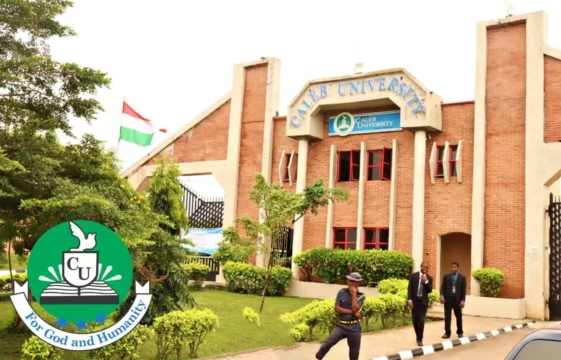
Caleb University
Caleb University, Imota

Caleb University, Imota known as CU is a private university located in Imota. Established by Prince Oladega Adebogun and owned by the Caleb Group of Schools, the university was licensed by the National Universities Commission (NUC) in 2007. Caleb University is recognised for its strong emphasis on discipline, moral values, entrepreneurship, innovation, and academic excellence. The university offers undergraduate, postgraduate, professional, and distance learning programmes across colleges including Environmental Sciences, Pure and Applied Sciences, Arts and Social Sciences, Education, Management Sciences, and Computing. Caleb University has continued to grow into one of the prominent private universities in Lagos State with modern academic facilities, structured hostel systems, ICT-driven learning, and a stable academic calendar.

History of the Institution

Caleb University evolved from the Caleb Group of Schools founded by Prince Oladega Adebogun, a renowned educationist and entrepreneur. The Caleb educational system began with Caleb Nursery and Primary School established in Lagos in 1986 and later expanded into secondary education through Caleb International College.

Following years of success in primary and secondary education, the vision expanded into university education, leading to the establishment of Caleb University in Imota, Lagos State. The university received its operational licence from the National Universities Commission (NUC) in 2007.

Academic activities officially commenced shortly after licensing, with the university focusing on producing graduates equipped with academic knowledge, entrepreneurial skills, leadership abilities, discipline, and moral character. Over the years, Caleb University has expanded its faculties, research activities, and infrastructure while introducing postgraduate and distance learning programmes.

Location

Imota, Lagos State, Nigeria

The university is located in the peaceful town of Imota along the Ikorodu–Epe axis of Lagos State. The campus provides a serene and secure environment conducive for learning, research, innovation, and student development.

List of Courses Offered by Caleb University, Imota

Caleb University offers undergraduate, postgraduate, and distance learning programmes across several colleges and faculties.

College of Environmental Sciences and Management

  • Architecture
  • Building
  • Estate Management
  • Quantity Surveying

College of Pure and Applied Sciences

  • Biochemistry
  • Biotechnology
  • Chemistry
  • Computer Science
  • Cyber Security
  • Industrial Chemistry
  • Mathematics
  • Microbiology
  • Physics
  • Physics with Computational Modelling
  • Statistics

College of Arts, Social and Management Sciences

  • Accounting
  • Banking and Finance
  • Business Administration
  • Criminology and Security Studies
  • Economics
  • English and Literary Studies
  • International Relations
  • Mass Communication
  • Peace Studies and Conflict Resolution
  • Philosophy
  • Political Science
  • Psychology
  • Public Administration
  • Taxation

College of Education

  • Education and English Language
  • Educational Management
  • Guidance and Counselling

College of Computing and Information Sciences

  • Information Systems
  • Information Technology
  • Software Engineering

College of Law

  • Law (LL.B.)

Admission Requirements

UTME (Undergraduate) Admission

Candidates applying for undergraduate admission into Caleb University must possess:

  • A minimum of five (5) O’Level credit passes including English Language and Mathematics
  • Results obtained in WAEC, NECO, GCE, or NABTEB in not more than two sittings
  • A valid JAMB UTME score meeting the university cut-off mark
  • Relevant JAMB subject combinations for the intended course
  • Participation in the admission screening process

Candidates who did not initially select Caleb University in JAMB may apply through Change of Institution.

Direct Entry Admission

Candidates with the following qualifications may apply for Direct Entry admission into 200 Level:

  • JUPEB
  • A-Level certificates
  • ND
  • NCE
  • HND

Departmental requirements also apply.

Postgraduate Admission

Applicants for postgraduate programmes must possess relevant Bachelor’s degrees from recognised institutions.

Apply online here:

Please check school website or latest news below for newest update.

School Fees

Caleb University operates a structured fee system that varies depending on programme, level, accommodation type, and laboratory requirements.

Undergraduate School Fees (2025/2026)

Arts, Social and Management Sciences

  • Approximately ₦700,000 — ₦1,200,000 per session

Science and Computing Programmes

  • Approximately ₦900,000 — ₦1,500,000 per session

Law

  • Approximately ₦2,000,000 — ₦3,000,000 per session

Architecture and Environmental Sciences

  • Approximately ₦1,200,000 — ₦1,800,000 per session

Cut-off Mark

The general JAMB cut-off mark for Caleb University is approximately 140 — 160 for most programmes.

Competitive courses such as:

  • Law
  • Cyber Security
  • Computer Science

may require higher scores.

Please check school website or latest news below for newest update.

Hostel / Accommodation

Caleb University provides structured on-campus hostel accommodation for students.

Hostel facilities include:

  • Furnished rooms
  • Electricity supply
  • Water supply
  • Security services
  • Internet access
  • Reading areas

Accommodation fees vary based on room category and hostel type.

Please check school website or latest news below for newest update.

Academic Calendar

Caleb University Academic Calendar 2026/2027 Released

Caleb University has released the approved academic calendar for the 2026/2027 academic session. The calendar was approved by the university’s Senate and Management, with the Vice-Chancellor, Professor Olalekan Asikhia, directing staff and students to follow the scheduled dates for academic activities.

The calendar covers the major activities planned for the first semester of the 2026/2027 session. Students and members of staff are expected to take note of the dates and make the necessary preparations ahead of each stage of the academic programme.

The university encouraged all students and staff to plan accordingly and comply with the approved schedule to support the smooth commencement and completion of academic activities during the session.

Students are advised to check the attached academic calendar for the specific dates and activities applicable to them and keep the schedule available for reference throughout the semester.

Notice Board

Caleb University Resumption Dates for Returning Students 2026/2027

Caleb University, Imota, Lagos State, has announced revised resumption dates for returning students for the 2026/2027 academic session. The university management, led by the Vice-Chancellor, Professor Olalekan Asikhia, has approved a 10-day extension for students in 200 to 400 level.

The revised dates apply to upper-level students, while the previously announced resumption date for fresh students and foundation students remains unchanged.

Student Category Resumption Date
200 Level October 9, 2026
300 Level October 10, 2026
Final Year (400 Level) October 22, 2026
100 Level and JUPEB September 26, 2026

All returning students in 200, 300 and 400 levels are required to complete their hostel allocation through the university portal and print evidence of completion before arriving on campus. The university stated that students without valid proof of hostel allocation will not be allowed to enter the university premises upon resumption.

The revised schedule supersedes the earlier communication on resumption for upper-level students. Students, parents and staff are advised to take note of the new dates and comply with the hostel allocation requirement before resumption.

Caleb University Notice to JUPEB Students and 2026/2027 Admitted Students

Caleb University has issued a notice to all students under its Joint Universities Preliminary Examinations Board (JUPEB) programme regarding the release of their examination results. The university stated that requests for the release of JUPEB results are currently being processed.

According to the notice, affected students will be informed once the processing of their JUPEB results has been completed. Students are therefore advised to await further communication from the university.

The university also announced that admission letters for the 2026/2027 academic session are now ready for collection at the Admissions/Academic Affairs Office. Students concerned are advised to collect their admission letters and complete the necessary registration procedures.

The resumption date is Saturday, September 26, 2026. Newly admitted students are encouraged to make the necessary preparations and ensure that all required admission and registration processes are completed promptly.

Notable Alumni

Caleb University has produced graduates across media, business, entertainment, and professional sectors. Publicly documented notable alumni records remain limited as the institution continues to grow.

  • Tosin Oshinowo – Nigerian architect, designer and creative director.
  • Femi Otedola – Nigerian businessman and philanthropist.
  • Ifeanyi Okowa – Nigerian physician and politician, former Governor of Delta State.
  • Oluwatoyin Alake – Nigerian media and communications professional.
  • Chiamaka Nnadi – Nigerian media personality and communications professional.

Official Website and Portal Links

Resource Link
Official Website Caleb University Website
Admissions Portal Caleb University Admissions
Courses Offered Courses Offered
Undergraduate Programmes Undergraduate Programmes
Distance Learning Centre Distance Learning Centre
Contact Page Contact Caleb University

Contact Information

Imota, Lagos State, Nigeria

Phone:

  • +234 803 230 4920
  • +234 805 552 0001

Website:

Frequently Asked Questions (FAQs)

Where is Caleb University located?

Caleb University is located in Imota along the Ikorodu–Epe axis of Lagos State, Nigeria.

Who owns Caleb University?

Caleb University was founded by Oladega Adebogun through the Caleb Group of Schools.

Is Caleb University owned by a church?

No. Caleb University is not officially owned by a specific church denomination, although it promotes Christian values and discipline.

What courses are offered at Caleb University?

Caleb University offers programmes in Law, Computer Science, Cyber Security, Accounting, Mass Communication, International Relations, Architecture, Psychology, Biotechnology, Software Engineering, and several others.

How much are Caleb University school fees?

School fees vary depending on programme and level, ranging from approximately ₦700,000 to ₦3,000,000.

Please check school website or latest news below for newest update.

Does Caleb University provide hostel accommodation?

Yes. Caleb University provides on-campus hostel accommodation with modern facilities for students.

What is Caleb University’s cut-off mark?

The general JAMB cut-off mark is approximately 140 — 160 for most programmes.

Please check school website or latest news below for newest update.

Does Caleb University offer distance learning programmes?

Yes. Caleb University operates a Distance Learning Centre for flexible academic programmes.

Is Caleb University accredited?

Yes. Caleb University is licensed and accredited by the National Universities Commission (NUC).

TSU, TASU
Taraba State University – TSU / TASU

Taraba State University widely known as TSU or TASU  is a state-owned public university located in Jalingo, the capital of Taraba State, North-East Nigeria. Established in 2008 by the Taraba State Government, the university was founded to widen access to university education for the people of Taraba State and promote economic growth and development in the region. With a motto of Harnessing Nature’s Gift, TSU has grown from a fledgling institution into a recognised university offering undergraduate and postgraduate programmes across ten faculties. The university is fully accredited and recognised by the National Universities Commission (NUC). As of 2022, the university had conducted its 6th, 7th, 8th and 9th combined convocation ceremony, graduating a cumulative total of over 14,000 students. The current Vice-Chancellor is Professor Sylvester Adi.

History of the Institution

Taraba State University was established in 2008 by the Taraba State Government with the primary mandate of widening access to tertiary education for Taraba State indigenes and contributing to the economic and human capital development of the state. The first Vice-Chancellor of the university at inception was Dr. Ahmed Usman Jalingo, who served from 2008 until his passing in March 2011. Following his death, Professor Michael Noku served as Acting Vice-Chancellor. In January 2012, Professor Mohammed Sani Yahaya was appointed as the second substantive Vice-Chancellor.

The university’s first convocation ceremony was conducted in 2018, combining the 1st through 5th graduating sets — a total of 5,900 students. Of these, 29 graduated with First Class Honours, 1,006 with Second Class Upper Division, 2,083 with Second Class Lower, 1,850 with Third Class, and 32 with Pass Degrees. By 2022, the university had produced its first-ever PhD graduate — Hanawa Herbert Rufus — who made history as the first doctoral degree holder from TSU.

The university has expanded steadily over its 17-year history, adding faculties including Engineering, Health Sciences, Communication and Media Studies, and Law. TSU has also benefited from TETFund interventions covering physical infrastructure, academic staff development, library improvement, equipment procurement, and research. The university’s motto, Harnessing Nature’s Gift, reflects Taraba State’s rich natural endowments and the institution’s goal of harnessing human potential for development.

Location

Taraba State University (TSU) P.M.B. 1167, Jalingo Taraba State, Nigeria

The university is located in Jalingo, the capital city of Taraba State, North-East Nigeria.

List of Courses Offered by Taraba State University (TSU)

TSU offers undergraduate and postgraduate programmes across ten faculties, covering arts, sciences, social sciences, management, education, engineering, health sciences, law, agriculture, and communication.

Faculty of Agriculture

  • Agricultural Economics and Extension
  • Agronomy
  • Animal Science
  • Crop Protection
  • Environmental Conservation and Management (B.Agric)
  • Forestry and Wildlife (B.Agric)
  • Home Economics
  • Soil Science

Faculty of Arts

  • Arabic
  • Christian Religious Studies
  • English and Literary Studies
  • French
  • History and Diplomatic Studies
  • Islamic Studies
  • Languages and Linguistics (English)
  • Languages and Linguistics (Hausa)
  • Theatre and Film Studies

Faculty of Communication and Media Studies

  • Advertising
  • Broadcasting
  • Journalism and Media Studies
  • Public Relations

Faculty of Education

  • Agricultural Education (B.Agric Ed)
  • Arts Education (English, History, Hausa)
  • Early Childhood Education
  • Educational Foundation
  • Guidance and Counselling
  • Library and Information Science
  • Science Education
  • Social Science Education
  • Vocational and Technology Education

Faculty of Engineering

  • Agricultural and Bio-Resource Engineering
  • Civil Engineering
  • Electrical and Electronic Engineering
  • Mechanical Engineering

Faculty of Health Sciences

  • Environmental Health
  • Medical Laboratory Science
  • Nursing Science
  • Public Health

Faculty of Law

  • Law (LL.B.)

Faculty of Management Sciences

  • Accounting
  • Business Administration
  • Geography
  • Public Administration
  • Sociology

Faculty of Science

  • Biological Sciences
  • Botany
  • Chemistry
  • Computer Science
  • Ecology and Conservation
  • Mathematics and Statistics
  • Physics

Faculty of Social Sciences

  • Economics
  • Peace and Conflict Studies (B.Sc. Peace and Conflict Studies)
  • Political Science and International Relations

For the complete and most up-to-date list of departments and courses, please visit the official admissions page or see the latest news below.

Admission Requirements

UTME (Undergraduate) Admission

  • A minimum of five (5) O’Level credit passes including English Language and Mathematics, obtained in not more than two sittings in WAEC, NECO, GCE O’Level, or NABTEB.
  • A valid JAMB UTME score meeting the minimum cut-off mark of 140 is required. Candidates must select Taraba State University as their institution of first choice on JAMB.
  • All eligible candidates must participate in the Post-UTME screening exercise and meet departmental requirements.

Direct Entry Admission

  • Candidates with relevant A’Level passes, ND (Upper Credit), HND, NCE, or IJMB qualifications may apply for Direct Entry into 200 Level.
  • Five (5) O’Level credit passes including English Language and Mathematics in not more than two sittings are required in addition to the Direct Entry qualification.

Postgraduate Admission

  • A Bachelor’s degree with a minimum of Second Class Lower Division from an NUC-accredited university.
  • NYSC Discharge or Exemption certificate.
  • Academic transcripts and additional departmental requirements apply.

Apply for Admission: apply.tsuniversity.edu.ng

Admission Lists

TASU Merit Admission List 2026/2027

Taraba State University (TASU), Jalingo, has released its admission list for the 2026/2027 academic session on the Joint Admissions and Matriculation Board (JAMB) Central Admissions Processing System (CAPS). Candidates who participated in the university’s admission screening exercise can now check their admission status online.

To check their status, applicants should visit the JAMB e-Facility portal and log in with their registered email address and password. From the dashboard, select “Check Admission Status”, click on “Access my CAPS”, and then choose “Admission Status” to see whether an admission offer has been made.

Candidates who have been offered admission should accept or reject the offer using the available JAMB CAPS process. The notice also states that candidates can send ACCEPT or REJECT by SMS to 55019 or 66019 using the phone number linked to their JAMB profile. Candidates without access to their registered phone numbers are advised to visit a JAMB-accredited centre for assistance.

Admitted candidates are advised to accept their offers within the stated four-week period and print their JAMB admission letters after acceptance, as these may be required during clearance and registration. Candidates checking CAPS on a mobile phone who cannot see all the options can use Google Chrome’s “Request desktop site” feature to display the full page. Applicants who have not yet received an offer should continue checking their admission status for updates.

School Fees

Taraba State University is widely regarded as one of the most affordable state universities in Nigeria. The university operates a differentiated fee structure for indigenes and non-indigenes.

The last known school fees for TSU are as follows:

  • Indigene fresh students: approximately ₦30,000 — ₦55,000 per session depending on faculty and programme
  • Non-indigene fresh students: approximately ₦50,000 — ₦80,000 per session depending on faculty and programme
  • Returning students (indigenes): approximately ₦20,000 — ₦40,000 per session
  • Returning students (non-indigenes): approximately ₦35,000 — ₦60,000 per session
  • Acceptance fee (all newly admitted students): ₦10,000 (non-refundable)

Fees for Health Sciences and Engineering programmes are generally higher than those for Arts, Education, and Social Sciences. School fees are paid online via the TSU official portal.

Please see the latest news below or visit the school website for the most current and officially confirmed school fees schedule, as fees are subject to review each academic session.

Cut-off Mark

The last known JAMB cut-off mark for Taraba State University is 140 for all degree programmes. Only candidates who score a minimum of 140 in JAMB are eligible to apply for any undergraduate degree course at TSU. Departmental cut-off marks may vary based on the number of applicants and available spaces.

Please see the latest news below or visit the school website for the most current cut-off mark information.

Hostel / Accommodation

Taraba State University provides on-campus hostel accommodation for students. The last known hostel accommodation fee is ₦25,000 per academic year, covering maintenance and bed space. Accommodation spaces are available to all interested students on an availability basis.

Please see the latest news below or visit the school website for the most current hostel fees and application procedures.

Notice Board

TASU Post-UTME/DE Application Deadline Extended to October 31, 2026

Taraba State University (TASU), Jalingo, has extended the deadline for the 2026/2027 Post-UTME and Direct Entry (DE) application. The university management approved the extension to give prospective candidates more time to complete the online application process.

The application portal will now remain open until Saturday, 31st October 2026. Candidates who are yet to apply are advised to complete their applications before the new deadline, as applications submitted after the portal closes may not be considered.

TASU stated that only candidates who have uploaded their O’level result(s) to the JAMB portal and completed the university’s online application exercise will be considered for admission. Applicants are also required to provide accurate information during registration, as the university warned that candidates found to have supplied false information may be disqualified, even after gaining admission.

The extension applies to candidates seeking admission into Taraba State University for the 2026/2027 academic session through UTME and Direct Entry. Applicants are advised to ensure that all required steps are completed before the new closing date.

Notable Alumni

Taraba State University is a relatively young institution, established in 2008. No widely documented notable alumni are currently recorded in major public sources. The university has, however, produced its first-ever PhD graduate — Hanawa Herbert Rufus — who made history in 2022. 

Official Website and Portal Links

Resource Link
Official Website tsuniversity.edu.ng
Admission Application Portal apply.tsuniversity.edu.ng
Admissions Page tsuniversity.edu.ng/admissions
News and Updates tsuniversity.edu.ng/author/exquisite
Endowment / Donations endowment.tsuniversity.edu.ng
History and Traditions tsuniversity.edu.ng/history-traditions
Leadership tsuniversity.edu.ng/leadership
Vision and Mission tsuniversity.edu.ng/vision-mission

Contact Information

Taraba State University (TSU) P.M.B. 1167, Jalingo Taraba State, Nigeria

Please visit the official website for current phone and email contact details.

Frequently Asked Questions (FAQs)

Where is Taraba State University located? TSU is located in Jalingo, the capital city of Taraba State, North-East Nigeria.

When was Taraba State University established? The university was established in 2008 by the Taraba State Government. Its first academic session commenced the same year, with the first Vice-Chancellor being Dr. Ahmed Usman Jalingo.

What programmes does Taraba State University offer? TSU offers undergraduate and postgraduate (PGD, M.Sc., and Ph.D.) programmes across ten faculties covering agriculture, arts, communication, education, engineering, health sciences, law, management sciences, science, and social sciences.

What is the JAMB cut-off mark for TSU? The last known cut-off mark is 140 for all degree programmes. Please see the latest news below or visit the school website for the most current figure.

Does TSU conduct Post-UTME screening? Yes. TSU conducts a Post-UTME aptitude test for all eligible JAMB candidates. Candidates must have scored at least 140 in JAMB and chosen TSU as their first choice to be eligible. Apply via apply.tsuniversity.edu.ng.

How much are TSU school fees? TSU is one of the most affordable universities in Nigeria. The last known fees range from approximately ₦30,000 — ₦55,000 for fresh indigene students and ₦50,000 — ₦80,000 for non-indigenes per session. The acceptance fee is ₦10,000. Please see the latest news below or visit the school website for current fees.

Does TSU have hostel accommodation? Yes. The last known hostel fee is ₦25,000 per academic year. Please see the latest news below or visit the school website for current hostel fees and availability.

Has TSU produced any PhD graduates? Yes. In 2022, Hanawa Herbert Rufus became the first PhD graduate in the history of Taraba State University, a historic milestone for the institution.

Ajayi Crowther University ACU
Ajayi Crowther University – ACU

Ajayi Crowther University (ACU) is a private Christian university located in Oyo, Oyo State. Established in 2005 by the Supra Diocesan Board (West) of the Church of Nigeria (Anglican Communion), the university was founded to provide quality education rooted in strong moral and spiritual values.

ACU is fully accredited by the National Universities Commission (NUC) and offers undergraduate and postgraduate programmes across disciplines such as law, engineering, social sciences, natural sciences, and humanities.

The university is known for combining academic excellence with character development, producing graduates equipped with both professional competence and ethical discipline.

Official Website: https://acu.edu.ng/
Admission Portal: https://admissions.acu.edu.ng/
Postgraduate Portal: https://pgs.acu.edu.ng/

History of the Institution

Ajayi Crowther University was established in 2005 as a successor to the defunct CMS Training Institution, Abeokuta, and St. Andrew’s College, Oyo—both historically significant institutions in Nigeria’s educational development.

The university is named after Bishop Samuel Ajayi Crowther, the first African Anglican bishop, who played a major role in the spread of Christianity and Western education in Nigeria.

The Church of Nigeria (Anglican Communion) founded ACU with the goal of promoting higher education that integrates academic knowledge with Christian ethics. Since its establishment, the university has expanded significantly in terms of:

  • Academic programmes
  • Infrastructure development
  • Student population
  • Research and postgraduate studies

Today, ACU stands as one of Nigeria’s recognized faith-based private universities, committed to discipline, academic rigor, and moral uprightness.

Location

Ajayi Crowther University (ACU)
Oyo Town
Oyo State

The university is located in Oyo, a historic town in Oyo State, offering a peaceful and conducive environment for learning and research.

List of Courses Offered by Ajayi Crowther University, Oyo

Ajayi Crowther University offers a wide range of undergraduate and postgraduate programmes across several faculties.

Faculty of Humanities

  • English
  • History and International Studies
  • Religious Studies

Faculty of Social Sciences

  • Economics
  • Political Science
  • Sociology

Faculty of Management Sciences

  • Accounting
  • Banking and Finance
  • Business Administration
  • Industrial Relations and Personnel Management

Faculty of Natural Sciences

  • Biochemistry
  • Microbiology
  • Computer Science
  • Physics with Electronics
  • Mathematics

Faculty of Engineering

  • Civil Engineering
  • Mechanical Engineering
  • Electrical and Electronics Engineering
  • Computer Engineering

Faculty of Law

  • Law (LL.B.)

Faculty of Environmental Studies

  • Architecture
  • Estate Management

Postgraduate Programmes

ACU offers postgraduate diplomas, master’s degrees, and PhD programmes.
https://pgs.acu.edu.ng/

Admission Requirements

UTME (Undergraduate Admission)

  • Minimum of five (5) O’Level credit passes including English Language and Mathematics
  • Must sit for the Joint Admissions and Matriculation Board (JAMB) UTME
  • Meet the required cut-off mark (generally 140–180+)
  • Apply through the ACU admission portal
  • Participate in screening

Direct Entry Admission

  • Acceptable qualifications include ND, NCE, IJMB, HND, or A-Level
  • Must meet departmental requirements

Postgraduate Admission

  • Bachelor’s degree from a recognized university (minimum Second Class Lower Division)
  • NYSC discharge or exemption certificate
  • Academic transcripts and departmental requirements

Apply here: https://admissions.acu.edu.ng/

School Fees

Ajayi Crowther University operates a structured tuition system based on programme and level.

  • Fees vary widely depending on the course
  • Programmes like Agriculture and Religious Studies are among the lowest (around ₦200,000 per session)
  • Professional courses such as Law and Engineering can exceed ₦1,000,000 per session
  • Law programmes can reach up to about ₦2,000,000 per session

Payment Structure

  • Fees are typically paid in installments:
    • 50% first payment
    • 25% second payment
    • 25% final payment

Detailed fee schedule:
https://acu.edu.ng/downloads/Approved-2025-2026-Tuition-fees-schedule.pdf

Cut-off Mark

  • General JAMB cut-off mark: 140–180+
  • Competitive courses such as Law and Engineering require higher scores

Hostel / Accommodation

ACU provides on-campus accommodation for students.

Hostel features include:

  • Furnished rooms
  • Electricity and water supply
  • Security
  • Structured campus environment

Accommodation fees vary depending on hostel type and facilities.

Notice Board

Ajayi Crowther University Announces 32nd Inaugural Lecture

Ajayi Crowther University (ACU), Oyo, has announced its 32nd Inaugural Lecture, scheduled to take place on Tuesday, October 6, 2026. The academic event will bring together members of the university community, scholars, students and other invited participants.

The lecture, titled “Invisible Giants: The Microbial Forces Securing Food, Protecting Health and Sustaining Life on Earth,” will be delivered by Professor Afolake Atinuke Olanbiwoninu, Professor of Food Microbiology at Ajayi Crowther University. The presentation will examine the role of microorganisms in food security, human health and the sustenance of life.

The event will be held at the Modupe and Folorunso Alakija Faculty of Law Lecture Auditorium, Ajayi Crowther University, Oyo, and will commence at 11:00 a.m. Professor Ebunoluwa O. Oduwole, Vice-Chancellor of the university, will serve as the distinguished chairman, while Professor A. O. Binuyo, Deputy Vice-Chancellor (Administration), will chair the Ceremonials Committee.

The inaugural lecture is part of the university’s academic activities aimed at promoting scholarly engagement, knowledge sharing and research development. Members of the university community, academic scholars, students and interested members of the public are expected to participate in the event.

Notable Aluni

  • Jumoke Odetola – Nigerian actress, filmmaker and television personality. She is a graduate of Ajayi Crowther University and has received recognition for her work in Nollywood.
  • Dr Olasehinde-Williams Godwin Oluseye – Nigerian academic and researcher who was listed among the world’s top 2% of scientists in a Stanford–Elsevier ranking. He graduated from Ajayi Crowther University in 2011 as the valedictorian of his set.
  • Dr Thompson Olatuyi – IT risk and governance professional and Deloitte manager in the United States; he earned a B.Sc. in Economics from Ajayi Crowther University in 2011.
  • Grace Daramola – Nigerian scientist and research professional working at the International Institute of Tropical Agriculture (IITA). She is an alumna of Ajayi Crowther University.
  • Blessing Agbeetan – Nigerian award-winning broadcast journalist and development advocate who graduated from Ajayi Crowther University in 2022.

Official Website and Portal Links

Contact Information

Ajayi Crowther University (ACU)
Oyo Town
Oyo State

Email: info@acu.edu.ng

Frequently Asked Questions (FAQs)

Where is Ajayi Crowther University located?
ACU is located in Oyo Town, Oyo State, Nigeria.

When was Ajayi Crowther University established?
It was established in 2005 by the Church of Nigeria (Anglican Communion).

What courses are offered at ACU?
ACU offers programmes in law, engineering, sciences, social sciences, management, and humanities.

What is the cut-off mark for ACU?
The general cut-off mark ranges from 140 to 180 depending on the course.

How much are Ajayi Crowther University school fees?
Fees range from about ₦200,000 to over ₦2,000,000 depending on the programme.

Is Ajayi Crowther University admission still on?
Admission is usually ongoing during each academic cycle. Applicants should check the official portal for updates.

Does ACU offer postgraduate programmes?
Yes, ACU offers postgraduate diploma, master’s, and PhD programmes.

How do I access Ajayi Crowther University portal?
Visit the admission portal: https://admissions.acu.edu.ng/

TAGS

Ajayi crowther university acu fees, Ajayi crowther university acu tuition fees, Ajayi Crowther University school fees, Ajayi Crowther University courses and fees, Ajayi Crowther University portal, Ajayi Crowther University postgraduate school fees, Ajayi Crowther University admission, Ajayi crowther university acu ranking


Dennis Osadebay University - DOU
Dennis Osadebay University – DOU

Dennis Osadebay University (DOU) is a state-owned university located in Asaba, Delta State, Nigeria. The university is owned by the Delta State Government and was established to expand access to university education while providing programmes that respond to the academic, professional and development needs of the state and wider Nigerian society.

The university offers full-time undergraduate degree programmes through JAMB UTME and Direct Entry (DE) admission routes. According to its current undergraduate programme information, DOU has eight faculties and more than 73 accredited undergraduate courses, with programmes generally lasting four or five years depending on the discipline.

Dennis Osadebay University has developed programmes in areas including Allied Medical Sciences, Agriculture, Arts, Behavioural Sciences, Computing, Engineering, Environmental Sciences, Management and Social Sciences, and Science. The university also provides alternative academic routes such as Pre-Degree and JUPEB Foundation programmes, alongside certificate, diploma and advanced diploma programmes available through its portal.

For prospective students, DOU currently operates an online Post-UTME screening portal for the 2026/2027 academic session. Candidates can access the screening process through the university’s official portal using their JAMB registration details.

History 

Dennis Osadebay University was established by the Delta State Government as a state-owned university in Asaba. The institution is named after Dennis Chukude Osadebay, a prominent Nigerian statesman and the first Premier of the former Mid-Western Region of Nigeria.

The university was established as part of Delta State’s efforts to expand tertiary education opportunities and develop human capital within the state. Its location in Asaba also places it within one of the major administrative and commercial centres of Delta State.

Since its establishment, DOU has expanded its academic structure beyond the traditional arts and science disciplines to include professional and technology-oriented programmes. Its present academic offerings include programmes in medicine and health sciences, agriculture, computing, engineering, environmental sciences, management, social sciences and humanities.

The university has also developed alternative entry and foundation programmes. Its Pre-Degree programme is designed as a one-year foundation route for candidates seeking admission into 100 level, while the JUPEB Foundation programme provides an advanced-level route to Direct Entry admission into 200 level.

Location 

Dennis Osadebay University is located in Anwai, Asaba, Delta State, Nigeria.

The university’s official contact information identifies its location as:

Dennis Osadebay University
Anwai, Asaba
Delta State, Nigeria

Asaba serves as the capital of Delta State and is an important urban centre in the South-South region of Nigeria. The university’s location provides students with access to a growing city and the wider economic activities of Delta State.

List of Programmes Offered by Dennis Osadebay University

Dennis Osadebay University offers a wide range of undergraduate programmes across its faculties. The exact availability of individual programmes may depend on accreditation and the admission session, so prospective students should confirm their preferred course on the current university portal before applying.

Faculty of Allied Medical Sciences

Programmes listed by the university include:

  • Anatomy – B.Sc.
  • Healthcare Administration and Hospital Management – B.Sc.
  • Human Nutrition and Dietetics – B.Sc.
  • Human Physiology – B.Sc.
  • Medical Laboratory Science – B.MLS.
  • Public Health – B.Sc.
  • Nursing Science – B.NSc.
  • Optometry – O.D.

These programmes provide opportunities for students interested in healthcare, biomedical sciences, public health and related professional fields.

Faculty of Agriculture

Agriculture-related programmes include:

  • Agribusiness – B.Sc.
  • Agricultural Extension and Rural Development
  • Agricultural Economics and Agribusiness
  • Animal Science and Production
  • Crop Science and Horticultural Management
  • Soil and Land Resource Management
  • Fisheries and Aquaculture

These programmes cover agricultural production, agribusiness, extension services, animal production, crop management and aquatic resources.

Faculty of Arts

Arts and humanities programmes include:

  • Creative Arts, with options in Theatre Arts and Film Studies, Visual Arts and Music
  • European Language
  • English and Literary Studies
  • History, Strategic and International Studies
  • Religious Studies
  • Philosophy, with options including Politics and Economic Entrepreneurship
  • Philosophy in Critical Thinking and Character Studies

The Faculty of Arts provides programmes that combine traditional humanities with contemporary areas such as film, creative arts and critical thinking.

Faculty of Behavioural Sciences

The university’s behavioural and social science-related programmes include:

  • Criminology and Security Studies
  • Economics
  • Film and Multimedia Studies
  • International Relations

The faculty covers disciplines concerned with human behaviour, society, security, economic activity and international affairs.

Faculty of Computing

DOU offers computing-related programmes designed to prepare students for careers in software, information technology and digital systems. These include:

  • Computer Science
  • Cyber Security
  • Information Technology
  • Software Engineering

The university’s current academic staff information also shows active teaching and research in software engineering, cybersecurity, cloud engineering, data engineering, artificial intelligence and related areas.

Faculty of Engineering

Engineering programmes form part of the university’s academic expansion. Prospective students interested in engineering should check the current undergraduate programme catalogue for the specific engineering disciplines available for their admission session.

Faculty of Environmental Sciences

Environmental and built-environment programmes include areas such as:

  • Environmental Management and Toxicology
  • Fine and Applied Arts
  • Surveying and Geo-Informatics
  • Urban and Regional Planning

The university’s programme documents also contain specific academic requirements for Surveying and Geo-Informatics, including routes for UTME and Direct Entry candidates.

Faculty of Management and Social Sciences

Programmes include:

  • Accounting
  • Banking and Finance
  • Business Administration
  • Criminology and Security Studies
  • Economics
  • Entrepreneurship
  • Hospitality and Tourism Studies
  • Industrial Relations and Personnel Management
  • International Relations
  • Management
  • Marketing
  • Mass Communication
  • Political Science
  • Psychology
  • Public Administration
  • Sociology

These programmes cover business, finance, administration, communication, public policy and several social science disciplines.

Faculty of Science

Science programmes include:

  • Biology
  • Chemistry
  • Geology
  • Industrial Chemistry
  • Mathematics
  • Microbiology
  • Physics
  • Statistics

These courses provide a foundation for scientific research, laboratory work, industry and further professional or postgraduate study.

Admission Requirements

Admission into Dennis Osadebay University for regular undergraduate programmes is through UTME or Direct Entry. The university’s current undergraduate programme page states that candidates must possess five O’Level credits or their equivalent as required by their department. It also currently states a minimum UTME score of 150 and an admission age requirement of 16 years by 30 September of the admission year.

For UTME admission, candidates should have the required O’Level subjects for their chosen course. The university’s admission information states that the required five credits should include English Language and Mathematics where applicable, with the remaining subjects determined by the department.

The university’s published admission requirements also provide routes for Direct Entry candidates. Previous official admission information states that candidates with a relevant ND or HND at minimum Lower Credit, together with the required JAMB Direct Entry registration, may be considered for admission.

Candidates with IJMB/JUPEB qualifications may also be considered under the university’s stated requirements. The published requirements indicate a minimum of two relevant subjects with at least four points obtained across the subjects, while NCE candidates are required to have a Merit grade from a recognised institution.

Because professional programmes such as Nursing, Medical Laboratory Science, Optometry and other health-related courses can have additional subject requirements, applicants should always check the requirements for their particular course before applying.

Cut-Off Mark

The current DOU undergraduate programme page states a minimum UTME score of 150 for admission into its full-time undergraduate programmes.

However, candidates should distinguish this current general minimum from older admission-session requirements. For example, the university’s official 2025/2026 admission advert required candidates who chose DOU as first choice and scored 160 and above in the 2025/2026 UTME. Candidates who had not selected DOU as first choice were asked to process a change of institution.

Therefore, the 150 score currently displayed on the university’s undergraduate programme page should be treated as the university’s stated general minimum, while candidates should check the current admission notice for any programme-specific or session-specific requirement.

Meeting the minimum UTME score does not automatically guarantee admission. Candidates must also satisfy the O’Level, subject combination and other requirements of their chosen programme.

DOU Admission Lists

Dennis Osadebay University Admission List 2026/2027 Released

Dennis Osadebay University (DOU), Asaba, has released its admission list for the 2026/2027 academic session. Candidates who applied for admission can now check their admission status through the JAMB Central Admissions Processing System (CAPS).

To check, visit the JAMB eFacility portal, log in with your JAMB details, select Check Admission Status, then Access my CAPS and Admission Status. Candidates who receive an admission offer should accept or reject it through an approved JAMB CBT centre or by sending ACCEPT or REJECT to 55019 or 66019 using their JAMB-registered phone number. Those who accept their offer should also print their JAMB admission letter.

DOU has advised newly admitted candidates to accept their admission within two weeks from the date of the offer. After acceptance, candidates are expected to pay the prescribed acceptance fee and applicable sundry charges within one week. Candidates whose CAPS status shows Admission in Progress, Recommended, Pending or Not Admitted should continue checking for updates.

All acceptance fees and other admission-related payments should be made only through official university-approved channels. Candidates are advised not to pay individuals or unauthorised accounts claiming to represent the university. Those checking CAPS on a mobile phone may need to use Chrome’s Request Desktop Site option if the Admission Status menu is not displayed.

School Fees

Dennis Osadebay University does not have one universal school-fee amount applicable to every student. The amount payable can vary according to the programme, level of study and other approved institutional charges.

Students should obtain their official payment information through the DOU student/application portal rather than relying on fee figures circulated on unofficial websites or social media.

The university’s portal currently provides separate application options for Certificate, Diploma and Advanced Diploma programmes, with an application fee of ₦15,000 shown for each of those programmes. This is an application fee for those programmes and should not be confused with undergraduate tuition or school fees.

Prospective undergraduate students should confirm the current acceptance fee, tuition and other charges through the university after admission before making payment.

The safest approach is to use the official DOU website and portal for applications, payments, admission-status checks and other admission-related processes.

Hostel / Accommodation

Students admitted to Dennis Osadebay University should confirm the current hostel and accommodation arrangements directly with the university.

Accommodation availability, charges and allocation procedures can change from one academic session to another. Students who do not obtain university accommodation may also consider private accommodation around Asaba, subject to their individual needs and budget.

Academic Calendar

Dennis Osadebay University Academic Calendar 2026/2027

Dennis Osadebay University (DOU), Asaba, Delta State, has approved the academic calendar for the 2026/2027 academic session. The calendar covers resumption, registration, lectures, examinations, students’ activities, breaks and other academic activities for the session.

Returning students are expected to resume and begin registration on Monday, 12 October 2026, while first-semester lectures for returning students will commence on 19 October. Screening and registration for new students will begin on 19 October, with lectures for new students scheduled to start on 9 November 2026.

First Semester

Activity Date
Resumption and registration for returning students 12 October 2026
First-semester lectures for returning students 19 October 2026
Screening and registration for new students 19 October 2026
Registration ends for returning students 23 October 2026
First Semester Prayer and Worship 6 November 2026
Registration ends for new students 6 November 2026
First-semester lectures for new students 9 November 2026
Late registration/Add and Drop 16–20 November 2026
Orientation/Lecture for new students 23–25 November 2026
Matriculation Ceremony 27 November 2026
Continuous Assessment 14–18 December 2026
Christmas Break 21 December 2026–3 January 2027
Resumption from Christmas Break 4 January 2027
First-semester lectures end 12 February 2027
Revision and uploading of CA scores 15–19 February 2027
First-semester examinations 22 February–12 March 2027
First-semester break 14 March–2 April 2027

The second semester will begin with resumption on 4 April 2027 and lectures on 5 April. Continuous assessment is scheduled for 10–14 May, while Students’ Week will hold from 17–21 May. Second-semester lectures will end on 25 June, followed by revision and examinations.

Activity Date
Resumption from first-semester break 4 April 2027
Second-semester lectures begin 5 April 2027
Departmental/Faculty Boards on first-semester results 5–9 April 2027
BCOS consideration of first-semester results 12–16 April 2027
Continuous Assessment 10–14 May 2027
Students’ Week 17–21 May 2027
Second-semester lectures end 25 June 2027
Revision and uploading of CA scores 28 June–2 July 2027
Mid-Year Prayer and Thanksgiving 2 July 2027
Second-semester examinations 5–23 July 2027
Departmental/Faculty Boards on second-semester results 9–13 August 2027
BCOS consideration of results 16–20 August 2027
End of 2026/2027 academic session 27 August 2027
2027/2028 academic session October 2027

DOU also stated that Wednesdays from 4:00 p.m. to 6:00 p.m. are lecture-free periods for sports activities. Students are advised to take note of the dates and plan their academic activities accordingly.

Notice Board

DOU Notice to JUPEB Students for 2025/2026 and 2026/2027 Sessions

Dennis Osadebay University (DOU), Asaba, Delta State, has released an important update for students and applicants under its Joint Universities Preliminary Examinations Board (JUPEB) programme. The notice covers the release of the 2025/2026 examination results, the 2026/2027 first batch admission list and ongoing admissions.

The university confirmed that 2025/2026 JUPEB results are now available. Students can log into their accounts on the university portal to check and print their Statements of Results.

DOU also announced that the 2026/2027 JUPEB First Batch Admission List has been released. Applicants are advised to check their admission status through the university portal and proceed with registration where applicable.

Admission into the 2026/2027 JUPEB programme remains open for prospective candidates who are yet to apply. Further enquiries can be made at the JUPEB Office, Dennis Osadebay University, Asaba, or through the university’s official website at www.dou.edu.ng, email info@dou.edu.ng, or phone +234 803 441 3861.

Notable Alumni

The university’s alumni are increasingly entering fields including agriculture, science, computing, management, environmental sciences and the health professions, but publicly documented notable alumni remain limited because of the university’s young age.

Official Website and Portal Links

Resource Link
Official Website Dennis Osadebay University Official Website
Student/Application Portal DOU Student and Application Portal
Undergraduate Programme Information DOU Undergraduate Programme Page
2026/2027 Post-UTME Screening DOU 2026/2027 Post-UTME Screening Portal
Pre-Degree Programme DOU Pre-Degree Programme
JUPEB Foundation Programme DOU JUPEB Foundation Programme

Contact Information

Dennis Osadebay University
Anwai, Asaba
Delta State, Nigeria

Email: info@dou.edu.ng
Telephone: +234 912 441 7389

The university’s official staff and website information identifies the institution as being located at Anwai, Asaba, Delta State and provides the above general contact details.

Prospective students should use the official university website and portal to confirm current admission dates, fees, screening requirements and programme availability.

Frequently Asked Questions (FAQs)

What is the full name of DOU?
DOU stands for Dennis Osadebay University.

Where is Dennis Osadebay University located?
Dennis Osadebay University is located in Anwai, Asaba, Delta State, Nigeria.

Is Dennis Osadebay University a state university?
Yes. DOU is owned by the Delta State Government. The university’s 2025/2026 admission advertisement identifies it as a Delta State Government-owned institution.

What is the current DOU cut-off mark?
The university’s current undergraduate programme page states a minimum UTME score of 150. Candidates should still check the admission notice for their particular session and programme.

What was the DOU cut-off mark for 2025/2026?
The official 2025/2026 admission advert required candidates who chose DOU as first choice to have scored 160 or above in the UTME. This was a requirement for that admission exercise and should not automatically be presented as the current general cut-off.

Does DOU offer Nursing Science?
Yes. B.NSc Nursing Science is listed among the university’s Allied Medical Sciences programmes.

Does DOU offer Medical Laboratory Science?
Yes. B.MLS Medical Laboratory Science is listed among the university’s undergraduate programmes.

Does DOU offer Medicine and Surgery?
The undergraduate programme information reviewed for this page lists several health and medical-related programmes, including Nursing Science, Medical Laboratory Science, Anatomy, Human Physiology, Public Health and Optometry. Medicine and Surgery was not included in the 2025/2026 programme list reviewed here, so prospective Medicine applicants should confirm the current official programme list before applying.

Does DOU offer Computer Science?
Yes. Computer Science is among the university’s computing-related programmes. The university also offers Cyber Security, Information Technology and Software Engineering.

Does DOU offer Cyber Security?
Yes. Cyber Security is listed among the computing programmes offered by the university.

Does Dennis Osadebay University accept Direct Entry?
Yes. The university accepts Direct Entry candidates. Its published requirements include relevant ND or HND qualifications with at least Lower Credit, together with the required JAMB Direct Entry registration.

Does DOU accept JUPEB?
Yes. DOU operates a JUPEB Foundation programme. The university describes it as a one-year advanced-level route that can qualify successful candidates for 200-level Direct Entry admission.

Does DOU have a Pre-Degree programme?
Yes. The university currently offers a one-year Pre-Degree programme. Its official page states that applicants need five O’Level credits including English Language, with no JAMB score required for entry into the foundation programme itself.

How do I apply for DOU admission?
Applicants should use the official DOU portal, create an account, complete the relevant application form, upload the required documents and pay the applicable application fee.

How do I check DOU Post-UTME screening?
The university’s official portal has a dedicated 2026/2027 Post-UTME Screening page where candidates can begin the screening process using their JAMB registration number.

How much is Dennis Osadebay University school fees?
There is no single school-fee amount applicable to every DOU student. Fees depend on the programme and other approved charges. Students should confirm the current official amount through the university portal after admission.

How much are DOU Certificate, Diploma and Advanced Diploma application forms?
The current DOU application portal lists the application fee for Certificate, Diploma and Advanced Diploma programmes as ₦15,000 each. This is an application fee and should not be confused with tuition or school fees.

What courses does Dennis Osadebay University offer?
DOU offers courses across Allied Medical Sciences, Agriculture, Arts, Behavioural Sciences, Computing, Engineering, Environmental Sciences, Management and Social Sciences, and Science. Its published programmes include Nursing Science, Medical Laboratory Science, Public Health, Accounting, Business Administration, Mass Communication, Political Science, Computer Science, Cyber Security, Software Engineering, Microbiology, Geology and several others.

TAGS

Dennis Osadebay University, DOU, DOU Asaba, Dennis Osadebay University Asaba, DOU courses, DOU courses and requirements, DOU admission, DOU admission requirements, DOU school fees, DOU school fees for freshers, DOU cut off mark, DOU JAMB cut off mark, DOU Post UTME, DOU Post UTME form, DOU Post UTME screening, DOU admission portal, DOU admission status, DOU student portal, DOU Direct Entry, DOU JUPEB, DOU Pre-Degree, DOU Nursing, DOU Medical Laboratory Science, DOU Public Health, DOU Computer Science, DOU Cyber Security, DOU Software Engineering, DOU Engineering courses, DOU Agriculture courses, DOU Mass Communication, DOU Accounting, DOU courses and cut off mark, Dennis Osadebay University 2026/2027 admission, DOU 2026/2027 Post UTME, DOU 2025/2026 admission, Dennis Osadebay University Asaba Delta State, DOU departmental cut off mark