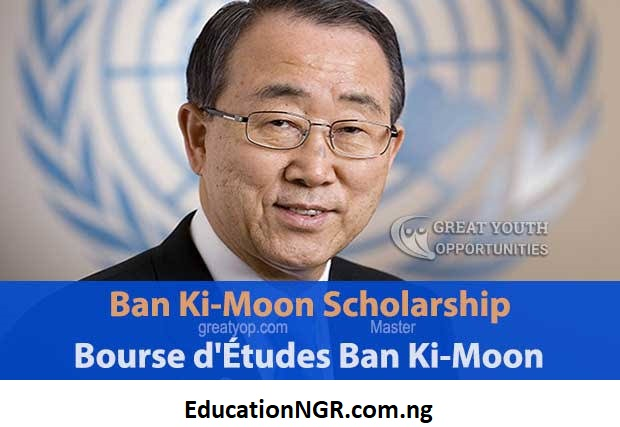
Ban Ki-moon Foundation Global Citizen Scholarship: Eligibility, Benefits and How To Apply

The Ban Ki-moon Foundation Global Citizen Scholarship Programme is an international development programme for young people who want to turn their ideas into practical projects that contribute to the United Nations Sustainable Development Goals (SDGs).

Organised by the Ban Ki-moon Foundation for a Better Future, the programme brings together young changemakers from selected countries and gives them training, mentoring and opportunities to develop projects addressing issues in their communities.

Unlike a conventional university scholarship, this programme is focused not only on academic achievement but also on leadership, global citizenship and the ability to develop a practical project linked to one or more of the SDGs.

The programme is delivered online, although selected participants also take part in an in-person summer school.

What Is The Ban Ki-moon Global Citizen Scholarship?

The Global Citizen Scholarship Programme is designed for young people who are interested in contributing to sustainable development in their communities.

Participants spend several months learning about the UN 2030 Agenda and Sustainable Development Goals, developing their knowledge of entrepreneurship for sustainable development and connecting with other young leaders from participating countries.

A major part of the programme is the development and implementation of a changemaker project.

This means that applicants should not approach the opportunity simply as a training programme. They should be able to identify a real issue they care about and explain how they could contribute to addressing it.

Who Is The Programme For?

The programme targets young global citizens between 20 and 35 years old who have demonstrated an interest in sustainable development and global citizenship.

For the current application cycle, the programme is open to citizens of selected countries in Africa, the Middle East, South Asia and Southeast Asia.

Eligible African Countries

Applicants from the following African countries are eligible:

  • Cameroon
  • Ethiopia
  • Liberia
  • Madagascar
  • Malawi
  • Mozambique
  • Nigeria
  • Sierra Leone
  • Tanzania
  • Uganda
  • Zimbabwe

Eligible Middle Eastern Countries

  • Egypt
  • Jordan
  • Kuwait
  • Lebanon
  • Oman
  • Saudi Arabia
  • United Arab Emirates

Eligible South Asian Countries

  • Bangladesh
  • Bhutan
  • India
  • Nepal
  • Pakistan
  • Sri Lanka

Eligible Southeast Asian Countries

  • Cambodia
  • Laos
  • Philippines
  • Vietnam

The country list is an important part of the eligibility requirements. If your country is not included in the current list, you should not assume that you can apply based on your age or academic qualifications alone.

Eligibility Requirements

Applicants must satisfy the requirements for the relevant application cycle.

For the 2026 edition, applicants were required to:

  • Be a citizen of one of the participating countries.
  • Be between 20 and 35 years old at the time of application.
  • Have completed at least a Master’s degree.
  • In exceptional cases, applicants who have completed the first year of a Master’s programme may be considered.
  • Demonstrate a strong commitment to the Sustainable Development Goals and global citizenship.
  • Have at least B2-level English proficiency according to European language standards.

Meeting the academic requirement is only one part of the application. The programme is particularly interested in candidates who can demonstrate a genuine interest in sustainable development and explain how they intend to create positive change.

What Does The Programme Offer?

Selected participants take part in an eight- to nine-month programme combining training, mentoring, project development and networking.

The benefits announced for the 2026 programme include:

Summer School

Participants receive full cost coverage for a two-week summer school at Management Center Innsbruck (MCI).

This provides an opportunity for participants to receive intensive training and interact with other selected changemakers.

Expert Training And Workshops

Participants take part in expert-led workshops covering areas connected with sustainable development, entrepreneurship and the implementation of their ideas.

Peer-to-Peer Mentoring

The programme includes a peer-to-peer mentoring component, allowing participants to learn from and exchange ideas with other young leaders.

Project Seed Funding

Selected scholars can receive EUR 500 in seed funding to support their changemaker project.

The funding is released after the successful submission of the required project proposal.

Applicants should therefore understand that the funding is connected to the project component of the programme rather than being simply a cash award for personal use.

Certificate Of Achievement

Participants who successfully complete the programme receive a certificate of achievement signed by Ban Ki-moon and Heinz Fischer.

What Kind Of Project Should An Applicant Have?

This is one of the most important parts of the application.

The programme is intended for young people who want to develop and implement a practical changemaker project connected to one or more Sustainable Development Goals.

For example, a project might address an issue involving education, environmental sustainability, employment, gender equality, community development, poverty reduction or another recognised SDG area.

The important point is not simply to choose an SDG because it sounds impressive. Applicants should be able to explain:

  • What problem they want to address.
  • Who is affected by the problem.
  • Which SDG or SDGs the project supports.
  • What they intend to do.
  • How the project could be implemented.
  • Who could benefit from it.
  • What resources or partnerships may be required.

A clear and realistic project idea is likely to be more useful in an application than a broad proposal that attempts to solve too many problems at once.

Documents And Information Required

The application process involves providing personal, educational and professional information as well as details about the proposed changemaker project.

For the 2026 application, applicants were required to provide or upload information including:

  • Personal details.
  • Educational background.
  • Language competence.
  • Professional information, including organisation and role where applicable.
  • Information about the proposed changemaker project.
  • The SDG or SDGs addressed by the project.
  • The proposed implementation strategy.

At the final stage, applicants were required to submit:

  • A motivational statement.
  • A recent portrait photograph in JPEG or PNG format.
  • A short introduction video of no more than 60 seconds in MP4 or MOV format.
  • Curriculum Vitae.
  • Project outline.

Applicants should prepare these materials before beginning the application, particularly the motivational statement and project outline. These sections require more thought than simply entering personal information into an online form.

How To Apply

Applications are submitted online through the programme’s designated application platform.

For the 2026 edition, applicants were directed to the official online application form:

Apply through the official Ban Ki-moon Foundation application portal

After submitting the form, applicants receive a confirmation email.

Only shortlisted candidates are contacted for the subsequent stages of the selection process.

Before submitting an application, check that the email address you provide is active and regularly monitored.

Application Deadline

For the 2026 edition, the application deadline was 4 March 2026.

Application dates should be treated as cycle-specific information. The programme may use different opening and closing dates in a future year.

If you are preparing to apply in another year, check the latest official announcement and application portal rather than relying on an old deadline.

How To Prepare A Strong Application

An applicant does not need to describe themselves as a perfect leader or claim to have solved a major social problem.

A better approach is to demonstrate a genuine understanding of a problem and explain what you have done, what you have learned and what you want to accomplish.

Before submitting your application, consider the following:

Choose a problem you understand.
Your project should be connected to an issue you have a reasonable understanding of rather than simply selecting a popular SDG.

Make the project practical.
Explain what you can realistically accomplish with the time and resources available.

Connect your project to the SDGs clearly.
Do not simply mention several SDGs. Explain the connection between your proposed activities and the goals you have selected.

Use your motivational statement to tell your story.
Explain why the issue matters to you and what motivated you to become involved.

Keep your project outline realistic.
A small project with clear objectives and measurable results can be easier to understand than an ambitious proposal with no practical implementation plan.

Check your video before submitting it.
Because the introduction video is limited to 60 seconds, plan what you want to say before recording it.

Is This A Conventional University Scholarship?

Not exactly.

Although it is described as a scholarship programme, the opportunity is structured around leadership development, sustainable development training and project implementation.

Participants are selected because of their potential as changemakers and their interest in contributing to the SDGs.

Therefore, someone looking for a scholarship that simply pays university tuition may find that this programme serves a different purpose.

Frequently Asked Questions

Is The Programme Open To Nigerians?

Yes. Nigeria is among the African countries included in the eligible-country list for the 2026 programme, subject to the other eligibility requirements.

What Is The Age Requirement?

For the 2026 edition, applicants needed to be between 20 and 35 years old at the time of application.

Do I Need A Master’s Degree?

The stated requirement for the 2026 programme was a completed Master’s degree. In exceptional cases, applicants who had completed the first year of a Master’s programme could be considered.

How Much Is The Project Funding?

The 2026 programme included EUR 500 in seed funding for a changemaker project, released after successful submission of the required project proposal.

Is The Programme Fully Online?

The main programme is delivered online, but selected participants receive full cost coverage for a two-week summer school at Management Center Innsbruck.

How Many People Are Selected?

The 2026 programme was scheduled to select 16 young changemakers.

What English Level Is Required?

The stated minimum was B2 English proficiency under European language standards.

Will Everyone Who Applies Be Selected?

No. The programme is competitive, and only shortlisted applicants proceed to subsequent stages.

Current Application Details

The information below relates specifically to the 2026 edition and should be updated when the next application cycle is announced.

Item Details
Programme Ban Ki-moon Foundation Global Citizen Scholarship Programme
Organiser Ban Ki-moon Foundation for a Better Future
2026 Edition 2026
Number Of Scholars 16
Programme Duration 8–9 months
Summer School Two weeks at Management Center Innsbruck
Project Seed Funding EUR 500
Age Requirement 20–35 years
Minimum Qualification Master’s degree or first year of a Master’s programme in exceptional cases
English Requirement B2 minimum
Application Deadline 4 March 2026
Application Method Online
Application Fee No application fee stated
Official Application Form Ban Ki-moon Foundation application portal


Commonwealth Distance Learning Masters Scholarship: Eligibility, Requirements and How To Apply

The Commonwealth Distance Learning Masters Scholarship provides an opportunity for eligible students from developing Commonwealth countries to study approved part-time Master’s programmes with participating UK universities while remaining in their home countries.

Unlike scholarships that require students to relocate to the United Kingdom, the distance learning route is designed around online or distance-based study. This makes it particularly relevant to professionals and graduates who want to pursue postgraduate education without leaving their country of residence.

The programme is administered by the Commonwealth Scholarship Commission (CSC) as part of the UK Government’s wider Commonwealth scholarship programme and its international development objectives.

What Is The Commonwealth Distance Learning Scholarship?

The Commonwealth Distance Learning Scholarship supports students from eligible developing Commonwealth countries who would otherwise face financial difficulty pursuing an approved postgraduate programme.

Successful scholars study a qualifying part-time Master’s programme offered by an approved UK university while continuing to live in their home country.

The programme is therefore different from a conventional UK-based Commonwealth Master’s Scholarship. Applicants do not normally relocate to the UK for the duration of the degree.

The scholarship is intended to help talented graduates gain advanced knowledge and skills that can contribute to development in their home countries.

What Does The Scholarship Cover?

The exact support available can depend on the approved programme and scholarship arrangements for the relevant application cycle.

For the current scholarship cycle, the support includes:

  • Full tuition fees for the approved distance learning programme
  • Study grants where required

Applicants should carefully check the conditions attached to their particular scholarship before assuming that other expenses will be covered.

It is also important to disclose or consider any other scholarship, award or bursary that may cover the same costs. Applicants should not assume that two sources of funding can automatically be combined.

Who Can Apply?

The eligibility requirements can change between scholarship cycles, so applicants should always check the requirements published for the year in which they are applying.

For the 2026/2027 cycle, applicants are required to meet the following conditions:

  • Be a citizen of, or have been granted refugee status by, an eligible Commonwealth country, or be a British Protected Person.
  • Be permanently resident in a developing Commonwealth country.
  • Hold, by September 2026, a first degree equivalent to at least an upper second-class (2:1) standard.
  • In specific circumstances, applicants with a lower qualification may be considered where they have sufficient relevant professional experience.
  • Be unable to afford the programme without financial assistance.
  • Provide all required supporting documents in the format specified by the scholarship authorities.

Meeting the basic requirements does not necessarily mean that an applicant will receive an award. Applications are assessed competitively.

What Does The 2:1 Degree Requirement Mean?

The requirement for an upper second-class, or 2:1, degree is an academic standard commonly used by UK universities.

Applicants whose previous qualifications were obtained outside the UK should pay attention to the qualification-equivalence requirements rather than simply comparing degree classifications by name.

Where the scholarship rules allow professional experience to compensate for a lower academic qualification, applicants should provide clear evidence of relevant experience. This provision should not be interpreted as an automatic waiver of the normal degree requirement.

How Are Applications Selected?

The Commonwealth Scholarship Commission considers applications against a number of factors.

The main areas of assessment include:

Academic Merit

The applicant’s academic background and previous achievements are considered when assessing their ability to undertake postgraduate study successfully.

Quality Of The Study Plan

Applicants should be able to explain why the proposed programme is appropriate for their academic or professional development.

A strong application should demonstrate a clear connection between the proposed course, the applicant’s experience and their future goals.

Development Impact

The scholarship is linked to the Commonwealth’s wider development objectives. Applicants therefore need to demonstrate how gaining the proposed knowledge and skills could contribute to development in their home country.

For this reason, applicants should avoid treating the application simply as a request for financial assistance. The development value of the proposed study is an important part of the selection process.

Why Choose Distance Learning?

Distance learning can be particularly useful for applicants who cannot relocate for postgraduate education.

Depending on the programme, students may be able to:

  • Remain in their home country while studying.
  • Continue employment or other professional responsibilities.
  • Gain a UK university qualification through an approved distance learning programme.
  • Apply newly acquired knowledge and skills within their local professional environment.

However, distance learning still requires considerable commitment. Applicants should consider their internet access, available study time, work responsibilities and ability to meet coursework deadlines before applying.

What Documents May Applicants Need?

Applicants should follow the document requirements published for the particular scholarship cycle and university programme.

Supporting documentation may include evidence of:

  • Academic qualifications
  • Previous education
  • Relevant professional experience, where applicable
  • Citizenship or eligible Commonwealth status
  • Residence
  • Other information requested through the application system

Applicants should make sure that names, dates and other personal details are consistent across their documents.

It is better to prepare and check these documents before starting an application rather than waiting until close to the deadline.

How To Apply

Applications are submitted online through the official Commonwealth Scholarship Commission application system.

Before applying, prospective candidates should:

  1. Check that their country is included among the eligible developing Commonwealth countries.
  2. Review the eligibility requirements for the current application cycle.
  3. Identify an approved distance learning Master’s programme that matches their academic and professional interests.
  4. Check the university’s programme requirements separately.
  5. Prepare the required supporting documents.
  6. Complete the online application carefully.
  7. Submit the application before the published deadline.

Applicants should use the official Commonwealth Scholarship Commission information and application channels rather than relying on third-party websites or social media posts for important scholarship requirements.

How To Prepare A Strong Application

A competitive application should do more than demonstrate that the applicant needs financial support.

Applicants should clearly explain:

  • Why they want to study the proposed Master’s programme.
  • How the programme relates to their previous education or professional experience.
  • What knowledge or skills they expect to gain.
  • How those skills could be applied in their home country.
  • What development challenge their proposed study could help address.
  • Why financial assistance is necessary.

The strongest applications are usually those in which the academic plan, professional background and expected development impact form a clear story.

Can You Hold Another Scholarship At The Same Time?

Applicants should be careful when receiving other financial support.

Where another scholarship, award or bursary covers the same costs, applicants should check the relevant conditions before accepting or declaring the funding.

Do not assume that receiving another scholarship is automatically permitted simply because the funding comes from a different organisation.

Is The Commonwealth Distance Learning Scholarship Available Every Year?

The Commonwealth Distance Learning Scholarship is part of the Commonwealth Scholarship Commission’s scholarship programmes, but the availability of particular courses, universities, eligibility conditions, deadlines and funding arrangements can change from one application cycle to another.

EducationNGR therefore recommends checking the current Commonwealth Scholarship Commission announcement before applying each year.

An older article should not be treated as confirmation that the same course list, deadline or requirements remain in place for a new application cycle.

Current Application Details: 2026/2027

The following information relates specifically to the 2026/2027 application cycle and should be updated when a new scholarship cycle is announced.

Item Current Details
Scholarship Commonwealth Distance Learning Masters Scholarship
Academic Session 2026/2027
Programme Type Part-time Distance Learning Master’s
Administered By Commonwealth Scholarship Commission
Study Location Home country through approved distance learning programmes
Tuition Support Full tuition fees
Additional Support Study grants where required
Minimum Degree Standard Upper second-class (2:1) or equivalent
Residence Requirement Permanently resident in a developing Commonwealth country
Application Deadline 16:00 BST, Tuesday, 31 March 2026
Study Commencement September/October 2026
Application Method Online
Official Information Commonwealth Scholarship Commission

Important Things To Check Before Applying

Before submitting an application, prospective candidates should confirm the following:

  • Their country is eligible for the current scholarship cycle.
  • They meet the academic requirements.
  • Their intended Master’s programme is included among the approved programmes.
  • They meet the admission requirements of the relevant UK university.
  • They can commit sufficient time to part-time distance learning.
  • Their supporting documents are complete and correctly formatted.
  • They understand what the scholarship does and does not cover.
  • They are not relying on outdated information from an earlier application cycle.
  • Their application is submitted before the deadline.

Applicants should also keep a copy of their completed application and any confirmation received after submission.

Frequently Asked Questions

Is The Commonwealth Distance Learning Scholarship A Fully Funded Scholarship?

It provides substantial financial support, including full tuition fees and study grants where required for the current cycle. However, applicants should check the specific funding conditions rather than assuming that every personal or study-related expense is covered.

Do I Have To Travel To The UK?

No. The distance learning route is designed to allow successful scholars to study from their home countries through approved UK university programmes.

Can I Apply If I Already Have A Job?

Yes, the programme is designed around part-time distance learning. However, applicants should consider the workload and make sure they can balance their employment and academic responsibilities.

What Degree Classification Is Required?

For the 2026/2027 cycle, applicants are expected to hold a first degree equivalent to at least an upper second-class (2:1) standard by September 2026, subject to the applicable rules.

Does Meeting The Eligibility Requirements Guarantee A Scholarship?

No. Eligible applicants are assessed competitively. Academic merit, the quality of the proposed study and the potential development impact are among the factors considered.

When Does The 2026/2027 Programme Start?

Successful candidates are expected to begin their studies in September/October 2026.

Where Should I Check The Latest Information?

Applicants should rely on the official Commonwealth Scholarship Commission information and application portal for the latest requirements, approved programmes and deadlines.

Summary Of Key Details

Item Details
Scholarship Name Commonwealth Distance Learning Masters Scholarship
Administered By Commonwealth Scholarship Commission
Study Format Part-time distance learning
Study Location Applicant’s home country
Current Cycle 2026/2027
Tuition Support Full tuition fees
Other Support Study grants where required
Academic Requirement At least 2:1 degree standard for the 2026/2027 cycle
Residence Developing Commonwealth country
Application Deadline 16:00 BST, 31 March 2026
Expected Study Start September/October 2026
Application Method Online


PTDF Overseas MSc And PhD Scholarships Applications
PTDF Overseas MSc and PhD Scholarship: Eligibility, Requirements and How To Apply

The Petroleum Technology Development Fund (PTDF) Overseas Scholarship provides opportunities for qualified Nigerians to pursue selected postgraduate programmes at approved universities outside Nigeria.

The scholarship is part of PTDF‘s efforts to develop specialised human capacity and support the availability of skilled professionals in areas relevant to Nigeria’s petroleum and energy sector.

The scheme covers both Master’s and PhD study, although the eligibility requirements, application conditions and approved programmes differ between the two categories.

Because PTDF reviews its scholarship arrangements from one application cycle to another, applicants should always check the requirements, approved courses, partner institutions and deadlines published for the year in which they intend to apply.

What Is The PTDF Overseas Scholarship?

The PTDF Overseas Scholarship supports postgraduate study at selected partner universities outside Nigeria.

Rather than allowing applicants to choose any university or course they wish, PTDF limits the scholarship to approved courses and institutions that meet the objectives of the scheme.

For some programmes, particularly PhD awards, additional conditions may apply. Applicants should therefore read the current PTDF guidelines carefully before beginning an application.

What Does The PTDF Scholarship Cover?

The benefits available to successful scholars can vary according to the scholarship cycle and programme.

For the 2026 award cycle, PTDF listed the following support:

  • Return flight tickets
  • Health insurance
  • Tuition and bench fees, where applicable
  • Allowances for accommodation and living expenses

Applicants should not assume that every type of expense will be covered in exactly the same way for future scholarship cycles.

Which Countries Are Covered?

PTDF selects partner universities in countries approved for each scholarship cycle.

For the 2026 Overseas MSc and PhD Scholarship, applications were restricted to participating institutions in:

  • United Kingdom
  • Germany
  • France
  • Malaysia

The availability of a particular university or course should be confirmed from the current PTDF scholarship information before an applicant submits an application.

PTDF UK PhD Split-Site Arrangement

One of the notable features of the 2026 PhD award is the split-site arrangement for selected UK programmes.

Following the establishment of the College of Petroleum and Energy Studies, Kaduna (CPESK), PTDF stated that UK PhD scholarships for the 2026 cycle would operate under a split-site model.

Under this arrangement, scholars divide their academic residency between CPESK in Nigeria and designated UK partner universities.

The universities identified for the 2026 UK PhD arrangement were:

  • Robert Gordon University
  • University of Strathclyde
  • University of Portsmouth

The arrangement is intended to combine international academic exposure with the development of postgraduate research capacity in Nigeria.

Applicants should check the latest PTDF guidelines before assuming that the same split-site arrangement or universities will apply to a future cycle.

PTDF MSc Scholarship Requirements

The requirements for Master’s applicants may change from one application cycle to another.

For the 2026 scholarship cycle, MSc applicants were required to:

  • Have at least a Second Class Upper (2.1) degree, or a Second Class Lower (2.2) degree together with relevant industry experience.
  • Have completed the mandatory NYSC programme.
  • Be computer literate.
  • Have at least five O’Level credits, including English Language and Mathematics.
  • Submit a Statement of Purpose of not more than 500 words.
  • Have a verified National Identification Number (NIN).

The Statement of Purpose was required to explain the applicant’s reason for choosing the proposed study, its relevance to the oil and gas industry and the expected contribution to national development.

Applicants should note that possessing the minimum academic qualification does not guarantee selection.

PTDF PhD Scholarship Requirements

The PhD scholarship has additional academic and research requirements.

For the 2026 cycle, PhD applicants were required to:

  • Have completed NYSC.
  • Be computer literate.
  • Have at least five O’Level credits, including English Language and Mathematics.
  • Have at least a Second Class Lower (2.2) first degree.
  • Possess a good postgraduate degree.
  • Have a verified NIN.
  • Submit a research proposal of not more than five pages.

The research proposal was expected to contain:

  • Research topic
  • Introduction or background
  • Research objectives
  • Methodology
  • Proposed data collection approach

The research topic should demonstrate relevance to the areas supported by PTDF and the broader development objectives of the scholarship.

Additional Requirement For Lecturers

Lecturers applying under the PhD category may have additional requirements.

For the 2026 cycle, lecturers were required to submit a letter from their Vice-Chancellor confirming that they were not currently benefiting from another scholarship.

Applicants in this category should check the current guidelines for any additional institutional or employment-related requirements.

Documents Required For The Application

Applicants should prepare clear copies of the documents requested by PTDF.

For the 2026 application, the required documents included:

  • First degree certificate or statement of result
  • NYSC discharge certificate
  • WAEC, GCE, SSCE or NECO results with verification PIN(s)
  • Recent passport photograph
  • Local government identification letter
  • Master’s degree certificate for PhD applicants
  • Evidence of membership of professional associations

Applicants should ensure that uploaded documents are clear and readable.

PTDF has warned that illegible or falsified documents can result in disqualification. Candidates should therefore provide genuine documents and check their files carefully before submission.

How Does PTDF Select Scholarship Candidates?

PTDF describes the scholarship as a merit-based programme.

The selection process begins with the screening of submitted applications and qualifications. Candidates who perform well during the initial assessment may then be invited for an interview.

For the 2026 cycle, the selection committee considered factors including:

Academic Merit

This includes the applicant’s degree classification, academic transcripts and relevant professional qualifications.

Professional Membership

Membership of relevant professional organisations may form part of the assessment.

Publications

Relevant publications are considered particularly for PhD applicants.

Study Plan Or Research Proposal

The proposed programme or research should be practical, relevant and aligned with the objectives of the scholarship.

Relevance To The Oil And Gas Sector

Applicants should demonstrate a clear connection between their proposed area of study and the needs of Nigeria’s oil and gas or wider energy sector.

What Makes A Strong PTDF Application?

Applicants should not focus solely on meeting the minimum requirements.

A stronger application should show a clear connection between:

Previous education → professional experience → proposed postgraduate study → contribution to Nigeria.

For MSc applicants, the Statement of Purpose should explain why the chosen programme is appropriate and how the applicant expects to use the knowledge gained.

For PhD applicants, the research proposal should identify a meaningful problem, establish clear objectives and explain how the proposed methodology could address the research questions.

Applicants should also ensure that their proposed course is actually among the courses approved by PTDF for the relevant application cycle.

Important PTDF Scholarship Rules

Applicants should pay attention to the conditions attached to the scholarship.

For the 2026 cycle, PTDF stated that:

  • Applications were limited to PTDF-approved courses at partner institutions.
  • The proposed course needed to align with the applicant’s academic background.
  • Multiple applications could result in automatic disqualification.
  • Candidates previously sponsored by PTDF were not eligible to apply for the same or a lower scholarship category.
  • Shortlisted candidates were required to present academic transcripts during the interview.
  • PhD applicants under the PTDF/DAAD partnership in Germany were required to secure a research supervisor before the final interviews.

These conditions should be treated as cycle-specific unless PTDF confirms that they remain applicable in a subsequent year.

How To Apply For The PTDF Overseas Scholarship

Applications are submitted online through the PTDF scholarship application platform.

Before starting an application, candidates should:

  1. Read the current PTDF scholarship guidelines.
  2. Confirm that they meet the academic and other eligibility requirements.
  3. Check the approved courses.
  4. Confirm that their preferred institution is a PTDF partner university for the relevant cycle.
  5. Prepare the required certificates and supporting documents.
  6. Prepare their Statement of Purpose or PhD research proposal, depending on the category.
  7. Confirm that their NIN has been verified.
  8. Complete the online application accurately.
  9. Review all information and uploaded documents before submitting.
  10. Keep a record of the submitted application.

Applicants should use the official PTDF scholarship portal and avoid unofficial agents or individuals who claim they can guarantee selection.

Does PTDF Pay For Tuition And Living Expenses?

For the 2026 Overseas Scholarship, PTDF listed tuition and bench fees where applicable, together with allowances for accommodation and living expenses.

It also listed return flights and health insurance among the benefits.

The precise value and conditions attached to allowances can change between scholarship cycles, so applicants should consult the current award information rather than relying on figures from an older announcement.

Can I Choose Any University Abroad?

No.

PTDF scholarships are tied to approved programmes and partner universities. Applicants should therefore check the list provided for the relevant scholarship cycle.

Being admitted to a university that is not included in the applicable PTDF arrangements does not automatically make the applicant eligible for PTDF sponsorship.

Is The PTDF Overseas Scholarship Available Every Year?

PTDF has operated overseas postgraduate scholarship schemes across multiple application cycles, but applicants should not assume that the same countries, universities, courses, academic requirements or funding arrangements will be repeated every year.

For each new cycle, EducationNGR recommends checking:

  • Approved countries
  • Partner universities
  • Approved courses
  • MSc and PhD eligibility requirements
  • Required documents
  • Selection criteria
  • Application deadline
  • Any new conditions introduced by PTDF

This is particularly important for applicants who are using an older scholarship article as a reference.

Current Application Details: 2026

The following information relates specifically to the 2026 PTDF Overseas MSc and PhD Scholarship.

Item 2026 Details
Scholarship Body Petroleum Technology Development Fund (PTDF)
Award Overseas MSc and PhD Scholarship
Study Level Master’s and PhD
Partner Countries UK, Germany, France and Malaysia
MSc Minimum Grade 2.1, or 2.2 with relevant industry experience
PhD Minimum Grade 2.2 first degree plus a good postgraduate degree
Key Requirements NYSC completion, verified NIN and required academic qualifications
UK PhD Arrangement Split-site model involving CPESK and designated UK partner universities
Scholarship Benefits Tuition/bench fees where applicable, flights, health insurance, accommodation and living allowances
Application Deadline 27 February 2026
Application Method Online

Frequently Asked Questions

What Is The PTDF Overseas Scholarship?

It is a postgraduate scholarship programme that supports eligible Nigerians to study approved Master’s and PhD programmes at selected partner universities outside Nigeria.

What Degree Is Required For The MSc Scholarship?

For the 2026 cycle, applicants needed at least a 2.1 degree, or a 2.2 degree with relevant industry experience.

What Degree Is Required For The PhD Scholarship?

For the 2026 cycle, applicants needed at least a 2.2 first degree and a good postgraduate degree, in addition to the other requirements.

Is NYSC Required?

Yes. Completion of NYSC was listed as a requirement for both MSc and PhD applicants in the 2026 cycle.

Is NIN Required?

Yes. A verified National Identification Number was required for the 2026 application.

Can I Apply For More Than One PTDF Scholarship?

Applicants should follow the rules for the particular application cycle. For 2026, PTDF stated that multiple applications could result in automatic disqualification.

Does PTDF Pay For Accommodation?

Accommodation and living allowances were included among the benefits listed for the 2026 Overseas Scholarship. The exact value and conditions should be confirmed from the applicable award information.

When Was The 2026 Application Deadline?

The application deadline for the 2026 cycle was 27 February 2026.

Will The Same PTDF Requirements Apply Next Year?

Not necessarily. PTDF can change its approved universities, courses, countries, eligibility requirements, benefits and deadlines. Applicants should always use the latest official guidelines for the relevant cycle.

Summary Of Key Details

Item Details
Scholarship PTDF Overseas MSc and PhD Scholarship
Organisation Petroleum Technology Development Fund
Target Applicants Eligible Nigerian postgraduate applicants
Study Levels MSc and PhD
2026 Partner Countries UK, Germany, France and Malaysia
MSc Requirement 2.1, or 2.2 with relevant industry experience
PhD Requirement 2.2 first degree + good postgraduate degree
NYSC Required for 2026 cycle
NIN Verified NIN required
Major Benefits Tuition/bench fees, flights, health insurance, accommodation and living allowances
2026 Deadline 27 February 2026
Application Online through PTDF’s official scholarship platform


Global Korea Scholarship (GKS): Eligibility, Benefits and How To Apply

The Global Korea Scholarship (GKS) is a Korean Government scholarship programme for international students who want to pursue higher education at participating universities in South Korea.

The programme supports international students at different levels of study and is intended to promote academic exchange, develop future leaders and strengthen educational relationships between Korea and other countries.

For postgraduate applicants, the scholarship provides opportunities to pursue Master’s and Doctoral degrees at recognised higher education institutions in Korea.

Because the scholarship requirements and available programmes can change between application cycles, prospective applicants should always check the latest information published through the official GKS application channels.

What Is The Global Korea Scholarship?

The Global Korea Scholarship is a government-funded scholarship programme for international students.

For postgraduate applicants, the programme provides an opportunity to undertake Master’s or Doctoral study in Korea with financial support from the Korean Government.

The scholarship is particularly suited to students who want to gain international academic experience while studying in a Korean higher education institution.

Selection is competitive. Meeting the minimum eligibility requirements does not automatically mean that an applicant will receive a scholarship.

Who Can Apply For The GKS Graduate Scholarship?

Eligibility conditions depend on the particular GKS application cycle and scholarship track.

For the 2026 Graduate Scholarship cycle, applicants were required to meet conditions relating to citizenship, age, academic qualifications and health.

Citizenship Requirement

Applicants and their parents must be citizens of countries other than the Republic of Korea.

Applicants should check the official list of participating countries for the relevant application cycle because eligibility is not necessarily open to citizens of every country.

Age Requirement

For the graduate category, applicants must generally be below the specified age limit for the relevant application year.

For the 2026 GKS Graduate programme, the age requirement was under 40 years.

Applicants should check the official guidelines for the applicable birth-date cut-off rather than relying only on the general age description.

Health Requirement

Applicants must be sufficiently healthy to undertake their proposed studies in Korea.

The scholarship authorities may require successful candidates to undergo medical examinations or provide health-related documentation as part of the selection and admission process.

Academic Qualification

Graduate applicants must have completed the qualification required for their proposed level of study.

For Master’s applicants, this generally means holding a Bachelor’s degree.

For Doctoral applicants, a Master’s degree is generally required.

The qualification must satisfy the requirements specified in the current GKS guidelines and the university to which the applicant is applying.

Academic Performance Requirement

Academic performance is an important part of the GKS selection process.

For the 2026 cycle, applicants were required to meet the applicable academic performance standard, including a minimum of 80% or an accepted equivalent grading standard.

The stated equivalent CGPA standards included:

  • 2.64 on a 4.0 scale
  • 2.80 on a 4.3 scale
  • 2.91 on a 4.5 scale
  • 3.23 on a 5.0 scale

Applicants whose institutions use a different grading system should carefully follow the conversion or documentation requirements specified in the official application guidelines.

What Does The GKS Scholarship Cover?

The Global Korea Scholarship is designed to provide substantial financial support to successful scholars.

Benefits can vary according to the scholarship programme and current government guidelines.

For the 2026 cycle, the benefits listed included:

  • Round-trip airfare
  • Tuition support
  • Annual allowance
  • Medical insurance
  • Settlement allowance
  • Completion grant

The reported annual stipend for the 2026 programme was US$8,196.

Applicants should be careful when using older GKS articles because scholarship allowances and other financial benefits can be revised from one year to another.

What Can You Study Under GKS?

GKS applicants can apply for eligible academic programmes offered by participating Korean universities.

The available fields and universities depend on the current GKS university and programme lists.

Applicants should therefore choose their intended course only after checking:

  • Whether the university participates in the relevant GKS track.
  • Whether the desired programme is eligible.
  • Whether the university has additional admission requirements.
  • Whether the applicant’s previous qualification is suitable for the proposed programme.
  • Whether the programme is taught in a language the applicant can adequately study in.

Being interested in a particular Korean university does not automatically mean that it is available under every GKS application track.

How Does GKS Selection Work?

GKS selection is competitive and normally involves several stages.

Depending on the application track, candidates may apply through the Korean embassy in their country or directly through a designated university.

Applications are assessed against the requirements and selection criteria established for the relevant year.

Academic performance is important, but applicants should also present a clear and convincing academic plan.

A strong application should demonstrate why the proposed programme is appropriate for the applicant’s background and future goals.

How To Prepare A Strong GKS Application

Applicants should begin preparing well before the application deadline.

Choose Your Programme Carefully

Do not select a course simply because the university is well known.

The proposed programme should make sense in relation to your previous education, professional experience and future plans.

Check The University Requirements

GKS eligibility and university admission requirements are not necessarily identical.

An applicant may satisfy the general GKS requirements but still fail to meet the admission requirements of a particular university.

Prepare Academic Documents Early

Applicants should obtain and organise their degree certificates, transcripts and other required documents before beginning the application.

Where documents require certification, authentication or other formal processing, applicants should allow enough time for those procedures.

Write A Clear Study Plan

The study plan should explain what the applicant wants to learn, why the programme has been selected and how the proposed study fits into their long-term goals.

Avoid filling the document with general statements about wanting to “experience Korean culture”. The academic purpose of the application should remain clear.

Embassy Track And University Track

Depending on the application cycle, GKS applicants may apply through different selection routes.

These can include:

  • An application submitted through the Korean diplomatic mission responsible for the applicant’s country.
  • An application submitted directly through a participating Korean university.

The number of applications an applicant can submit and the universities that can be selected depend on the specific GKS guidelines for that year.

Applicants should therefore follow the instructions for the particular track rather than relying on procedures from an older application cycle.

Is GKS Only For Postgraduate Students?

No.

The Global Korea Scholarship programme also has undergraduate opportunities in addition to graduate scholarships.

However, the requirements, age limits, academic qualifications, application procedures and scholarship duration differ between the undergraduate and graduate categories.

This article focuses on the Graduate Scholarship, covering Master’s and Doctoral study.

Is The Global Korea Scholarship Available Every Year?

The Korean Government has operated GKS scholarship programmes across multiple years, but applicants should not assume that the conditions of one cycle will automatically remain unchanged.

Each year, applicants should confirm:

  • Eligible countries
  • Age requirements
  • Academic requirements
  • Participating universities
  • Available programmes
  • Application routes
  • Required documents
  • Scholarship benefits
  • Application deadlines

This approach is particularly important when using an EducationNGR article from a previous year.

Current Application Details: 2026 Graduate Scholarship

The following information relates specifically to the 2026 GKS Graduate Scholarship cycle.

Item 2026 Details
Scholarship Global Korea Scholarship (GKS)
Study Level Master’s and Doctoral
Country South Korea
Programme Type Government-funded international scholarship
Age Requirement Under 40 years for graduate applicants
Academic Requirement Minimum 80% or accepted equivalent
Master’s Qualification Bachelor’s degree
Doctoral Qualification Master’s degree
Reported Annual Stipend US$8,196
Other Benefits Airfare, tuition support, medical insurance, settlement allowance and completion grant
Application Deadline 31 March 2026
Study Location Korea
Application Through the designated GKS application route

Frequently Asked Questions

What Is The Global Korea Scholarship?

The Global Korea Scholarship is a Korean Government scholarship programme that supports international students studying at participating Korean higher education institutions.

Can Nigerians Apply For GKS?

Nigerian applicants can apply when Nigeria is included among the eligible countries for the relevant GKS application cycle. Applicants should confirm the current country list and application route before applying.

What Age Is Required For GKS Master’s And PhD?

For the 2026 Graduate Scholarship, applicants were required to be under 40 years of age, subject to the applicable cut-off specified in the official guidelines.

What CGPA Is Required?

For the 2026 cycle, the stated academic requirement included a minimum of 80% or an accepted equivalent grading standard, including the specified CGPA equivalents.

Does GKS Pay Tuition Fees?

Yes. Tuition support is included among the benefits of the scholarship, subject to the conditions of the relevant GKS programme.

Does GKS Provide An Allowance?

Yes. The 2026 scholarship information included an annual allowance, together with other forms of financial support.

Do I Need To Speak Korean Before Applying?

Applicants should check the language requirements of their intended programme and the current GKS guidelines. Some scholars may also be required or provided with Korean-language training depending on their programme and circumstances.

Can I Apply To Any Korean University?

No. Applicants must follow the list of participating universities and programmes applicable to the relevant GKS track and application year.

Does Meeting The GKS Requirements Guarantee Selection?

No. GKS is competitive, and meeting the minimum eligibility requirements does not guarantee an award.

Summary Of Key Details

Item Details
Scholarship Global Korea Scholarship (GKS)
Sponsor Korean Government
Target International students
Postgraduate Levels Master’s and Doctoral
Study Country South Korea
Graduate Age Requirement Under 40 years for 2026
Academic Standard 80% or accepted equivalent
Master’s Entry Qualification Bachelor’s degree
PhD Entry Qualification Master’s degree
2026 Reported Annual Stipend US$8,196
Main Benefits Tuition, airfare, medical insurance, allowances and completion grant
2026 Deadline 31 March 2026
Application Method Designated GKS application route

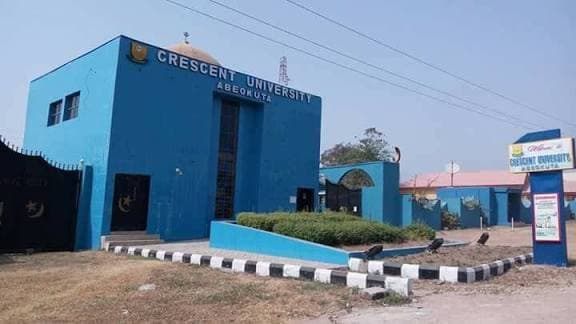
Crescent University Abeokuta CUAB
Crescent University Abeokuta – CUAB 

Crescent University, Abeokuta (CUAB) is a private university located in Abeokuta, Ogun State, Nigeria. The university was established in 2005 following approval by the Federal Government through the National Universities Commission (NUC). It was founded by the late Judge Bola Ahmed Ajibola, a prominent Nigerian jurist and former judge of the International Court of Justice. Crescent University describes itself as a citadel of academic and moral excellence and places emphasis on academic development, discipline, integrity and positive societal values.

The university offers undergraduate programmes through colleges covering Law, Health Sciences, Environmental Sciences, Arts, Social and Management Sciences, Information and Communication Technology, and Natural and Applied Sciences. Its official website states that its courses are fully accredited by the NUC. Crescent University also operates a residential campus, with students accommodated in university-managed halls of residence.

For prospective students, admission into Crescent University is available through UTME, Direct Entry and, where applicable, transfer routes. The university’s current undergraduate admission information requires applicants to meet the relevant O’Level and UTME conditions, obtain the university’s screening form and participate in the required screening exercise.

History of Crescent University

Crescent University Abeokuta was established in 2005 as a private university founded by Judge Bola Ahmed Ajibola. The institution grew out of the vision of its founder to provide university education that combines academic excellence with moral and character development. The university is associated with the Islamic Mission for Africa and is widely known as one of Nigeria’s pioneer Islamic universities.

The university began with a number of foundational colleges and has expanded its academic structure over the years. Its present academic offerings include Law, Health Sciences, Environmental Sciences, Information and Communication Technology, Natural and Applied Sciences, and Arts, Social and Management Sciences.

Crescent University marked its 20th anniversary in 2025, with the institution highlighting the development of its academic programmes, alumni and infrastructure since its establishment. The university has also reported graduates working in organisations such as the BBC, Central Bank of Nigeria, Nestlé, Dangote Group, Federal Inland Revenue Service and Guaranty Trust Bank.

Location of Crescent University

Crescent University is located at:

KM. 5, Ayetoro Road, Lafenwa, Abeokuta, Ogun State, Nigeria.

The university’s postal address is P.M.B. 2104, Sapon, Abeokuta, Ogun State. Its campus is situated within Abeokuta, making it accessible to students from Ogun State and other parts of Nigeria.

List of Programmes Offered by Crescent University

Crescent University offers degree programmes across several academic colleges. Prospective students should always confirm the current programme catalogue and specific departmental requirements before applying because programme availability and admission requirements can change.

Bola Ajibola College of Law

  • Law (LL.B)

The Bola Ajibola College of Law provides undergraduate legal education leading to the Bachelor of Laws degree. The university has also reported graduates of the college achieving first-class results at the Nigerian Law School.

College of Health Sciences

Programmes include:

  • Nursing Science (B.NSc)
  • Anatomy (B.Sc)
  • Physiology (B.Sc)

The university’s College of Health Sciences provides training in health-related disciplines, with Nursing Science offered as a five-year UTME programme and a four-year Direct Entry programme according to the college’s current programme information.

College of Natural and Applied Sciences

The college covers science-based disciplines including areas such as:

  • Biochemistry
  • Microbiology
  • Chemistry-related programmes
  • Biological Sciences
  • Other approved natural and applied science programmes

The university’s history of the college states that Natural and Applied Sciences was one of its foundation academic areas, initially involving Biological Sciences and Chemical Sciences.

College of Information and Communication Technology

The college offers programmes in computing and information technology, including areas such as:

  • Computer Science
  • Information and Communication Technology
  • Related computing and technology disciplines

Crescent University established its College of Information and Communication Technology from the beginning of the university and has continued to develop its technology-oriented academic offerings.

College of Arts, Social and Management Sciences

Programmes in this broad academic area include disciplines such as:

  • Accounting
  • Banking and Finance
  • Business Administration
  • Economics
  • Mass Communication
  • Political Science
  • International Relations
  • Islamic Studies
  • Other approved arts, social science and management programmes

The college combines humanities, social sciences and management-related disciplines and is one of the university’s long-established academic areas.

College of Environmental Sciences

The College of Environmental Sciences was established in January 2011 and provides academic training in environmental and related professional disciplines.

Prospective students interested in environmental programmes should check the university’s current programme catalogue for the exact courses and departmental requirements available for their admission year.

Crescent University Admission Requirements

Crescent University’s general undergraduate admission requirements include the following:

  • Candidates must have at least five O’Level credits in SSCE, GCE, NECO or an approved equivalent.
  • The required credits must include English Language and Mathematics, together with three other relevant subjects specified by the intended department.
  • The required O’Level subjects may be obtained in not more than two sittings.
  • The university states that candidates awaiting their O’Level results may also apply, subject to its admission conditions.
  • UTME candidates are expected to meet the university’s required UTME score and participate in the university’s screening exercise.
  • Candidates must obtain the Crescent University screening form through the university’s e-portal.
  • Applicants are required to participate in the university’s screening process, including the oral interview where applicable.

Direct Entry Admission

Candidates seeking admission into 200 level may apply through Direct Entry if they possess an acceptable qualification such as:

  • NCE
  • OND
  • A-Level qualifications
  • IJMB
  • Other approved equivalent qualifications

The university generally requires relevant qualifications and the required O’Level credits. Applicants may also be required to participate in an interview. In certain circumstances, holders of lower-credit OND or HND qualifications may be considered for 200-level admission in relevant programmes, subject to university approval.

Transfer Admission

Students transferring from another university are required to meet Crescent University’s admission requirements, submit relevant academic records and satisfy the university’s transfer conditions. The university states that transfer applicants should have a minimum CGPA of 1.5 and ensure that their academic transcript and other required documentation reach the Admissions Office within the specified period.

Crescent University School Fees

Crescent University’s fees vary according to the programme and level of study. The university’s undergraduate page currently displays programme-specific figures rather than one uniform school-fee amount.

Examples of tuition figures displayed on the official undergraduate page include:

Programme New Students Tuition Returning Students
Biochemistry ₦853,000 ₦770,000 (200L)
Business Administration ₦733,000 ₦660,000 (200L)
Computer Science ₦723,000 ₦650,000 (200L)
Economics/OR ₦753,000 ₦700,000 (200L)
Islamic Studies ₦303,000 ₦280,000
Law ₦1,653,000 ₦1,500,000
Mass Communication ₦753,000 ₦700,000
Microbiology ₦703,000 ₦660,000
Nursing ₦1,653,000 ₦1,500,000 (200L)
Physiology ₦853,000 ₦800,000 (200L)

The same official page lists an acceptance fee of ₦50,000 for the programmes displayed, while the application fee is generally ₦10,000 and is ₦20,000 for Nursing. The figures should be confirmed on the university’s portal before payment because university charges can be revised.

For Nursing, the College of Health Sciences separately confirms a current displayed tuition of ₦1,653,000 for freshers and ₦1,500,000 for returning 200-level students, with additional hostel-related charges shown for returning students.

Please check the official Crescent University website or admission portal for the latest fee schedule before making any payment.

Crescent University Cut-Off Mark

Crescent University’s current undergraduate admission information states that candidates should obtain a minimum 180 UTME score as part of the admission procedure. However, candidates must also satisfy the programme-specific requirements and complete the university’s screening process.

Therefore, prospective applicants should not rely on the general UTME score alone. Competitive programmes may have additional academic requirements, particularly in terms of UTME subject combinations and O’Level subjects.

Crescent University Post-UTME / Screening Information

Crescent University conducts an admission screening exercise for prospective undergraduate students.

The university’s stated admission procedure involves:

  1. Sitting for the current UTME and obtaining the required score.
  2. Applying through the Crescent University e-portal.
  3. Paying the applicable application fee.
  4. Paying the screening fee.
  5. Participating in the university’s screening exercise and oral interview where required.
  6. Accepting the admission offer after successful completion of the admission process.
  7. Proceeding with registration and other requirements after admission.

Candidates who initially selected another institution can also seek admission into Crescent University by changing their institution of first choice through JAMB and subsequently completing the university’s screening process.

Applicants should use only the university’s official channels for application and payment.

Hostel / Accommodation at Crescent University

Crescent University operates a residential system in which students are accommodated on campus. The university’s Student Affairs Division states that students are fully residential within the campus and provides a number of general and private hostel options for male and female students.

Female hostel options listed by the university include New Hostel, Hameedah, Iqra, Gbadela, Amota, Dantata, U-Shaped, Tropicana and several Bowlsant halls.

Male accommodation includes Saudi Hall, Dangote Hall, Okeleye Hall, Mahruf Hall, Tijani Folawiyo Hall, Bungalow halls, Lateef Adegbite Hall and Zakariyah Hall.

The university’s current programme-fee information also shows hostel-related charges for some returning students, so prospective students should confirm the applicable accommodation fee for their programme and level before registration.

Notable Alumni and Graduates

Crescent University has produced graduates who have gone into the media, banking, accounting, business, public service, law and other professional fields. The university identifies alumni working with organisations including the BBC, Central Bank of Nigeria, Nestlé, Dangote Group, Federal Inland Revenue Service and Guaranty Trust Bank.

Among graduates specifically identified in the university’s publications are Opeoluwa Rukayat Shekoni, the 2023 best graduating student who finished Economics with a reported CGPA of 4.98, and Daniel Oyeniyi, the 2023/2024 valedictorian who graduated from Mass Communication with a reported CGPA of 4.95.

Another notable alumnus is HRH Oba Olufemi Ogunleye, the Oba of Akinale, who graduated from the Bola Ajibola College of Law at Crescent University and subsequently pursued further legal studies.

Official Website and Portal Links

Resource Official Link
Crescent University Official Website Visit Crescent University official website
Undergraduate Programmes and Admission Requirements Crescent University undergraduate page
University Admission / Application Portal Crescent University e-Portal
College of Health Sciences Crescent University College of Health Sciences
Hostel Information Crescent University hostel information

Contact Information

Crescent University, Abeokuta
KM. 5, Ayetoro Road, Lafenwa, Abeokuta, Ogun State, Nigeria
P.M.B. 2104, Sapon, Nigeria

Phone Numbers:

  • +234 (0)803 836 2771
  • +234 (0)803 064 4731
  • +234 (0)803 817 1727
  • +234 (0)802 781 4584

Email:

Frequently Asked Questions (FAQs)

Is Crescent University a private university?

Yes. Crescent University Abeokuta is a private university established in 2005 and approved by the Federal Government through the National Universities Commission.

Where is Crescent University located?

Crescent University is located along Ayetoro Road, Lafenwa, Abeokuta, Ogun State, Nigeria.

What is Crescent University’s UTME cut-off mark?

The university’s current undergraduate admission page states that candidates should obtain a minimum UTME score of 180 for its admission procedure. Applicants must also meet the O’Level and departmental requirements and complete the screening exercise.

Does Crescent University accept Direct Entry?

Yes. Crescent University accepts qualified Direct Entry applicants into 200 level, subject to the required NCE, OND, A-Level, IJMB or other approved qualifications and the relevant O’Level requirements.

Does Crescent University offer Nursing Science?

Yes. Crescent University offers Bachelor of Nursing Science (B.NSc) through its College of Health Sciences. The university currently lists the programme as five years through UTME and four years through Direct Entry.

Does Crescent University offer Law?

Yes. The Bola Ajibola College of Law offers the Bachelor of Laws (LL.B) programme.

Does Crescent University provide hostel accommodation?

Yes. The university operates a residential system with male and female halls of residence on campus.

How much is Crescent University school fees?

Fees depend on the programme and level. The university’s current published figures show that tuition varies considerably across programmes, with higher fees for programmes such as Law and Nursing. Applicants should confirm the applicable fee for their programme directly from the university before payment.

Does Crescent University accept candidates who chose another institution in JAMB?

Yes. Candidates who initially selected another institution can change their first choice to Crescent University through JAMB and then complete the university’s screening application.

Is Crescent University accredited?

Crescent University states on its official website that its courses are fully accredited by the National Universities Commission.

TAGS

Crescent University Abeokuta, CUAB, Crescent University courses, Crescent University school fees, Crescent University admission, Crescent University cut off mark, Crescent University Post UTME, Crescent University admission requirements, Crescent University courses and fees, CUAB admission portal, Crescent University Nursing, Crescent University Law, Crescent University Computer Science, Crescent University hostel, private universities in Ogun State, universities in Abeokuta, private universities in Nigeria

NLNG 2025 Undergraduate Scholarship
NLNG Undergraduate Scholarship: Eligibility, Requirements and How To Apply

The NLNG Undergraduate Scholarship Scheme is an educational support programme for high-performing Nigerian undergraduates. The scheme is designed to help students manage some of the financial demands of university education while encouraging strong academic performance.

The scholarship is intended for eligible students studying for their first degree in Nigerian universities. Applicants are expected to satisfy the academic, age, nationality and other conditions set for the relevant application cycle.

For students considering the NLNG Undergraduate Scholarship, it is important to understand the eligibility requirements, documents, screening process and application procedure before submitting an application.

What Is the NLNG Undergraduate Scholarship?

The NLNG Undergraduate Scholarship Scheme is part of the Nigeria LNG Limited (NLNG) education and human-capital development initiatives.

The programme supports academically strong Nigerian students and is particularly aimed at students at the early stage of their university education.

The scholarship is generally associated with students pursuing their first degree in Nigerian universities. Because application conditions can change from one cycle to another, prospective applicants should always check the requirements published for the particular year they intend to apply.

Who Can Apply for the NLNG Undergraduate Scholarship?

Eligibility requirements are determined for each application cycle. For the 2025 application cycle, applicants were required to meet the following conditions:

  • Be a Nigerian citizen residing in Nigeria.
  • Be a full-time first-year undergraduate in the 2025/2026 academic session.
  • Be enrolled in a federal or state-owned university in Nigeria.
  • Have at least five O’Level credits in one sitting, including Mathematics and English Language.
  • Have scored 200 or above in the 2025 UTME.
  • Be between 18 and 25 years old.
  • Not be receiving another scholarship or bursary.
  • Not be a spouse, child, ward or direct relative of an NLNG staff member.

Meeting the basic requirements does not automatically guarantee an award. Eligible applicants may still have to pass the screening and selection stages.

Academic Requirements

Academic performance is an important part of the NLNG Undergraduate Scholarship selection process.

For the 2025 cycle, applicants needed at least five O’Level credits in one sitting, including:

  • English Language
  • Mathematics
  • Three other relevant subjects

Applicants were also required to have a UTME score of at least 200.

Students should ensure that the information on their application agrees with their official academic records. Differences between submitted information and supporting documents can create problems during verification.

University Requirements

The scholarship is intended for students studying in federal and state universities in Nigeria.

Applicants should therefore confirm that their institution and programme satisfy the requirements for the particular scholarship cycle before applying.

Students in other categories of tertiary institutions should not assume that they qualify simply because they are Nigerian undergraduates. The institution eligibility published by NLNG for the relevant year should be checked before an application is submitted.

Documents Required

Applicants should prepare their supporting documents before beginning the online application.

For the 2025 NLNG Undergraduate Scholarship, the required documents included:

Documents should be clear and readable. Applicants should also use an active email address because important information about screening and testing may be communicated electronically.

How To Apply for the NLNG Undergraduate Scholarship

Applications are submitted online through the scholarship application platform provided for the relevant cycle.

Step 1: Check Your Eligibility

Before opening an application, carefully read the current eligibility conditions. Check your age, university, academic level, UTME result, O’Level results and other requirements.

Step 2: Prepare Your Documents

Have clear copies of the required documents available before starting the application. This reduces the possibility of rushing through the process or submitting incomplete information.

Step 3: Complete the Online Application

Applicants should provide the requested personal, academic and other information through the official application portal.

For the 2025 cycle, applications were submitted through the:

NLNG Undergraduate Scholarship Application Portal

Step 4: Check the Application Carefully

Review every section before submitting the form. Names, dates of birth, examination details, university information and other important information should correspond with the applicant’s official documents.

Step 5: Submit Before the Deadline

Applications should be submitted before the stated closing date. Waiting until the final day can create unnecessary problems if there are internet, document-upload or portal-related difficulties.

NLNG Scholarship Test and Screening Process

Submitting an application is only the beginning of the selection process.

For the 2025 cycle, shortlisted applicants were invited to take a computer-based online proctored test.

Applicants selected for testing were expected to receive relevant information through email. Students should therefore monitor the email address used during registration, including the spam or junk folder.

Candidates who successfully pass the relevant screening stage may proceed to further document verification.

The final scholarship award is subject to meeting the programme’s requirements and successfully completing the required selection stages.

Is the NLNG Undergraduate Scholarship Automatically Awarded to Everyone Who Applies?

No.

Meeting the published eligibility requirements allows a student to apply, but it does not mean that every eligible applicant will receive an award.

The selection process can involve shortlisting, testing, document verification and other screening procedures. Applicants should therefore treat the scholarship as a competitive opportunity.

When Does the NLNG Undergraduate Scholarship Open?

The application period changes from one scholarship cycle to another.

For reference, the 2025 NLNG Undergraduate Scholarship application opened on 18 November 2025 at 12:00 a.m. WAT and closed on 12 December 2025 at 11:59 p.m. WAT.

Students applying in a later year should not assume that these dates will remain the same. The opening date, closing date and other conditions should be confirmed from the latest official NLNG scholarship announcement.

How To Prepare for the NLNG Scholarship

Students can improve their readiness by taking a few practical steps before applications open.

Keep Your Academic Records Available

Ensure that your O’Level result, JAMB result and admission documents are available and readable.

Use Consistent Personal Information

Names and other personal details should be consistent across your application and supporting documents. If there is a discrepancy, applicants should resolve it through the appropriate official channel rather than entering information that does not match their records.

Use an Active Email Address

The email address provided during registration should be one that the applicant regularly checks. Scholarship-related notifications, including possible test invitations, may be sent electronically.

Apply Early

Early submission gives applicants more time to identify and correct problems before the application deadline.

Prepare for Computer-Based Testing

Where a scholarship cycle includes an online test, applicants should become comfortable answering questions on a computer and ensure that they understand the instructions provided for the test.

Is the NLNG Undergraduate Scholarship Available Every Year?

The scholarship has been offered as an undergraduate education support programme, but applicants should not assume that every future cycle will have exactly the same requirements.

The following may change from year to year:

  • Application dates
  • Age limits
  • UTME requirements
  • Academic requirements
  • Eligible institutions
  • Required documents
  • Screening procedures
  • Test arrangements
  • Award conditions

For this reason, students should use older application information as a guide only and confirm the requirements for the current cycle before applying.

Important Advice for Applicants

Applicants should be cautious of individuals or websites claiming to guarantee an NLNG scholarship award in exchange for payment.

A scholarship application should be based on the official requirements and application process. Do not provide your login details, banking PINs, passwords or other confidential information to people claiming to be able to secure the award for you.

EducationNGR recommends checking the official scholarship information whenever a new application cycle is announced.

Frequently Asked Questions

Who is the NLNG Undergraduate Scholarship for?

It is an undergraduate scholarship opportunity for eligible Nigerian students pursuing a first degree in qualifying Nigerian universities.

Can a second-year student apply?

The eligibility conditions can vary by cycle. For the 2025 scholarship, the scheme was for first-year undergraduates in the 2025/2026 academic session.

What UTME score was required for the 2025 scholarship?

Applicants for the 2025 cycle were required to have a minimum UTME score of 200.

How many O’Level credits were required?

The 2025 requirements specified at least five O’Level credits in one sitting, including Mathematics and English Language.

Does meeting the requirements guarantee the scholarship?

No. Applicants who satisfy the eligibility requirements may still have to pass shortlisting, testing and document-verification stages.

Where was the 2025 application submitted?

The 2025 application was submitted online through the NLNG Undergraduate Scholarship application platform.

Can the requirements change in future years?

Yes. Applicants should always check the latest requirements, dates and application instructions for the specific scholarship cycle.

Current Application Details

The table below summarises the 2025 NLNG Undergraduate Scholarship information for reference.

Details 2025 Scholarship Cycle
Scholarship NLNG Undergraduate Scholarship Scheme
Academic session 2025/2026
Eligible students First-year full-time undergraduates
Institution type Federal and state universities
Nationality Nigerian
Minimum UTME score 200
O’Level requirement Five credits in one sitting, including Mathematics and English
Age requirement 18–25 years
Application opening 18 November 2025
Application deadline 12 December 2025
Application method Online
Selection Shortlisting, online proctored test and document verification
Application portal NLNG Undergraduate Scholarship Portal

Important: The dates and requirements in the table above apply to the 2025 application cycle. Students looking for a future NLNG Undergraduate Scholarship should confirm the latest information before applying.

Summary

The NLNG Undergraduate Scholarship provides an opportunity for eligible Nigerian university students to receive educational support based on academic performance and the requirements of the relevant scholarship cycle.

For prospective applicants, the most important steps are to confirm eligibility, prepare the required documents, provide accurate information and submit the application before the deadline.

Because scholarship requirements can change, students should always verify the current application conditions rather than relying entirely on information from a previous year.


Lafarge Graduate Tainee programme
Lafarge Africa Graduate Trainee Programme: Eligibility, Requirements and How To Apply

The Lafarge Africa Graduate Trainee Programme is an early-career opportunity for graduates who want to gain practical work experience and develop their professional skills in the manufacturing and building materials industry.

The programme is designed to give young graduates exposure to a structured corporate working environment, allowing them to learn from experienced professionals while developing skills that can support their long-term careers.

For graduates who are interested in engineering, business, finance, accounting and related fields, the programme can provide an opportunity to move from academic study into practical employment.

What Is the Lafarge Africa Graduate Trainee Programme?

The Lafarge Africa Graduate Trainee Programme is a structured early-career programme aimed at developing young professionals within the organisation.

Rather than relying only on classroom-based training, graduate trainees may gain experience through practical assignments, workplace learning, collaboration with colleagues and exposure to different aspects of the business.

The programme is particularly relevant to fresh graduates who are looking for their first significant professional experience.

Applicants should, however, check the requirements published for the particular recruitment cycle because eligibility criteria, disciplines, locations and other conditions can change.

Who Can Apply for the Lafarge Africa Graduate Trainee Programme?

The programme is intended for graduates who meet the requirements specified by Lafarge Africa for the relevant intake.

For the 2025/2026 Graduate Trainee Programme, eligible applicants included graduates from fields such as:

  • Engineering
  • Business
  • Accounting
  • Finance
  • Other related disciplines

Applicants should carefully review the official recruitment announcement before applying, particularly where specific degree classifications, graduation dates or professional requirements are stated.

What Does the Programme Offer?

A graduate trainee programme can be useful for candidates who have limited professional experience because it provides an opportunity to develop workplace skills while learning how a large organisation operates.

Depending on the structure of the particular intake, trainees may receive exposure to:

  • Practical workplace assignments
  • Professional development
  • Team-based projects
  • Experienced professionals and supervisors
  • Different business functions
  • Industry-specific processes and procedures
  • Workplace communication and problem-solving

The experience can help graduates understand how the knowledge acquired at university is applied in a professional setting.

Why Consider a Graduate Trainee Programme?

Moving from university into employment can be challenging, particularly for graduates who have little or no previous work experience.

A structured graduate programme can help bridge that gap. Instead of expecting a graduate to already have extensive industry experience, the programme provides an opportunity to learn while gaining exposure to real workplace responsibilities.

For candidates who are serious about building a career in manufacturing, engineering, business or related areas, this type of experience can also provide a clearer understanding of the industry and the skills employers expect.

How To Apply for the Lafarge Africa Graduate Trainee Programme

Applications are completed online through the recruitment platform provided for the relevant programme cycle.

For the 2025/2026 intake, applicants were directed to the:

Lafarge Africa Graduate Trainee Application Portal

Applicants should:

  1. Visit the recruitment portal.
  2. Create an account or profile where required.
  3. Provide the requested personal and academic information.
  4. Complete the application form carefully.
  5. Upload any required documents.
  6. Review the information before submitting the application.
  7. Submit the application before the stated deadline.

Applicants should use accurate information throughout the process. Details provided on the application may be checked during subsequent stages of recruitment.

Documents and Information to Prepare

Before starting an online graduate recruitment application, it is useful to have your important information readily available.

Depending on the requirements of the particular recruitment cycle, this may include:

  • Updated CV
  • University certificate or statement of result
  • Academic information
  • Personal contact details
  • Employment or internship information, where applicable
  • Professional qualifications, where applicable

Applicants should only upload documents specifically requested by the recruitment portal or official vacancy announcement.

What Happens After Applying?

Submitting an application does not necessarily mean that every candidate will proceed to the next stage.

Graduate recruitment programmes commonly involve a selection process in which applications are reviewed and eligible candidates are shortlisted.

Depending on the recruitment cycle, shortlisted applicants may be invited to participate in assessments, interviews or other selection activities.

Candidates should therefore monitor the email address and telephone number used during their application and respond promptly to any legitimate communication concerning the recruitment process.

Tips for a Strong Application

Make Your CV Easy To Read

A graduate CV does not need to be excessively long. Focus on your education, relevant skills, internships, projects, leadership activities, volunteering and other experiences that demonstrate your ability to contribute.

Highlight Relevant Skills

Engineering applicants, for example, may highlight technical, analytical and problem-solving skills. Business, accounting and finance graduates can emphasise numerical ability, communication, organisation and relevant software skills.

Check Your Information

Before submitting the form, check your name, degree, institution, graduation information, contact details and other important information for accuracy.

Prepare for Possible Assessments

If the recruitment process includes an aptitude test or other assessment, revise areas relevant to graduate recruitment and practise answering questions under time constraints.

Be Ready to Explain Your Interest

Applicants should be able to explain why they are interested in the industry, what they hope to learn and how their academic background and skills relate to the position.

Is Previous Work Experience Required?

Graduate trainee programmes are generally designed for people at the beginning of their professional careers. However, applicants should not assume that every Lafarge Africa intake will have identical experience requirements.

Internships, industrial training, NYSC experience, university projects, volunteering and other relevant activities can still be useful when demonstrating practical skills.

Always check the specific eligibility requirements for the current recruitment cycle.

Is the Lafarge Africa Graduate Trainee Programme Available Every Year?

Graduate recruitment programmes can be announced for different intakes, but applicants should not assume that a future programme will have exactly the same requirements or application dates.

Information that may change includes:

  • Application opening and closing dates
  • Eligible disciplines
  • Academic requirements
  • Graduation requirements
  • Age or experience conditions, where applicable
  • Recruitment locations
  • Assessment stages
  • Number of available positions

EducationNGR therefore recommends checking the latest official recruitment information before applying for a new intake.

Beware of Recruitment Scams

Applicants should be careful with individuals who claim to have the ability to secure a Lafarge Africa job in exchange for money.

Legitimate recruitment applications should follow the official process published by the company or its authorised recruitment platform.

Do not pay an individual simply because they claim to have access to the recruitment team. Also, avoid sharing passwords, banking PINs or other confidential information with people claiming to process your application.

Current Application Details

The following information relates specifically to the 2025/2026 Lafarge Africa Graduate Trainee Programme.

Details 2025/2026 Intake
Programme Lafarge Africa Graduate Trainee Programme
Target applicants Young/fresh graduates
Relevant fields Engineering, Business, Accounting, Finance and related disciplines
Application method Online
Application deadline 13 October 2025
Application portal Lafarge Africa Graduate Trainee Portal

Important: The deadline and other cycle-specific information above apply to the 2025/2026 intake. Graduates applying for a future Lafarge Africa Graduate Trainee Programme should confirm the latest requirements and application dates before submitting an application.

Frequently Asked Questions

What is the Lafarge Africa Graduate Trainee Programme?

It is an early-career programme designed to give graduates professional exposure, practical workplace experience and opportunities for skills development.

Who is the programme suitable for?

It is primarily aimed at graduates at the beginning of their professional careers. The eligible academic disciplines depend on the particular recruitment intake.

Can a fresh graduate apply?

Yes, where the applicant meets the requirements published for the relevant intake. Graduate trainee programmes are specifically intended to support early-career candidates.

How do I apply?

Applications are submitted online through the recruitment platform specified for the particular Lafarge Africa Graduate Trainee intake.

What was the deadline for the 2025/2026 programme?

The application deadline for the 2025/2026 intake was 13 October 2025.

Will everyone who applies be invited for an interview?

No. Applications are subject to screening and shortlisting. Only candidates selected for subsequent stages will receive further instructions.

Can the requirements change in future?

Yes. Applicants should check the requirements and instructions published for each new recruitment cycle.

Summary

The Lafarge Africa Graduate Trainee Programme can be an important starting point for graduates seeking practical experience and professional development after university.

Candidates should focus on meeting the published eligibility requirements, preparing an accurate application and being ready for possible assessments or interviews. Most importantly, applicants should rely on the official recruitment process rather than individuals promising guaranteed employment.

For future intakes, EducationNGR will update the Current Application Details section with the latest application dates, requirements and recruitment information when officially available.