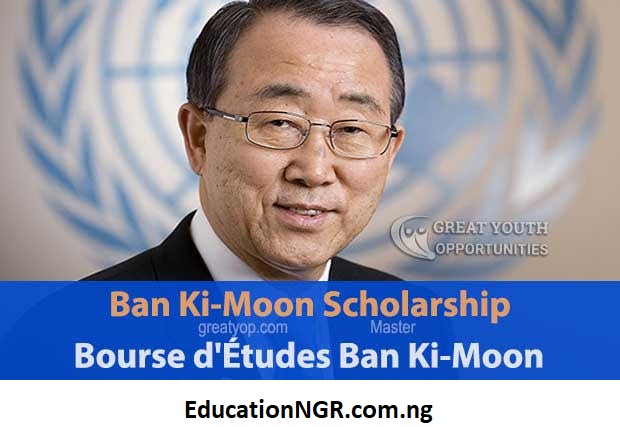

The Ban Ki-moon Foundation Global Citizen Scholarship Programme is an international development programme for young people who want to turn their ideas into practical projects that contribute to the United Nations Sustainable Development Goals (SDGs).
Organised by the Ban Ki-moon Foundation for a Better Future, the programme brings together young changemakers from selected countries and gives them training, mentoring and opportunities to develop projects addressing issues in their communities.
Unlike a conventional university scholarship, this programme is focused not only on academic achievement but also on leadership, global citizenship and the ability to develop a practical project linked to one or more of the SDGs.
The programme is delivered online, although selected participants also take part in an in-person summer school.
What Is The Ban Ki-moon Global Citizen Scholarship?
The Global Citizen Scholarship Programme is designed for young people who are interested in contributing to sustainable development in their communities.
Participants spend several months learning about the UN 2030 Agenda and Sustainable Development Goals, developing their knowledge of entrepreneurship for sustainable development and connecting with other young leaders from participating countries.
A major part of the programme is the development and implementation of a changemaker project.
This means that applicants should not approach the opportunity simply as a training programme. They should be able to identify a real issue they care about and explain how they could contribute to addressing it.
Who Is The Programme For?
The programme targets young global citizens between 20 and 35 years old who have demonstrated an interest in sustainable development and global citizenship.
For the current application cycle, the programme is open to citizens of selected countries in Africa, the Middle East, South Asia and Southeast Asia.
Eligible African Countries
Applicants from the following African countries are eligible:
- Cameroon
- Ethiopia
- Liberia
- Madagascar
- Malawi
- Mozambique
- Nigeria
- Sierra Leone
- Tanzania
- Uganda
- Zimbabwe
Eligible Middle Eastern Countries
- Egypt
- Jordan
- Kuwait
- Lebanon
- Oman
- Saudi Arabia
- United Arab Emirates
Eligible South Asian Countries
- Bangladesh
- Bhutan
- India
- Nepal
- Pakistan
- Sri Lanka
Eligible Southeast Asian Countries
- Cambodia
- Laos
- Philippines
- Vietnam
The country list is an important part of the eligibility requirements. If your country is not included in the current list, you should not assume that you can apply based on your age or academic qualifications alone.
Eligibility Requirements
Applicants must satisfy the requirements for the relevant application cycle.
For the 2026 edition, applicants were required to:
- Be a citizen of one of the participating countries.
- Be between 20 and 35 years old at the time of application.
- Have completed at least a Master’s degree.
- In exceptional cases, applicants who have completed the first year of a Master’s programme may be considered.
- Demonstrate a strong commitment to the Sustainable Development Goals and global citizenship.
- Have at least B2-level English proficiency according to European language standards.
Meeting the academic requirement is only one part of the application. The programme is particularly interested in candidates who can demonstrate a genuine interest in sustainable development and explain how they intend to create positive change.
What Does The Programme Offer?
Selected participants take part in an eight- to nine-month programme combining training, mentoring, project development and networking.
The benefits announced for the 2026 programme include:
Summer School
Participants receive full cost coverage for a two-week summer school at Management Center Innsbruck (MCI).
This provides an opportunity for participants to receive intensive training and interact with other selected changemakers.
Expert Training And Workshops
Participants take part in expert-led workshops covering areas connected with sustainable development, entrepreneurship and the implementation of their ideas.
Peer-to-Peer Mentoring
The programme includes a peer-to-peer mentoring component, allowing participants to learn from and exchange ideas with other young leaders.
Project Seed Funding
Selected scholars can receive EUR 500 in seed funding to support their changemaker project.
The funding is released after the successful submission of the required project proposal.
Applicants should therefore understand that the funding is connected to the project component of the programme rather than being simply a cash award for personal use.
Certificate Of Achievement
Participants who successfully complete the programme receive a certificate of achievement signed by Ban Ki-moon and Heinz Fischer.
What Kind Of Project Should An Applicant Have?
This is one of the most important parts of the application.
The programme is intended for young people who want to develop and implement a practical changemaker project connected to one or more Sustainable Development Goals.
For example, a project might address an issue involving education, environmental sustainability, employment, gender equality, community development, poverty reduction or another recognised SDG area.
The important point is not simply to choose an SDG because it sounds impressive. Applicants should be able to explain:
- What problem they want to address.
- Who is affected by the problem.
- Which SDG or SDGs the project supports.
- What they intend to do.
- How the project could be implemented.
- Who could benefit from it.
- What resources or partnerships may be required.
A clear and realistic project idea is likely to be more useful in an application than a broad proposal that attempts to solve too many problems at once.
Documents And Information Required
The application process involves providing personal, educational and professional information as well as details about the proposed changemaker project.
For the 2026 application, applicants were required to provide or upload information including:
- Personal details.
- Educational background.
- Language competence.
- Professional information, including organisation and role where applicable.
- Information about the proposed changemaker project.
- The SDG or SDGs addressed by the project.
- The proposed implementation strategy.
At the final stage, applicants were required to submit:
- A motivational statement.
- A recent portrait photograph in JPEG or PNG format.
- A short introduction video of no more than 60 seconds in MP4 or MOV format.
- Curriculum Vitae.
- Project outline.
Applicants should prepare these materials before beginning the application, particularly the motivational statement and project outline. These sections require more thought than simply entering personal information into an online form.
How To Apply
Applications are submitted online through the programme’s designated application platform.
For the 2026 edition, applicants were directed to the official online application form:
Apply through the official Ban Ki-moon Foundation application portal
After submitting the form, applicants receive a confirmation email.
Only shortlisted candidates are contacted for the subsequent stages of the selection process.
Before submitting an application, check that the email address you provide is active and regularly monitored.
Application Deadline
For the 2026 edition, the application deadline was 4 March 2026.
Application dates should be treated as cycle-specific information. The programme may use different opening and closing dates in a future year.
If you are preparing to apply in another year, check the latest official announcement and application portal rather than relying on an old deadline.
How To Prepare A Strong Application
An applicant does not need to describe themselves as a perfect leader or claim to have solved a major social problem.
A better approach is to demonstrate a genuine understanding of a problem and explain what you have done, what you have learned and what you want to accomplish.
Before submitting your application, consider the following:
Choose a problem you understand.
Your project should be connected to an issue you have a reasonable understanding of rather than simply selecting a popular SDG.
Make the project practical.
Explain what you can realistically accomplish with the time and resources available.
Connect your project to the SDGs clearly.
Do not simply mention several SDGs. Explain the connection between your proposed activities and the goals you have selected.
Use your motivational statement to tell your story.
Explain why the issue matters to you and what motivated you to become involved.
Keep your project outline realistic.
A small project with clear objectives and measurable results can be easier to understand than an ambitious proposal with no practical implementation plan.
Check your video before submitting it.
Because the introduction video is limited to 60 seconds, plan what you want to say before recording it.
Is This A Conventional University Scholarship?
Not exactly.
Although it is described as a scholarship programme, the opportunity is structured around leadership development, sustainable development training and project implementation.
Participants are selected because of their potential as changemakers and their interest in contributing to the SDGs.
Therefore, someone looking for a scholarship that simply pays university tuition may find that this programme serves a different purpose.
Frequently Asked Questions
Is The Programme Open To Nigerians?
Yes. Nigeria is among the African countries included in the eligible-country list for the 2026 programme, subject to the other eligibility requirements.
What Is The Age Requirement?
For the 2026 edition, applicants needed to be between 20 and 35 years old at the time of application.
Do I Need A Master’s Degree?
The stated requirement for the 2026 programme was a completed Master’s degree. In exceptional cases, applicants who had completed the first year of a Master’s programme could be considered.
How Much Is The Project Funding?
The 2026 programme included EUR 500 in seed funding for a changemaker project, released after successful submission of the required project proposal.
Is The Programme Fully Online?
The main programme is delivered online, but selected participants receive full cost coverage for a two-week summer school at Management Center Innsbruck.
How Many People Are Selected?
The 2026 programme was scheduled to select 16 young changemakers.
What English Level Is Required?
The stated minimum was B2 English proficiency under European language standards.
Will Everyone Who Applies Be Selected?
No. The programme is competitive, and only shortlisted applicants proceed to subsequent stages.
Current Application Details
The information below relates specifically to the 2026 edition and should be updated when the next application cycle is announced.
| Item | Details |
|---|---|
| Programme | Ban Ki-moon Foundation Global Citizen Scholarship Programme |
| Organiser | Ban Ki-moon Foundation for a Better Future |
| 2026 Edition | 2026 |
| Number Of Scholars | 16 |
| Programme Duration | 8–9 months |
| Summer School | Two weeks at Management Center Innsbruck |
| Project Seed Funding | EUR 500 |
| Age Requirement | 20–35 years |
| Minimum Qualification | Master’s degree or first year of a Master’s programme in exceptional cases |
| English Requirement | B2 minimum |
| Application Deadline | 4 March 2026 |
| Application Method | Online |
| Application Fee | No application fee stated |
| Official Application Form | Ban Ki-moon Foundation application portal |
The official account of EducatioNGR editorial team, used for publication of various educational resources and information. A Team with a combined experience of 15 years and headed by the Lead Publisher; Amakor Vitalis.
Discover more from EducationNGR
Subscribe to get the latest posts sent to your email.