Adventist college JMCONS
Jibape Memorial College of Nursing Sciences, Jengre – JMCONS

Jibape Memorial College of Nursing Sciences (JMCONS), Jengre is a private nursing institution located in Jengre, Bassa Local Government Area of Plateau State, Nigeria. The college provides professional nursing and midwifery education and operates along Saminaka Road in Jengre. Its official website describes the institution as a private College of Nursing offering ND/HND Nursing, while the Nursing and Midwifery Council of Nigeria (NMCN) lists both its Nursing and Midwifery programmes among approved training programmes.

The college’s stated vision is to produce polyvalent nurses capable of providing professional nursing care to individuals, families and communities. Its training combines classroom instruction with practical and clinical experience, preparing students for professional nursing responsibilities after completing their programmes.

History

Jibape Memorial College of Nursing Sciences is operated by Jibape Memorial College of Nursing Limited, a private company incorporated in Nigeria in June 2021. Public corporate records identify the company’s principal activity as education and training in health technology, with its registered address in Jengre, Plateau State.

The institution subsequently developed into a specialised nursing training college. NMCN records show that its Nursing and Midwifery programmes were granted provisional approval in October 2023. The college is also included in the NMCN’s updated list of approved schools covering Plateau State.

JMCONS has continued to develop its nursing education programme and admission structure. The college’s official website states that students are trained toward professional nursing qualifications and that graduates proceed for the mandatory supervised clinical experience after completing their academic programme.

The college’s presence in Jengre also places it within an area that has several nursing and midwifery training institutions, making Jengre an important location for healthcare education in Plateau State.

Location

Jibape Memorial College of Nursing Sciences is located along Saminaka Road, Jengre, Bassa Local Government Area, Plateau State, Nigeria. The college’s business listing places it within Jengre, while its official admission information and recent admission notices identify Jengre as the location of the institution.

Jengre is a community in Bassa Local Government Area of Plateau State. The location provides access to nursing education for students from Plateau State as well as candidates from neighbouring parts of northern and central Nigeria.

List of Programmes Offered by Jibape Memorial College of Nursing Sciences

Nursing Programmes

  • National Diploma (ND) in Nursing
  • Higher National Diploma (HND) in Nursing

Midwifery Programme

  • Midwifery

The NMCN’s published list identifies Nursing and Midwifery as programmes at Jibape Memorial College of Nursing Sciences, Jengre. The college’s own website specifically describes its ND/HND Nursing programme.

Admission Requirements

For the 2026/2027 academic session, candidates applying for admission into the ND Nursing programme are required to have participated in the JAMB UTME and obtained a minimum score of 150. The college’s official application page states that JAMB is required for the programme.

Applicants must also possess at least five credit passes in the required O’Level subjects:

  • English Language
  • Mathematics
  • Physics
  • Chemistry
  • Biology

The credits may be obtained from WAEC, NECO or NABTEB, with results accepted in not more than two sittings. However, candidates presenting a NABTEB result are not permitted to combine it with another result according to the college’s published 2026/2027 admission requirements.

Applicants must also be at least 16 years old by October 2026 for the 2026/2027 admission exercise.

School Fees

A comprehensive official 2026/2027 school-fee schedule was not found on the college’s website during this research.

Some third-party sources have published estimated figures for JMCONS, including an older estimate of about ₦150,000 to ₦200,000 per session. However, this figure is not a current official fee schedule and should not be presented as the confirmed 2026/2027 school fees.

Prospective students should obtain the current fee breakdown directly from the college before making payment. This is particularly important because nursing students may have additional charges for registration, clinical activities, uniforms, accommodation, examinations and other requirements.

Cut-Off Mark

The 2026/2027 JAMB cut-off mark for Jibape Memorial College of Nursing Sciences is 150. The figure is stated on the college’s official application page for admission into its Nursing programme.

Meeting the 150 UTME requirement does not by itself guarantee admission. Applicants must also satisfy the required O’Level subjects and other conditions attached to the admission exercise.

Hostel and Accommodation

Information about the current availability and official cost of hostel accommodation at Jibape Memorial College of Nursing Sciences is limited.

An older third-party source estimated self-contained hostel accommodation at about ₦120,000, but this is not a current official 2026/2027 figure and should not be treated as the confirmed accommodation fee.

Students should contact the college directly to confirm whether accommodation is currently available, the type of rooms provided and the applicable charges for the academic session.

Notable Alumni

Jibape Memorial College of Nursing Sciences is a relatively young nursing institution, with its programmes appearing in NMCN’s approved-school records from 2023. It therefore does not yet have a large body of long-established alumni whose professional achievements are widely documented.

Official Website and Portal Links

Resource Link
Official Website Jibape Memorial College of Nursing Sciences
Application Portal JMCONS Online Application
Admission Status JMCONS Admission Status Portal

The college’s official website provides the online application facility and admission-status checking portal.

Contact Information

Jibape Memorial College of Nursing Sciences
Saminaka Road, Jengre,
Bassa Local Government Area, Plateau State, Nigeria.

Telephone:

  • 08148737879
  • 09047926863

The college’s official website currently publishes these two numbers as its contact telephone numbers. Recent 2026 admission information has also published additional numbers for admission enquiries, but prospective students should prioritise the contact details displayed on the official college website.

Frequently Asked Questions (FAQs)

What is Jibape Memorial College of Nursing Sciences?

Jibape Memorial College of Nursing Sciences is a private nursing institution located in Jengre, Bassa Local Government Area of Plateau State. It provides professional nursing and midwifery training.

Where is Jibape Memorial College of Nursing Sciences located?

The college is located along Saminaka Road in Jengre, Bassa Local Government Area, Plateau State, Nigeria.

What courses does Jibape Memorial College of Nursing Sciences offer?

The institution offers Nursing and Midwifery programmes. Its official website specifically identifies ND/HND Nursing, while NMCN’s approved-school records list Nursing and Midwifery at the institution.

What is the cut-off mark for Jibape Memorial College of Nursing Sciences?

The JAMB UTME cut-off mark stated by the college for the 2026/2027 admission exercise is 150.

What are the O’Level requirements for JMCONS?

Candidates are required to have five credits in English Language, Mathematics, Physics, Chemistry and Biology. The college accepts WAEC, NECO and NABTEB, with results permitted in not more than two sittings. Candidates presenting NABTEB cannot combine it with another O’Level result according to the 2026/2027 admission requirements.

Does Jibape Memorial College of Nursing Sciences require JAMB?

Yes. JAMB UTME is required for admission into the ND Nursing programme for the 2026/2027 academic session, and the college specifies a minimum UTME score of 150.

How much is the Jibape Memorial College of Nursing Sciences application form?

The 2026/2027 application form fee was reported as ₦10,000. Recent admission information states that applications were submitted through the college’s online portal.

Is Jibape Memorial College of Nursing Sciences accredited?

JMCONS describes itself on its official website as fully licensed and accredited. However, the NMCN’s December 2025 approved-schools list records the college’s Nursing and Midwifery programmes as provisional, with approval dated October 2023. Prospective students should therefore distinguish the college’s own description from the regulator’s published accreditation status.

Does JMCONS offer Midwifery?

Yes. Midwifery is listed alongside Nursing for Jibape Memorial College of Nursing Sciences in the NMCN’s approved-schools records.

How much is Jibape Memorial College of Nursing Sciences school fees?

A current official 2026/2027 school-fee schedule was not found on the college’s website. Older third-party information estimated the school fees at ₦150,000–₦200,000 per session, but that figure should not be treated as the current official fee.

Does Jibape Memorial College of Nursing Sciences have a hostel?

Hostel accommodation has been mentioned in third-party information about the college, but a current official 2026/2027 accommodation fee or detailed hostel schedule was not verified. Students should confirm availability and charges directly with JMCONS.

What is the official website of Jibape Memorial College of Nursing Sciences?

The official website is jmcons.edu.ng. The site provides information about the college, its programmes, online application and admission-status checking.

Is admission currently available at JMCONS?

The college opened applications for the 2026/2027 ND Nursing admission exercise earlier in 2026. The official application page identifies the 2026/2027 programme and its requirements, while recent reports indicate that an admission list for the session was released in September 2026. Prospective students should use the official admission-status portal or contact the college to confirm the current status of applications.

Mercy Medical University, Iwo - MMU
Mercy Medical University, Iwo – MMU

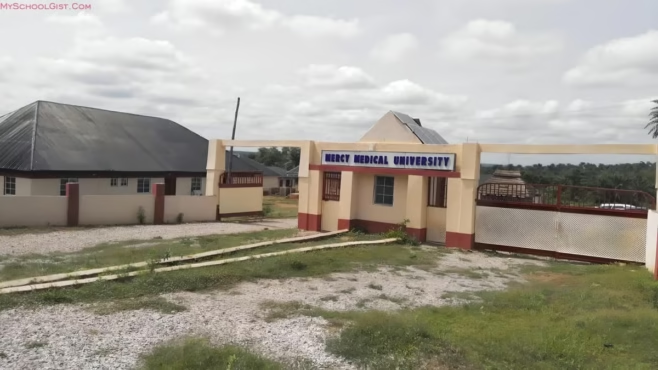
Mercy Medical University (MMU) is a private specialised medical university located in Iwara, Iwo, Osun State, Nigeria. The university was established and licensed by the National Universities Commission (NUC) and the Federal Government of Nigeria in 2023, with Licence No. 137. It commenced academic activities after receiving approval to operate as a degree-awarding institution focused on medicine, pharmacy and allied health education.

The university’s academic structure includes the College of Medicine, College of Pharmaceutical Sciences and College of Allied Health Sciences. Its current undergraduate programmes include Medicine and Surgery, Nursing Science, Medical Laboratory Science, Pharmacy, Physiotherapy, Optometry, Radiography, Audiology, Public Health, Community Health Science, Complementary and Alternative Medicine, and Healthcare Administration and Hospital Management.

History 

Mercy Medical University was established in 2023 as a private specialised medical university in Iwara, Iwo, Osun State. Its establishment was licensed by the National Universities Commission and the Federal Government of Nigeria under Licence No. 137. The university was created with a focus on training medical and healthcare professionals with both academic knowledge and practical clinical skills.

From its beginning, the institution has concentrated on medicine, pharmacy and allied health sciences rather than operating as a broad-based university with programmes across unrelated academic fields. Its academic offerings have expanded as the university has developed, with the 2026/2027 admission exercise covering programmes across three major colleges.

The university’s development has also included expansion of its clinical training capacity. In August 2026, Mercy Medical University announced that the Medical and Dental Council of Nigeria (MDCN) had granted the university full accreditation for housemanship training and approved an increase in its housemanship training quota following an institutional assessment. The assessment included facilities at Mercy University Teaching Hospital in Osogbo and the university’s Telemu campus.

Location

Mercy Medical University is located at Mercy Medical Complex, Ikire-Ile-Iwara Road, Iwara, Iwo, Osun State, Nigeria. The university’s published contact information identifies Iwara in Iwo as its main location.

Iwo is a major town in Osun State and is accessible from other parts of the state and neighbouring areas. The university’s medical focus means students also have access to clinical training environments associated with its teaching-hospital facilities.

List of Programmes Offered by Mercy Medical University

Mercy Medical University offers undergraduate degree programmes through its colleges.

College of Allied Health Sciences

  • Bachelor of Nursing Science (BNSc)
  • Bachelor of Medical Laboratory Science (BMLS)
  • Doctor of Physiotherapy (D. Physio)
  • Doctor of Optometry (D. Opt.)
  • Bachelor of Radiography (B. Rad.)
  • Bachelor of Audiology (B. Aud.)

College of Medicine

  • Medicine and Surgery (MBBS)
  • Bachelor of Complementary and Alternative Medicine (BCAM)
  • Bachelor of Community Health Science (BCHS)
  • Bachelor of Healthcare Administration and Hospital Management (BHAHM)
  • Bachelor of Public Health Science (BPHS)

College of Pharmaceutical Sciences

  • Doctor of Pharmacy (D. Pharm.)

Admission Requirements

For the 2026/2027 academic session, UTME candidates seeking admission to Mercy Medical University are required to have taken the 2026 UTME and obtained a minimum score of 150. Candidates who did not initially choose the university as their first choice may be required to process a Change of Institution through a JAMB-accredited CBT centre or JAMB office.

Candidates are also required to possess at least five relevant O’Level credit passes in WAEC, NECO or NABTEB. The general science-based requirement listed by the university includes English Language, Mathematics, Physics, Chemistry and Biology, with results accepted in not more than two sittings. Programme-specific requirements may apply.

Direct Entry Admission

Mercy Medical University also accepts Direct Entry candidates. The university’s 2026/2027 admission exercise includes Direct Entry alongside UTME and Inter-University Transfer admission. Candidates applying through Direct Entry should meet the additional academic qualification required for their intended programme and provide the relevant certificate or qualification for verification.

School Fees

Mercy Medical University has published an official 2026/2027 fee breakdown for 100-level students. The published figures include tuition, college fee, practical fee, registration fee and medical test fee.

Programme Tuition Fee College Fee Practical Fee Registration Fee Medical Test Total
Medicine and Surgery ₦6,500,000 ₦50,000 ₦50,000 ₦5,000 ₦15,000 ₦6,670,000
Doctor of Pharmacy ₦2,000,000 ₦50,000 ₦50,000 ₦5,000 ₦15,000 ₦2,170,000
Nursing Science ₦1,400,000 ₦50,000 ₦50,000 ₦5,000 ₦15,000 ₦1,570,000
Medical Laboratory Science ₦1,000,000 ₦50,000 ₦50,000 ₦5,000 ₦15,000 ₦1,170,000
Doctor of Physiotherapy ₦800,000 ₦50,000 ₦50,000 ₦5,000 ₦15,000 ₦970,000
Radiography ₦800,000 ₦50,000 ₦50,000 ₦5,000 ₦15,000 ₦970,000
Doctor of Optometry ₦680,000 ₦50,000 ₦50,000 ₦5,000 ₦15,000 ₦850,000
Audiology ₦680,000 ₦50,000 ₦50,000 ₦5,000 ₦15,000 ₦850,000
Community Health ₦680,000 ₦50,000 ₦50,000 ₦5,000 ₦15,000 ₦850,000
Public Health ₦480,000 ₦50,000 ₦50,000 ₦5,000 ₦15,000 ₦650,000
Alternative Medicine ₦480,000 ₦50,000 ₦50,000 ₦5,000 ₦15,000 ₦650,000
Healthcare Administration ₦480,000 ₦50,000 ₦50,000 ₦5,000 ₦15,000 ₦650,000

These figures are specifically identified by the university as the 2026/2027 fees for 100-level students. Students should confirm the complete payment schedule and any additional charges before making payment.

Cut-Off Mark

The general minimum UTME score for admission into Mercy Medical University for the 2026/2027 academic session is 150. Candidates must also meet the relevant O’Level requirements for their chosen programme.

The university’s admission requirements indicate that candidates for its health and medical programmes are expected to have the appropriate science subjects at O’Level. Meeting the 150 UTME threshold alone does not replace the programme-specific academic requirements.

Hostel and Accommodation

Mercy Medical University provides hostel accommodation as part of its student arrangements. The university’s 2026 registration notice states that all UTME students are required to provide evidence of hostel-fee payment, while Direct Entry and Inter-University Transfer students in Medicine and Surgery and Pharmacy are also specifically listed for hostel accommodation.

The same registration notice requires newly admitted students to come with a 2½-size mattress and personal belongings. It also states that electrical items are not permitted.

A separate current hostel fee figure was not clearly stated in the official 2026/2027 fee breakdown reviewed for this page, so prospective students should confirm the applicable accommodation charge through the university portal or admissions office.

Notable Alumni

Mercy Medical University is a relatively young institution, having been established in 2023 and commencing academic activities only recently. It therefore does not yet have a large body of graduates with long-established public profiles.

EducationNGR has not identified a sufficiently reliable official list of notable alumni to publish names under this section. As the university’s alumni community develops, this section can be updated with graduates whose educational and professional records can be independently verified.

Official Website and Portal Links

Resource Link
Official Website Mercy Medical University official website
Admission Application Mercy Medical University Admission Application
Admission Status Mercy Medical University Admission Status Portal
School Fees 2026/2027 Mercy Medical University Fees
Admission Requirements 2026/2027 Undergraduate Admission Information

Contact Information

Mercy Medical University
Mercy Medical Complex
Ikire-Ile-Iwara Road, Iwara, Iwo, Osun State, Nigeria

Email: info@mercymedicaluniversity.edu.ng

Telephone:

  • +234 816 601 4034
  • +234 816 007 9367
  • +234 906 625 7038
  • +234 806 308 5437

The university’s Registrar’s Office also published +234 802 416 8115 and +234 806 308 5437 for enquiries concerning the 2026 registration of newly admitted students.

Frequently Asked Questions (FAQs)

Is Mercy Medical University a private university?

Yes. Mercy Medical University is a private specialised medical university in Iwara, Iwo, Osun State. It was established and licensed by the National Universities Commission and the Federal Government of Nigeria in 2023.

Where is Mercy Medical University located?

Mercy Medical University is located at Mercy Medical Complex, Ikire-Ile-Iwara Road, Iwara, Iwo, Osun State, Nigeria.

When was Mercy Medical University established?

Mercy Medical University was established and licensed in 2023 under NUC Licence No. 137.

What is the cut-off mark for Mercy Medical University?

The general minimum UTME score for the 2026/2027 academic session is 150. Candidates must also meet the O’Level and other requirements for their chosen programme.

What courses does Mercy Medical University offer?

The university offers programmes in Medicine, Pharmacy and Allied Health Sciences, including Medicine and Surgery, Nursing Science, Medical Laboratory Science, Physiotherapy, Optometry, Radiography, Audiology, Public Health, Community Health Science, Pharmacy and Healthcare Administration and Hospital Management.

Does Mercy Medical University offer Medicine and Surgery?

Yes. Mercy Medical University offers Medicine and Surgery (MBBS) through its College of Medicine.

Does Mercy Medical University offer Nursing?

Yes. The university offers Bachelor of Nursing Science (BNSc) through its College of Allied Health Sciences.

Does Mercy Medical University offer Pharmacy?

Yes. The university offers the Doctor of Pharmacy (D. Pharm.) programme through its College of Pharmaceutical Sciences.

How much is Mercy Medical University school fees?

The 2026/2027 fees vary by programme. The official 100-level fee schedule lists a total of ₦6,670,000 for Medicine and Surgery, ₦2,170,000 for Doctor of Pharmacy, ₦1,570,000 for Nursing Science, ₦1,170,000 for Medical Laboratory Science, and lower amounts for several other programmes.

What are the admission requirements for Mercy Medical University?

For UTME admission in 2026/2027, candidates must have a minimum UTME score of 150 and at least five relevant O’Level credits, including English Language, Mathematics, Physics, Chemistry and Biology, with results accepted in not more than two sittings. Programme-specific requirements may also apply.

Does Mercy Medical University accept Direct Entry?

Yes. Direct Entry is one of the admission routes listed by the university for the 2026/2027 academic session. Candidates are required to provide their qualifying certificates for verification where applicable.

Does Mercy Medical University have hostel accommodation?

Yes. The university provides hostel accommodation, and its 2026 registration notice specifies hostel requirements for UTME students and certain Direct Entry/Inter-University Transfer students.

Is Mercy Medical University accredited?

Mercy Medical University is licensed by the National Universities Commission and Federal Government of Nigeria. In August 2026, the university also announced that the Medical and Dental Council of Nigeria had granted it full accreditation for housemanship training and increased its approved training quota.

What is the official website of Mercy Medical University?

The university’s official website is mercymedicaluniversity.edu.ng. Prospective students should use the university’s official online channels for applications, admission-status checks and payments.

UNINIGER
University on the Niger, Umunya – UNINIGER

University on the Niger, Umunya (UNINIGER) is a private university located along the Onitsha–Enugu Expressway in Umunya, Anambra State, Nigeria. The university was established by the Diocese on the Niger of the Anglican Communion and received approval from the National Universities Commission (NUC) to commence academic activities with effect from the 2023/2024 academic session. Its permanent campus is in Umunya, while the university also has an important clinical teaching base at the University on the Niger Teaching Hospital, Iyienu, Ogidi.

The university was founded around the vision of providing university education that combines academic development, character formation, leadership and service. Its academic structure includes the Faculties of Medicine and Dentistry, Allied Health Sciences, Pharmaceutical Sciences, Law, Arts, Management and Social Sciences, and Science and Computing. The university’s official website currently states that admission into the 2026/2027 academic session is ongoing.

UNINIGER has expanded its academic offerings considerably since its initial approval. Its current programme list includes professional programmes such as Medicine and Surgery, Dentistry, Nursing Science, Pharmacy, Law, Medical Laboratory Science, Physiotherapy, Radiography and Optometry alongside programmes in computing, sciences, management, social sciences and religious studies. The university has also announced full NUC accreditation for programmes following the October/November 2025 accreditation exercise.

History of University on the Niger

The history of University on the Niger is connected to the educational and missionary work of the Diocese on the Niger. According to the university, its founding vision grew from the legacy of the Church Missionary Society’s Niger Mission, which began in 1857 and established schools and health institutions alongside its missionary activities. The Diocese on the Niger subsequently sought to extend this educational tradition into university-level education.

The university’s founding vision became more prominent during the episcopacy of Bishop Owen Nwokolo, who described the establishment of a university as an effort to take the educational contributions associated with the Diocese to a higher level. The institution was subsequently established in Umunya, with Very Rev. Prof. Chinedu Nebo becoming its pioneer Vice-Chancellor.

The Federal Executive Council licensed the establishment of University on the Niger, while the NUC approved the commencement of academic activities in 20 programmes from the 2023/2024 academic session. The university subsequently began admitting students into its undergraduate programmes and expanded its academic offerings.

The institution has also developed its health sciences infrastructure around the University on the Niger Teaching Hospital at Iyienu, Ogidi. This provides a clinical setting connected to the university’s growing portfolio of medicine and health-related programmes.

Location

University on the Niger is located at KM 13, Onitsha–Enugu Expressway, Umunya, Anambra State, Nigeria. The university’s permanent site is in Umunya, while its Iyienu campus is located at the University on the Niger Teaching Hospital, Iyienu, Ogidi.

Umunya is in Oyi Local Government Area of Anambra State and is situated along the major Onitsha–Enugu transport corridor. The location gives students access to nearby urban centres including Onitsha and Awka.

The university also identifies Onitsha among its campuses and maintains academic and administrative activities across its different locations. Its health-related programmes make use of the university’s teaching hospital environment at Iyienu.

List of Programmes Offered by University on the Niger

University on the Niger currently offers undergraduate programmes across six principal faculties. The university’s official academic page identifies these as NUC-approved programmes.

Faculty of Science and Computing

  • B.Sc. Forensic Science
  • B.Sc. Microbiology
  • B.Sc. Computer Science
  • B.Sc. Cyber Security
  • B.Sc. Software Engineering
  • B.Sc. Artificial Intelligence

Faculty of Medicine and Dentistry

  • MBBS Medicine and Surgery
  • BDS Dentistry

Faculty of Allied Health Sciences

  • B.DT. Dental Therapy
  • B.MLS Medical Laboratory Science
  • B.NSc. Nursing Science
  • DPT Physiotherapy
  • B.Sc. Radiography and Radiation Science
  • B.Sc. Public Health
  • B.HIM Health Information Management
  • D.O. Optometry
  • B.Sc. Community Health Science

Faculty of Arts, Management and Social Sciences

  • B.Sc. Accounting
  • B.Sc. Economics and Development Studies
  • B.Sc. Human Psychology
  • B.A. Religious Studies
  • B.A. Business Administration

Faculty of Pharmaceutical Sciences

  • Pharm.D Pharmacy

Faculty of Law

  • LL.B Law

Admission Requirements

For the 2026/2027 academic session, University on the Niger requires candidates seeking admission into its undergraduate programmes to have at least five O’Level credit passes in relevant subjects, including English Language and Mathematics. Programme-specific subject requirements may also apply depending on the course selected.

UTME candidates are required to have sat the 2026 JAMB UTME and obtained a minimum score of 150. Candidates who originally selected another institution are required to effect a Change of Institution/Course to University on the Niger through the JAMB portal where applicable.

Candidates should also ensure that their O’Level results are uploaded to the JAMB Central Admissions Processing System (CAPS), as the university states that its 2026/2027 screening process involves assessment of JAMB UTME results and verified O’Level results.

Direct Entry applicants should check the university’s requirements for their chosen programme before applying because additional qualifications may be required.

School Fees

University on the Niger has published a tuition schedule covering its undergraduate programmes. The current fee page lists tuition by programme and year of study.

For the 2026/2027 academic session, the published tuition figures include:

Programme Year 1 Year 2 Year 3 Year 4
B.Sc. Computer Science ₦500,000 ₦500,000 ₦500,000 ₦500,000
B.Sc. Cyber Security ₦350,000 ₦350,000 ₦350,000 ₦350,000
B.Sc. Software Engineering ₦400,000 ₦400,000 ₦400,000 ₦400,000
B.Sc. Microbiology ₦250,000 ₦250,000 ₦250,000 ₦250,000
B.Sc. Artificial Intelligence ₦350,000 ₦350,000 ₦350,000 ₦350,000
B.Sc. Forensic Science ₦350,000 ₦350,000 ₦350,000 ₦350,000
B.Sc. Accounting ₦300,000 ₦200,000 ₦200,000 ₦200,000
B.Sc. Economics ₦300,000 ₦200,000 ₦200,000 ₦200,000
Business Administration ₦300,000 ₦200,000 ₦200,000 ₦200,000
Psychology ₦200,000 ₦200,000 ₦200,000 ₦200,000
Religious Studies ₦150,000 ₦150,000 ₦150,000 ₦150,000
MBBS Medicine and Surgery ₦2,850,000 ₦2,500,000 ₦2,500,000 ₦2,500,000
Dentistry ₦2,850,000 ₦2,500,000 ₦2,500,000 ₦2,500,000
B.Sc. Radiography ₦500,000 ₦500,000 ₦500,000 ₦500,000
BMLS Medical Laboratory Science ₦650,000 ₦650,000 ₦650,000 ₦650,000
Community Health Science ₦500,000 ₦500,000 ₦500,000 ₦500,000
Nursing Sciences ₦1,300,000 ₦1,050,000 ₦1,050,000 ₦1,050,000
DPT Physiotherapy ₦500,000 ₦500,000 ₦500,000 ₦500,000
Optometry ₦500,000 ₦500,000 ₦500,000 ₦500,000
B.Sc. Public Health ₦350,000 ₦350,000 ₦350,000 ₦350,000
Dental Therapy ₦350,000 ₦350,000 ₦350,000 ₦350,000
Health Information Management ₦350,000 ₦350,000 ₦350,000 ₦350,000
Pharm.D Pharmacy ₦1,300,000 ₦1,080,000 ₦1,080,000 ₦1,080,000
LL.B Law ₦1,300,000 ₦1,070,000 ₦1,070,000 ₦1,070,000

The university states that tuition can generally be paid in four instalments. The published payment arrangement specifies exceptions for Medicine and Surgery, Pharmacy, Law and Nursing Science. Medicine and Surgery, Pharmacy and Law are listed for two instalments, while Nursing Science does not have the four-instalment option.

Students should confirm the final amount payable, including any applicable non-tuition charges, before making payment.

Cut-Off Mark

For the 2026/2027 academic session, the general minimum UTME score stated by University on the Niger is 150. Candidates must also satisfy the O’Level requirements and any additional subject requirements applicable to their chosen programme.

The 150 minimum should therefore be treated as the university’s general admission threshold rather than assuming that every programme has identical admission requirements.

Hostel and Accommodation

University on the Niger provides hostel accommodation for students. The university’s 2026/2027 admission information states that all students will reside in the school hostels.

The university has also published accommodation as a separate charge from tuition. A recent fee schedule reported the hostel accommodation charge at ₦200,000 per session for the 2026/2027 academic session.

The university has previously stated that students can cook in designated kitchens, giving students some flexibility in managing their food arrangements.

Notable Alumni

University on the Niger is a relatively young university, having commenced academic activities in the 2023/2024 session. It therefore does not yet have a large body of established alumni with extensive publicly documented professional careers.

EducationNGR has not identified a sufficiently reliable official list of notable alumni to publish names in this section. As the university’s graduate community grows, this section can be updated with alumni whose educational and professional backgrounds are publicly verifiable.

Official Website and Portal Links

Resource Link
Official Website University on the Niger official website
Admission Page UNINIGER Admission
How to Apply UNINIGER How to Apply
Programmes UNINIGER Programmes and Degree Programmes
Tuition Fees UNINIGER Tuition Fee Schedule
Contact UNINIGER Contact Page

Contact Information

University on the Niger, Umunya
KM 13, Onitsha–Enugu Expressway,
Umunya, Anambra State, Nigeria

Telephone: +234 (0) 915 286 1562
Alternative telephone: +234 (0) 802 616 6558
Email: info@uniniger.edu.ng

The university also identifies its University Teaching Hospital at Iyienu, Ogidi as one of its locations.

Frequently Asked Questions (FAQs)

Is University on the Niger a private university?

Yes. University on the Niger, Umunya is a private university established through the Diocese on the Niger and licensed to operate as a university in Nigeria. The NUC approved the commencement of its academic activities from the 2023/2024 academic session.

Where is University on the Niger located?

The university’s permanent site is located at KM 13, Onitsha–Enugu Expressway, Umunya, Anambra State. It also has a campus at the University on the Niger Teaching Hospital, Iyienu, Ogidi.

When did University on the Niger start academic activities?

University on the Niger commenced academic activities from the 2023/2024 academic session after approval by the National Universities Commission.

What is the cut-off mark for University on the Niger?

The general minimum UTME score for the 2026/2027 academic session is 150. Candidates must also satisfy the relevant O’Level and programme requirements.

What courses are offered at University on the Niger?

The university offers programmes in Medicine and Dentistry, Allied Health Sciences, Pharmaceutical Sciences, Law, Arts, Management and Social Sciences, and Science and Computing. Programmes include Medicine and Surgery, Dentistry, Nursing Science, Pharmacy, Law, Computer Science, Cyber Security, Software Engineering, Accounting, Economics, Microbiology, Physiotherapy and several others.

Does University on the Niger offer Medicine and Surgery?

Yes. The university offers MBBS Medicine and Surgery through its Faculty of Medicine and Dentistry.

Does University on the Niger offer Nursing Science?

Yes. Nursing Science is offered through the Faculty of Allied Health Sciences.

Does University on the Niger offer Pharmacy?

Yes. The university offers the Doctor of Pharmacy (Pharm.D) programme through its Faculty of Pharmaceutical Sciences.

How much is University on the Niger school fees?

The tuition fee varies according to the programme. For the published 2026/2027 schedule, tuition ranges from ₦150,000 for Religious Studies to ₦2,850,000 for first-year Medicine and Dentistry. Nursing Science is listed at ₦1,300,000 for Year 1, while Law and Pharmacy are also listed at ₦1,300,000 for Year 1.

How much is accommodation at University on the Niger?

The 2026/2027 accommodation fee is reported as ₦200,000 per session. The university’s admission information states that students will reside in the school hostels.

Does University on the Niger have a teaching hospital?

Yes. The university has the University on the Niger Teaching Hospital, Iyienu, Ogidi, which serves as its clinical teaching location for relevant health and medical programmes.

Who is the Vice-Chancellor of University on the Niger?

The Vice-Chancellor is The Very Rev. Prof. Chinedu Nebo, who is also identified by the university as its pioneer Vice-Chancellor.

Is University on the Niger accredited by NUC?

The university is approved by the National Universities Commission to operate and commence academic activities. In 2026, the university also announced that a number of its programmes had received full NUC accreditation following the October/November 2025 accreditation exercise.

Is admission currently ongoing at University on the Niger?

Yes. The university’s official website currently states that admission for the 2026/2027 academic session is ongoing.

What is the official website of University on the Niger?

The official website is uniniger.edu.ng. Prospective students should use the university’s official website and admission channels when applying or making payments.

Fountain University, Osogbo (FUO)
Fountain University, Osogbo

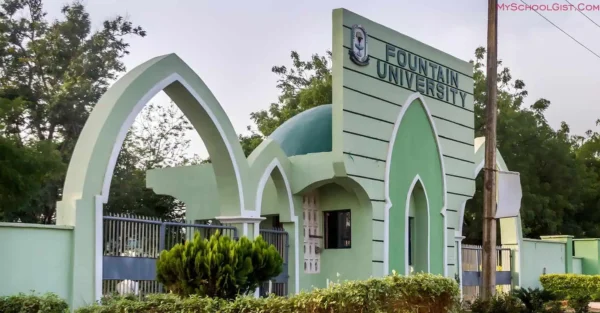
Fountain University, Osogbo is a private university located in Osogbo, Osun State, Nigeria. The university was established by the Nasrul-Lahi-Il-Fatih Society of Nigeria (NASFAT) and received its operational licence from the Federal Government on May 17, 2007, following approval by the National Universities Commission (NUC). The university commenced academic activities in March 2008 and has since expanded from its original programmes in the Natural and Applied Sciences and Management and Social Sciences to include law, computing, education, nursing and other health-related disciplines.

Fountain University operates as a faith-based institution whose educational philosophy combines academic development with character building and service to humanity. Its academic structure currently includes the College of Arts and Education, College of Basic Medical and Health Sciences, College of Natural and Applied Sciences, College of Management and Social Sciences, College of Law and College of Computing Science. The university reported in 2026 that all of its academic programmes had obtained full NUC accreditation, with more than 39 programmes fully accredited.

The university is currently admitting candidates for the 2026/2027 academic session. Its official admission requirements specify a minimum UTME score of 150 for general undergraduate admission, although some programmes have higher programme-specific requirements. Fountain University also publishes its approved 2026/2027 school fees, accommodation charges and other student fees on its official website.

History of Fountain University

Fountain University’s history is closely connected to NASFAT, which established the university as part of its broader educational objectives. The university received its operational licence on May 17, 2007, after the Federal Government approved its establishment on the recommendation of the National Universities Commission. A strategic implementation committee was subsequently constituted to put the necessary structures and facilities in place for the university’s take-off.

The university commenced academic activities in March 2008. In its early years, Fountain University operated with two colleges: the College of Natural and Applied Sciences and the College of Management and Social Sciences. The institution initially offered degree programmes in areas such as Microbiology, Biochemistry and Nutrition, Industrial and Environmental Chemistry, Physics with Electronics, Computer Science, Economics, Accounting, Business Administration, Banking and Finance, Political Science, Public Administration, Sociology and Mass Communication.

Over time, Fountain University expanded its academic structure. The College of Basic Medical and Health Sciences began operations in the 2018/2019 academic session, while the College of Law was established during the 2020/2021 academic session. More recently, the university has expanded into computing, education, nursing, medical laboratory science, public health, environmental health science and physiotherapy.

The university’s expansion has also been accompanied by investment in academic and residential infrastructure. In 2026, Fountain University commenced three new hostel projects comprising 63 rooms and an extension of its library ahead of the 2026/2027 academic session.

Location

Fountain University is located at Oke-Osun, P.M.B. 4491, Osogbo, Osun State, Nigeria. The university’s campus is situated around the Oke-Osun area of Osogbo, the capital of Osun State.

The university provides academic, residential, library, laboratory, recreational and student-support facilities on its campus. Its location in Osogbo also places students within the administrative and commercial centre of Osun State.

List of Programmes Offered by Fountain University

Fountain University offers undergraduate programmes across its colleges and academic departments.

College of Arts and Education

  • Arabic
  • English
  • French
  • History and International Studies
  • Islamic Studies
  • Linguistics
  • Education and Arabic
  • Education and English
  • Education and Islamic Studies
  • Education and Economics
  • Education and Computer Science

College of Management and Social Sciences

  • Accounting
  • Banking and Finance
  • Business Administration
  • Criminology and Security Studies
  • Economics
  • Mass Communication
  • Political Science
  • Public Administration
  • Sociology
  • Library and Information Science

College of Natural and Applied Sciences

  • Biochemistry and Nutrition
  • Electronics and Communication
  • Electronics and Computer Systems
  • Industrial and Environmental Chemistry
  • Microbiology
  • Food Science and Technology
  • Physics with Electronics

College of Computing Science

  • Computer Science
  • Software Engineering
  • Cybersecurity
  • Information and Communication Technology

College of Basic Medical and Health Sciences

  • Environmental Health Science
  • Medical Laboratory Science
  • Nursing Science
  • Public Health
  • Doctor of Physiotherapy

College of Law

  • Common Law
  • Common and Islamic Law

The programme list above reflects the university’s current 2026/2027 admission information.

Admission Requirements

For the 2026/2027 academic session, Fountain University requires undergraduate applicants to be at least 16 years old at the time of application. UTME candidates are required to have scored at least 150 in the 2026 JAMB UTME, while applicants must also possess at least five relevant O’Level credit passes, including English Language and Mathematics, in not more than two sittings. Programme-specific subject requirements also apply.

The minimum UTME score varies according to the programme. For example, Computer Science requires 170, Medical Laboratory Science requires 190, Doctor of Physiotherapy requires 200, Nursing Science requires 220, Common Law requires 220, while Common and Islamic Law requires 200 for the 2026/2027 admission exercise.

Direct Entry applicants are also considered, with programme-specific Direct Entry requirements published by the university. Candidates should check the requirements for their intended programme before beginning the application process.

The university has advised prospective candidates to use its official admission portal for applications and to beware of unauthorised persons claiming to represent the institution.

School Fees

Fountain University has published its approved 2026/2027 school fees for fresh and returning undergraduate students.

For newly admitted students, the approved programme fees include:

Programme 2026/2027 Fresh Student Fee
B.A Arabic ₦319,000
B.A Islamic Studies ₦319,000
B.A English ₦481,800
B.A French ₦481,800
B.A Linguistics ₦481,800
B.A History and International Studies ₦481,800
B.A. (Ed) Arabic Language ₦330,000
B.A. (Ed) English Language ₦330,000
B.A. (Ed) Islamic Studies ₦330,000
B.Sc. (Ed) Computer Science ₦330,000
B.Sc. (Ed) Economics ₦330,000
B.Sc. Accounting ₦766,656
B.Sc. Banking and Finance ₦766,656
B.Sc. Business Administration ₦766,656
B.Sc. Economics ₦766,656
B.Sc. Political Science ₦766,656
B.Sc. Public Administration ₦766,656
B.Sc. Sociology ₦766,656
B.Sc. Criminology and Security Studies ₦766,656
B.Sc. Library and Information Science ₦766,656
B.Sc. Mass Communication ₦832,656
B.Sc. Physics with Electronics ₦638,000
B.Sc. Electronics and Communications ₦638,000
B.Sc. Electronics and Computer Systems ₦638,000
B.Sc. Microbiology ₦638,880
B.Sc. Biochemistry and Nutrition ₦638,880
B.Sc. Food Science ₦638,880
B.Sc. Industrial and Environmental Chemistry ₦638,880
B.Sc. Computer Science ₦806,256
B.Sc. Cybersecurity ₦806,256
B.Sc. Software Engineering ₦806,256
B.Sc. Information and Communication Technology ₦806,256
BMLS. Medical Laboratory Science ₦1,817,640
B.NSc. Nursing Science ₦2,127,125
B.Sc. Public Health ₦1,003,872
B.Sc. Environmental Health Sciences ₦718,740
Doctor of Physiotherapy ₦1,831,700
Law ₦2,127,125

These are the university’s approved programme fees for fresh 100-level and Direct Entry students for the 2026/2027 academic session. Additional charges may apply depending on the programme and student status.

The university also lists an undergraduate application fee of ₦2,000 and an undergraduate acceptance fee of ₦75,000 for the 2026/2027 session. Other charges include medical, portal, laboratory, clinical, matriculation and other applicable fees.

Students and parents should consult the university’s official fee schedule before making payment because fees and additional charges can vary according to programme and level.

Cut-Off Mark

For the 2026/2027 academic session, Fountain University’s general minimum UTME requirement is 150. However, the university has approved higher minimum admissible scores for some programmes.

Programme 2026/2027 Minimum UTME
Accounting 150
Banking and Finance 150
Business Administration 150
Criminology and Security Studies 150
Economics 150
Mass Communication 160
Political Science 150
Public Administration 150
Sociology 150
Library and Information Science 150
Biochemistry and Nutrition 150
Electronics and Communication 150
Electronics and Computer Systems 150
Industrial and Environmental Chemistry 150
Microbiology 150
Food Science and Technology 150
Physics with Electronics 150
Computer Science 170
Software Engineering 150
Cybersecurity 150
Information and Communication Technology 150
Environmental Health Science 150
Medical Laboratory Science 190
Nursing Science 220
Public Health 150
Doctor of Physiotherapy 200
Arabic 150
English 150
French 150
History and International Studies 150
Islamic Studies 150
Linguistics 150
Education and Arabic 150
Education and English 150
Education and Islamic Studies 150
Education and Economics 150
Education and Computer Science 150
Common Law 220
Common and Islamic Law 200

These figures are the university’s approved 2026/2027 minimum admissible UTME marks and should not be confused with a general JAMB national cut-off mark.

Hostel and Accommodation

Fountain University provides on-campus hostel accommodation for students. For the 2026/2027 academic session, the university published accommodation charges ranging from ₦180,000 to ₦250,000, depending on the hostel.

Female Hostels

Hostel 2026/2027 Fee
Adeola ₦250,000
F. K. Lawal I ₦250,000
F. K. Lawal II ₦250,000
Yusuf Ali ₦250,000
Nimot Liadi ₦250,000
Olalekan Saliu ₦250,000
Awa Ibraheem ₦220,000
Nimbe Adedipe ₦200,000
Ish’aq Oloyede ₦200,000
Nimbe Adedipe Extension I ₦240,000
Nimbe Adedipe Extension II ₦240,000

Male Hostels

Hostel 2026/2027 Fee
Adegunwa ₦180,000
Jubrila Ayinla ₦220,000
Akewusola ₦220,000
Akewusola Extension ₦240,000

For the 2026/2027 session, the university announced that hostel bed-space allocation would be handled through the student portal. Students are required to meet the stated financial and registration conditions before participating in the allocation exercise.

The university was also constructing additional hostel facilities in 2026, including 63 new rooms across three projects, as part of efforts to expand accommodation capacity.

Notable Alumni

Fountain University has produced graduates who have gone on to further studies, professional careers, research and other areas of public and private-sector activity.

Some alumni whose recent achievements have been documented by the university include:

Muadh Adekunle Monsuru

Muadh Adekunle Monsuru is a Fountain University alumnus and First-Class Computer Science graduate of the Class of 2025. He was also the former Amir of the Fountain University Muslim Students’ Society for his graduating set. In September 2026, the university reported that he secured an Erasmus Mundus Joint Master’s Degree scholarship in Applied Cybersecurity.

Memunat Olawore

Memunat Olawore is a graduate of Fountain University’s pioneer Law class and its Best Graduating Student for that set. In September 2026, she emerged second in the tertiary institution category of the National Emergency Management Agency’s 2026 National Essay Competition. She was also undergoing professional legal training at the Nigerian Law School at the time of the report.

Mariam Eniola Sulaiman

Mariam Eniola Sulaiman is a Fountain University alumna and First-Class Biochemistry graduate who emerged Overall Best Graduating Student of the Class of 2023. In September 2026, she returned to the university as the lead trainer at an Advanced Bioimaging Workshop after gaining further research experience and international exposure.

Official Website and Portal Links

Resource Link
Official Website Fountain University official website
Undergraduate Admission Portal Fountain University admission portal
Admission Requirements 2026/2027 admission requirements
School Fees 2026/2027 approved school fees
University About Page About Fountain University

Fountain University specifically advises prospective students to use its official website and admission portal when applying and to be cautious of admission fraudsters.

Contact Information

Fountain University, Osogbo
Oke-Osun, P.M.B. 4491,
Osogbo, Osun State, Nigeria

General enquiries: +234 803 706 3960
Admissions enquiries: +234 816 035 0557
Email: info@fuo.edu.ng

The university lists its general contact address and phone number on its official website, while the admission page provides a separate admissions contact.

Frequently Asked Questions (FAQs)

Is Fountain University a private university?

Yes. Fountain University is a private university established by NASFAT and licensed by the Federal Government in 2007 on the recommendation of the National Universities Commission.

Where is Fountain University located?

Fountain University is located at Oke-Osun, Osogbo, Osun State, Nigeria.

When was Fountain University established?

Fountain University received its operational licence on May 17, 2007, and commenced academic activities in March 2008.

Who is the Vice-Chancellor of Fountain University?

The Vice-Chancellor is Professor Olayinka Ramota Karim. She assumed office as the fourth substantive Vice-Chancellor of Fountain University on March 1, 2023, and the university’s Governing Council has approved her reappointment for a second term.

What is the cut-off mark for Fountain University?

The general minimum UTME score for the 2026/2027 admission exercise is 150. Some programmes have higher requirements, including 220 for Nursing Science and Common Law, 200 for Doctor of Physiotherapy and Common and Islamic Law, 190 for Medical Laboratory Science, and 170 for Computer Science.

How much is Fountain University school fees?

The 2026/2027 school fees vary by programme. Fresh undergraduate fees range from ₦319,000 for some Arts programmes to ₦2,127,125 for Nursing Science and Law. Medical Laboratory Science is listed at ₦1,817,640, while Doctor of Physiotherapy is ₦1,831,700. Additional charges may apply.

How much is Fountain University acceptance fee?

The approved undergraduate acceptance fee for the 2026/2027 academic session is ₦75,000.

Does Fountain University offer Nursing Science?

Yes. Fountain University offers Nursing Science through its College of Basic Medical and Health Sciences. The programme is listed among the university’s undergraduate programmes and has a 2026/2027 minimum UTME requirement of 220.

Does Fountain University offer Law?

Yes. The university offers Common Law and Common and Islamic Law through its College of Law.

Does Fountain University offer Computer Science?

Yes. Computer Science is offered through the College of Computing Science. The university also offers Software Engineering, Cybersecurity and Information and Communication Technology.

Does Fountain University provide hostel accommodation?

Yes. Fountain University operates halls of residence for students. For 2026/2027, published accommodation fees range from ₦180,000 to ₦250,000 depending on the hostel.

Is Fountain University accredited by NUC?

Fountain University reported in April 2026 that it had secured full NUC accreditation for all its academic programmes, bringing its fully accredited programme total to more than 39.

What is the official Fountain University admission portal?

The official undergraduate admission portal is eportal.fuo.edu.ng. Fountain University advises applicants to use only its official website and admission portal when processing admission.

School of Health Technology, Alkaleri (SOHTA)
College of Health Science and Technology, Alkaleri – SOHTA

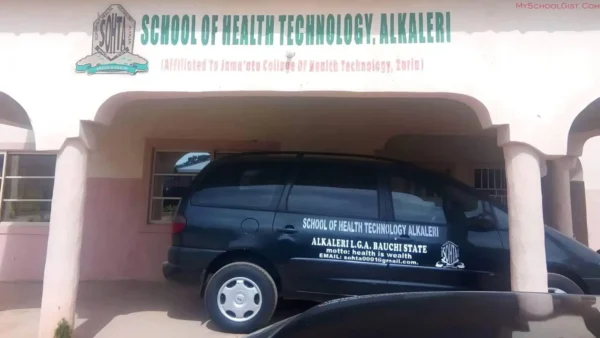
The College of Health Science and Technology, Alkaleri, also commonly referred to as the School of Health Technology, Alkaleri (SOHTA), is a health training institution located in Alkaleri Local Government Area of Bauchi State, Nigeria. The institution provides training in different areas of health technology, with programmes covering community health, environmental health, public health, health information and other technical healthcare fields.

The college is located along Sarki Street in Alkaleri, with admission-related sources also identifying its premises along the GGAC Alkaleri area. The institution has continued to admit students into diploma and certificate programmes in health-related disciplines. The Community Health Practitioners Registration Board of Nigeria (CHPRBN) lists the School of Health Technology, Alkaleri among community health training institutions in Bauchi State, with its status shown as provisional in the board’s published North-East list.

For the 2026/2027 academic session, the college announced an entrance examination for prospective applicants. The aptitude test was scheduled for September 26, 2026, at the College Multi-Purpose Hall, following a September 24 deadline for submission of completed application forms.

History of the Institution

The College of Health Science and Technology, Alkaleri developed as a health training institution serving Alkaleri and surrounding communities in Bauchi State. Its programmes are focused on producing health personnel who can support healthcare delivery at community, primary-care and technical levels.

The institution has historically operated under the name School of Health Technology, Alkaleri, a name that remains widely used in admission information and professional regulatory records. The institution’s programmes have included training for community health workers and other health technicians.

Its role is particularly relevant to students who want to enter the healthcare sector through professional and technical training without necessarily following the longer university route for a medical or health science degree. The programmes also provide specialised training in areas that support hospitals, primary healthcare centres, public health services and other healthcare organisations.

Location

The College of Health Science and Technology, Alkaleri is located in Alkaleri Local Government Area of Bauchi State, Nigeria.

The school premises are identified around Sarki Street, Alkaleri, while admission notices have also referred to the college’s location along the GGAC Alkaleri area.

Alkaleri is one of the local government areas in Bauchi State and is situated in the northeastern part of Nigeria. Students from Alkaleri and neighbouring communities can therefore access health-related professional training without necessarily travelling to larger cities for every programme.

List of Programmes Offered by College of Health Science and Technology, Alkaleri

The programmes publicly associated with the institution include:

Diploma and National Diploma Programmes

  • National Diploma in Epidemiology and Disease Control
  • National Diploma in Public Health
  • Diploma in Community Health Extension Workers (CHEW)
  • Diploma in Environmental Health Technician
  • Diploma in X-Ray Technician
  • Diploma in Pharmacy Technician
  • Diploma in Health Information Technician
  • Diploma in Health Education and Promotion

Certificate Programme

  • Junior Community Health Extension Worker (JCHEW)

These programmes are based on the institution’s published admission information for the 2025/2026 academic session.

Admission Requirements

Admission requirements depend on the programme selected because the college offers programmes at different qualification levels.

For several of the diploma and National Diploma programmes, prospective applicants are generally expected to possess relevant O’Level qualifications, including credits in science-related subjects where required by the chosen programme. Applicants should check the requirements attached to their particular programme before submitting an application.

The college has also used an entrance or aptitude test as part of its admission process. For the 2026/2027 session, an aptitude test was scheduled for September 26, 2026, indicating that applicants were expected to complete the application process before being considered for the examination.

Because admission requirements can change between academic sessions and between programmes, prospective students should confirm the current requirements with the college before paying application or other fees.

School Fees

A reliable, comprehensive and current 2026/2027 school-fee schedule for the College of Health Science and Technology, Alkaleri could not be verified from an official institutional source.

Applicants should therefore avoid relying on unofficial fee figures circulated on blogs, social media or admission forums. The amount paid by a student may also depend on the programme, level and other applicable charges.

Students who have been offered admission should obtain the current payment schedule directly from the college or its authorised admission office before making payments.

Cut-Off Mark

No reliable institution-wide 2026/2027 cut-off mark for the College of Health Science and Technology, Alkaleri could be verified from an official source.

The college’s admission process includes an institutional aptitude test, and programme requirements may differ. Candidates should therefore confirm the applicable academic requirements for their chosen programme directly from the institution.

Hostel and Accommodation

Information confirming the availability, capacity and current charges for student accommodation at the College of Health Science and Technology, Alkaleri could not be reliably verified.

Students who require accommodation should contact the college to determine whether institutional hostel spaces are available for their programme and academic session. Where college accommodation is unavailable or limited, students may need to make arrangements for private accommodation in Alkaleri.

Notable Alumni

A reliable official list of notable alumni of the College of Health Science and Technology, Alkaleri was not found in the available sources.

Official Website and Portal Links

A clearly identifiable current official institutional website could not be independently verified during this research. Earlier admission information has identified an online application portal for the School of Health Technology, Alkaleri, but prospective applicants should verify that the portal is currently authorised before entering personal information or making payment.

Resource Link
Official Website Not independently verified
Admission Portal School of Health Technology Alkaleri application portal
Current admission information Check with the college directly

Contact Information

Institution: College of Health Science and Technology, Alkaleri
Location: Alkaleri, Bauchi State, Nigeria
Area: Along Sarki Street / GGAC Alkaleri area

Recent 2026/2027 admission notices published the following numbers for enquiries concerning the aptitude test and admission process:

  • 08132931862
  • 08038320729
  • 08139728312

Because contact numbers can change, prospective students should confirm that a number is still being used by the college before relying on it for admission or payment-related matters.

Frequently Asked Questions (FAQs)

What is the College of Health Science and Technology, Alkaleri?

The College of Health Science and Technology, Alkaleri is a health training institution in Alkaleri Local Government Area of Bauchi State. It provides professional and technical training in areas such as public health, community health, environmental health, pharmacy technology and health information.

Where is the College of Health Science and Technology, Alkaleri located?

The institution is located in Alkaleri, Bauchi State, with admission information identifying the school around Sarki Street and the GGAC Alkaleri area.

What courses does the College of Health Science and Technology, Alkaleri offer?

Published admission information lists programmes such as National Diploma in Epidemiology and Disease Control, National Diploma in Public Health, Community Health Extension Workers, Junior Community Health Extension Workers, X-Ray Technician, Pharmacy Technician, Health Information Technician, Environmental Health Technician, and Health Education and Promotion.

Does the College of Health Science and Technology, Alkaleri conduct an entrance examination?

Yes. The college has used an aptitude test as part of its admission process. For the 2026/2027 session, the entrance examination was scheduled for September 26, 2026, at the College Multi-Purpose Hall.

What is the application fee for the College of Health Science and Technology, Alkaleri?

The 2025/2026 admission information listed the application form at ₦5,000. This was a session-specific figure and should not automatically be treated as the fee for a later academic session.

Is the College of Health Science and Technology, Alkaleri accredited?

The School of Health Technology, Alkaleri appears in the Community Health Practitioners Registration Board of Nigeria’s published list of community health training institutions in the North-East. The listing identified its status as provisional, so applicants should confirm the current regulatory status of their specific programme before enrolment.

Does the college offer Nursing?

Nursing should not be assumed to be an approved programme simply because some third-party listings mention it. The more consistently documented programmes in the college’s published admission information include public health, epidemiology and disease control, community health, environmental health, pharmacy technician, X-ray technician, health information and health education.

When was the College of Health Science and Technology, Alkaleri established?

A sufficiently reliable official source confirming the institution’s exact founding date was not located. EducationNGR therefore does not state a specific establishment year without stronger evidence.

Is the College of Health Science and Technology, Alkaleri currently admitting students?

The college announced a 2026/2027 aptitude test for applicants, with the examination scheduled for September 26, 2026. Since that examination date has now passed, prospective applicants should contact the institution directly to confirm whether any subsequent admission window remains open.

What is the cut-off mark for the College of Health Science and Technology, Alkaleri?

A reliable current institution-wide cut-off mark for the 2026/2027 academic session was not verified. Applicants should confirm the requirement for their particular programme with the college.

How much is the school fee at the College of Health Science and Technology, Alkaleri?

A reliable current 2026/2027 school-fee schedule was not verified. Students should obtain the official fee schedule from the college before making payment.

CUSTECH
Confluence University of Science and Technology Osara – CUSTECH

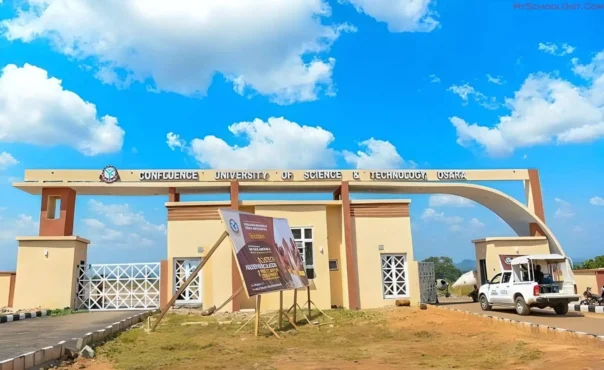
Confluence University of Science and Technology (CUSTECH), Osara, is a state-owned university in Kogi State, Nigeria, established with a strong focus on science, technology, engineering, innovation and health-related disciplines. The university is located along the Okene–Lokoja Road in Osara, within Okehi Local Government Area of Kogi State. CUSTECH describes its academic mission around practical learning, research, innovation, entrepreneurship and the development of graduates equipped to address real-world challenges.

The university was established in 2020 through legislation by the Kogi State Government. The Kogi State House of Assembly passed the bill establishing CUSTECH on 20 August 2020, and the Governor assented to it on 21 August 2020. The university subsequently received the necessary recognition from the National Universities Commission (NUC), while its pioneer management team was inaugurated in December 2020.

CUSTECH has expanded its academic offerings to include science, computing and informatics, engineering, environmental sciences, management and social sciences, agriculture, science and technology education, law and medical sciences. The university’s current website states that it has more than 42 departments and over 50 programmes, while its 2026/2027 admission information identifies 56 undergraduate programmes approved for the admission exercise.

History 

Confluence University of Science and Technology was conceived as a specialised university intended to expand access to higher education in science, technology, engineering and related fields in Kogi State. The university’s establishment formed part of the Kogi State Government’s plan to create an institution with a strong orientation towards scientific and technological education.

The legal process for establishing the university took place in August 2020. The Kogi State House of Assembly passed the CUSTECH establishment bill on 20 August 2020, while assent was given on 21 August 2020. According to the university’s historical account, the National Universities Commission granted the required recognition in November 2020, and the pioneer management team was inaugurated on 17 December 2020.

CUSTECH was established with its main campus at Osara, along the Okene–Lokoja corridor. The university subsequently developed academic, administrative and residential infrastructure to support its expanding programmes. Its academic direction has remained closely connected to science, technology, engineering, medicine, agriculture, computing and innovation.

Location

Confluence University of Science and Technology is located at:

Kilometre 19, Okene–Lokoja Road, Osara, Kogi State, Nigeria.

The university is situated in Okehi Local Government Area of Kogi State, along the road connecting Okene and Lokoja. Its location gives the institution access to the central Kogi corridor linking the two major cities.

List of Programmes Offered by CUSTECH

CUSTECH currently offers undergraduate programmes across its faculties and College of Medical Sciences. 

Faculty of Agriculture

  • Agriculture

Faculty of Computing and Informatics

  • Computer Science
  • Cyber Security
  • Information Technology
  • Software Engineering
  • Library and Information Science

Faculty of Engineering

CUSTECH’s Engineering programmes include:

  • Agricultural Engineering
  • Chemical Engineering
  • Civil Engineering
  • Computer Engineering
  • Electrical and Electronics Engineering
  • Marine Engineering
  • Materials and Metallurgical Engineering
  • Mechanical Engineering
  • Mechatronics Engineering
  • Mining Engineering
  • Petroleum and Gas Engineering

Faculty of Environmental Sciences

Programmes include:

  • Architecture
  • Building
  • Geography
  • Surveying and Geoinformatics
  • Urban and Regional Planning

Faculty of Management and Social Sciences

The faculty offers:

  • Accounting
  • Actuarial Science
  • Business Administration
  • Economics
  • Human Resource Management
  • Transport and Logistics Management

Faculty of Science

Science programmes include:

  • Applied Geophysics
  • Biochemistry
  • Biology
  • Chemistry
  • Geology
  • Mathematics
  • Microbiology
  • Physics
  • Statistics

Faculty of Science and Technology Education

Programmes include:

  • Biology Education
  • Building Technology Education
  • Chemistry Education
  • Computer Science Education
  • Electrical and Electronics Technology Education
  • Geography Education
  • Mathematics Education
  • Mechanical (Automobile) Education
  • Metalworks Technology Education
  • Physics Education
  • Woodwork Technology Education

College of Medical Sciences

The College of Medical Sciences includes programmes in medical and allied health disciplines such as:

  • Anatomy
  • Medical Laboratory Science
  • Medicine and Surgery
  • Nursing Science
  • Physiology
  • Physiotherapy
  • Radiography

Law

CUSTECH also offers Law.

Admission Requirements

Admission requirements at CUSTECH depend on the programme selected.

For the 2026/2027 UTME admission exercise, candidates must meet the minimum UTME score specified for their intended programme. This means there is no single course-specific cut-off applicable to every CUSTECH applicant. The university has published individual cut-off marks for its programmes.

Candidates must also satisfy the required UTME subject combinations and O’Level subject requirements for their chosen courses. For example, science and engineering programmes generally require relevant combinations of Mathematics, Physics, Chemistry, Biology or related subjects, while management and social science programmes have different combinations.

The university’s admission portal advises candidates to provide accurate information during registration and warns that false declarations, impersonation or document falsification may lead to disqualification.

Prospective students should therefore check the specific subject combination and O’Level requirements for their chosen programme before completing the application.

School Fees

CUSTECH School Fees Schedule 2026/2027

Confluence University of Science and Technology (CUSTECH), Osara, Kogi State, has published its school fees schedule for the 2026/2027 academic session. The charges vary according to programme, level of study and indigene status. The acceptance fee is ₦20,000 for both indigenes and non-indigenes.

100 Level School Fees

Programme(s) Indigene Non-indigene
Accounting, Actuarial Science, Business Administration, Economics, Geography, Geography Education, Human Resource Management, Surveying and Geo-informatics, Transport and Logistics Management, Urban and Regional Planning ₦159,100 ₦239,600
Agricultural Engineering, Agriculture, Applied Geophysics, Architecture, Biochemistry, Biology, Biology Education, Building, Building Technology Education, Chemical Engineering, Chemistry, Chemistry Education, Civil Engineering, Computer Engineering, Computer Science, Computer Science Education, Cyber Security, Electrical and Electronics Engineering, Electrical and Electronics Technology Education, Geology, Information Technology, Library and Information Science, Marine Engineering, Materials and Metallurgical Engineering, Mathematics, Mathematics Education, Mechanical (Automobile) Technology Education, Mechanical Engineering, Mechatronics Engineering, Metalworks Technology Education, Microbiology, Mining Engineering, Petroleum and Gas Engineering, Physics, Physics Education, Software Engineering, Statistics, Woodworks Technology Education ₦188,600 ₦268,600
Law ₦238,600 ₦376,600
Anatomy, Physiology and Physiotherapy ₦348,600 ₦469,000
Medical Laboratory and Radiography ₦508,550 ₦596,550
Nursing Science ₦538,550 ₦626,550
Medicine ₦568,550 ₦656,550

200, 300 and 400 Level School Fees

Programme(s) Indigene Non-indigene
Accounting, Actuarial Science, Business Administration, Economics, Geography, Geography Education, Human Resource Management, Surveying and Geo-informatics, Transport and Logistics Management, Urban and Regional Planning ₦121,600 ₦182,100
Agriculture ₦162,100 ₦268,650
Applied Geophysics, Architecture, Biochemistry, Biology, Biology Education, Building, Building Technology Education, Chemical Engineering, Chemistry, Chemistry Education, Civil Engineering, Computer Engineering, Computer Science, Computer Science Education, Cyber Security, Electrical and Electronics Engineering, Electrical and Electronics Technology Education, Geology, Information Technology, Library and Information Science, Mathematics, Mathematics Education, Mechanical (Automobile) Technology Education, Mechanical Engineering, Metalworks Technology Education, Microbiology, Mining Engineering, Physics, Physics Education, Software Engineering, Statistics, Woodworks Technology Education ₦151,100 ₦211,100
Agricultural Engineering, Petroleum and Gas Engineering, Mechatronics Engineering, Marine Engineering, Materials and Metallurgical Engineering ₦162,100 ₦222,100
Law ₦212,100 ₦330,100
Anatomy, Physiology and Physiotherapy ₦322,100 ₦422,500
Medical Laboratory and Radiography ₦482,050 ₦550,050
Nursing Science ₦512,050 ₦580,050
Medicine ₦542,050 ₦610,050

500 Level School Fees

Programme(s) Indigene Non-indigene
Surveying and Geo-informatics, Urban and Regional Planning ₦121,600 ₦182,100
Chemical Engineering, Civil Engineering, Computer Engineering, Electrical and Electronics Engineering, Mechanical Engineering, Mining Engineering, Architecture, Building, Library and Information Science ₦151,100 ₦211,100
Agriculture ₦162,100 ₦268,650
Agricultural Engineering, Marine Engineering, Materials and Metallurgical Engineering, Mechatronics Engineering, Petroleum and Gas Engineering ₦162,100 ₦222,100
Law ₦212,100 ₦330,100
Physiotherapy ₦322,100 ₦422,500
Medical Laboratory and Radiography ₦482,050 ₦550,050
Nursing Science ₦512,050 ₦580,050
Medicine ₦542,050 ₦610,050

600 Level School Fees

Programme Indigene Non-indigene
Medicine ₦678,050 ₦746,050

Students are advised to check the fees applicable to their programme and level before making payment. The acceptance fee is separate from the listed school fees unless the university specifies otherwise. Newly admitted and returning students should consult CUSTECH’s official channels for payment instructions and any additional registration requirements.

Cut-Off Mark

CUSTECH does not have one single cut-off mark for every course.

For the 2026/2027 academic session, the university has published programme-specific minimum UTME scores. Several programmes have a minimum of 150, while others have higher requirements.

Some examples include:

Programme 2026/2027 Cut-Off Mark
Agriculture 150
Computer Science 170
Cyber Security 180
Information Technology 160
Software Engineering 170
Civil Engineering 180
Petroleum and Gas Engineering 180
Architecture 180
Accounting 160
Medicine and Surgery 280
Nursing Science 240
Medical Laboratory Science 200
Physiotherapy 200
Radiography 200
Law 240
Biology 150
Chemistry 150
Microbiology 170
Physics 150

These are the university’s published 2026/2027 programme-specific cut-off marks, not historical figures from an earlier admission session.

Meeting a published minimum does not by itself guarantee admission because the university notes that programme quota, carrying capacity and other admission policies can also affect admission.

Hostel / Accommodation

CUSTECH provides student accommodation as part of its campus development. The university has also reported ongoing development of student housing, including a female students’ hostel supported through the Federal Government’s Renewed Hope Student Housing Initiative.

However, a complete and current 2026/2027 hostel fee schedule and room-allocation procedure was not clearly published in the official sources reviewed. Students should therefore confirm current hostel availability, fees and application arrangements through the university.

Notable Alumni

CUSTECH is a relatively young university, having been established in 2020 and beginning its academic development after its establishment. Its alumni network is consequently still developing.

The university’s official website highlights its growing alumni community but does not provide a sufficiently detailed, verified list of notable alumni for EducationNGR to reproduce. EducationNGR therefore does not attach public figures to the university as alumni without reliable institutional evidence.

Official Website and Portal Links

Resource Link
Official Website CUSTECH Official Website
2026/2027 Post-UTME Portal CUSTECH Post-UTME Screening Portal
ePortal / Student Portal CUSTECH ePortal
2026/2027 Cut-Off Marks CUSTECH 2026/2027 Cut-Off Marks
2026/2027 UPASE Guide CUSTECH UPASE Application Guide
Academic Calendar CUSTECH 2026/2027 Academic Calendar

Contact Information

Institution: Confluence University of Science and Technology, Osara

Address: Kilometre 19, Okene–Lokoja Road, Osara, Kogi State, Nigeria.

General Email: info@custech.edu.ng

Admission Email: admission@custech.edu.ng

Admission Enquiries: 09023551052.

Vice-Chancellor: Engr. Prof. Abdulrahman Asipita Salawu.

Frequently Asked Questions (FAQs)

What is the full name of CUSTECH?

CUSTECH stands for Confluence University of Science and Technology. The university is located in Osara, Kogi State.

Where is CUSTECH located?

Confluence University of Science and Technology is located at Kilometre 19, Okene–Lokoja Road, Osara, Kogi State, Nigeria.

Is CUSTECH a federal or state university?

CUSTECH is a state-owned university established by the Kogi State Government.

When was CUSTECH established?

The CUSTECH establishment bill was passed by the Kogi State House of Assembly on 20 August 2020, and it received assent on 21 August 2020.

What is the CUSTECH cut-off mark for 2026/2027?

There is no single cut-off mark for every CUSTECH course. For 2026/2027, programme-specific cut-off marks range from 150 to 280. Medicine and Surgery has 280, Nursing Science has 240, Law has 240, while many other programmes have cut-offs between 150 and 200.

Does CUSTECH offer Cyber Security?

Yes. CUSTECH offers Cyber Security, and its published 2026/2027 minimum UTME cut-off mark for the programme is 180.

Does CUSTECH offer Engineering courses?

Yes. CUSTECH offers several engineering programmes, including Chemical Engineering, Civil Engineering, Computer Engineering, Electrical and Electronics Engineering, Mechanical Engineering, Mechatronics Engineering, Mining Engineering, Petroleum and Gas Engineering, Agricultural Engineering, Marine Engineering and Materials and Metallurgical Engineering.

How much is the CUSTECH Post-UTME form?

The official 2026/2027 UPASE guide states that the UTME/Direct Entry screening fee is ₦2,000.

How many courses does CUSTECH offer?

The university’s current website states that it has over 50 programmes, while its 2026/2027 admission announcement identifies 56 undergraduate programmes approved for that admission exercise.

How much is CUSTECH school fees?

A complete and verified 2026/2027 school-fee schedule was not clearly available in the official public sources reviewed. Newly admitted students are directed to use the official ePortal for acceptance, registration and school-fee payments.

Does CUSTECH have a student portal?

Yes. CUSTECH operates an official ePortal for admission status, student login, registration and payment-related processes.

Does CUSTECH provide hostel accommodation?

CUSTECH provides student accommodation facilities and has also reported the development of additional student housing, including a female hostel. Current availability and charges should be confirmed through the university.

Emmanuel Alayande University of Education (EAUED)
Emmanuel Alayande University of Education, Oyo – EAUED

Emmanuel Alayande University of Education, Oyo (EAUED) is a state-owned university of education located in Oyo, Oyo State, Nigeria. The institution is focused primarily on teacher education, professional training, research and the development of manpower for the education sector and other areas of national development. Its history dates back to 1896, when St. Andrew’s College was established by the Church Missionary Society (CMS), making the institution one of Nigeria’s oldest teacher-training institutions.

The institution has evolved through several stages, from a Grade II teachers’ college to an NCE-awarding institution and later a full-fledged College of Education. It was renamed Emmanuel Alayande College of Education, Oyo, in 2008 in honour of Rev. Canon Emmanuel Alayande before its transformation into Emmanuel Alayande University of Education. The Oyo State Government upgraded the institution to university status in 2022, beginning a new phase in its academic development.

EAUED currently operates five faculties: Arts Education, Science Education, Social Science Education, Specialised and Professional Education, and Vocational, Innovation and Engineering Education. The university’s website states that it has more than 8,400 students, 597 staff members, five faculties and 31 departments. It also runs undergraduate programmes and a JUPEB programme that provides a pathway towards Direct Entry admission.

For the 2026/2027 academic session, the university has already released its first-batch admission list and subsequently announced the release of the Direct Entry and UTME second-batch admission list. Candidates who have been offered admission are required to accept their offers through JAMB CAPS and complete the university’s subsequent screening and admission procedures.

History 

The history of Emmanuel Alayande University of Education can be traced to 1896, when St. Andrew’s College was established in Oyo by the Church Missionary Society. The institution originally operated as a Grade II teachers’ college and developed a long-standing reputation for teacher training. Its history predates many of Nigeria’s modern higher institutions and has made teacher education central to its identity.

The institution’s transition into a higher-level teacher-training centre began in the twentieth century. In 1976, there was a renewed demand for its conversion into an NCE-awarding institution. The Oyo State Government subsequently upgraded it in October 1980 to a campus of the then Oyo State College of Education, Ilesa. In March 1983, its supervision was transferred to the Oyo State College of Education, Ila Orangun.

The institution eventually became an autonomous College of Education on 1 October 1985. It subsequently operated under names including St. Andrew’s College of Education, Oyo State College of Education, Oyo, and Emmanuel Alayande College of Education, Oyo. The institution moved to its present site in 2003 and was renamed Emmanuel Alayande College of Education in 2008 in honour of the renowned educationist Rev. Canon Emmanuel Alayande.

The final major stage in this development was the transition from college to university. The institution became Emmanuel Alayande University of Education, Oyo, following the Oyo State Government’s decision to upgrade it to university status in 2022. The university’s first Governing Council was inaugurated in December 2023, while Professor Olanrewaju A. Olaniyan serves as the pioneer Vice-Chancellor.

Location

Emmanuel Alayande University of Education is located in the Erelu area of Oyo town, Oyo State, Nigeria.

The university’s official library page gives the campus area as:

Erelu Area, Ogbomosho–Oyo Express Road, Oyo, Oyo State, Nigeria.

The institution’s location in Oyo places it within the historic Oyo town area, while its campus facilities have expanded considerably since the institution relocated to its present site in 2003.

List of Programmes Offered by Emmanuel Alayande University of Education

Emmanuel Alayande University of Education offers undergraduate programmes across five faculties. The university’s current academic structure includes Arts Education, Science Education, Social Science Education, Specialised and Professional Education, and Vocational, Innovation and Engineering Education.

Faculty of Arts Education

Programmes publicly listed by the university include:

  • B.A. (Ed.) Arabic Education
  • B.A. (Ed.) Christian Religious Studies Education
  • B.A. (Ed.) Creative Arts Education
  • B.A. (Ed.) Fine and Applied Arts Education
  • B.A. (Ed.) French Education
  • B.A. (Ed.) Hausa Education
  • B.A. (Ed.) History and International Studies Education
  • B.A. (Ed.) Islamic Studies Education
  • B.A. (Ed.) Music Education
  • B.A. (Ed.) Theatre Arts Education
  • B.A. (Ed.) Yoruba Education
  • B.A. English Language and Literary Studies

Faculty of Science Education

Programmes include:

  • B.Sc. (Ed.) Biology Education
  • B.Sc. (Ed.) Chemistry Education
  • B.Sc. (Ed.) Computer Science Education
  • B.Sc. (Ed.) Integrated Science Education
  • B.Sc. (Ed.) Mathematics Education
  • B.Sc. (Ed.) Physics Education
  • B.Sc. Biology
  • B.Sc. Chemistry
  • B.Sc. Computer Science

Faculty of Social Science Education

Programmes include:

  • B.Ed./B.Sc. Library and Information Science
  • B.Sc. (Ed.) Economics Education
  • B.Sc. (Ed.) Environmental Education
  • B.Sc. (Ed.) Geography Education
  • B.Sc. (Ed.) Political Science Education
  • B.Sc. (Ed.) Social Studies and Civic Education
  • B.Sc. (Ed.) Social Work
  • B.Sc. Accounting
  • B.Sc. Economics
  • B.Sc. Political Science

Faculty of Specialised and Professional Education

Programmes include:

  • B.Ed. Adult and Continuing Education
  • B.Ed. Early Childhood Education
  • B.Ed. Primary Education
  • B.Ed. Educational Technology
  • B.Ed. Guidance and Counselling
  • B.Sc. (Ed.) Educational Management
  • B.Sc. (Ed.) Health Education
  • B.Sc. (Ed.) Human Kinetics/Physical Education
  • B.Ed./B.Sc. (Ed.) Special Education
  • Library and Information Science

Faculty of Vocational, Innovation and Engineering Education

Programmes publicly listed for the faculty include:

  • B.Sc. (Ed.) Agricultural Science Education
  • B.Sc. (Ed.) Business Education
  • B.Sc. (Ed.) Entrepreneurship Education
  • B.Sc. (Ed.) Home Economics Education
  • B.Tech. (Ed.) Automobile Technology Education
  • B.Tech. (Ed.) Building Technology Education
  • B.Tech. (Ed.) Electrical/Electronic Technology Education
  • B.Tech. (Ed.) Metal Work Technology Education
  • B.Tech. (Ed.) Woodwork Technology Education

Admission Requirements

For the 2026/2027 academic session, EAUED stated that UTME candidates with a score of 150 or above were eligible to register for its Post-UTME screening exercise. The university also requires candidates to meet the O’Level and UTME subject requirements for their selected programmes.

Candidates are generally expected to possess at least five relevant credit passes in SSCE/NECO at not more than two sittings. The exact subjects depend on the programme being applied for.

The university accepts recognised qualifications including WAEC, NECO and NABTEB for relevant admission routes. For Direct Entry, EAUED also lists qualifications such as Cambridge Advanced Level, NCE, OND, HND and recognised degree certificates, subject to programme-specific requirements.

Candidates who initially selected another institution but subsequently wish to study at EAUED are required to effect the appropriate change of institution through JAMB where applicable. The university’s 2026/2027 admission notice specifically instructed candidates to change their previous choice of university to Emmanuel Alayande University of Education through JAMB.

School Fees

A complete, current 2026/2027 school-fee schedule was not clearly published in the official sources reviewed, so EducationNGR does not list an unverified total as the university’s current tuition fee.

The university’s admission information confirms that admitted candidates are required to pay approved university charges after completing acceptance and screening procedures. Its newly admitted students’ guide also explains that students proceed to pay tuition and other approved levies after the initial admission processes.

Applicants should therefore check the university’s payment portal for the charges applicable to their programme and level before making payment. Fees can differ according to programme, student status and the particular academic session.

Cut-Off Mark

For the 2026/2027 Post-UTME screening exercise, Emmanuel Alayande University of Education announced 150 as the minimum UTME score for candidates eligible to register for the screening exercise.

However, the university also publishes programme-specific admission cut-off points. For example, the official programme page for B.Sc. Accounting currently shows a cut-off of 160 for that programme.

The university released a programme-by-programme cut-off document for its 2026/2027 first-batch admission exercise and subsequently published information on the second-batch admission process. Candidates should therefore distinguish between the general Post-UTME eligibility score and the specific cut-off applicable to their chosen course.

Hostel / Accommodation

EAUED has provided student accommodation facilities, including female hostel accommodation. The university has previously published information specifically concerning its girls’ hostel accommodation.

However, a current 2026/2027 hostel fee schedule and detailed information on the allocation of available spaces were not clearly published in the official sources reviewed. Students who require university accommodation should confirm current availability, fees and application procedures directly with the university.

Notable Alumni

Emmanuel Alayande University of Education has a long history of producing teachers and other professionals dating back to the St. Andrew’s College era. The university states that its predecessor institution has produced thousands of teachers and professionals who have contributed to national development.

A comprehensive, officially verified list of notable alumni was not identified on the current university website. EducationNGR therefore avoids attaching prominent names to the institution without sufficient institutional evidence.

Official Website and Portal Links

Resource Link
Official University Website Emmanuel Alayande University of Education official website
Admission Portal EAUED Admission Portal
Student Portal EAUED Student Portal
JUPEB Programme EAUED JUPEB Programme
University Overview About Emmanuel Alayande University of Education
Admission Information EAUED Admission Information and Processing

Candidates should use the university’s official website and admission portal for application, payment and admission-status activities rather than relying on unofficial agents or third-party payment links.

Contact Information

Institution: Emmanuel Alayande University of Education, Oyo

Address: Erelu Area, Ogbomosho–Oyo Express Road, Oyo, Oyo State, Nigeria.

General Email: info@eauedoyo.edu.ng

Admission Email: admission@eauedoyo.edu.ng

Admission Enquiries: +234 703 929 7888; +234 803 953 7727.

Vice-Chancellor: Professor Olanrewaju A. Olaniyan.

Frequently Asked Questions (FAQs)

What is the full name of EAUED?

EAUED stands for Emmanuel Alayande University of Education, Oyo. It is a state-owned university of education located in Oyo, Oyo State.

Where is Emmanuel Alayande University of Education located?

The university is located in the Erelu area of Oyo town, Oyo State, along the Ogbomosho–Oyo Express Road.

Is Emmanuel Alayande University of Education a university?

Yes. The institution was formerly Emmanuel Alayande College of Education and was upgraded to university status by the Oyo State Government in 2022.

What is the cut-off mark for Emmanuel Alayande University of Education?

For the 2026/2027 Post-UTME screening exercise, the minimum UTME score announced by the university was 150. Individual programmes can have higher cut-off points; for example, the university’s B.Sc. Accounting programme currently shows 160.

How much is the EAUED Post-UTME form?

The university announced a ₦2,000 screening/portal access fee for the 2026/2027 UTME and Direct Entry screening exercise.

Does EAUED accept Direct Entry?

Yes. The university accepts Direct Entry candidates and lists qualifications including Cambridge Advanced Level, NCE, OND, HND and recognised degree certificates, subject to programme requirements.

What courses does Emmanuel Alayande University of Education offer?

EAUED offers programmes in Arts Education, Science Education, Social Science Education, Specialised and Professional Education, and Vocational, Innovation and Engineering Education. Courses include Accounting, Economics, Computer Science, Biology, Chemistry, Political Science, Social Work, Educational Management, Guidance and Counselling, Early Childhood Education, Special Education and several technical and vocational education programmes.

Does EAUED offer Computer Science?

Yes. The university lists B.Sc. Computer Science and B.Sc. (Ed.) Computer Science Education among its programmes.

Does Emmanuel Alayande University of Education offer Accounting?

Yes. B.Sc. Accounting is offered under the Department of Accounting in the Faculty of Social Science Education. The university’s current course page gives a programme-specific cut-off of 160.

Does EAUED offer JUPEB?

Yes. EAUED operates a one-year JUPEB programme designed to prepare candidates for Direct Entry admission into 200 level, subject to the relevant requirements.

What is the school fees for Emmanuel Alayande University of Education?

A complete current 2026/2027 fee schedule was not clearly verified from the university’s publicly accessible official information. Students should check the official payment portal for the charges applicable to their programme and level.

Does EAUED provide hostel accommodation?

The university has student accommodation facilities, including a girls’ hostel. Current accommodation availability and fees should be confirmed with the university because hostel spaces and charges can change between sessions.

When was Emmanuel Alayande University of Education established?

The institution traces its history to 1896, when St. Andrew’s College was established by the Church Missionary Society. Its university status is much more recent, following its upgrade from Emmanuel Alayande College of Education in 2022.

Dambo College of Health Sciences and Innovations, Kazaure

Dambo International College of Health Sciences and Innovations is a health-focused training institution located in Kazaure, Jigawa State. The college describes its mission around affordable and qualitative healthcare education, professional competence and innovative training designed to help students develop practical skills for employment and self-reliance. Its published address is No. 740, Santali Street, Kanti-Kazaure, Kazaure, Jigawa State.

The institution provides professional health training programmes including Community Health Extension Worker (CHEW), Medical Laboratory Technician (MLT), Pharmacy Technician (PT) and Public Health Technician (PHT). Its published admission information has also mentioned Health Information Management (HIM) and related professional diploma programmes.

Dambo College has also promoted digital skills training alongside its health programmes. The institution has previously listed areas such as desktop publishing, computer networking, graphic design, satellite installation, solar installation, game development, CCTV installation and web development as areas in which students could receive additional training.

Some published information about the college has also referred to degree and postgraduate programmes delivered in partnership with other institutions, including programmes in nursing, midwifery, medical laboratory science, public health, information technology, software engineering and other disciplines. Prospective students should therefore confirm the awarding institution, accreditation status and admission conditions for any degree or postgraduate programme before applying.

History 

Dambo International College of Health Sciences and Innovations is a relatively young institution in Kazaure, Jigawa State. Publicly available records show the college conducting professional diploma admissions and matriculation activities by 2024–2025, indicating that its health-training operations were already established by that period. The college’s published activities have focused on healthcare education, professional competence and additional entrepreneurial or technology-oriented skills.

One of the institution’s notable activities was the reported scholarship support for 20 students from Ghari in Kunchi Local Government Area in December 2024. The scholarships covered three professional health programmes: Medical Laboratory Technician, Pharmacy Technician and Community Health Extension Worker.

The college has also held matriculation activities for its students and continued to advertise professional diploma programmes. Its development reflects the growing demand for health-worker training institutions that provide practical, career-oriented programmes outside the conventional university system.

Location

Dambo International College of Health Sciences and Innovations is located in Kazaure, Jigawa State, Nigeria.

The published address is:

No. 740, Santali Street, Kanti-Kazaure, Kazaure, Jigawa State, Nigeria.

List of Programmes Offered by Dambo College

Dambo College’s publicly advertised professional health programmes include the following:

Professional Diploma Programmes

  • Community Health Extension Worker (CHEW)
  • Medical Laboratory Technician (MLT)
  • Pharmacy Technician (PT)
  • Public Health Technician (PHT)
  • Health Information Management (HIM)
  • Other professional health-related programmes announced by the college from time to time.

Digital and Information Technology Training

The college has also advertised additional digital and technical training in areas such as:

  • Desktop Publishing
  • Computer Networking
  • Graphic Design
  • Satellite Installation
  • Solar Installation
  • Game Development
  • CCTV Installation
  • Web Development

Degree and Postgraduate Programmes

Public reports concerning the college’s 2024/2025 academic offerings listed degree programmes such as:

  • B.N.Sc Nursing
  • B.N.Sc Midwifery
  • BMLS Medical Laboratory Science
  • B.Sc Community Health
  • B.Sc Public Health
  • B.Sc Information Technology
  • B.Sc Software Engineering
  • B.Sc Business Administration
  • B.Sc Public Administration
  • B.Sc Accountancy
  • B.Sc Computer and Information Technology
  • B.A. Arabic
  • B.A. Islamic Studies
  • B.A. English Language

Admission Requirements

Admission requirements vary according to the programme.

For the professional diploma programmes publicly advertised by Dambo College, applicants have been invited to apply with their Senior Secondary School Certificate or equivalent qualification. The college’s 2024 admission announcement specifically stated that applicants with SSCE could apply for programmes including CHEW, MLT, Pharmacy Technician and Public Health Technician.

Because health-training programmes can have programme-specific subject and examination requirements, prospective students should confirm the exact requirements for the programme they intend to study before completing an application.

Applicants interested in degree programmes should also distinguish between admission into a professional diploma programme at Dambo College and admission into a degree programme delivered through a partner university.

School Fees

A reliable, comprehensive and current school-fee schedule for the 2026/2027 academic session was not found in the publicly accessible sources reviewed for this page.

The college has advertised its programmes as affordable, but an advertised description of affordability should not be treated as a specific fee figure. Applicants should obtain the current fee breakdown directly from the college before making payment.

Students should also ask whether the quoted amount covers tuition only or includes registration, practical training, examinations, uniforms, professional levies, identification cards and other institutional charges.

Cut-Off Mark

No official institution-wide JAMB cut-off mark for Dambo International College of Health Sciences and Innovations was found in the available public information.

This is also important because the college’s main advertised professional diploma programmes are different from conventional university undergraduate admissions. Candidates should therefore not assume that a university-style JAMB cut-off automatically applies to every programme at Dambo College.

Where admission is through a partner university, the partner institution’s admission requirements may apply.

Hostel / Accommodation

No reliable current information confirming the availability, cost and conditions of student hostel accommodation at Dambo International College of Health Sciences and Innovations was found in the sources reviewed.

Students coming from outside Kazaure should therefore confirm accommodation arrangements with the college before completing their admission plans.

Notable Alumni

A reliable official list of notable alumni of Dambo International College of Health Sciences and Innovations was not found.

EducationNGR does not list individuals as notable alumni without sufficient evidence linking them to the institution.

Official Website and Portal Links

A dedicated official website or online admission portal for Dambo International College was not clearly identified in the publicly accessible sources reviewed.

Resource Link
College location and public information Dambo International College of Health Sciences and Innovations information page
Iconic Open University Kazaure Centre Iconic Open University Examination Centres

Applicants should be cautious with third-party websites claiming to be official admission portals and should verify payment details directly with the college.

Contact Information

Institution: Dambo International College of Health Sciences and Innovations

Address: No. 740, Santali Street, Kanti-Kazaure, Kazaure, Jigawa State, Nigeria.

Publicly listed telephone numbers associated with the college include:

  • 0806 263 0136
  • 0701 508 8002
  • 0706 489 9635
  • 0703 645 3234

Another public listing gives 0806 263 0136 as the college telephone number, while Iconic Open University lists 0806 263 0136 and 0701 508 8002 for its Kazaure examination centre at the college.

Because telephone numbers and admission contacts can change, applicants should confirm the current number before making enquiries or travelling to the institution.

Frequently Asked Questions (FAQs)

What is the full name of Dambo College?

The institution is publicly identified as Dambo International College of Health Sciences and Innovations, located in Kazaure, Jigawa State.

Where is Dambo International College located?

Dambo International College is located at No. 740, Santali Street, Kanti-Kazaure, Kazaure, Jigawa State, Nigeria.

What courses does Dambo College offer?

Its advertised professional programmes include Community Health Extension Worker (CHEW), Medical Laboratory Technician (MLT), Pharmacy Technician and Public Health Technician. Other professional programmes, including Health Information Management, have also been advertised.

Does Dambo College offer Nursing?

Nursing has appeared among degree programmes reported in connection with the college’s partnerships. However, prospective students should verify the current programme, the institution awarding the qualification and the relevant professional accreditation before applying.

Does Dambo College offer Medical Laboratory Science?

Medical Laboratory Science has been listed among degree programmes reported in connection with the college’s partner arrangements, while Medical Laboratory Technician (MLT) is directly identified among the college’s advertised professional diploma programmes. Applicants should distinguish between these two qualifications and verify the awarding institution.

Does Dambo College offer Pharmacy?

The college has advertised Pharmacy Technician (PT) as a professional programme. Pharmacy-related degree programmes should be verified separately because some published degree information concerns programmes offered through partner institutions.

What is the cut-off mark for Dambo College?

A current official general cut-off mark was not identified. The admission requirements depend on the particular programme and whether the applicant is seeking a professional diploma or a degree through a partner institution.

How much is Dambo College school fees?

A reliable current 2026/2027 fee schedule was not identified from the sources reviewed. Applicants should obtain the latest official fee breakdown from the college before making payment.

Does Dambo College offer digital skills training?

Yes. The college has advertised additional training in areas including computer networking, graphic design, web development, CCTV installation, solar installation, satellite installation, game development and desktop publishing.

Is Dambo College in Kazaure?

Yes. Dambo International College of Health Sciences and Innovations is located in Kazaure, Jigawa State. It is also listed as a Kazaure examination centre by Iconic Open University.


Michael Adeniyi Koleosho Polytechnic, Saki - MAKPOLY / TOPS
Michael Adeniyi Koleosho Polytechnic, Saki – MAKPOLY / TOPS

Michael Adeniyi Koleosho Polytechnic, Saki (MAKPOLY) is a state-owned polytechnic located in Saki, Oyo State, Nigeria. The institution was formerly known as The Oke-Ogun Polytechnic, Saki (TOPS) and before that operated as the Saki Campus of The Polytechnic, Ibadan. It provides National Diploma (ND) and Higher National Diploma (HND) education in areas including engineering, agriculture, science and technology, environmental studies, financial management, business and communication. The institution is regulated within Nigeria’s technical education system, with programmes subject to the accreditation requirements of the National Board for Technical Education (NBTE).

The institution became an autonomous polytechnic after the former Polytechnic Ibadan Saki Campus was separated from The Polytechnic, Ibadan. The Oke-Ogun Polytechnic, Saki name was subsequently used for the autonomous institution. In 2024, the Oyo State Government renamed the polytechnic Michael Adeniyi Koleosho Polytechnic, Saki in honour of the late Chief Michael Adeniyi Koleosho, a prominent businessman, community leader and former public office holder from Saki.

The polytechnic focuses on practical and career-oriented education. Its academic structure covers six broad areas: Financial Management Studies, Engineering, Agriculture and Natural Resources, Science, Environmental Studies, and Business and Communication Studies. The institution’s official website states that its programmes combine academic knowledge with practical experience and that it has NBTE-recognised programmes across several disciplines.

For the 2026/2027 academic session, the institution announced admission into ND full-time and HND programmes. The current admission notice states that ND candidates who scored 100 and above in UTME, possess at least five relevant O’Level credits and meet the institution’s other requirements can apply. HND applicants are required to possess at least a Lower Credit ND in a relevant course and complete the required industrial training.

History 

The history of Michael Adeniyi Koleosho Polytechnic can be traced to the establishment of a satellite campus of The Polytechnic, Ibadan in Saki. The campus was created to provide residents of the Oke-Ogun region with easier access to technical and vocational higher education without having to travel to Ibadan.

The Saki campus subsequently became an autonomous institution. The transition to an independent polytechnic was formally recognised in July 2014 under the administration of the then Oyo State Governor, Senator Abiola Ajimobi. It became known as The Oke-Ogun Polytechnic, Saki (TOPS). Historical records from NBTE also list The Oke-Ogun Polytechnic, Saki as a state polytechnic within the technical education system.

The institution has since developed programmes covering agriculture, engineering, science, environmental studies, business, financial management and communication. Its academic programmes are designed around practical and technical skills that can be applied in industry, agriculture, construction, business and other areas of the economy. The polytechnic’s official website currently describes its objectives as including practical skills development, entrepreneurship, industry partnerships, research and technological advancement.

In 2024, the Oyo State Government announced the renaming of The Oke-Ogun Polytechnic, Saki after Chief Michael Adeniyi Koleosho. The renaming was intended to honour his contributions to Saki and Oyo State. The institution is now officially referred to as Michael Adeniyi Koleosho Polytechnic, although some of its online admission materials continue to display the former TOPS name.

Location 

Michael Adeniyi Koleosho Polytechnic (MAKPOLY) is located in Saki, Oyo State, Nigeria, within the Oke-Ogun area of the state.

The institution’s published address is:

P.M.B. 021,
Saki, Oyo State, Nigeria.

The polytechnic is situated in Saki, an important town in the Oke-Ogun region of Oyo State. Its location makes it accessible to students from Saki and surrounding communities as well as applicants from other parts of Oyo State and Nigeria.

Official Website: Michael Adeniyi Koleosho Polytechnic official website

Application Portal: MAKPOLY/TOPS Application Portal

List of Programmes Offered by Michael Adeniyi Koleosho Polytechnic

Michael Adeniyi Koleosho Polytechnic offers ND and HND programmes across its academic schools. The institution’s current academic structure includes Financial Management Studies, Engineering, Environmental Studies, Agriculture and Natural Resources, Science, and Business and Communication Studies.

School of Financial Management Studies

Programmes include:

  • Accountancy
  • Banking and Finance
  • Insurance

School of Engineering

Engineering programmes include:

  • Agricultural and Bio-Environmental Engineering Technology
  • Civil Engineering
  • Mechanical Engineering
  • Electrical/Electronics Engineering
  • Welding and Fabrication Engineering
  • Chemical Engineering

The Agricultural and Bio-Environmental Engineering programme includes areas such as farm machinery, soil and water engineering and post-harvest technology.

School of Agriculture and Natural Resources

Programmes include:

  • Agricultural Technology
  • Agricultural Extension and Management
  • Animal Health and Production Technology
  • Animal Production Technology
  • Crop Production Technology
  • Horticultural Technology
  • Soil Science Technology

These programmes provide practical training in crop production, animal production, agricultural extension, soil management and other areas connected with agricultural development.

School of Science

Programmes include:

  • Computer Science
  • Food Science and Technology
  • Mathematics and Statistics
  • Science Laboratory Technology

Science Laboratory Technology includes areas such as Applied Chemistry, Biochemistry, Physics with Electronics, Environmental Biology and Microbiology in the institution’s HND programme structure.

School of Environmental Studies

Programmes include:

  • Architectural Technology
  • Building Technology
  • Estate Management and Valuation
  • Quantity Surveying
  • Surveying and Geo-Informatics
  • Urban and Regional Planning
  • Transport Planning and Management

These courses prepare students for careers in construction, property management, surveying, urban development and the built environment.

School of Business and Communication Studies

Programmes include:

  • Business Administration and Management
  • Marketing
  • Public Administration
  • Local Government Studies
  • Library and Information Science

The school provides training in business management, public administration, marketing, local government and information services.

Admission Requirements

Michael Adeniyi Koleosho Polytechnic admits students into National Diploma (ND) and Higher National Diploma (HND) programmes. The institution also provides full-time and part-time admission routes, with requirements varying according to the programme.

ND Full-Time Admission Requirements

For ND full-time admission, candidates are generally required to:

  • Participate in the Unified Tertiary Matriculation Examination (UTME).
  • Meet the minimum UTME score required for the admission session.
  • Possess at least five relevant O’Level credit passes.
  • Have credit passes in English Language and Mathematics where required.
  • Meet the specific O’Level subject requirements for the chosen course.
  • Meet the relevant JAMB subject combination for the chosen programme.
  • Participate in the required Post-UTME or admission screening exercise.

The Polytechnic’s 2026/2027 admission notice specifically states that candidates who scored 100 and above in the 2026 UTME and have at least five relevant O’Level credits can apply for ND full-time admission, provided they have chosen the institution as their first choice or complete the required change of institution process.

ND Part-Time Admission Requirements

Candidates applying for ND part-time programmes are not required to have taken UTME according to the institution’s general admission policy.

Applicants must, however, possess at least five relevant O’Level credit passes, including English Language and Mathematics where required, and complete the institution’s application process.

HND Admission Requirements

Candidates seeking HND admission must generally:

  • Possess a National Diploma (ND) in a relevant discipline.
  • Have at least a Lower Credit in the relevant ND programme.
  • Complete the required one-year Industrial Training (IT).
  • Possess the required O’Level credits.
  • Meet the specific requirements of the proposed HND course.

The institution’s 2026/2027 admission notice confirms that eligible HND applicants should possess at least a Lower Credit ND in a relevant course and have completed the required one-year industrial training.

Candidates with an ND Pass may be considered under additional conditions, including relevant work experience, in accordance with the institution’s admission requirements.

School Fees

Michael Adeniyi Koleosho Polytechnic has published a 2026/2027 first-semester fee structure, with the published figures identified as representing 60% of the session’s school fees. The amount payable depends on the student’s programme, level and whether the student is classified as an indigene or non-indigene.

For full-time ND students, the published 60% first-semester figures are:

  • ND I Indigene: ₦84,500
  • ND I Non-Indigene: ₦91,300
  • ND II Indigene: ₦75,400
  • ND II Non-Indigene: ₦79,400

For full-time HND students:

  • HND I Indigene: ₦100,200
  • HND I Non-Indigene: ₦106,800
  • HND II Indigene: ₦90,200
  • HND II Non-Indigene: ₦94,200

The published schedule also lists separate compulsory fees:

  • ND I: ₦53,200
  • ND II: ₦46,700
  • HND I: ₦49,700
  • HND II: ₦46,700

Part-time students have a different fee structure. The 2026/2027 published figures list ND I at ₦108,300 for Science and ₦99,800 for Non-Science, while ND II is listed at ₦93,200 for Science and ₦84,900 for Non-Science.

Because the published figures are specifically identified as a 60% first-semester payment structure, applicants should not interpret them as the total cost of the entire academic session. Students should confirm the amount currently displayed on the official portal before payment.

Cut-Off Mark

For the 2026/2027 academic session, Michael Adeniyi Koleosho Polytechnic’s admission notice states that candidates seeking ND full-time admission must have scored 100 or above in UTME.

The institution’s general admission page also states that candidates must meet the minimum cut-off mark set for their desired programme. Therefore, meeting the published 100 UTME threshold does not remove the need to satisfy the O’Level, JAMB subject combination and programme-specific requirements.

Candidates should check the current admission notice and programme requirements before submitting an application.

Hostel / Accommodation

Michael Adeniyi Koleosho Polytechnic has student support and accommodation-related services within its administrative structure. The institution’s current online administrative system lists Housing among its student-related services.

Students should confirm the current hostel availability, accommodation charges and allocation procedure directly from the institution before making accommodation arrangements, particularly because available spaces can vary from one academic session to another.

Students who do not obtain institutional accommodation may also make arrangements for private housing in Saki and surrounding communities.

Notable Alumni

Michael Adeniyi Koleosho Polytechnic is a relatively young autonomous institution, although its history is connected to the former Saki Campus of The Polytechnic, Ibadan. As a result, many graduates associated with the institution’s earlier years studied under the Saki campus before it became an autonomous polytechnic.

The institution has produced graduates in areas such as engineering, agriculture, business, accounting, environmental studies, science and public administration. A comprehensive official list of notable alumni is not currently published by the polytechnic, so individual names should not be added without reliable documentation.

Official Website and Portal Links

Resource Link
Official Website Michael Adeniyi Koleosho Polytechnic official website
ND Application Portal ND Application Portal
HND Application Portal HND Application Portal
Student Portal Student Portal

The official website continues to use the TOPS / The Oke-Ogun Polytechnic branding in several sections, even though the institution has been renamed Michael Adeniyi Koleosho Polytechnic. This is worth explaining on the EducationNGR page so prospective students do not become confused when the new name and former website branding appear together.

Contact Information

Michael Adeniyi Koleosho Polytechnic (formerly The Oke-Ogun Polytechnic, Saki)
P.M.B. 021,
Saki, Oyo State, Nigeria.

Official Website: tops.edu.ng

For current admission enquiries, application support and other official contacts, prospective students should use the contact information displayed on the Polytechnic’s official website and application portal.

The institution’s 2026 HND admission announcement also published the following enquiry numbers:

  • 08052410949
  • 08039284871
  • 08109242425

Frequently Asked Questions (FAQs)

What is the full name of MAKPOLY?
MAKPOLY refers to Michael Adeniyi Koleosho Polytechnic, Saki.

What was Michael Adeniyi Koleosho Polytechnic formerly called?
The institution was formerly known as The Oke-Ogun Polytechnic, Saki (TOPS). Before becoming autonomous, it operated as the Saki Campus of The Polytechnic, Ibadan.

Where is Michael Adeniyi Koleosho Polytechnic located?
The polytechnic is located in Saki, Oyo State, Nigeria, in the Oke-Ogun region of the state.

Is Michael Adeniyi Koleosho Polytechnic a state or federal polytechnic?
It is a state-owned polytechnic under the Oyo State Government. NBTE records identify The Oke-Ogun Polytechnic, Saki as a state institution.

When did the Saki polytechnic become autonomous?
The former Saki Campus of The Polytechnic, Ibadan became an autonomous institution in 2014 and was subsequently known as The Oke-Ogun Polytechnic, Saki.

What is the cut-off mark for Michael Adeniyi Koleosho Polytechnic?
For the 2026/2027 ND full-time admission exercise, candidates with 100 and above in UTME were eligible to apply, subject to meeting the other admission requirements.

What are the requirements for MAKPOLY ND admission?
Candidates generally need five relevant O’Level credits, participate in UTME for full-time ND admission, meet the required UTME score and satisfy the subject requirements for their chosen programme.

Does Michael Adeniyi Koleosho Polytechnic offer HND?
Yes. The polytechnic offers HND programmes in areas including engineering, agriculture, science, accountancy, banking and finance and other disciplines.

What are the HND admission requirements at MAKPOLY?
Applicants generally need a relevant National Diploma with at least Lower Credit, the required O’Level credits and completion of the required one-year industrial training.

How much is Michael Adeniyi Koleosho Polytechnic school fees?
The 2026/2027 first-semester fee structure varies by level, programme and indigene status. For example, the published 60% first-semester full-time ND I fee is ₦84,500 for indigenes and ₦91,300 for non-indigenes.

Is the published 2026/2027 school fee the full annual fee?
No. The published schedule is identified as a 60% first-semester payment structure, so students should not automatically treat the figures as the full cost for the academic session.

Does MAKPOLY offer part-time programmes?
Yes. The institution’s admission policy provides for ND part-time admission, and the 2026/2027 fee information includes separate part-time fee categories.

What courses are offered at Michael Adeniyi Koleosho Polytechnic?
The polytechnic offers programmes in engineering, agriculture, science, environmental studies, financial management, business and communication, including Computer Science, Accountancy, Banking and Finance, Civil Engineering, Mechanical Engineering, Agricultural Technology, Science Laboratory Technology and Estate Management.

How do I apply for MAKPOLY admission?
Candidates can use the official application portal to begin the admission process. For 2026/2027 ND admission, the institution directed eligible candidates to its online ND application portal.

Borno-State-University-BOSU-1536x806
Kashim Ibrahim University – KIU

Kashim Ibrahim University  popularly known as KIU  is a state government-owned university located in Maiduguri, Borno State, North-East Nigeria. The institution was formerly known as Borno State University (BOSU) before it was officially renamed to Kashim Ibrahim University in 2025 in honour of Sir Kashim Ibrahim and former Governor Kashim Shettima. KIU is committed to academic excellence, research, innovation, and community development across Northern Nigeria.

The university offers undergraduate and postgraduate programmes across sciences, arts, education, social sciences, management sciences, and health-related disciplines. KIU is recognised by the National Universities Commission (NUC) and continues to expand in infrastructure, student enrolment, and academic offerings.

History of the Institution

The idea of establishing a state university in Borno State originated during the administration of Senator Ali Modu Sheriff and was later actualised by former Governor Kashim Shettima. The institution received official approval from the National Universities Commission (NUC) in 2016 and commenced operations as Borno State University (BOSU).

In 2025, the Borno State Government officially renamed the institution to Kashim Ibrahim University (KIU). The renaming became effective on August 4, 2025, and all university documents and communications now bear the KIU identity.

The university was established to expand access to higher education for students in Borno State and the North-East region, especially at a time when admission spaces in federal universities were highly limited.

Location

Kashim Ibrahim University (KIU)
Kano Road, Njimtilo
Maiduguri, Borno State
Nigeria

Website: KIU Website
Student Portal: KIU Student Portal

Maiduguri is the capital city of Borno State and one of the major educational and commercial centres in Northern Nigeria.

List of Faculty and Courses Offered

KIU offers programmes through several faculties and departments.

Faculty of Science

  • Biochemistry
  • Chemistry
  • Physics
  • Mathematics
  • Computer Science
  • Biotechnology

Faculty of Arts and Education

  • English Language
  • Islamic Studies
  • History and International Studies
  • Education Programmes

Faculty of Social and Management Sciences

  • Accounting
  • Business Administration
  • Economics
  • Political Science
  • Sociology
  • Criminology and Security Studies

Faculty of Basic Medical and Allied Health Sciences

  • Medical Laboratory Science
  • Public Health
  • Physiotherapy
  • Nursing Science
  • Radiography
  • MBBS (Medicine and Surgery)

Other Academic Areas

  • Entrepreneurship Studies
  • General Studies
  • Postgraduate and Research Programmes

For current programmes and departments: KIU Academics

Admission Forms / Requirements

Kashim Ibrahim University Post-UTME/DE Registration 2026/2027 Reopened

Kashim Ibrahim University (KIU) has reopened its Post-UTME and Direct Entry (DE) online screening portal for the 2026/2027 academic session. The reopening is for prospective candidates who selected the university as their first-choice institution and scored a minimum of 150 in the UTME.

The screening portal will remain open until Sunday, October 18, 2026. The university said the decision to reopen the portal follows the release of the 2026 NECO results, allowing affected candidates to upload their SSCE results on the JAMB portal and complete the admission screening process.

Eligible candidates who are yet to complete their registration should visit the official screening portal at https://putme.kiu.edu.ng and submit their applications before the deadline.

For enquiries, candidates can contact the Admissions Office via admissions@kiu.edu.ng or 07033520469. Applicants are advised to complete the registration within the stated period, as the portal will close on October 18, 2026.

Postgraduate Admission

  • Bachelor’s degree from a recognised institution
  • Additional departmental requirements may apply

Admissions portal: KIU Admissions

 Cut-off Mark

The general JAMB cut-off mark for Kashim Ibrahim University varies by programme.

Last known ranges include:

  • General programmes: approximately 150 and above
  • Competitive medical courses: 180 – 210 and above

Programmes such as MBBS and Nursing usually require higher scores.

Please check school website or latest news below for newest update.

Please check school website or latest news below for newest update.

School Fees

As a state-owned university, KIU fees are generally subsidised.

Estimated previous fee ranges:

  • Arts and Social Sciences: approximately ₦45,000 – ₦70,000
  • Science programmes: approximately ₦60,000 – ₦90,000
  • Medical and health sciences: higher depending on programme

Additional charges may include:

  • Acceptance fee
  • ICT fee
  • Laboratory fee
  • Hostel accommodation

Admission Lists

Kashim Ibrahim University Admission List 2026/2027

Kashim Ibrahim University (KIU) has released its first batch UTME/Direct Entry (DE) admission list for the 2026/2027 academic session. The university announced the release in an official notice dated 5 October 2026, issued by the Office of the Registrar.

Candidates whose names appear on the list have been offered provisional admission into various degree programmes for the 2026/2027 academic session. Successfully admitted candidates are advised to log in to their JAMB CAPS profiles to check their admission status and accept the offer.

Candidates can view the 2026/2027 first batch UTME/DE admission list through the university’s published notice. View the KIU first batch admission list

After confirming their admission, candidates should accept the offer on JAMB CAPS and print their JAMB admission letters. They are also advised to complete any further admission and registration procedures as directed by Kashim Ibrahim University.

Hostel / Accommodation

KIU provides hostel accommodation for students within the campus environment. Limited hostel spaces are available, while off-campus accommodation is also common around Maiduguri.

Please check school website or latest news below for newest update.

Academic Calender

KIU Academic Calendar 2026/2027

Kashim Ibrahim University (KIU), Maiduguri, has approved the academic calendar for the 2026/2027 academic session. The calendar was approved by the University Senate at its 30th Regular Meeting held on Wednesday, 30 September 2026.

Returning students are expected to resume and begin lectures on Monday, 5 October 2026, while the resumption and registration of newly admitted students will run from Monday, 5 October to Saturday, 17 October 2026. The first semester will include orientation and matriculation activities for new students, as well as examinations for both returning and newly admitted students.

Activity Date
Returning students resume/lectures begin 5 October 2026
New students’ resumption and registration 5–17 October 2026
Examinations – Returning students 18 January–6 February 2027
Examinations – New students 25 January–13 February 2027
Semester break – Returning students 7–21 February 2027
Semester break – New students 14–21 February 2027
Orientation for new students 10 February 2027
Matriculation 11 February 2027
Second-semester lectures 22 February–5 June 2027
Second-semester examinations 7–26 June 2027
Long vacation 28 June–3 October 2027
2027/2028 academic session begins 4 October 2027

The university also stated that all national and state public holidays will be observed during the session. Students and staff are advised to take note of the approved dates and plan their academic activities accordingly.

Notice Board

Kashim Ibrahim University Registration for Newly Admitted Students 2026/2027

Kashim Ibrahim University (KIU), Borno State, has commenced registration and clearance for newly admitted students for the 2026/2027 academic session. The announcement was contained in a notice dated 2 October 2026 issued by the University’s Office of the Registrar, Admission Unit.

Newly admitted students are required to pay an acceptance fee of ₦3,000 and print their KIU Admission Letter and Clearance Form through the KIU Post-UTME/DE portal. The admission letter should be printed on Cream Conqueror paper. Registration commenced on Monday, 5 October 2026, and candidates should report to the Old ICT Unit near the University Library with their original JAMB e-Waech Scratch Card and NECO token, plus four photocopies of the required documents.

Documents required for verification include the Clearance Form/Checklist, passport photographs, KIU and JAMB Admission Letters, JAMB Result Slip, DE Application Slip where applicable, Post-UTME/DE Screening Slip, Primary School Certificate, Indigene Letter, Birth Certificate/Declaration of Age, O’Level results, A’Level results for DE candidates and NIN Slip. Candidates who successfully complete the initial screening must also provide four copies of their medical report/clearance from the University Clinic and NDLEA, evidence of NELFUND registration, payment receipt, Bio-Data Form, Online Course Registration Form and completed Manual Course Registration Form.

After completing the registration and screening, newly admitted students are required to report to their respective departments for final clearance. The university advised candidates to ensure that all required documents are complete and properly arranged before reporting to facilitate a smooth registration and clearance process.

Kashim Ibrahim University Third Semester Examination 2025/2026

Kashim Ibrahim University (KIU) has announced the dates for the Third Semester Examination for the 2025/2026 academic session.

According to a circular issued by the Office of the Registrar and dated September 25, 2026, the examination will be conducted over two days, Friday, October 2 and Saturday, October 3, 2026.

The examination schedule is as follows:

Date Activity
Friday, October 2, 2026 Third Semester Examination
Saturday, October 3, 2026 Third Semester Examination

The university directed all academic staff to make the necessary arrangements and ensure strict compliance with the approved examination dates. Lecturers and students are advised to take note of the schedule and prepare accordingly for the examinations.

Notable Alumni

Kashim Ibrahim University has produced graduates across various fields, but its alumni are still at an early stage of their professional careers. As more graduates gain national and international recognition, notable alumni can be added to the list.

Official Website and Portal Links

Resource Link
Official Website KIU Website
Student Portal KIU Student Portal
Former BOSU Website BOSU Website
About KIU About KIU

Contact Information

Kashim Ibrahim University (KIU)
Kano Road, Njimtilo
Maiduguri, Borno State, Nigeria

Email: info@bosu.edu.ng
Website:
Portal:

Frequently Asked Questions (FAQs)

What is KIU University?
KIU stands for Kashim Ibrahim University, formerly known as Borno State University (BOSU).

When was BOSU renamed to KIU?
The university was officially renamed in 2025.

Where is Kashim Ibrahim University located?
It is located in Maiduguri, Borno State, Nigeria.

What is the KIU cut-off mark?
General programmes usually start from 150, while medical courses may require 180–210 and above.

How do I access the KIU student portal?
Students can login through: KIU Portal Login

Can I check results on the KIU portal?
Yes. Students can check semester results and registration details through the portal after login.

Does KIU offer medical courses?
Yes. The university offers programmes including MBBS, Nursing Science, Public Health, Physiotherapy, and Medical Laboratory Science.

Is KIU a federal or state university?
KIU is a Borno State Government-owned university.