
Time Management Tips for Students: Study Smarter, Stress Less

No student plans to miss deadlines, cram the night before an exam, or feel overwhelmed by assignments. Yet, these situations are common because managing time is often harder than understanding the coursework itself. Whether you’re preparing for WAEC, JAMB, Post-UTME, university exams, or applying for scholarships in Nigeria, learning how to manage your time effectively and using the effective study techniques for exams can make a significant difference in your academic performance.

The good news is that effective time management isn’t about filling every hour with study sessions. It’s about making smart decisions with the time you already have. Throughout the years, I’ve noticed that the highest-performing students aren’t always the ones studying the longest. Instead, they’re usually the ones who follow simple routines, prioritize important tasks, and remain consistent even during busy weeks.

This guide covers practical, proven strategies that will help you stay organized, reduce stress, and build study habits that last.

Why Time Management Matters for Students

Time management is the ability to plan, organize, and use your time wisely to achieve specific goals. For students, it means balancing lectures, assignments, revision, extracurricular activities, and personal responsibilities without feeling constantly overwhelmed.

Good time management offers several benefits:

  • Improves academic performance
  • Reduces exam stress and anxiety
  • Helps meet assignment deadlines
  • Creates a better study-life balance
  • Builds discipline and consistency
  • Prevents last-minute cramming
  • Leaves more time for hobbies and rest

When you manage your time well, you spend less energy worrying about unfinished work and more energy focusing on learning.

Common Time Management Challenges

Most students struggle with similar problems, including:

  • Procrastinating until deadlines are close
  • Spending excessive time on social media.
  • Trying to multitask during study sessions
  • Creating unrealistic study schedules
  • Losing focus after a short period
  • Balancing academics with part-time work or family responsibilities

Recognizing these challenges is the first step toward overcoming them.

The 5 P’s of Time Management Explained

A simple framework that many successful students follow is the 5 P’s of Time Management.

  1. Plan

Start every week by writing down upcoming lectures, assignments, quizzes, exams, and personal commitments.

Using a planner or digital calendar gives you a clear picture of your workload before it becomes overwhelming.

  1. Prioritize

Not all tasks deserve the same level of attention.

A useful method is the Eisenhower Matrix, which helps you separate urgent tasks from those that can wait.

Task Type Action
Urgent and important Complete immediately
Important but not urgent Schedule it
Urgent but less important Delegate if possible
Neither Remove or postpone

For instance, preparing for tomorrow’s exam should take priority over organizing old class notes.

  1. Prepare

Before studying, gather everything you need.

This might include:

  • Textbooks
  • Lecture notes
  • Laptop
  • Calculator
  • Water bottle
  • Internet connection if required

A prepared study space minimizes interruptions and helps you stay focused.

  1. Perform

Once your study session begins, concentrate on one task at a time.

Many students believe multitasking saves time, but it usually reduces concentration and increases mistakes. Focused work almost always produces better results.

  1. Persist

Consistency is more valuable than perfection.

Missing one study session doesn’t ruin your progress. What matters is returning to your routine instead of abandoning it altogether.

The Five Principles of Effective Time Management

While the 5 P’s provide a practical framework, long-term academic success depends on following several core principles.

Set Clear Goals

Avoid vague goals like:

“I’ll study Biology today.”

Instead, create measurable objectives such as:

“Complete Chapter 5, summarize key concepts, and answer 20 practice questions.”

Using smart goals makes your study sessions more purposeful because every session has a clear outcome.

Plan Before You Study

Many students waste valuable time deciding what to study after sitting at their desks.

Spend five to ten minutes every evening preparing the next day’s schedule. This small habit removes uncertainty and makes it much easier to start studying.

Prioritize High-Impact Tasks

The Pareto Principle (80/20 Rule) suggests that a small percentage of your efforts often produces the majority of your results.

For students, that means focusing first on activities such as:

  • Reviewing topics frequently tested in exams
  • Completing assignments with the highest marks
  • Practicing past examination questions
  • Strengthening weaker subjects

This strategy is especially valuable during WAEC, JAMB, or university examination periods when study time is limited.

Build Consistent Habits

One lesson I’ve learned from observing high-achieving students is that they rarely depend on motivation.

A classmate during university wasn’t known as the smartest student, yet he consistently ranked among the top performers. His advantage wasn’t extraordinary intelligence—it was consistency. Every evening, regardless of how busy he was, he spent about an hour reviewing lecture notes. Pairing a consistent routine with proven strategies for preparing for exams can make revision more efficient and help you retain information for longer.

These small daily efforts are also the foundation of effective study habits that support long-term academic success.

Review and Improve

Your study schedule shouldn’t remain the same throughout the semester.

Review your progress every week by asking:

  • Which tasks took longer than expected?
  • What distracted me most?
  • Which study methods worked well?
  • What should I change next week?

Making small adjustments regularly keeps your routine realistic and sustainable.

10 Proven Time Management Techniques for Students

Different methods work for different learners, but the following techniques have consistently helped students improve focus and productivity.

  1. Use the Pomodoro Technique

Study for 25 minutes, then take a 5-minute break. After four study sessions, take a longer break of 20 to 30 minutes.

This technique helps maintain concentration while preventing mental fatigue.

  1. Try Time Blocking

Instead of keeping a simple to-do list, assign a specific time to each activity.

For example:

Time Activity
8:00–9:00 AM Mathematics revision
9:15–10:15 AM Assignment writing
10:30–11:15 AM Practice questions
11:30–12:00 PM Review notes

Time blocking removes the guesswork because every hour already has a defined purpose.

  1. Apply Parkinson’s Law

Parkinson’s Law states that work expands to fill the time available.

If you give yourself an entire day to complete an assignment that only requires two hours, you’ll likely spend most of the day on it.

Instead, set shorter, realistic deadlines. You’ll often complete tasks faster without sacrificing quality.

  1. Break Large Tasks into Smaller Steps

Big assignments often feel intimidating because they seem impossible to finish. Instead of trying to complete everything at once, divide the work into smaller, manageable tasks.

For example:

  • Research the topic
  • Create an outline
  • Write the first draft
  • Edit and proofread
  • Submit before the deadline

Completing one small task at a time builds momentum and makes steady progress much easier.

  1. Remove Distractions

Distractions can quickly derail even the best study plan. During study sessions:

  • Turn off unnecessary notifications.
  • Keep your phone out of reach.
  • Study in a quiet environment such as a library.
  • Let family or roommates know when you need uninterrupted time.

If staying away from your phone is difficult, apps like Forest App can help you stay focused.

  1. Use Productivity Tools

The right tools won’t replace discipline, but they can help you stay organized.

Tool Best Use
Google Calendar Schedule classes, exams, and deadlines
Notion Organize notes and study plans
Todoist Manage daily tasks
Microsoft To Do Create simple checklists
Trello Track assignments and group projects
Forest App Reduce phone distractions

Choose one or two tools rather than switching between multiple apps.

  1. Review Your Progress Weekly

Spend a few minutes every weekend evaluating your progress.

Ask yourself:

  • Did I meet my study goals?
  • Which subjects need more attention?
  • What distracted me this week?
  • How can I improve next week?

Regular reviews help you adjust your routine before small problems become bigger ones.

  1. Learn to Say No

Students often take on too many responsibilities, leaving little time for studying.

It’s okay to decline unnecessary commitments, especially during exam periods. Protecting your study time is an investment in your future.

  1. Schedule Rest and Exercise

Studying for long hours without breaks often leads to burnout.

Make time for:

  • Short breaks
  • Physical activity
  • Healthy meals
  • Quality sleep

A well-rested mind learns and remembers information more effectively than an exhausted one.

  1. Stay Consistent

The most successful students aren’t perfect—they’re consistent.

Some days won’t go as planned, and that’s normal. Instead of giving up after missing one study session, simply return to your routine the next day.

How to Create a Realistic Study Schedule

A study timetable should fit your daily routine rather than forcing you into an unrealistic schedule.

Here’s an example for a university student.

Time Activity
7:00–8:00 AM Morning routine and breakfast
8:00–12:00 PM Classes or lectures
12:00–1:00 PM Lunch
1:00–2:30 PM Assignment or project work
2:45–4:00 PM Revision using the Pomodoro Technique
4:00–5:00 PM Exercise or relaxation
7:00–8:30 PM Practice questions and exam preparation

If you’re preparing for WAEC, JAMB, or Post-UTME, gradually increase revision time as exams approach instead of relying on last-minute cramming. Students balancing university with part-time work can shorten study sessions while maintaining consistency.

Common Time Management Mistakes to Avoid

Even the best study plan can fail if you fall into these common traps:

  • Waiting until the last minute to start assignments
  • Multitasking during study sessions
  • Creating unrealistic schedules
  • Ignoring regular breaks
  • Studying without clear goals
  • Trying to be perfect instead of making progress
  • Failing to review and adjust your timetable

Avoiding these mistakes will help you stay on track throughout the semester.

FAQ’s

Q: What are time management tips for students?

The most effective tips include planning your week, prioritizing important tasks, following a realistic study timetable, reducing distractions, taking regular breaks, and reviewing your progress consistently.

Q: What are the 5 P’s of time management?

The 5 P’s are Plan, Prioritize, Prepare, Perform, and Persist. They provide a practical framework for organizing work and building productive study habits.

Q: What are the five principles of time management?

The five principles are setting clear goals, planning ahead, prioritizing tasks, maintaining consistent routines, and reviewing your progress regularly.

Q: What are 10 time management techniques?

Popular techniques include the Pomodoro Technique, Time Blocking, Parkinson’s Law, SMART Goals, the Pareto Principle, breaking large tasks into smaller steps, removing distractions, using productivity tools, weekly reviews, and scheduling regular rest.

Q: How can students stop procrastinating?

Start with a small task, set short deadlines, remove distractions, and use focused study sessions. Taking action is often easier than waiting to feel motivated.

Q: What is the best study schedule for university students?

The best schedule balances lectures, assignments, revision, breaks, and personal time. It should also be flexible enough to adapt during busy periods such as exams.

Q: Which productivity app is best for students?

Google Calendar is ideal for scheduling, Notion is excellent for organizing notes and projects, Todoist simplifies task management, while Forest App helps reduce distractions during study sessions.

Q: How many hours should students study daily?

There’s no fixed number. Most students benefit from 2–4 hours of focused study outside class, while exam periods may require additional revision depending on the workload.

Conclusion

Good time management isn’t about staying busy every minute of the day—it’s about using your time intentionally. By combining the 5 P’s of Time Management, proven techniques like the Pomodoro Technique, Time Blocking, SMART Goals, the Pareto Principle, and Parkinson’s Law, you can stay organized, reduce stress, and improve your academic performance.

Whether you’re preparing for WAEC, JAMB, university exams, or scholarship applications, start by making one small improvement today. Build a realistic schedule, stay consistent, and review your progress regularly. Over time, these simple habits will help you study smarter, meet deadlines with confidence, and achieve your academic goals without feeling overwhelmed.

Best Study Techniques for Exams That Actually Work

Preparing for exams isn’t about spending the most hours with your books—it’s about using the right methods. The best study techniques for exams help you understand concepts, remember information for longer, and recall it confidently during tests. Instead of relying on last-minute cramming or repeatedly reading your notes, proven learning strategies can make every study session more productive.

Whether you’re preparing for school exams, university assessments, competitive entrance tests, or major Nigerian examinations like WAEC and JAMB, choosing effective study methods can improve both your confidence and academic performance. This guide explores science-backed techniques, practical study habits, and simple strategies that help students study smarter rather than harder.

Why Using the Right Study Technique Matters

Many students believe that studying for longer automatically leads to better grades. In reality, how you study often matters more than how long you study.

Effective study methods improve:

  • Memory retention
  • Concentration
  • Understanding of complex topics
  • Time management
  • Confidence during exams
  • Long-term learning

Learning psychology shows that your brain remembers information better when you actively retrieve it instead of passively reading it. That’s why modern techniques such as Active Recall, Spaced Repetition, and Practice Testing consistently outperform traditional rereading.

The 10 Best Study Techniques for Exams

  1. Active Recall

If you could only choose one study method, Active Recall would be among the most effective.

Instead of reading your textbook repeatedly, Active Recall requires you to test your memory without looking at your notes. This process strengthens retrieval pathways in your brain, making it easier to remember information during exams.

How to Use Active Recall

  1. Read a topic once.
  2. Close your book.
  3. Write down everything you remember.
  4. Compare your answers with your notes.
  5. Repeat the process until you can explain the topic confidently.

Why It Works

Active Recall improves working memory and strengthens long-term memory through repeated retrieval practice. It also helps identify weak areas before exam day.

  1. Spaced Repetition

One of the biggest reasons students forget information is reviewing everything only once.

Spaced Repetition solves this problem by revisiting material at increasing intervals before you begin to forget it.

A simple revision schedule might look like this:

Study Session Review Time
First Study Day 1
Review 1 Day 2
Review 2 Day 5
Review 3 Day 10
Review 4 Day 20

This method reinforces memory naturally while reducing the need for stressful last-minute revision.

Many students combine Spaced Repetition with flashcards, making it one of the easiest ways to improve long-term retention.

  1. Practice Testing

Many students avoid practice tests because they expose mistakes. In reality, making mistakes during revision is one of the fastest ways to learn.

Practice testing allows you to:

  • Measure your progress
  • Improve recall speed
  • Build confidence
  • Reduce exam anxiety
  • Identify knowledge gaps

Instead of waiting until the night before your exam, complete practice questions throughout your preparation.

For students preparing for WAEC, JAMB, or university entrance exams, solving past papers is especially valuable because it familiarizes you with question formats and time limits.

  1. The Pomodoro Technique

Studying for four or five hours without a break often leads to mental fatigue rather than better results.

The Pomodoro Technique helps maintain concentration by breaking study sessions into manageable intervals.

A common schedule includes:

  • Study for 25 minutes
  • Take a 5-minute break
  • Repeat four times
  • Take a longer break of around 20 to 30 minutes.

These short sessions reduce cognitive load, helping your brain process information more efficiently.

If you frequently lose focus or procrastinate, this technique can make studying feel less overwhelming.

  1. The Feynman Technique

Understanding a topic isn’t the same as being able to explain it.

The Feynman Technique encourages students to simplify complex concepts by teaching them in plain language.

Here’s how it works:

  1. Choose a topic.
  2. Explain it as if teaching a beginner.
  3. Identify areas where you struggle.
  4. Review those sections.
  5. Simplify your explanation again.

If you can explain a concept in simple language without using technical jargon, it shows you’ve truly understood it and are better prepared for the exam.

  1. Interleaving Different Subjects

Many students spend an entire day studying only one subject. While this feels productive, mixing related subjects often leads to better learning.

This approach, called Interleaving, involves alternating between different topics during study sessions.

For example:

  • Mathematics
  • Biology
  • English
  • Chemistry

Switching subjects encourages your brain to distinguish between concepts instead of memorizing information in isolation.

Interleaving is particularly useful for students balancing multiple university courses or preparing for comprehensive examinations.

  1. Cornell Note-Taking System

The Cornell system is one of the most effective approaches, but it isn’t the only option. Exploring other best note-taking methods for students can help you find a technique that matches your learning style, keeps your notes organized, and makes revision more efficient.

Simply copying everything from a lecture rarely leads to deep understanding.

The Cornell Note-Taking System organizes information into three sections:

Section Purpose    
Notes Key lecture information    
Cue Column Questions and keywords    
Summary Main ideas after class    

This structure makes revision faster because your notes already include prompts for self-testing and review.

Students who revisit their Cornell notes regularly often find it easier to recall information during exams because they’re actively engaging with the material instead of reading passively.

Choosing the Right Study Method for Your Learning Style

There isn’t a single study technique that works perfectly for everyone. The most effective approach depends on the subject, your learning preferences, and the amount of time available before the exam.

Consider these combinations:

Need to remember facts? Use Active Recall alongside Spaced Repetition for better long-term retention.

Preparing for problem-solving subjects? Focus on Practice Testing and worked examples.

Struggling with concentration? Use the Pomodoro Technique alongside a distraction-free study environment.

Learning difficult concepts? Apply the Feynman Technique to simplify and reinforce understanding.

Managing several subjects? Use Interleaving with a well-planned study timetable.

Rather than relying on one method alone, many high-performing students combine several evidence-based strategies into a consistent study routine.

Common Study Mistakes That Hold Students Back

Even the best study techniques become less effective when paired with poor habits. Avoid these common mistakes to get the most from every revision session:

  • Cramming the night before an exam instead of reviewing regularly.
  • Reading textbooks repeatedly without testing your understanding.
  • Studying in a noisy environment with constant distractions.
  • Multitasking between social media and revision.
  • Skipping sleep to gain extra study time.
  • Ignoring weak subjects and focusing only on easier topics.
  • Spending hours highlighting notes without practicing retrieval.

Replacing these habits with structured revision, regular self-testing, and scheduled breaks can significantly improve both learning efficiency and exam performance.

Study Tips for Nigerian Students Preparing for WAEC, JAMB Exams

Students in Nigeria often prepare for highly competitive examinations where strong subject knowledge and effective time management are equally important. If you’re planning to take JAMB this year, completing your JAMB CBT Registration 2026 early can help you avoid unnecessary stress and give you more time to focus on consistent exam preparation.

Whether you’re aiming for a high WAEC score, preparing for JAMB, or studying for university exams, having a structured approach can make a significant difference.

Here are a few practical tips:

  • Start your revision several weeks before the exam instead of relying on last-minute cramming.
  • Use past questions to understand the exam format and identify frequently tested topics.
  • Create a realistic study timetable that balances all subjects.
  • Focus extra time on weaker subjects while continuing to revise your strengths.
  • Join a study group only if it helps you stay accountable and focused.
  • Take short breaks to avoid mental fatigue during long study sessions.

If you’re also applying for scholarships or preparing for undergraduate admissions, building strong study habits now can improve both your exam performance and your long-term academic success.

Sample Weekly Study Schedule

A balanced study schedule helps you cover all subjects without feeling overwhelmed.

Day Focus Area Study Method
Monday Subject 1 Active Recall + Practice Questions
Tuesday Subject 2 Spaced Repetition + Flashcards
Wednesday Subject 3 Practice Tests + Error Review
Thursday Subject 1 & 4 Interleaving + Cornell Notes
Friday Subject 2 Feynman Technique
Saturday Mixed Revision Mock Test + Weak Topics
     

Remember to include:

  • 25–50 minute study sessions
  • Short breaks between sessions
  • At least one hour each week to review previous material
  • Adequate sleep every night

Studying consistently is much more effective than relying on a few long study sessions each week.

Recommended Study Tools and Apps

The right tools won’t replace effective study habits, but they can make revision more organized and efficient.

Flashcard Apps

Ideal for Active Recall and Spaced Repetition by helping you review information before you forget it.

Digital Note-Taking Apps

Useful for organizing lecture notes, creating revision summaries, and managing study materials across devices.

Study Planner Apps

A study planner helps you schedule revision sessions, track progress, and avoid leaving important topics until the last minute.

Productivity Timers

Pomodoro timers encourage focused study sessions with regular breaks, making it easier to maintain concentration.

Choose tools that fit your routine instead of downloading multiple apps you’ll never use. A simple, consistent system usually works better than a complicated one.

Healthy Study Habits That Improve Memory

Effective revision isn’t just about what you do while studying. Your daily habits also influence how well your brain processes and stores information.

Get Enough Sleep

Sleep plays an essential role in moving information from working memory into long-term memory. Sacrificing sleep for extra revision often reduces concentration and recall during the exam.

Eat Balanced Meals

Your brain performs better when it’s properly nourished. Include healthy foods, drink enough water, and avoid relying on excessive caffeine or sugary snacks.

Stay Active

Even a short walk or light exercise can improve focus and reduce stress before returning to your books.

Minimize Distractions

Study in a quiet environment, silence unnecessary notifications, and keep your phone out of reach during focused study sessions.

Active Recall vs. Rereading

Many students spend hours rereading textbooks because it feels productive. However, research in learning psychology consistently shows that testing yourself is far more effective than simply reading the same material again.

Method Best For Limitation
Active Recall Long-term memory and exam preparation Requires more mental effort
Rereading Initial understanding of new topics Can create a false sense of confidence

A practical approach is to read a topic once to understand it, then switch to Active Recall and Practice Testing for future revision.

Group Study vs. Self-Study

Both approaches have advantages when used correctly.

Self-Study

Best for:

  • Deep concentration
  • Personalized revision
  • Managing your own pace
  • Solving practice questions

Group Study

Best for:

  • Explaining concepts to others
  • Discussing difficult topics
  • Staying motivated
  • Sharing different problem-solving methods

Many successful students combine both by studying independently first and using group sessions to review challenging concepts.

FAQ’s

Q: What are the five best study techniques for exams?

The most effective techniques include Active Recall, Spaced Repetition, Practice Testing, the Pomodoro Technique, and the Feynman Technique. Together, they improve understanding, memory retention, and exam performance.

Q: Which study technique is scientifically proven?

Active Recall and Spaced Repetition have strong support from cognitive science research. These methods strengthen memory by encouraging regular retrieval and timed review instead of passive reading.

Q: How can I focus 100% on studying?

Study in a distraction-free environment, use timed sessions such as the Pomodoro Technique, silence notifications, set clear daily goals, and take regular breaks to maintain concentration.

Q: How many hours should I study every day?

Quality matters more than quantity. Most students benefit from two to four hours of focused study each day, depending on their workload and how close they are to exams. Regular review is more effective than occasional marathon sessions.

Q: How do I study fast without forgetting?

Combine Active Recall with Spaced Repetition, review information regularly, complete practice tests, and avoid cramming. Revisiting material over time helps transfer knowledge into long-term memory.

Q: Can I improve my grades in one month?

Yes. While dramatic improvements depend on your starting point, following a structured study timetable, focusing on weak subjects, and practicing consistently can lead to noticeable progress within a month.

Q: Should I study alone or in a group?

A combination often works best. Study alone to understand topics thoroughly, then join a focused study group to discuss difficult concepts, test your knowledge, and gain different perspectives.

Q: What should I do the night before an exam?

Avoid learning entirely new topics. Review summaries, flashcards, and key concepts, prepare everything you’ll need for the exam, and get enough sleep so your mind is rested and ready.

Conclusion

Success in exams isn’t determined by how many hours you spend studying—it’s determined by how effectively you use those hours. The best study techniques for exams focus on active learning, consistent revision, and building long-term understanding rather than short-term memorization.

Methods such as Active Recall, Spaced Repetition, Practice Testing, the Pomodoro Technique, and the Feynman Technique provide a practical framework for improving memory, concentration, and confidence. When combined with healthy study habits, a realistic timetable, and regular self-assessment, these strategies can help students perform at their best in school, university, WAEC, JAMB, and other competitive examinations.

As you continue your academic journey, explore additional resources on scholarship opportunities, university admissions, time management, and exam preparation to build skills that support long-term success—not just your next test.

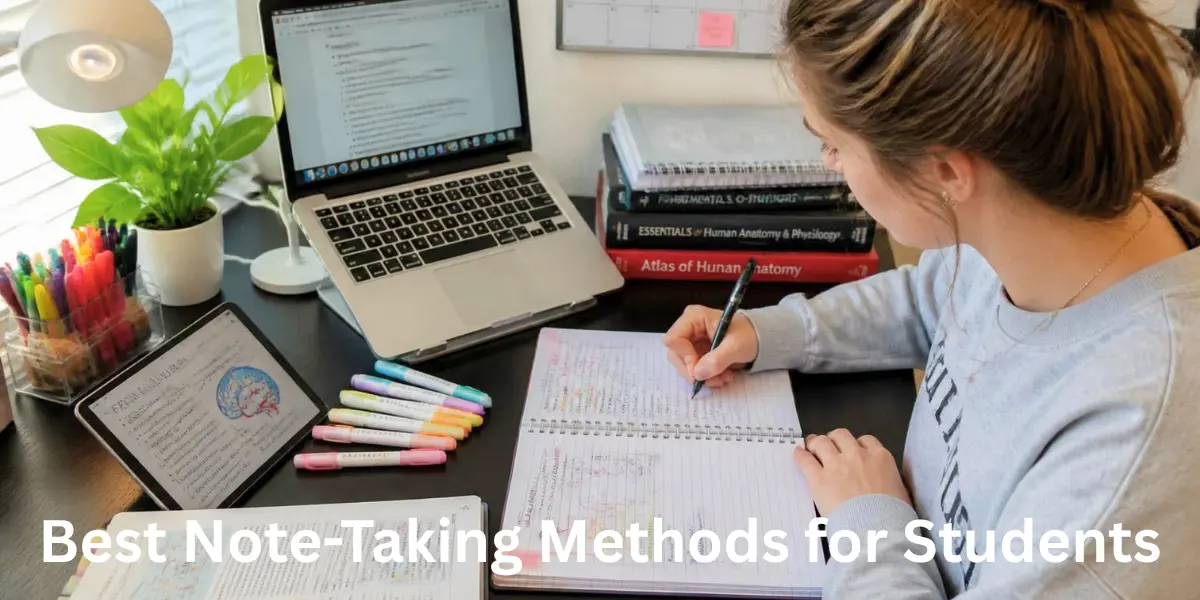
Best Note-Taking Methods for Students

Taking notes is more than writing down what a teacher says. The right note-taking method helps you understand lessons, organize ideas, and remember information long after class ends. Whether you’re preparing for WAEC, JAMB, university exams, or simply trying to improve your study habits, using an effective system can make studying faster and less stressful.

The best note-taking method depends on your learning style, the subject you’re studying, and how you review your notes. Some students learn best with structured outlines, while others prefer visual diagrams or concise summaries. The key is choosing a method that helps you actively process information instead of copying it word for word.

Why Effective Note-Taking Matters

Good notes are one of the strongest foundations of academic success. They help you capture important ideas during lectures, organize information logically, and make revision sessions more productive.

Effective note-taking can help you:

  • Improve memory retention
  • Stay focused during lectures
  • Reduce revision time before exams
  • Identify key concepts more easily
  • Build better study habits
  • Feel more confident during tests

For students in Nigeria preparing for WAEC, NECO, JAMB, or university examinations, well-organized notes can simplify large topics into manageable study materials.

What Makes a Good Note-Taking Method?

Not every note-taking system works for every student. A good method should help you understand concepts instead of simply recording information.

Look for a method that:

  • Organizes information clearly
  • Highlights important ideas
  • Makes reviewing easier
  • Encourages active learning
  • Fits your learning style
  • Works well for your subjects

For example, science students may benefit from diagrams and flowcharts, while humanities students often find structured outlines more effective for lengthy lecture notes.

The 7 Best Note-Taking Methods for Students

Each method has its strengths. Understanding when to use each one will help you study more efficiently.

  1. Cornell Note-Taking Method

The Cornell Method is one of the most popular note-taking systems because it combines note-taking with active revision.

Divide your page into three sections:

  • Main Notes: Record key ideas during the lecture.
  • Cue Column: Add keywords or questions after class.
  • Summary: Write a short summary at the bottom of the page.

This layout encourages you to review your notes instead of reading them passively.

Best for:

  • University lectures
  • WAEC and JAMB preparation
  • Revision sessions
  • Subjects with detailed explanations

Advantages

  • Keeps notes organized
  • Supports active recall
  • Makes revision quicker
  • Helps identify key concepts

Possible drawback

Preparing the page takes a little extra time, but many students find the improved organization worth the effort.

Example

After a biology lecture on photosynthesis, your main notes could explain the process, the cue column could include questions like “What is chlorophyll?”, and the summary could briefly describe how plants convert sunlight into energy.

  1. Outline Method

The Outline Method organizes information using headings, subheadings, and bullet points. It follows the natural flow of a lecture, making it one of the easiest note-taking systems for beginners.

For example:

Photosynthesis

Definition

Requirements

  • Sunlight
  • Water
  • Carbon dioxide

Products

  • Glucose
  • Oxygen

Because related ideas stay together, reviewing becomes much easier.

Best for:

History

Literature

Business studies

Social sciences

Lecture-heavy courses

Advantages

Easy to create

Highly organized

Simple to review

Works well for detailed lectures

Limitations

It may not be the best option when lectures move quickly between unrelated topics.

  1. Mapping Method

The Mapping Method uses branches to connect related ideas. Instead of writing information in straight lines, you build a visual network of concepts.

Start with the main topic in the center, then create branches for major ideas and smaller branches for supporting details.

This method is particularly useful for visual learners because it shows how concepts relate to each other.

Best for:

Science

Medicine

Engineering

Geography

Brainstorming sessions

Advantages

  • Improves understanding of relationships
  • Makes complex topics easier to remember
  • Encourages critical thinking
  • Supports visual learning

Example

If you’re studying ecosystems, place “Ecosystem” in the center, then branch out to producers, consumers, decomposers, food chains, and environmental factors.

  1. Charting Method

The Charting Method organizes information into columns, making it easy to compare facts side by side.

For example, when studying world history, you might compare different civilizations by listing their leaders, achievements, economies, and time periods in separate columns.

This format is especially useful when you need to memorize similarities and differences.

Best for:

Comparison topics

Business courses

Economics

History

Government studies

Advantages

  • Makes comparisons simple
  • Improves organization
  • Speeds up revision
  • Helps identify patterns quickly

Limitations

It is less suitable for lectures that involve storytelling or continuous explanations.

Which Method Works Best for Exams?

There isn’t a single “best” method for every student. The right choice depends on what you’re studying and how you learn.

  • Cornell Method: Best for long-term revision and memory retention.
  • Outline Method: Great for detailed lectures with clear structures.
  • Mapping Method: Ideal for visual learners and concept-heavy subjects.
  • Charting Method: Excellent for comparing information and preparing for objective exams.

Many high-performing students combine different note-taking methods instead of relying on just one. Combining these approaches with effective study techniques for exam success can further improve revision and boost confidence before test day.

For example, you might use the Outline Method during a lecture, then convert your notes into a mind map before exams to reinforce understanding.

Good note-taking becomes even more effective when paired with active recall and spaced repetition. Instead of simply rereading your notes, test yourself regularly and review important topics over increasing intervals. These evidence-based study techniques strengthen memory and reduce last-minute cramming.

  1. Sentence Method

The Sentence Method is one of the simplest note-taking techniques. Instead of creating headings or diagrams, you write each important point as a separate sentence in the order it is presented.

This method works well when a lecture moves quickly or covers many unrelated ideas. You can capture information without worrying about formatting and organize it later during revision.

Best for:

Fast-paced lectures

Guest presentations

Brainstorming sessions

Beginners learning to take notes

Advantages

  • Quick and easy to use
  • Captures information efficiently
  • Requires little preparation

Limitations

Since ideas aren’t grouped by topic, reviewing can take longer unless you reorganize your notes afterward.

  1. Flow Notes

Flow Notes focus on understanding rather than copying. Instead of writing every detail, you connect ideas using arrows, sketches, keywords, and short explanations.

This method encourages active learning because you’re constantly asking how concepts relate to one another.

Best for:

Problem-solving subjects

Mathematics

Science

Concept-based university courses

Advantages

  • Promotes deeper understanding
  • Improves critical thinking
  • Helps connect related concepts
  • Makes revision more engaging
  1. Mind Mapping

Mind Mapping starts with one central topic and expands into branches of related ideas. While similar to the Mapping Method, mind maps rely more on colors, symbols, and images to improve memory.

Many students find this technique useful when reviewing an entire chapter before an exam because it provides a quick visual overview.

Best for:

Visual learners

Exam revision

Essay planning

Project planning

Advantages

  • Improves memory retention
  • Makes revision faster
  • Encourages creativity
  • Helps organize complex information

How to Choose the Right Note-Taking Method

Choosing the best method depends on your learning style and the subject you’re studying.

If you want to… Best Method
Organize detailed lectures Cornell Method
Follow structured lessons Outline Method
Understand relationships Mapping or Mind Mapping
Compare information Charting Method
Capture fast lectures Sentence Method
Learn concepts deeply Flow Notes

You don’t have to stick with just one method. Many successful students combine multiple techniques depending on the topic and their revision goals.

Handwritten vs. Digital Notes

Both handwritten and digital notes have advantages, so the right choice depends on your study habits.

Handwritten Notes

Pros

  • Better focus during lectures
  • Encourages summarization instead of copying
  • May improve memory retention through active writing

Cons

  • Slower to write
  • Harder to edit
  • Can become disorganized over time

Digital Notes

Pros

  • Easy to organize and search
  • Simple to edit and update
  • Convenient for online classes
  • Can include images, PDFs, and audio recordings

Cons

  • More distractions from devices
  • Easier to copy information without understanding it

Many university students use a hybrid approach by taking handwritten lecture notes and storing organized versions digitally.

Can AI Help with Note-Taking?

AI-powered tools can make studying more efficient, but they work best when used alongside your own notes rather than replacing them.

Popular options include:

OneNote for organizing notebooks across devices.

Notion for creating structured study dashboards.

Evernote for storing lecture notes and research.

Goodnotes for handwriting on tablets.

Google Keep for quick reminders and simple study lists.

Some AI study tools can summarize lecture notes, generate practice questions, or create flashcards. Always review AI-generated content for accuracy and add your own explanations to reinforce learning.

Tips to Improve Memory Using Your Notes

Taking good notes is only the first step. Regular review is what helps information stay in your long-term memory.

Try these proven strategies:

  • Review your notes within 24 hours of class.
  • Highlight only the most important ideas.
  • Use Active Recall by testing yourself instead of rereading.
  • Apply Spaced Repetition to review topics over several days or weeks.
  • Add diagrams or color coding to simplify complex concepts.
  • Turn key points into flashcards for quick revision.
  • Summarize each chapter in your own words.

These techniques are especially helpful when preparing for WAEC, JAMB, university entrance tests, or semester exams.

Common Note-Taking Mistakes to Avoid

Even the best note-taking method won’t help if you develop ineffective habits.

Avoid these common mistakes:

  • Writing every word instead of identifying key ideas.
  • Never reviewing notes after class.
  • Keeping notes disorganized across different notebooks.
  • Ignoring diagrams, charts, or examples used during lectures.
  • Highlighting almost every sentence.
  • Using only one study technique for every subject.
  • Waiting until exam week to read your notes.

Improving these habits can make your study sessions shorter and more productive.

FAQ’s

Q: What are the 7 effective note-taking methods?

The seven widely used methods are the Cornell Method, Outline Method, Mapping Method, Charting Method, Sentence Method, Flow Notes, and Mind Mapping. Each works best for different learning styles and subjects.

Q: What are the 5 note-taking methods?

The five classic methods are the Cornell Method, Outline Method, Mapping Method, Charting Method, and Sentence Method. These remain the most commonly taught note-taking systems.

Q: What are the 5 R’s of note-taking?

The 5 R’s are Record, Reduce, Recite, Reflect, and Review. Together, they encourage students to write key points, summarize them, test their understanding, think critically, and revise regularly.

Q: What are the 4 R’s of note-taking?

A common version of the 4 R’s includes Record, Reduce, Recite, and Review. These steps help improve understanding and long-term memory.

Q: Which note-taking method improves memory the most?

The Cornell Method is often considered one of the most effective because it combines organized notes with summaries and self-testing. Pairing it with Active Recall and Spaced Repetition can further strengthen memory.

Q: Are handwritten notes better than typed notes?

Handwritten notes often encourage deeper processing because students summarize information instead of copying it. Digital notes, however, are easier to organize, edit, and search. Both can be effective when reviewed consistently.

Q: Should students rewrite their notes?

Rewriting every note is usually unnecessary. Instead, review your notes, add missing details, create summaries, and test yourself using Active Recall to save time while improving retention.

Q: Which note-taking method is best for university students?

The Cornell Method is an excellent all-around choice for university lectures, while Mapping and Flow Notes are ideal for concept-heavy courses. Many students combine methods depending on the subject.

Conclusion

The best note-taking methods for students are the ones that help you understand, organize, and remember information effectively. Whether you prefer the structured Cornell Method, the simplicity of the Outline Method, or the creativity of Mind Mapping, choosing a system that matches your learning style can improve both confidence and academic performance.

Well-organized notes also make it easier to develop stronger academic writing skills, especially when preparing essays, assignments, research projects, and exam responses.

Remember that great notes alone won’t guarantee success. Combine your preferred note-taking method with Active Recall, Spaced Repetition, and regular review sessions to make studying more effective. By building consistent study habits, you’ll be better prepared for classroom learning, university coursework, and important exams like WAEC, NECO, and JAMB.

How to Improve Academic Writing Skills: 12 Practical Tips

Academic writing is more than simply using formal language. It is the ability to communicate ideas clearly, support arguments with reliable evidence, and present information in a logical, well-organized way. Whether you’re preparing university assignments, scholarship essays, or dissertations, strong academic writing skills can help you achieve better grades and build confidence throughout your academic journey.

Many students struggle because they focus only on grammar while overlooking critical thinking, essay structure, coherence, and proper referencing. The good news is that academic writing is a skill that improves with consistent practice and the right techniques. This guide explains practical strategies, common mistakes to avoid, and useful tools that can help students—especially those studying in Nigerian universities—write with greater clarity and confidence.

What Is Academic Writing?

Academic writing is a formal style of writing used in schools, colleges, and universities to present ideas, research findings, and arguments based on evidence rather than personal opinion. It is commonly used for essays, research papers, literature reviews, reports, dissertations, and scholarship applications.

Unlike creative or conversational writing, academic writing focuses on:

  • Clear and logical arguments
  • Evidence from credible sources
  • Objective language
  • Proper citation and referencing
  • Accurate grammar and punctuation
  • Well-structured paragraphs

For example, instead of writing:

“Online learning is good because many people like it.”

An academic version would be:

“Online learning has become increasingly popular because it offers flexible access to educational resources while supporting diverse learning needs.”

The second example provides a more precise and professional tone suitable for university assignments.

Why Academic Writing Skills Matter

Strong academic writing does more than help you complete assignments. It improves your ability to think critically, organize ideas, and communicate effectively in both academic and professional settings.

Good writing skills can help you:

  • Earn higher grades on assignments and examinations
  • Produce stronger research papers and dissertations
  • Write compelling scholarship and admission essays
  • Avoid plagiarism through proper citation
  • Build confidence when presenting arguments
  • Prepare for careers that require professional communication

For students applying to competitive universities or scholarships in Nigeria, well-written personal statements and academic essays can significantly strengthen an application.

Signs Your Academic Writing Needs Improvement

Many students don’t realize their writing needs work until they receive disappointing grades or repeated feedback from lecturers.

You may need to improve your academic writing if you frequently experience these issues:

  • Your essays lack clear organization.
  • Lecturers comment on weak arguments.
  • Grammar mistakes appear throughout your work.
  • Paragraphs feel disconnected.
  • You struggle to explain ideas clearly.
  • Your assignments lose marks because of poor referencing.
  • You rely heavily on personal opinions instead of supporting evidence.
  • You spend hours writing but still feel dissatisfied with the final result.

Recognizing these challenges is the first step toward becoming a stronger academic writer.

12 Practical Ways to Improve Academic Writing Skills

  1. Read Academic Sources Regularly

One of the fastest ways to improve academic writing skills is to expose yourself to quality academic content. Reading journal articles, textbooks, and university publications helps you understand sentence structure, academic vocabulary, and how experienced writers build logical arguments.

Reliable sources include:

  • Peer-reviewed journals
  • University websites
  • Academic textbooks
  • Google Scholar publications
  • Purdue OWL writing resources

As you read, pay attention to how introductions, body paragraphs, and conclusions are organized. Combining regular reading with better note-taking methods can help you organize key ideas, build your academic vocabulary, and review important concepts more efficiently.

  1. Build Your Academic Vocabulary Naturally

Academic writing requires precise language, but that doesn’t mean using complicated words unnecessarily.

Instead of memorizing long vocabulary lists, learn words through reading and practice. Focus on transition words and phrases that improve the flow of your writing, such as:

  • Furthermore
  • Consequently
  • In contrast
  • For example
  • Therefore
  • Similarly
  • As a result

Using these expressions correctly improves coherence and makes your arguments easier to follow.

  1. Start With a Strong Thesis Statement

Every successful academic essay begins with a clear thesis statement.

A thesis statement tells readers exactly what your paper will argue or explain. It acts as a roadmap for the rest of your writing.

For example:

Weak thesis:

“Social media affects students.”

Improved thesis:

“While social media can enhance collaboration among university students, excessive use may reduce academic performance by affecting concentration and time management.”

The second example presents a specific, balanced argument that can be supported with evidence throughout the essay.

  1. Organize Ideas Logically

Even well-researched papers lose marks when ideas are presented in a confusing order.

A simple structure works well for most university assignments:

Section Purpose
Introduction Introduce the topic and thesis statement
Body Paragraph 1 Present the first supporting argument
Body Paragraph 2 Add evidence and analysis
Body Paragraph 3 Address another key point or counterargument
Conclusion Summarize the main ideas without introducing new information

Each paragraph should focus on one main idea and connect naturally to the next using transition words.

  1. Support Every Claim with Evidence

Academic writing is built on evidence, not assumptions.

Whenever you make a claim, support it with reliable information from books, scholarly journals, research papers, or reputable institutional websites. Depending on your course requirements, you may need to use APA Style, MLA Style, Chicago Style, or Harvard Referencing.

For example:

Instead of writing:

“Many students procrastinate.”

Strengthen your argument by explaining the reason and citing a credible source that discusses student procrastination and its academic impact.

Supporting evidence makes your writing more persuasive and demonstrates critical thinking.

  1. Improve Your Paragraph Structure

Strong paragraphs make your writing easier to understand.

A practical approach is to use this four-step structure:

  1. Begin with a clear topic sentence.
  2. Explain your main idea.
  3. Add supporting evidence or an example.
  4. End with a sentence that links to the next paragraph.

This approach creates better cohesion and prevents your writing from feeling disorganized.

Example Paragraph

Topic Sentence: Effective time management improves academic writing quality.

Explanation: Students who plan their writing schedule have more time to research, draft, revise, and proofread.

Evidence: Instead of rushing to finish an assignment the night before submission, they can review their arguments carefully and correct mistakes.

Closing Sentence: As a result, their final work is usually clearer, more accurate, and better structured.

  1. Develop Critical Thinking Before You Write

Many students focus on writing before fully understanding the topic. Strong academic writing begins with strong thinking.

Before drafting your essay, ask yourself:

  • What question am I answering?
  • What is my main argument?
  • Which evidence supports my position?
  • Are there alternative viewpoints?
  • Have I evaluated my sources carefully?

Taking time to answer these questions will help you create analytical writing rather than simply describing information.

Good academic writing doesn’t just present facts—it explains their significance and connects them to your overall argument.

  1. Edit Before You Submit

Strong academic writing is usually the result of careful drafting and revision. The editing stage is where you refine your ideas, improve clarity, and eliminate errors that could reduce your marks.

Instead of submitting your assignment immediately after finishing it, leave it for a few hours—or overnight if possible—before reviewing it with fresh eyes.

During editing, check for:

  • Grammar and spelling mistakes
  • Awkward or repetitive sentences
  • Unclear arguments
  • Missing evidence or citations
  • Paragraph flow and logical transitions
  • Consistent formatting

Reading your work aloud is another effective way to identify sentences that sound unnatural or confusing.

  1. Learn the Correct Referencing Style

Proper referencing plays a vital role in maintaining academic integrity and preventing plagiarism. Most universities specify which citation style students should use, so always check your course guidelines before submitting an assignment.

Common referencing styles include:

Referencing Style Commonly Used For
APA Style Education, Psychology, Social Sciences
MLA Style Literature and Humanities
Chicago Style History and Publishing


Harvard Referencing Many universities across different disciplines

Whichever style you use, remain consistent throughout your paper. Your in-text citations should match the bibliography or reference list exactly.

  1. Use Writing Tools Responsibly

Technology can make writing easier, but it should never replace your own thinking. You can also strengthen your writing skills by exploring free online learning resources, where universities and educational platforms offer writing guides, grammar lessons, and research tutorials.

Several tools can help you identify grammar issues, improve sentence clarity, or organize references:

Tool Best For
Grammarly Grammar, spelling, punctuation, readability
QuillBot Sentence refinement and paraphrasing assistance
Microsoft Word Editor Basic grammar and style suggestions
Google Docs Collaborative writing and comments
Turnitin Similarity checking and academic integrity
Purdue OWL Writing guidance and citation examples

These tools work best after you’ve completed your first draft. They should support your writing process rather than generate your academic work.

Using AI Responsibly

Artificial intelligence can help brainstorm ideas, explain difficult concepts, or suggest clearer wording. However, university assignments should always reflect your own understanding and analysis.

Responsible use of AI includes:

  • Clarifying difficult topics
  • Generating study questions
  • Receiving feedback on grammar
  • Improving sentence clarity
  • Organizing ideas before writing

Avoid submitting AI-generated content as your own without reviewing, verifying, and rewriting it. Academic honesty remains one of the most important expectations in higher education.

  1. Practice Writing Every Week

Academic writing improves through consistent practice rather than occasional effort.

Try setting aside time each week to:

  • Summarize journal articles
  • Write short essays
  • Practice literature reviews
  • Analyze case studies
  • Respond to past examination questions

Even writing for 20–30 minutes several times a week can significantly improve your confidence, vocabulary, and analytical thinking.

  1. Ask for Feedback and Learn from It

Constructive feedback is one of the fastest ways to improve.

Ask lecturers, tutors, classmates, or writing mentors to review your work before submission whenever possible.

Pay close attention to recurring comments such as:

  • “Needs stronger evidence.”
  • “Clarify your argument.”
  • “Improve paragraph structure.”
  • “Support claims with citations.”
  • “Avoid informal language.”

Instead of viewing feedback as criticism, treat it as a roadmap for improvement.

Common Academic Writing Mistakes to Avoid

Even knowledgeable students lose marks because of avoidable mistakes.

Some of the most common include:

  • Writing without a clear thesis statement
  • Using unreliable online sources
  • Copying information without proper citation
  • Overusing complex vocabulary unnecessarily
  • Writing long paragraphs without a clear focus
  • Ignoring proofreading before submission
  • Mixing referencing styles
  • Depending entirely on grammar-checking software
  • Making unsupported claims
  • Failing to answer the assignment question directly

Avoiding these mistakes can dramatically improve the quality of your assignments.

Academic Writing Tips for Nigerian University Students

Students in Nigerian universities often complete various forms of academic writing, including assignments, seminar papers, project reports, scholarship essays, and final-year research projects.

To meet university expectations:

  • Read your assignment instructions carefully before writing.
  • Use credible academic sources instead of relying only on general websites.
  • Support arguments with evidence from journals and textbooks.
  • Follow the referencing style required by your department.
  • Begin assignments early to allow time for revision.
  • Proofread carefully before submission.

If you’re applying for scholarships, learning the basics of writing a strong scholarship essay can help you present your achievements, goals, and motivation more effectively. Explain your achievements, goals, and motivation clearly while maintaining a formal writing style.

Practical Academic Writing Checklist

Before submitting any assignment, ask yourself:

✔ Does my introduction clearly explain the topic?

✔ Is my thesis statement specific?

✔ Does each paragraph focus on one main idea?

✔ Have I supported every major claim with evidence?

✔ Have I used transition words to improve flow?

✔ Are all citations correctly formatted?

✔ Have I checked for plagiarism?

✔ Have I proofread grammar, spelling, and punctuation?

✔ Does my conclusion summarize the key points without introducing new ideas?

Using this checklist consistently can help reduce common errors and improve the overall quality of your work.

FAQ’s

Q: What are the 7 C’s of academic writing?

The 7 C’s commonly refer to clarity, correctness, conciseness, completeness, coherence, consistency, and credibility. Together, these principles help create writing that is easy to understand, well-organized, and supported by reliable evidence.

Q: What is the fastest way to improve writing skills?

The fastest approach combines regular reading, frequent writing practice, constructive feedback, and careful editing. Reviewing high-quality academic papers and rewriting your own work also accelerates improvement.

Q: What are the 7 steps of writing skills?

A practical writing process includes:

  1. Understand the topic
  2. Conduct research
  3. Create an outline
  4. Write the first draft
  5. Revise the content
  6. Edit and proofread
  7. Submit the final version

Q: What is the ABC of academic writing?

The ABC approach stands for Accuracy, Brevity, and Clarity. Academic writing should present correct information, avoid unnecessary wording, and communicate ideas clearly.

Q: What are the 7 features of academic writing?

Academic writing is generally:

  • Formal
  • Objective
  • Evidence-based
  • Clear
  • Logical
  • Structured
  • Properly referenced

Q: Can AI help improve academic writing?

Yes, when used responsibly. AI can help explain concepts, suggest improvements, organize ideas, and identify grammar issues. However, students should ensure their final work reflects their own understanding and complies with their institution’s academic integrity policies.

Q: How long does it take to improve academic writing?

The timeline varies depending on your starting point and how often you practice. Students who read academic material regularly, write consistently, and apply feedback often notice meaningful improvement within a few months.

Conclusion

Improving academic writing skills is a gradual process built on consistent practice, thoughtful revision, and a willingness to learn from feedback. By developing a strong thesis statement, organizing ideas logically, supporting arguments with credible evidence, using the correct referencing style, and proofreading every assignment carefully, you can produce writing that is clear, persuasive, and academically sound.

Whether you’re preparing university assignments, scholarship applications, research papers, or dissertations, investing time in these skills will benefit you throughout your academic journey. Continue practicing, seek constructive feedback, and make use of trusted writing resources to become a more confident and effective academic writer.

Best Free Online Learning Resources Complete Guide

Learning new skills is easier than ever before. Whether you want to prepare for exams, learn coding, improve your business knowledge, or explore a new hobby, there are hundreds of free online learning resources available. The real challenge isn’t finding a platform—it’s choosing one that aligns with your learning goals.

Many people assume “free” means low quality, while others worry they’ll be asked to pay halfway through a course. In reality, several trusted platforms provide excellent educational content at no cost, although some charge separately for certificates or premium features.

This guide explains what free online learning really includes, compares the best platforms, and helps you choose the right resource based on your learning goals.

What Are Free Online Learning Resources?

Free online learning resources are websites and apps that provide educational content without requiring learners to pay for access. Depending on the platform, you can study through video lectures, interactive exercises, reading materials, quizzes, and self-paced courses.

These resources cover subjects such as:

  • Mathematics and science
  • Programming and AI
  • Business and marketing
  • Languages
  • Personal development
  • University-level courses
  • Career development skills

Some platforms also partner with universities and educational institutions, allowing learners to access high-quality course materials from recognised educators.

Why Choose Free Online Learning?

Online education offers flexibility that traditional classrooms cannot always provide. You can learn at your own pace, study from anywhere, and focus only on the skills that matter to you.

Free learning platforms are especially valuable for:

  • Students preparing for school or university
  • Professionals developing new career skills
  • Job seekers building practical knowledge
  • Teachers looking for classroom resources
  • Anyone exploring a new subject before investing in paid training

For many learners, free courses are also an excellent way to test a subject before purchasing an advanced programme or professional certification.

Best Free Online Learning Resources in 2026

Each platform has different strengths. Instead of asking which website is best overall, it’s more useful to identify which one is best for your specific learning objective.

Platform Best For Free Access Certificate Available
Khan Academy School subjects, maths, science Yes No
edX University courses Yes (course access) Paid option
Coursera Professional skills Many free courses Paid option
MIT OpenCourseWare University lectures Yes No
Harvard Online Selected free courses Some Varies
Alison Career and workplace skills Yes Yes (some paid certificates)
OpenLearn Self-paced learning Yes Free statements of participation on selected courses
Harvard Online Selected free courses Some Varies
Alison Career and workplace skills Yes Yes (some paid certificates)
OpenLearn Self-paced learning Yes Free statements of participation on selected courses
Codecademy Coding basics Limited free plan Paid upgrade
FutureLearn Short online courses Selected free access Paid upgrade
LinkedIn Learning Professional development Free trial only Included with subscription

Which Platform Is Best for Different Learning Goals?

Best for School Students

Khan Academy remains one of the strongest completely free educational platforms. Its structured lessons, practice exercises, and progress tracking make it ideal for mathematics, science, economics, and exam preparation.

It is particularly useful for learners who prefer step-by-step explanations instead of lengthy university-style lectures. Combining these lessons with proven study techniques for exams can also improve understanding and long-term retention.

Best for University Learners

If you’re looking for university-level content, edX and MIT Open Course Ware are excellent choices.

edX offers courses from leading universities worldwide. Most course materials can be accessed for free, while verified certificates usually require payment.

MIT Open Course Ware provides free lecture notes, assignments, and course materials from the Massachusetts Institute of Technology, making it an outstanding option for independent learners.

Best for Coding and Technology

For programming, several platforms serve different experience levels.

  • Codecademy introduces beginners to coding through interactive exercises.
  • Harvard Online occasionally offers introductory computer science courses.
  • MIT OpenCourseWare provides more advanced computer science materials.

If you’re interested in AI education, Python, data science, or software development, combining structured courses with hands-on practice produces the best results.

Best for Business and Professional Skills

Professionals looking to improve workplace skills should consider:

  • Coursera
  • Alison
  • Future Learn

These platforms cover project management, digital marketing, entrepreneurship, leadership, finance, and communication. Many courses are created by universities or major organizations, helping learners develop practical skills valued by employers.

Best for Language Learning

Many free learning platforms include language courses, but your ideal choice depends on how you learn.

Interactive lessons suit beginners, while university-based language courses often provide more detailed grammar and cultural understanding.

Combining multiple resources usually delivers better long-term progress than relying on a single app.

Best for Career Development

If your goal is changing careers or improving your CV, focus on platforms offering job-relevant skills rather than collecting dozens of unrelated courses.

Subjects worth prioritizing include:

  • Digital marketing
  • Data analysis
  • Business management
  • AI and machine learning
  • Programming
  • Cybersecurity
  • Graphic design
  • Communication skills

Building practical projects alongside your learning often has greater value than simply completing courses.

Are Free Online Courses Really Free?

This is one of the most common questions, and the answer depends on the platform.

Many websites provide complete course content without charge but ask learners to pay if they want:

  • A verified certificate
  • Graded assessments
  • Instructor feedback
  • Career services
  • Additional premium learning tools

For example, Khan Academy offers all educational content free of charge, while edX and Coursera generally allow free course access but charge for verified certificates and certain premium features.

Understanding this difference helps you avoid disappointment and choose a platform that matches both your learning goals and your budget.

How to Choose the Right Learning Platform

Instead of selecting the most popular website, begin by identifying your primary objective.

Ask yourself:

  • Do you want academic knowledge or practical skills?
  • Are you learning for personal interest or career growth?
  • Do you need a recognised certificate?
  • Do you prefer video lessons or interactive exercises?
  • How much time can you dedicate each week?

Choosing a platform based on these questions is more effective than simply enrolling in the course with the highest number of reviews.

A good starting strategy is to complete one short course, evaluate the teaching style, and then commit to a longer learning path if it suits your needs. Developing effective study habits alongside your online courses will also make it easier to stay consistent and achieve your learning goals.

Common Mistakes to Avoid

Many learners start with enthusiasm but struggle to stay consistent. Avoiding a few common mistakes can make your online learning experience far more productive.

  • Signing up for too many courses at once instead of finishing one.
  • Choosing courses based only on popularity rather than your goals.
  • Paying for certificates before deciding whether you enjoy the subject.
  • Watching lessons without practising what you’ve learned.
  • Ignoring course updates and community discussions that provide additional insights.

A simple study plan with realistic weekly goals is often more effective than trying to complete several courses in a short time.

Free Online Learning Resources in Pakistan and Other Countries

Most leading online learning platforms are available globally, including in Pakistan, India, the UK, and the USA. Learners can access websites like Khan Academy, edX, Coursera, Alison, Open Learn, and MIT Open Course Ware with an internet connection.

If you’re studying in Pakistan, these resources can help you prepare for university entrance exams, improve English, develop digital skills, or learn coding without paying for expensive training programmes. Before enrolling, always check whether certificates, assessments, or premium features require payment in your region.

Common Myths About Free Online Learning

Several misconceptions prevent people from taking advantage of free education.

Myth: Free courses are low quality.

Reality: Many courses are created by leading universities, industry experts, and recognized organizations.

Myth: Employers never value free courses.

Reality: Employers often value practical skills, portfolios, and real-world projects more than simply collecting certificates.

Myth: Every “free” course has hidden fees.

Reality: Many platforms provide complete learning materials for free, while optional certificates or advanced features may have a separate cost.

FAQ’s

Q: Is Khan Academy 100% free?

Yes. Khan Academy provides all of its educational content completely free. You can access lessons, practice exercises, quizzes, and learning materials without paying or subscribing.

Q: Is edX actually free?

Yes, many edX courses can be audited for free. However, verified certificates, graded assessments, and some additional features usually require payment.

Q: Where can I learn online for free?

You can learn online for free through trusted platforms such as Khan Academy, MIT Open Course Ware, Open Learn, Alison, edX, and selected courses on Coursera and Future Learn.

Q: Which study app is 100% free?

Khan Academy is one of the best completely free study apps. It offers structured lessons across multiple subjects without charging for access.

Q: Can I earn certificates without paying?

Some platforms provide free completion records or statements of participation, while many charge for verified certificates. Always check each platform’s certification policy before enrolling.

Q: Which free learning platform is best for beginners?

Khan Academy is ideal for beginners because of its clear lessons and structured learning paths. For professional skills, Alison and selected Coursera courses are also beginner-friendly.

Q: Are free online courses recognized by employers?

Many employers value the knowledge and practical skills gained from reputable learning platforms, especially when supported by projects, portfolios, or relevant work experience. Certificates can strengthen your profile, but demonstrated ability is often more important.

Q: Can I learn job-ready skills online for free?

Yes. You can build valuable skills in coding, digital marketing, business, data analysis, communication, and AI through free online courses. Combining learning with practical projects will improve your career prospects even further.

Conclusion

The best free online learning resources make high-quality education accessible to anyone with curiosity and an internet connection. Whether you want to strengthen school subjects, gain professional skills, learn coding, or prepare for a career change, there is a platform suited to your goals.

Rather than joining multiple courses at once, choose one trusted learning platform, set a realistic study schedule, and apply what you learn through regular practice. Consistent progress over time is far more valuable than collecting unfinished courses. Start with a platform that matches your objectives, and you’ll build skills that continue to benefit you long after the course is complete.

How to Build Effective Study Habits That Improve Grades

Good grades rarely come from studying harder—they come from studying smarter and more consistently. Many students spend long hours with their books open but still struggle to remember what they learn or stay motivated throughout the semester. The difference often lies in the habits they build every day.

Effective study habits help you manage your time, improve memory retention, reduce stress, and prepare for exams with confidence. Whether you’re getting ready for WAEC, JAMB, university exams, or a scholarship test, creating a reliable study routine can make learning more productive and less overwhelming.

This guide explains how to build effective study habits, the techniques that actually work, and simple ways to stay consistent over the long term.

Why Effective Study Habits Matter

Study habits are the routines and behaviors that shape how you learn. Strong habits help you absorb information more efficiently, while poor habits can lead to procrastination, burnout, and disappointing results.

Students with effective study habits often experience:

  • Better concentration during study sessions
  • Improved memory retention
  • Less exam-related stress
  • More confidence before tests
  • Higher academic performance over time

Instead of relying on last-minute cramming, they learn steadily, making revision easier when exams approach.

Signs Your Current Study Routine Isn’t Working

Sometimes, students mistake long study hours for productive learning. However, spending more time studying doesn’t always mean you’re learning effectively.

Your study routine may need improvement if you:

  • Frequently procrastinate before studying.
  • Forget information shortly after learning it.
  • Feel overwhelmed by your workload.
  • Study without clear goals.
  • Get distracted by your phone or social media.
  • Depend on cramming before exams.

Recognizing these signs early allows you to replace ineffective habits with strategies that support long-term academic success.

How to Build Effective Study Habits Step by Step

Building productive study habits doesn’t happen overnight. Small, consistent improvements are usually more effective than trying to change everything at once.

Set Realistic Study Goals

Clear goals give every study session a purpose. Instead of saying, “I’ll study biology today,” define a specific objective.

For example:

  • Complete two chemistry chapters.
  • Solve 20 mathematics questions.
  • Revise one history topic using active recall.

Using SMART goals—Specific, Measurable, Achievable, Relevant, and Time-bound—makes it easier to measure progress and stay motivated.

Create a Distraction-Free Study Environment

Your surroundings play a major role in your ability to focus.

Choose a quiet place with:

  • Good lighting
  • A comfortable chair
  • Minimal noise
  • Only the materials you need

If your phone constantly interrupts you, turn on Focus Mode or keep it out of reach until your study session ends.

Creating the same study environment each day also trains your brain to switch into learning mode more quickly.

Build a Daily Study Routine

Consistency matters more than studying for extremely long hours.

A simple daily routine might include:

Time Activity
6:00–6:30 PM Review previous lessons
6:30–7:15 PM Learn new concepts
7:15–7:25 PM Short break
7:25–8:00 PM Practice questions
8:00–8:15 PM Summarize key points

Studying at the same time every day gradually turns learning into a habit rather than a task you constantly postpone.

Seven Study Habits of Successful Students

Successful students don’t rely on motivation alone. They follow routines that help them learn efficiently throughout the year.

  1. Use Active Recall

Instead of rereading your notes repeatedly, test yourself.

Close your notebook and try explaining the topic from memory before checking your answers.

This simple method strengthens long-term memory far more effectively than passive reading.

  1. Practice Spaced Repetition

Review information several times over days or weeks instead of trying to memorize everything in one sitting.

For example:

  • Review after one day.
  • Review again after three days.
  • Review after one week.
  • Complete another revision before the exam.

Spacing your revision sessions helps transfer knowledge into long-term memory and reduces forgetting.

  1. Follow the Pomodoro Technique

Studying for hours without breaks often reduces concentration.

The Pomodoro Technique encourages focused work by dividing study time into manageable sessions.

A common approach is:

  • Study for 25 minutes.
  • Take a 5-minute break.
  • Repeat four times.
  • Take a longer break of 15–30 minutes.

Many students find this method especially useful during intensive exam preparation because it prevents mental fatigue.

  1. Take Organized Notes

Good note-taking isn’t about writing everything the teacher says.

Instead, summarize important ideas using:

  • Bullet points
  • Diagrams
  • Mind maps
  • Color coding for related concepts

Organized notes make revision faster and help you identify key information at a glance.

  1. Revise Regularly

Revision shouldn’t begin a few days before exams.

Set aside time every week to review previous lessons, solve practice questions, and identify weak areas.

Regular revision improves understanding and makes final exam preparation far less stressful.

  1. Manage Your Time Wisely

Poor time management often leads to rushed assignments and last-minute studying. Learning time management strategies for students can help you organize your schedule and stay on track throughout the semester.

Use a planner, calendar, or digital scheduling app to organize:

  • Study sessions
  • Assignment deadlines
  • Revision periods
  • Mock tests
  • Personal activities

Balancing study with rest helps maintain productivity without causing burnout.

  1. Track Your Progress

Monitoring your improvement keeps you motivated.

At the end of each week, ask yourself:

  • Which subjects improved?
  • Which topics still need work?
  • Did I achieve my study goals?
  • What should I change next week?

Small weekly adjustments often produce better results than making drastic changes all at once.

Study Techniques That Improve Learning

Not every study method produces the same results. Some techniques are supported by learning science because they encourage deeper understanding instead of simple memorization.

Among the most effective approaches are:

  • Active recall to strengthen memory through self-testing.
  • Spaced repetition to improve long-term retention.
  • Time blocking to dedicate focused periods to specific subjects.
  • Practice questions to apply knowledge in exam-style situations.
  • Teaching someone else, which helps reveal gaps in your understanding.

Combining several of these methods creates a balanced study system that improves both learning efficiency and exam performance. For even better results, explore study techniques for exams that can help you prepare more confidently for upcoming tests.

Common Mistakes That Hurt Academic Performance

Even dedicated students can develop habits that slow their progress. Recognizing these mistakes is the first step toward improving your results.

Some of the most common include:

  • Skipping regular revision and studying only before exams.
  • Multitasking by checking social media or messaging while studying.
  • Reading notes repeatedly without testing your understanding.
  • Skipping breaks and trying to study for several hours without rest.
  • Avoiding difficult subjects until the last minute.
  • Setting unrealistic goals that lead to frustration.

Replacing these habits with a structured study routine helps you learn more efficiently and reduces unnecessary stress.

Best Time to Study: Morning or Night?

There isn’t a single best time to study because everyone has different energy levels and schedules.

Morning study is often ideal if you:

  • Feel most alert after waking up.
  • Need better concentration for complex subjects.
  • Prefer completing important tasks early.

Evening or night study may work better if you:

  • Have classes or work during the day.
  • Feel more focused and creative during the evening hours.
  • Can study without frequent interruptions.

The key is consistency. Choose a time when you can study with minimal distractions and stick to that schedule.

How to Stay Consistent with Your Study Routine

Building effective study habits is one thing—maintaining them is another. Consistency comes from creating a system that fits your lifestyle rather than relying on motivation alone.

Here are practical ways to stay on track:

Start Small

If studying every day feels overwhelming, begin with just 20–30 minutes. As the habit becomes automatic, gradually increase your study time.

Reward Your Progress

Celebrate small achievements, such as completing a chapter or reaching your weekly study goals. Simple rewards can help reinforce positive habits.

Plan Ahead

Prepare your study timetable at the beginning of each week. Knowing what to study each day reduces decision fatigue and makes it easier to get started.

Eliminate Distractions

Turn off unnecessary notifications, close unrelated browser tabs, and keep your study space organized. Even small interruptions can break your concentration.

Balance Study and Rest

Productivity isn’t about studying every waking hour. Getting enough sleep, exercising regularly, and taking short breaks improve focus and support long-term learning.

A Simple Weekly Study Plan

If you’re unsure where to begin, this example can help you build a consistent routine.

Day Focus    
Monday Learn new topics    
Tuesday Practice questions    
Wednesday Review previous lessons    
Thursday Focus on difficult subjects    
Friday Complete mock tests    
Saturday Revise the week’s work    
Sunday Rest, organize notes, and plan the next week    

Students preparing for WAEC, JAMB, university entrance exams, or scholarship tests can adjust this schedule to match their subjects and exam dates.

Study Tools That Can Make Learning Easier

The right tools won’t replace good habits, but they can make studying more organized.

Consider using:

  • A digital or printable study planner to schedule sessions.
  • Flashcard apps for active recall and spaced repetition.
  • Note-taking apps to organize class materials.
  • Calendar or productivity apps to manage deadlines.
  • Online learning platforms for extra practice and revision.

Choose tools that simplify your routine instead of adding unnecessary complexity.

FAQ’s

Q: What are effective study habits?

Effective study habits are consistent routines that improve learning, concentration, memory retention, and academic performance. They include setting goals, following a study schedule, using active recall, practicing spaced repetition, and revising regularly.

Q: How can I improve my studying habits?

Start by creating a realistic study timetable, removing distractions, setting clear goals, and reviewing your work consistently instead of waiting until exams.

Q: What is the 1-3-5-7 study rule?

The 1-3-5-7 study rule is a revision strategy where you review new information after 1 day, 3 days, 5 days, and 7 days. Repeating material at these intervals helps strengthen long-term memory and reduces forgetting.

Q: How can I focus 100% while studying?

Study in a quiet environment, silence notifications, work in short focused sessions such as the Pomodoro Technique, and take regular breaks to maintain concentration.

Q: What are the seven effective study habits?

Successful students typically:

  • Set clear goals.
  • Follow a daily study routine.
  • Use active recall.
  • Practice spaced repetition.
  • Take organized notes.
  • Revise regularly.
  • Track their progress.

Q: What is the best time of day to study?

The best time depends on when you’re most alert. Some students perform better in the morning, while others concentrate more effectively in the evening. Consistency is more important than the specific time.

Q: How can I study smarter instead of harder?

Focus on understanding concepts rather than memorizing them. Use proven learning techniques, practice questions, regular revision, and time management strategies to learn more efficiently.

Q: How long does it take to build a study habit?

While the timeline varies from person to person, consistently following the same routine for several weeks makes studying feel more natural and easier to maintain.

Conclusion

Building effective study habits is a gradual process, not an overnight transformation. Small, consistent actions—such as setting realistic goals, following a daily study routine, using active recall, and reviewing information through spaced repetition—can significantly improve your understanding, confidence, and exam performance.

Whether you’re preparing for school exams, university admissions, WAEC, JAMB, or scholarship opportunities, the right habits will help you study smarter instead of longer. Start with one or two changes today, stay consistent, and build a routine that supports your long-term academic success.

How to Choose the Right University Course

Choosing a university course is one of the biggest decisions you’ll make as a student. The programme you select can influence your career path, future earnings, and personal satisfaction for years to come. While it’s normal to feel uncertain, making an informed decision is far better than simply following trends or choosing a course because someone else recommends it.

If you’re wondering how to choose the right university course, start by understanding yourself before looking at universities. Your interests, strengths, career goals, and admission options all play an important role in finding a degree programme that suits you.

Whether you’re preparing for JAMB, have completed WAEC or NECO, or are considering Direct Entry, this guide will help you make a confident and well-informed choice.

Why Choosing the Right University Course Matters

A university course is more than just a pathway to earning a bachelor’s degree. It shapes the knowledge, skills, and professional experience you’ll gain throughout your time in higher education.

Choosing the wrong course can lead to:

  • Low motivation and poor academic performance
  • Difficulty finding employment after graduation
  • Wasting time and financial resources
  • Needing to change courses later

On the other hand, selecting the right degree programme can help you:

  • Build a rewarding career
  • Develop valuable professional skills
  • Increase your employability
  • Enjoy your learning experience
  • Prepare for postgraduate studies or professional certification

Rather than asking, “Which course is the best?” ask, “Which course is the best fit for me?”

Start by Understanding Your Interests and Strengths

One of the most effective ways to choose a university course is to identify what genuinely interests you.

Ask yourself questions like:

  • Which subjects do I enjoy most?
  • What activities keep me motivated?
  • What problems do I enjoy solving?
  • What skills do teachers often praise?
  • Which careers have always interested me?

For example:

If You Enjoy You Might Explore
Mathematics Engineering, Computer Science, Statistics
Biology Medicine, Nursing, Pharmacy, Microbiology
Business Accounting, Economics, Business Administration
Writing Mass Communication, English, Law
Technology Software Engineering, Information Technology, Cybersecurity

Your favourite subjects should not be the only deciding factor, but they often provide valuable clues about the type of career you may enjoy.

Match Your Personality with Your Career Goals

A course should fit both your academic strengths and your personality.

For example:

  • Students who enjoy helping people may thrive in Nursing, Medicine, Education, or Social Work.
  • Analytical thinkers often perform well in Engineering, Computer Science, Mathematics, or Data Science.
  • Creative students may prefer Architecture, Graphic Design, Theatre Arts, or Mass Communication.
  • Those who enjoy leadership and decision-making may consider Law, Business Administration, Political Science, or Public Administration.

Think about the type of work you want to do after graduation. Your long-term career goals should guide your decision rather than short-term trends.

Research Career Prospects Before Deciding

Many students ask, “Which university course has the best career opportunities?”

There isn’t one perfect answer because employment trends change over time. However, researching graduate employment and labour market demand can help you make a practical decision.

Look for information about:

  • Industries that are growing
  • Average graduate employment opportunities
  • Internship availability
  • Long-term career growth
  • Professional certification requirements
  • Opportunities to work internationally

Some fields currently show strong demand across many industries, including:

  • Computer Science
  • Software Engineering
  • Nursing
  • Medicine
  • Pharmacy
  • Data Science
  • Accounting
  • Engineering
  • Cybersecurity
  • Artificial Intelligence
  • Agriculture and Agribusiness

Instead of choosing a course solely because it is popular, consider whether it aligns with your interests and abilities.

If you’re still comparing career options, exploring best courses to study in Nigeria can help you understand which fields offer strong long-term career prospects before making your final decision.

Compare Similar Degree Programmes Carefully

Students are often unsure which course to choose because several options seem similar.

For example:

Computer Science vs Software Engineering

Computer Science focuses on computing theory, programming, artificial intelligence, algorithms, and problem-solving. Software Engineering places greater emphasis on designing, developing, testing, and maintaining software systems.

If you enjoy coding and understanding how technology works, Computer Science may be a better fit. If you prefer building software products and working on development projects, Software Engineering could be more suitable.

Medicine vs Nursing

Medicine prepares students to become medical doctors through extensive education and clinical training. Nursing focuses on patient care, health promotion, and supporting medical teams across different healthcare settings.

Both careers are respected and rewarding, but they involve different responsibilities, training pathways, and work environments.

Accounting vs Economics

Accounting centres on financial reporting, auditing, taxation, and business finance. Economics examines markets, public policy, consumer behaviour, and economic development.

If you enjoy working with financial records and numbers, Accounting may suit you. If you’re interested in understanding how economies function and influence society, Economics could be a better choice.

Comparing similar programmes helps you understand which curriculum matches your career aspirations more closely.

Consider Admission Requirements Before Applying

No matter how appealing a course seems, you must meet the university admission requirements.

Before applying, check:

  • JAMB subject combination
  • WAEC or NECO entry requirements
  • UTME cut-off marks
  • Direct Entry requirements (if applicable)
  • Faculty-specific admission policies
  • Any additional screening or aptitude tests

Always confirm that your preferred university is accredited by the Nigerian Universities Commission (NUC) and that the degree programme has the required accreditation. This ensures your qualification is recognised by employers and professional bodies.

It’s also wise to compare admission requirements across different universities, as entry criteria can vary depending on the institution.

Look Beyond University Rankings

Many students believe the highest-ranked university is always the best choice. While rankings can provide useful insights, they should not be your only deciding factor.

Instead, compare universities based on:

  • Course accreditation
  • Quality of lecturers
  • Curriculum and learning resources
  • Internship and industry partnerships
  • Graduate employment outcomes
  • Tuition fees and other study costs
  • Campus environment
  • Student support services
  • Scholarship opportunities
  • Location and accommodation options

For example, a university with strong industry connections may offer better internship opportunities, giving you valuable practical experience before graduation.

Think About the Cost of Your Education

University costs go beyond tuition fees. Before choosing a degree programme, calculate the total cost of studying.

Consider expenses such as:

  • Tuition fees
  • Accommodation
  • Transportation
  • Books and learning materials
  • Internet and technology
  • Daily living expenses

If affordability is a concern, explore scholarships, bursaries, student loans, and financial aid offered by universities, government agencies, or private organisations. You should also compare with lower tuition fees and affordable niversities in Nigeria to find an institution that matches both your academic goals and your budget. Many Nigerian universities also provide merit-based scholarships for high-performing students.

Ask for Advice—But Make the Final Decision Yourself

Parents, teachers, lecturers, career counsellors, and academic advisers can provide valuable guidance. However, the final decision should reflect your interests and long-term career goals.

If you’re unsure, speak with:

  • A career counsellor
  • Current university students
  • Recent graduates
  • Professionals working in your preferred field

Their experiences can help you understand what studying and working in that profession is really like.

A Simple Framework for Choosing the Right University Course

If you’re still undecided, use this step-by-step approach:

  1. List your favourite subjects and strongest skills.
  2. Identify careers that match your interests.
  3. Research degree programmes linked to those careers.
  4. Compare universities offering the course.
  5. Review admission requirements, including JAMB, WAEC, NECO, and UTME criteria.
  6. Check accreditation through the Nigerian Universities Commission (NUC).
  7. Evaluate tuition fees, available scholarships, and overall living expenses.
  8. Explore internship opportunities and graduate employment prospects.
  9. Discuss your options with trusted advisers.
  10. Choose the course that best aligns with your strengths, goals, and future ambitions.

Following a structured process reduces uncertainty and helps you make a confident decision.

Common Mistakes to Avoid

Many students regret their course choice because they make decisions based on pressure or incomplete information.

Avoid these common mistakes:

  • Choosing a course only because it’s popular.
  • Letting friends or family make the decision for you.
  • Ignoring your interests and natural abilities.
  • Focusing only on salary instead of long-term job satisfaction.
  • Applying without checking admission requirements.
  • Overlooking accreditation and graduate career prospects.
  • Not researching the curriculum or course duration.

Making an informed choice now can save you from changing courses or feeling dissatisfied later.

Passion or Salary

A common question is whether to choose a course based on passion or earning potential.

The best approach is to find a balance. Passion keeps you motivated during challenging periods, while strong career prospects improve your chances of stable employment after graduation.

Instead of choosing one over the other, look for degree programmes that combine your interests with skills that employers value. Fields with growing demand often provide both career satisfaction and long-term opportunities.

FAQ’s

Q: How do I choose the right university course?

Start by evaluating your interests, strengths, career goals, and preferred work environment. Then compare degree programmes, admission requirements, accreditation, and graduate career opportunities before making your decision.

Q: How do I know which course is right for me?

Think about the subjects you enjoy, the skills you naturally possess, and the type of career you want in the future. Career counselling and speaking with professionals can also help you make an informed choice.

Q: What should I study after WAEC?

The best course depends on your academic strengths, career ambitions, and JAMB subject combination. Research programmes that match both your interests and admission qualifications.

Q: Which university course has the best career opportunities in Nigeria?

Courses such as Computer Science, Nursing, Medicine, Pharmacy, Engineering, Data Science, Accounting, and Cybersecurity currently offer strong employment prospects. However, demand changes over time, so always research current labour market trends.

Q: Should I choose a course based on passion or salary?

Ideally, choose a course that combines your interests with good career prospects. This balance can lead to greater job satisfaction and long-term professional growth.

Q: Can I change my university course later?

Yes. Many universities allow students to change courses under specific conditions, though the process varies by institution and may depend on academic performance and programme availability.

Q: Does the university I attend matter?

Yes, but the quality of the programme, accreditation, practical experience, internships, and your own skills often have a greater impact on long-term career success than rankings alone.

Q: Why is accreditation important?

Accreditation shows that a degree programme meets approved academic and quality standards. Graduating from an accredited programme improves recognition by employers, professional bodies, and postgraduate institutions.

Conclusion

Choosing the right university course isn’t about selecting the most popular degree—it’s about finding a programme that aligns with your interests, abilities, career goals, and admission opportunities. Take time to research universities, compare similar courses, understand entry requirements, and explore future employment prospects before making your decision.

A thoughtful choice today can lay the foundation for a rewarding university experience and a successful career. Focus on a course that suits your strengths, supports your ambitions, and prepares you for opportunities both in Nigeria and beyond.

Cheapest Universities in Nigeria: Affordable Tuition Guide

Higher education can be expensive, but earning a quality degree doesn’t always require a large budget. If you’re searching for the cheapest universities in Nigeria, you’ll find several federal and state institutions that offer accredited academic programs at relatively affordable tuition rates.

For many students, choosing a university isn’t just about finding the lowest school fees. Factors like accommodation costs, admission requirements, scholarship opportunities, and the institution’s reputation also play an important role. Understanding these expenses before applying can help you plan your education budget and avoid unexpected costs.

This guide compares some of Nigeria’s most affordable universities, explains what influences tuition fees, highlights additional expenses to expect, and shares practical tips to help you make an informed decision.

Why Study at an Affordable University in Nigeria?

Choosing a budget-friendly university doesn’t mean sacrificing educational quality. Many public universities accredited by the National Universities Commission (NUC) offer respected undergraduate and postgraduate programs at significantly lower tuition costs than most private institutions.

Affordable universities are a practical choice for:

  • Students from low-income families
  • Parents managing education expenses for multiple children
  • Students planning to pursue postgraduate studies later
  • International students looking for cost-effective education in Africa

Besides lower tuition fees, many public universities have experienced lecturers, established research facilities, and recognized degrees accepted by employers across Nigeria and beyond.

What Affects University Costs in Nigeria?

School fees vary from one institution to another because several factors influence the overall cost of studying.

Type of University

Generally, federal universities charge lower tuition fees because they receive government funding. State universities can also be affordable, although fees often differ for residents and non-residents. Private universities usually have the highest tuition due to private funding and additional facilities.

Course of Study

Programs such as Medicine, Pharmacy, Engineering, and Laboratory Sciences usually cost more than courses in Arts, Education, or Social Sciences because they require specialized equipment and laboratory resources.

Student Status

Some universities charge different fees for:

  • Fresh and returning students
  • Undergraduate and postgraduate students
  • International applicants
  • Indigenes and non-indigenes

Additional Charges

Tuition is only one part of the total education cost. Students should also budget for:

  • Acceptance fees
  • Hostel accommodation
  • Departmental fees
  • Registration charges
  • Laboratory fees
  • Examination fees
  • Student union dues
  • Books and learning materials

These expenses can significantly increase first-year costs.

Cheapest Universities in Nigeria (2026)

While tuition fees are reviewed periodically, the universities below are widely recognized for offering affordable education compared with many other institutions.

University Type Typical Tuition Range* Popular Programs
Ahmadu Bello University Federal Low Engineering, Medicine, Agriculture
University of Ibadan Federal Low to Moderate Medicine, Arts, Sciences
Bayero University Federal Low Engineering, Business, Law
University of Nigeria Federal Low to Moderate Social Sciences, Medicine, Agriculture
Federal University of Technology Minna Federal Low Engineering, Computing, Technology
University of Benin Federal Moderate Medicine, Education, Engineering

Tuition fees vary by course, student status, and academic session. Always confirm the latest figures through the university’s official website before applying.

Federal Universities with Low Tuition Fees

Federal universities remain the first choice for many Nigerian students because government support helps keep tuition relatively affordable while maintaining academic standards.

Ahmadu Bello University (ABU)

Located in Zaria, Ahmadu Bello University is among Nigeria’s largest and most respected institutions. It offers hundreds of undergraduate and postgraduate programs across multiple faculties.

Students often choose ABU because of:

  • Affordable tuition
  • Wide course selection
  • Strong engineering and agricultural programs
  • Established research facilities

Although tuition is comparatively low, students should still budget for accommodation, registration, and departmental charges.

University of Ibadan (UI)

As Nigeria’s oldest university, the University of Ibadan combines academic excellence with relatively affordable education.

Popular faculties include:

Competition for admission can be high, so meeting the required JAMB score and WAEC requirements is essential.

Bayero University Kano (BUK)

Bayero University Kano consistently ranks among the best affordable universities in Nigeria. It offers quality education across science, technology, business, and law disciplines.

Its strengths include:

  • Competitive tuition fees
  • Modern learning facilities
  • Diverse academic programs
  • Strong reputation among employers

For students looking for value without paying premium private university fees, BUK remains an attractive option.

Federal University of Technology Minna (FUT Minna)

Students interested in engineering, technology, computing, and applied sciences frequently consider Federal University of Technology Minna because of its specialized academic focus.

FUT Minna offers:

  • Affordable engineering programs
  • Strong research culture
  • Industry-focused curriculum
  • Good graduate employability

Technology-related degrees may include additional laboratory or practical fees, so applicants should review the complete fee schedule before applying.

State Universities That Offer Great Value

Federal universities are not the only affordable option. Several state universities also provide quality education at competitive rates, especially for students who qualify for resident tuition.

When comparing state universities, don’t focus only on school fees. Consider:

  • Accreditation status
  • Graduate employability
  • Course availability
  • Campus facilities
  • Location
  • Living expenses
  • Student support services

Sometimes a university with slightly higher tuition may offer lower accommodation costs or scholarship opportunities, making the total annual expense more affordable.

Understanding the Total Cost of Studying

One of the biggest mistakes applicants make is comparing universities based only on tuition fees. Your first-year education budget should include every expected expense.

Typical costs may include:

  • Tuition fees
  • Acceptance fee
  • Hostel accommodation
  • Departmental registration
  • Medical screening
  • Student ID card
  • Learning materials
  • Transportation
  • Personal living expenses

Looking at the complete annual cost—not just tuition—provides a more accurate picture of which university offers the best value for your budget.

Hidden Costs Students Should Know

Tuition fees are only one part of the financial commitment. Many students underestimate additional charges, which can make the first year significantly more expensive than expected.

Some common expenses include:

Acceptance fee: A one-time payment required after receiving an admission offer.

Hostel accommodation: Costs vary depending on whether you choose on-campus or off-campus housing.

Faculty and departmental fees: Certain departments charge extra for practical sessions, laboratory work, or field trips.

Medical screening and registration: New students often pay for health checks and administrative registration.

Books and study materials: Depending on your course, textbooks, software, and lab manuals can add to your budget.

Transportation and personal expenses: Daily commuting, meals, internet access, and other living costs should also be included in your financial plan.

Creating a realistic budget before accepting admission can help you avoid unexpected financial pressure during the academic year.

Scholarships and Financial Aid

If paying university fees is a challenge, scholarships and financial aid can make higher education more accessible. If you need additional financial support, understanding the NELFUND student loan application process can help you secure funding for tuition and other education-related expenses.

Depending on your eligibility, you may qualify for:

  • Merit-based scholarships
  • Need-based financial aid
  • Federal and state government scholarship programs
  • Private foundation scholarships
  • Corporate sponsorships
  • Departmental awards

Some universities also provide flexible tuition payment schedules or limited financial assistance for students facing hardship. It’s worth checking the university’s scholarship office and official announcements regularly, as many opportunities have specific application deadlines.

Admission Requirements

Before applying to any affordable university in Nigeria, ensure you meet the institution’s admission requirements.

Although requirements vary, most universities expect applicants to have:

  • A valid WAEC, NECO, or equivalent qualification with the required subject combinations.
  • An acceptable JAMB score that meets or exceeds the university’s cut-off mark.
  • The required documents for admission screening or post-UTME (where applicable).
  • Any additional departmental requirements for competitive courses such as Medicine, Law, or Engineering.

Meeting the minimum requirements does not always guarantee admission, especially for highly competitive programs.

If you’re still undecided, it’s worth learning how to find the right university course based on your interests, strengths, and long-term career goals before submitting your application.

Federal vs. State vs. Private Universities

Understanding the differences between university types can help you choose the option that best fits your budget and academic goals.

Type Advantages Considerations
Federal Universities Lower tuition, strong reputation, wide course selection Highly competitive admissions
State Universities Affordable, especially for state indigenes Fees may be higher for non-indigenes
Private Universities Modern facilities, smaller class sizes, faster academic calendars Higher tuition and living costs

For students prioritizing affordability, federal universities generally offer the best value. However, a well-chosen state university may provide similar academic quality with lower overall living expenses, depending on its location.

Can International Students Study Affordably in Nigeria?

Yes. Nigeria can be an affordable study destination for international students compared with many countries in Europe or North America.

However, international applicants should consider more than tuition fees. Additional expenses may include:

  • Student visa and immigration costs
  • Health insurance
  • Accommodation
  • Travel expenses
  • Currency exchange fluctuations

Before applying, verify the admission requirements and tuition structure for international students directly through the university’s official website, as these may differ from those for domestic applicants.

Tips to Reduce Your Education Costs

Choosing one of the cheapest universities in Nigeria is only the first step. Smart financial planning can further reduce your overall expenses.

Here are some practical ways to save money:

  1. Apply for scholarships as early as possible.
  2. Compare the total annual cost instead of tuition alone.
  3. Consider universities with affordable hostel accommodation.
  4. Buy used textbooks or access digital learning resources where available.
  5. Plan your monthly budget before the academic session begins.
  6. Monitor official university announcements for fee updates and payment deadlines.
  7. Apply early to avoid late registration penalties.

Small savings in accommodation, transportation, and study materials can make a significant difference over the course of your degree.

How to Choose the Right Affordable University

The cheapest option isn’t always the best choice. Instead, compare universities based on overall value.

Before making your decision, consider:

  • Accreditation by the National Universities Commission (NUC)
  • Tuition and additional fees
  • Available academic programs
  • Graduate employment prospects
  • Campus facilities
  • Scholarship opportunities
  • Cost of living in the university’s location
  • Student support services
  • Internship and career development opportunities

Taking time to compare these factors can help you select a university that fits both your budget and your long-term career goals.

FAQ’s

Q: Which university has the lowest tuition fees in Nigeria?

Several federal universities are known for offering relatively low tuition fees, including Ahmadu Bello University, Bayero University, and the Federal University of Technology Minna. Actual fees vary by program and academic session, so always confirm the latest information through the university’s official website.

Q: Is tuition free in Nigeria?

No. Most universities charge tuition or other mandatory fees. However, federal universities are generally more affordable than private institutions, and scholarships or financial aid can help reduce education costs.

Q: Are affordable universities in Nigeria accredited?

Yes. Many low-cost universities are fully accredited by the National Universities Commission (NUC) and offer degrees recognized throughout Nigeria and internationally.

Q: Which federal university is the most affordable?

There is no single answer because tuition varies by course and student category. However, institutions such as Ahmadu Bello University, Bayero University, and Federal University of Technology Minna are frequently recognized for their affordable fee structures.

Q: What other costs should students expect?

In addition to tuition, students should budget for acceptance fees, accommodation, registration charges, departmental fees, books, transportation, and personal living expenses.

Q: Can international students apply to Nigerian universities?

Yes. Many Nigerian universities accept international students. Applicants should review the institution’s admission requirements, tuition policies, and immigration guidelines before applying.

Q: Are scholarships available for affordable universities?

Yes. Federal and state governments, universities, private organizations, and charitable foundations offer scholarships and financial aid to eligible students. Requirements and application deadlines vary by program.

Q: How much does it cost to study in Nigeria?

The total cost depends on the university, course, accommodation, and personal lifestyle. While tuition at many public universities remains relatively affordable, students should also account for living expenses and other academic fees when planning their budget.

Conclusion

Finding the cheapest universities in Nigeria is about more than identifying the institution with the lowest tuition fees. A smart decision considers the total cost of studying, including accommodation, acceptance fees, learning materials, and everyday living expenses.

Federal universities generally provide the best balance between affordability and academic quality, while some state universities also offer excellent value for eligible students. Before applying, compare tuition, review admission requirements, explore scholarship opportunities, and verify the latest fee schedule through the university’s official website. With careful planning and thorough research, you can earn a respected degree without placing unnecessary strain on your finances.

Best Courses to Study in Nigeria for High-Paying Jobs

Choosing the right university course is one of the most important decisions you’ll make after secondary school. The best courses to study in Nigeria are those that align with your interests while offering strong career opportunities, long-term job security, and competitive salaries. As industries continue to evolve in 2026, Nigerian universities are preparing graduates for careers in healthcare, technology, engineering, finance, education, and other growing sectors.

Whether you’re preparing for WAEC or JAMB, exploring admission options, or comparing degree programs, this guide highlights the best university courses in Nigeria, their career prospects, and what makes them valuable in today’s job market.

Why Choosing the Right Course Matters

Selecting a university course isn’t only about gaining admission. It shapes your future career, earning potential, and opportunities for professional growth. While passion is important, it should be balanced with market demand, graduate employability, and industry trends.

Before making your decision, consider:

  • Employment opportunities after graduation
  • Salary expectations
  • Admission requirements
  • Professional accreditation
  • Career flexibility
  • Opportunities for postgraduate study
  • International career prospects

Students should also research Nigerian labour market trends rather than relying solely on popular opinions or social media recommendations.

If you’re still unsure about your decision, our guide on choosing the right university course can help you compare your interests, strengths, and long-term career goals before applying.

Top 20 Best Courses to Study in Nigeria

The following courses continue to offer excellent career opportunities across both public and private sectors.

Course Job Demand Career Growth
Medicine and Surgery Very High Excellent
Nursing Very High Excellent
Computer Science Very High Excellent
Pharmacy High Excellent
Dentistry High Excellent
Law High Very Good
Civil Engineering High Very Good
Mechanical Engineering High Very Good
Electrical Engineering High Excellent
Petroleum Engineering Moderate-High Excellent
Accounting High Excellent
Economics High Very Good
Data Science Very High Excellent
Cybersecurity Very High Excellent
Information Technology Very High Excellent
Agricultural Science Growing Excellent
Architecture High Good
Medical Laboratory Science High Excellent
Radiography High Excellent
Business Administration High Very Good


Medicine and Surgery

Medicine remains one of the best degree courses in Nigeria because of its high demand, professional reputation, and long-term earning potential.

Career Opportunities

Graduates can work as:

Medical doctors

  • Hospital consultants
  • Public health specialists
  • Medical researchers
  • Healthcare administrators

Although admission is highly competitive and the program requires significant commitment, the profession offers excellent career stability both within Nigeria and abroad.

Computer Science

Computer Science has become one of the fastest-growing university courses due to the expansion of digital businesses and artificial intelligence.

Why It Is in High Demand

Graduates can pursue careers in:

  • Software development
  • Artificial intelligence
  • Cloud computing
  • Cybersecurity
  • Data science
  • Mobile application development
  • Remote technology jobs

Many employers now value practical programming skills alongside academic qualifications, making internships and portfolio projects especially valuable.

Nursing

Healthcare professionals continue to be needed across hospitals, clinics, and international healthcare systems.

Career Advantages

Nursing offers:

  • Strong local employment
  • International migration opportunities
  • Career progression into specialized fields
  • Competitive salaries
  • Opportunities for postgraduate education

As healthcare demand continues to rise, Nursing remains one of the best courses for employment in Nigeria.

Highest Paying Courses in Nigeria

Salary should never be the only reason for choosing a degree, but understanding earning potential can help students make informed decisions.

Some of the courses with the highest salary include:

  1. Medicine and Surgery
  2. Petroleum Engineering
  3. Dentistry
  4. Pharmacy
  5. Computer Science
  6. Data Science
  7. Law
  8. Cybersecurity
  9. Electrical Engineering
  10. Accounting

Keep in mind that factors such as experience, industry, employer, location, and professional certifications significantly influence income.

Courses with the Most Job Opportunities

Students frequently ask, “Which course has the most job opportunities in Nigeria?” While no degree guarantees employment, several fields consistently show strong demand.

These include:

  • Healthcare professions
  • Information Technology
  • Computer Science
  • Engineering
  • Accounting and Finance
  • Agriculture
  • Education
  • Digital Marketing
  • Data Analytics
  • Renewable Energy

Graduates who combine technical expertise with communication, problem-solving, teamwork, and digital skills are generally more competitive in today’s job market.

Most In-Demand Courses in Nigeria (2026)

As technology and the economy continue to evolve, employers are looking for graduates with practical, adaptable skills. The most in-demand courses in Nigeria in 2026 are those aligned with growing industries and long-term workforce needs.

Top Growth Areas

  • Computer Science and Software Engineering
  • Cybersecurity
  • Data Science and Artificial Intelligence
  • Nursing and Medical Laboratory Science
  • Pharmacy
  • Renewable Energy Engineering
  • Agricultural Science and Agribusiness
  • Accounting and Financial Technology (FinTech)
  • Digital Marketing
  • Environmental Science

These fields combine strong employment prospects with opportunities for entrepreneurship, remote work, and international careers.

Best Courses for the Future

Many students ask, “Which course is best for the future?” The answer depends on your interests, but future-proof careers are built around innovation, healthcare, sustainability, and digital transformation.

When evaluating a degree, consider whether it:

  • Solves real-world problems
  • Adapts to technological change
  • Offers continuous learning opportunities
  • Has strong local and global demand
  • Provides multiple career pathways

Medicine, Computer Science, Cybersecurity, Data Science, Nursing, Engineering, and Agricultural Technology are among the strongest long-term choices.

Nigerian Job Market Trends Every Student Should Know

Choosing a degree based only on popularity can be risky. Instead, pay attention to where the labour market is heading.

Current trends include:

  • Increased demand for digital and technology professionals
  • Continued growth in healthcare services
  • Expansion of FinTech and digital banking
  • Rising investment in agriculture and food security
  • Greater focus on renewable energy and environmental sustainability

Employers also value transferable skills such as communication, leadership, critical thinking, teamwork, and digital literacy. These skills can improve graduate employability regardless of your chosen field.

Key takeaway: A valuable degree combined with practical skills and experience offers the best chance of long-term career success.

Common Mistakes Students Make When Choosing a Course

Avoid these common pitfalls when selecting a university program:

  • Choosing a course solely because it is popular
  • Focusing only on salary without considering personal strengths
  • Ignoring admission requirements and subject combinations
  • Following family or peer pressure instead of career goals
  • Overlooking internship and professional certification opportunities
  • Assuming every graduate from the same course earns the same income

Researching career prospects before applying can save years of frustration later.

How to Choose the Right Course

If you’re unsure which path to take, use these practical steps:

  1. Identify your interests and strengths.
  2. Research industries with growing demand.
  3. Compare admission requirements for Nigerian universities.
  4. Consider tuition costs and available scholarships.
  5. If affordability is one of your biggest concerns, comparing affordable universities in Nigeria can help you find quality education that fits your budget.
  6. Explore potential career paths and salary expectations.
  7. Speak with career counselors, lecturers, or professionals in your preferred field.
  8. Choose a degree that balances passion with employment opportunities.

A thoughtful decision today can lead to greater job satisfaction and long-term career growth.

FAQ’s

Q: Which course has the most job opportunities?

Healthcare-related degrees, Computer Science, Engineering, Accounting, and Education consistently offer strong employment opportunities. Graduates who gain practical experience through internships, certifications, or industrial training are often more competitive in the job market.

Q: What are the top 20 highest paid courses in Nigeria?

Some of the highest-paying fields include Medicine and Surgery, Dentistry, Pharmacy, Petroleum Engineering, Computer Science, Cybersecurity, Data Science, Law, Electrical Engineering, Accounting, Mechanical Engineering, Civil Engineering, Medical Laboratory Science, Nursing, Architecture, Economics, Radiography, Information Technology, Business Administration, and Agricultural Engineering. Earnings vary by experience, specialization, and employer.

Q: Which course is best for the future?

Courses related to technology, healthcare, engineering, renewable energy, and artificial intelligence offer excellent long-term prospects. These industries continue to expand and are expected to create new career opportunities over the coming years.

Q: Which course is in demand in 2026?

Computer Science, Cybersecurity, Data Science, Nursing, Pharmacy, Medical Laboratory Science, Agricultural Technology, FinTech, Renewable Energy Engineering, and Digital Marketing are among the most in-demand courses in Nigeria in 2026.

Q: Which course is best to get a job immediately?

No course guarantees immediate employment. However, Nursing, Medical Laboratory Science, Computer Science, Accounting, and Education often provide quicker pathways into the workforce, especially when graduates have practical experience and relevant certifications.

Q: Which course has international career opportunities?

Medicine, Nursing, Pharmacy, Computer Science, Engineering, Accounting, and Data Science are widely recognized internationally. Graduates may need additional licensing or professional certification depending on the country where they intend to work.

Q: Which course is best for entrepreneurship?

Business Administration, Computer Science, Agriculture, Marketing, Economics, and Information Technology provide strong foundations for starting a business. These programs help students develop problem-solving, financial management, and innovation skills.

Q: Which course offers remote work opportunities?

Technology-focused degrees such as Computer Science, Software Engineering, Cybersecurity, Data Science, Information Technology, and Digital Marketing offer some of the best opportunities for remote and freelance work in today’s global economy.

Conclusion

Choosing among the best courses to study in Nigeria is about more than selecting a popular degree. The right course should align with your interests, career goals, and the realities of the evolving job market.

While Medicine, Nursing, Computer Science, Engineering, Pharmacy, Law, and Accounting remain excellent choices, success ultimately depends on continuous learning, practical experience, and developing skills that employers value. Before making your final decision, research admission requirements, compare universities, explore available scholarships, and understand the career opportunities each program offers. A well-informed choice today can lay the foundation for a rewarding and future-ready career.