
I’ve watched JAMB’s registration portal close five times now, and I’m still surprised by how many candidates think a deadline extension means starting over is possible. It isn’t. When I tracked the 2023, 2024, 2025, and 2026 cycles side by side, a clear pattern showed up that most guides skip entirely: JAMB extends some parts of registration far more often than others, and once the main window shuts, certain doors stay open while others lock for good.
This matters more than knowing a single date. If you understand which steps reactivate during a late window and which never do, you stop wasting time chasing rumors and start protecting your shot at the exam.
Key takeaways
- The 2026 UTME registration window ran from January 26 to February 28, with e-PIN sales cutting off two days earlier, on February 26.
- Over the last four cycles, JAMB extended the main UTME deadline in 2023 and 2025, but held firm in 2024 and 2026 despite public pressure.
- Direct Entry deadlines get extended far more often than UTME deadlines, sometimes more than once in a single cycle.
- A late or extended window almost always reopens e-PIN sales and biometric capture. It does not reopen subject combination changes, institution choices, or the correction-of-data portal, since those run on a separate, later schedule.
- Missing the final closing date means waiting for the next year’s cycle. There’s no fallback inside the same admission year.
When does JAMB registration actually close
For the 2026 cycle, JAMB opened UTME registration on January 26 and set February 28 as the final closing date, with e-PIN vending shutting down on February 26, two days ahead of the registration cutoff itself. JAMB disclosed that registration for UTME candidates, including those from foreign countries, would run from January 26, 2026, to February 28, 2026, while e-PIN vending would close on February 26.
That two-day gap between the e-PIN cutoff and the registration cutoff trips up more candidates than any other part of the calendar. I’ll get into why later, but the short version is this: buying your e-PIN late and assuming you still have two full days to finish everything is the single most common scheduling mistake I see candidates make.
JAMB held its position. Despite low turnout at registration centers and a public call from the House of Representatives the year before to extend the window, the board said its registration window was strategically scheduled to enable other examination bodies to conduct their own exercises immediately afterward, leaving no room for any extension. The deadline closed exactly as announced.
The historical pattern nobody puts in a table

Most articles tell you this year’s date and stop. What they skip is the pattern underneath it: how often JAMB actually moves the goalposts, and under what kind of pressure. I pulled the announced dates and outcomes across four straight cycles to show what really happens.
| UTME cycle | Original closing date | Final closing date | Was it extended? | Why |
|---|---|---|---|---|
| 2023 | February 14 | February 22 | Yes, by 8 days | JAMB granted the extension to give candidates who faced challenges not of their own making a chance to register. |
| 2024 | February 26 | February 26 | No | The House of Representatives directed JAMB to reopen the portal for two more weeks, but JAMB did not respond to or act on that directive. |
| 2025 | March 5 (e-PIN) / March 8 (registration) | March 8 | e-PIN deadline extended, registration deadline unchanged | JAMB extended the e-PIN vending deadline after candidates raised concerns about difficulty obtaining PINs before the original cutoff. |
| 2026 | February 26 (e-PIN) / February 28 (registration) | February 28 | No | JAMB said its calendar is coordinated with other exam bodies, leaving no room for an extension. |
A few things jump out once you line these up. First, the 2025 entry is the one detail almost every other guide flattens into “no extension.” It wasn’t quite that simple. JAMB left the registration closing date alone but pushed the e-PIN sales cutoff back from March 5 to March 8, which functionally gave latecomers a few extra days to get into the system, even though the official registration deadline never moved on paper. That’s a real distinction, and it’s the kind of nuance that decides whether a late candidate has a path forward or not.
Second, the 2024 case shows that political pressure alone doesn’t move JAMB anymore. A unanimous resolution from the House of Representatives went nowhere. If a national legislative motion can’t shift the date, a viral WhatsApp message claiming an extension is coming almost certainly can’t either.
Third, Direct Entry runs on its own calendar and gets far looser treatment. In 2024, JAMB extended DE registration twice in one cycle, first from March 28 to April 11, then again to April 25. The extension was the second time JAMB postponed the DE deadline that cycle, after first moving it from March 28 to April 11. The 2026 cycle showed the same habit, with JAMB moving the DE document sales deadline to May 8 to accommodate candidates and adding new registration centers in high-demand areas. JAMB extended the sale of Direct Entry application documents to May 8, 2026, and approved five new registration centres in high-demand areas to ease pressure.
So if you’re asking “will JAMB extend,” the honest answer depends on which form you filed. UTME extensions are the exception now. DE extensions are closer to routine.
What a late or extended window actually reopens
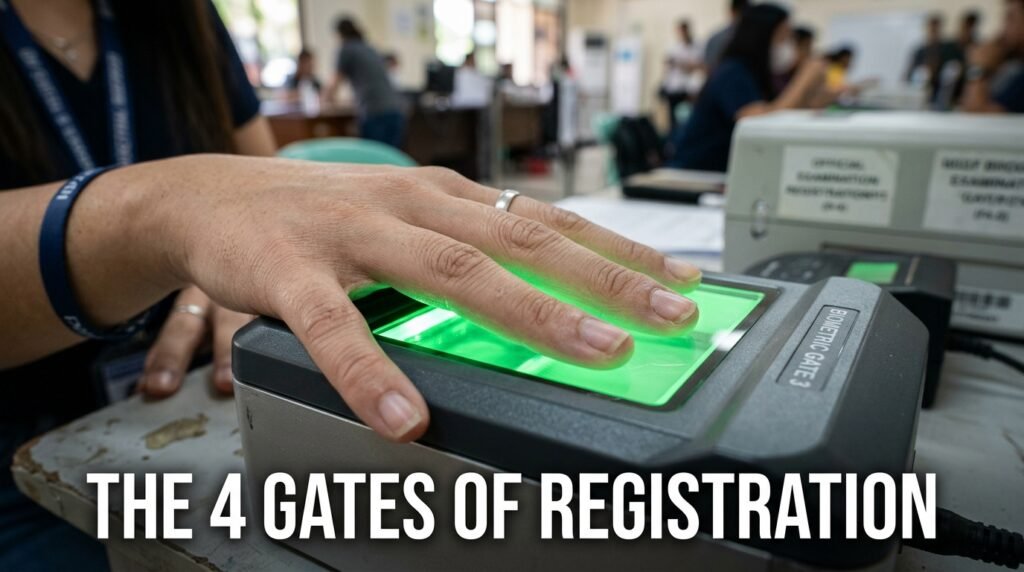
This is the part most coverage gets wrong by treating “extension” as one single switch. It isn’t. JAMB’s registration process runs through distinct gates, and an extension only reopens the gates it specifically names. Here’s how those gates work, based on how the 2023 and 2025 extensions actually played out.
Step 1: Profile code generation. You send your NIN by text to get a profile code. This step has no separate deadline of its own. It stays open as long as the broader registration window is open, so any extension automatically keeps it alive too.
Step 2: e-PIN purchase. This is the gate that closes first, usually one to two days before the final registration cutoff. For 2026, e-PIN vending ran from January 19 to February 26, while registration itself closed on February 28. When JAMB extends a deadline, this is almost always the gate it reopens, since without a valid e-PIN nothing downstream can happen.
Step 3: Biometric capture at a CBT center. A candidate must personally present their profile code and e-PIN at an accredited CBT centre, where their photograph and all ten fingerprints get captured. If e-PIN sales reopen, this step reopens with it, since you can’t have one without the other.
Step 4: Course, institution, and subject selection. This happens during the same CBT center visit as biometric capture, so it follows the same reopened window as Step 3.
What doesn’t reopen, no matter how the registration deadline moves, is the correction-of-data exercise. The correction portal typically opens after the UTME examination itself and remains active for a limited period, usually two to four weeks. That’s a separate process with its own separate calendar, sitting weeks or months after registration closes, not a backdoor into late registration. I’ve seen candidates assume that because corrections are still open, fresh registration must be too. It isn’t. Corrections fix details on a registration that already exists. They can’t create one from nothing.
The mock UTME slot also locks early and independently. The close of mock selection for the 2026 cycle was February 16, well before the main registration deadline of February 28. If you register late, even within an extended window, you’ve likely already missed the mock exam option for that cycle.
The decision tool: the four-gate check
Before you panic about a missed date, or before you wait around hoping for an extension, run through what I call the four-gate check. It’s a simple way to figure out exactly where you stand without guessing.
- Gate one, profile code. Do you have a working profile code from your NIN? If not, this is free and instant, so do it immediately regardless of any deadline news.
- Gate two, e-PIN. Is e-PIN vending still open as of today’s official JAMB bulletin? If yes, buy it now. If no, stop here. Nothing past this gate is reachable until JAMB issues a fresh public statement reopening sales.
- Gate three, CBT center visit. Do you have an e-PIN already and is the registration window (not just the e-PIN window) still listed as open? If yes, go to an accredited center today, since center queues get longer every day closer to the deadline.
- Gate four, correction window. Did you already complete registration but found an error afterward? Skip the previous three gates entirely. Wait for JAMB’s separate correction-of-data announcement instead, which comes later and follows its own fee and schedule.
If you fail gate two on a day when JAMB has made no extension announcement, the honest answer is that you wait for the next admission cycle. Don’t spend money or time on anyone offering a workaround, since JAMB’s registrar has been explicit about cracking down on irregular registration practices and exam malpractice tied to late registration claims.
Why JAMB resists extensions now more than it used to

The shift between the freer extension culture of 2023 and the firm stance of 2024 and 2026 isn’t random. JAMB has repeatedly tied its refusal to extend to a chain reaction across the wider exam calendar. The board said its registration window is strategically scheduled to enable other examination bodies to conduct their own exercises immediately afterward, leaving no room for any extension. Push UTME back, and you push the mock exam, the main exam, post-UTME screening, and the admissions policy meeting back with it. None of those steps live in isolation.
There’s also a behavioral angle JAMB has called out directly. The board observed a recurring pattern where candidates deliberately delay registration until the final days and then agitate for an extension, and said this would not be entertained in 2026. Once a board states that publicly, reversing course costs it credibility for every future cycle. That’s part of why 2024 and 2026 held firm even under pressure that, on paper, looked stronger than what triggered the 2023 extension.
None of this means an extension can never happen again. The 2025 e-PIN extension proves the door isn’t permanently shut, especially when the problem is on JAMB’s side (PIN supply, system outages) rather than candidate procrastination. But the pattern across four cycles points one direction: extensions tied to candidate-side complaints (low turnout, last-minute rushes, economic hardship) get refused. Extensions tied to JAMB-side technical failures get granted, and usually only for the narrow gate that actually failed.
Common mistakes that cost a whole year
I want to be specific about how candidates actually lose their shot, because “register early” alone doesn’t explain the mechanism.
- Buying the e-PIN on the last day it’s sold. Since e-PIN sales close before the registration window itself, a same-day purchase leaves no buffer for payment failures, bank downtime, or a wrong profile code. When e-PIN vending ends, banks stop selling the code and online payment platforms deactivate purchase options entirely. There’s no grace period for a transaction that was still processing at midnight.
- Confusing the correction window with a second registration chance. As covered above, corrections fix existing records. They have no power to register a candidate who never registered at all.
- Waiting on social media rumors instead of the official bulletin. JAMB’s own messaging draws a hard line here: there will be no reopening of the portal or grace period once the deadline passes, under any circumstances, according to the board’s repeated statements. A rumor that contradicts the most recent official bulletin is wrong by default until JAMB itself says otherwise.
- Assuming DE rules apply to UTME, or the reverse. Since DE extensions happen far more often, candidates sometimes assume UTME will follow the same pattern. The 2024 and 2026 cycles show that assumption fails more often than it holds.
What to do if you’re reading this after the deadline already passed
If the registration window has fully closed and JAMB hasn’t issued a fresh extension notice, your realistic options are limited to two things. Wait for the next year’s cycle, since candidates who fail to complete registration before the closing date become ineligible to sit for that year’s UTME. Or, if you’re a Direct Entry candidate specifically, check whether the DE window is still open, since it runs on a separate and later calendar that’s historically been extended more freely than UTME.
Check JAMB’s official weekly bulletin and its verified social accounts before accepting any claim that the window has reopened. Every extension across the last four cycles, in 2023 and again in 2025, was announced through JAMB’s own statement, not through a registration center, tutorial center, or unofficial source. If you hear about a reopening anywhere else first, treat it as unconfirmed until JAMB’s own channel repeats it.
Discover more from EducationNGR
Subscribe to get the latest posts sent to your email.