Federal-College-of-Education-Technical-FCET-Gombe
FCE (Technical) Gombe Approved NCE Academic Calendar for 2025/2026 Session

The Federal College of Education (Technical), Gombe, has released the approved academic calendar for its NCE programmes for the 2025/2026 academic session.

The calendar outlines activities for the first and second semesters, including lectures, examinations, teaching practice, SIWES, breaks, and statutory board meetings. EducationNGR also learnt that the dates are to be followed strictly as approved by the College authorities.

At a Glance: Key Dates to Note

These are the major dates students are expected to keep in view throughout the session:

  • Resumption (fresh and returning students): 11 January 2026

  • Registration (returning students): 12–31 January 2026

  • Lectures begin: 20 January 2026

  • Orientation for fresh students: 5–10 April 2026

  • Matriculation (NCE I): 11 April 2026

  • First semester break: 4–24 May 2026

  • Second semester examinations: 7–27 September 2026

  • SIWES (NCE II): 28 September–3 December 2026

First Semester Academic Schedule (2025/2026)

Resumption and Registration

  • 11 January 2026: Resumption for fresh and returning students

  • 12–31 January 2026: Registration for returning students (3 weeks)

  • 2–15 February 2026: Registration for fresh students and late registration for returning students (2 weeks)

Lectures and Academic Activities

  • 20 January–5 April 2026: Lectures (13 weeks)

  • 15 January 2025: Teaching Practice orientation for NCE III (1 day, as listed in the official calendar)

  • 19 January–25 April 2026: Teaching Practice for NCE III (14 weeks)

Administrative and Student Activities

  • 16–22 February 2026:

    • Submission of examination questions

    • Publishing of list of registered students by Heads of Department

  • 5–10 April 2026: Orientation programme for fresh students (1 week)

  • 11 April 2026: Matriculation ceremony for NCE I students

First Semester Examinations

Examination Periods by Level

  • 6–20 April 2026: First semester examinations for NCE II (2 weeks)

  • 20 April–3 May 2026: First semester examinations for NCE I and Pre-NCE (2 weeks)

Break, Marking, and Results

  • 4–24 May 2026: First semester break (3 weeks)

  • 4–17 May 2026: Marking and submission of examination scripts

  • 18–25 May 2026: Moderation of scripts (NCE II)

  • 25–30 May 2026: Uploading and compilation of results

Board and Committee Meetings

  • 1–7 June 2026: Schools Board Meeting

  • 8–14 June 2026: Academic Board Business Committee Meeting

  • 16 June 2026: Academic Board Meeting

Commencement of Second Semester

  • 25 May 2026: Official commencement of second semester activities (as stated in the calendar)

Second Semester Academic Schedule (2025/2026)

Resumption and Lectures

  • 25 May 2026: Resumption and registration

  • 7 June–30 August 2026: Lectures (12 weeks)

Other Academic Activities

  • 30–18 June 2026: Submission of examination questions (date range as stated in the calendar)

  • 31 August–5 September 2026: Students’ Week (1 week)

Second Semester Examinations

  • 7–27 September 2026: Second semester examinations (3 weeks)

SIWES and Break

  • 28 September–3 December 2026: SIWES for NCE II students (15 weeks)

  • 28 September–8 October 2026: Second semester break (6 weeks)

Marking, Results, and Meetings

  • 28 September–11 October 2026: Marking of scripts

  • 12–18 October 2026: Moderation of examination scripts

  • 19–25 October 2026: Uploading and compilation of results

  • 26–31 October 2026: Schools Board Meeting

  • 2–8 November 2026: Academic Board Business Committee Meeting

  • 11 November 2026: Academic Board Meeting

Academic Staff Annual Break

  • 1–31 December: Academic staff annual break (1 month)

Notes on the 2026/2027 Session

The academic calendar also contains the following entries:

  • 2 January 2026: Commencement of the 2026/2027 academic session

  • Statement: “2026/2027 Academic Session to Begin in November 2026”

Both entries appear in the official calendar notice and are presented as listed. Students are advised to keep a personal copy of the calendar for easy reference and planning.


JAMB CBT Centre
What to Do After Generating Your 2026 JAMB Profile Code

For many candidates, generating a JAMB profile code feels like the hardest part of the UTME process. Unfortunately, this is where many costly mistakes begin. Education experts warn that relaxing too early often leads to errors that later affect admission, course placement, or even outright disqualification. EducationNGR also learnt that most admission issues trace back to mistakes made immediately after profile code generation.

If you have successfully generated your 2026 JAMB profile code, the following are the critical next steps every candidate must follow carefully.

Step 1: Check Your Personal Details Immediately

Once your profile code is generated, carefully confirm your:

  • Full name

  • Date of birth

  • Gender

Any mistake noticed at this stage must be corrected immediately through the appropriate JAMB or NIMC channels. Errors that appear minor can later create serious problems during admission processing, NYSC registration, or certificate verification.

Step 2: Use a Valid and Personal Email Address and Phone Number

Candidates are strongly advised to use:

  • An email address they can always access

  • A personal phone number that will remain active

Do not use another person’s email address or phone number. All JAMB updates, password recovery links, admission notifications, and official communications will be sent through these contacts.

Step 3: Prepare for Your JAMB ePIN

Having a profile code does not mean you are registered. The next compulsory step is obtaining your ePIN, which is required before visiting any accredited CBT centre.

Candidates should ensure they:

  • Purchase the ePIN only from approved vendors

  • Avoid last-minute rush that may expose them to scams or inflated charges

Without an ePIN, UTME registration cannot proceed.

Step 4: Decide on Your Course and Institution Early

One of the most common mistakes candidates make is choosing courses and institutions hastily at the CBT centre. This often leads to poor decisions that reduce admission chances.

Before registration, candidates should:

  • Research their intended course

  • Confirm institutions that offer the programme

  • Check admission requirements and competitiveness

Early planning allows for informed and realistic choices.

Step 5: Confirm the Correct Subject Combination

A wrong subject combination can invalidate an admission offer, even with a very high UTME score. Candidates must confirm that their chosen subjects align with their intended course.

For example:

  • Engineering courses require Mathematics, Physics, and Chemistry

  • Law requires Literature in English

  • Medicine and health sciences require Biology

Candidates are advised to verify subject combinations using the official JAMB brochure.

Step 6: Organise Your O’Level Results Properly

Candidates should clearly determine:

  • Whether they are using one sitting or two sittings

  • If they are registering with awaiting results

Ensure that:

  • Required credits, including English Language and Mathematics where applicable, are available

  • Results are ready for upload when required by JAMB or institutions

Failure to upload O’Level results on time has caused many candidates to lose admission in previous years, EducationNGR reports.

Step 7: Confirm Age and Eligibility Requirements

Candidates must meet the minimum age requirement, usually 16 years by the time of admission. Those who do not meet this requirement should seek proper guidance before proceeding, as age discrepancies can result in disqualification later.

Step 8: Register Only at Accredited CBT Centres

Candidates are warned against registering through:

  • Cyber cafés

  • Roadside agents

  • Unapproved operators

Only JAMB-accredited CBT centres are authorised to carry out UTME registration. Registering elsewhere increases the risk of errors, fraud, and invalid registration.

Step 9: Keep All Registration Records Safe

After registration, candidates should safely keep:

  • Profile code

  • ePIN receipt

  • Registration slip

  • Email address and password details

These documents will be required at different stages of the admission process.

Step 10: Stay Informed and Avoid Misinformation

Candidates are advised to rely only on:

  • Official JAMB announcements

  • Verified education news platforms

  • Trusted academic advisers

Avoid rumours and unverified social media claims, especially those related to registration dates, cut-off marks, and admission guarantees.

Final Advice

Generating your JAMB profile code is only the beginning. Careful planning, accurate information, and early preparation are what truly secure admission. Candidates who follow these steps diligently stand a much better chance of avoiding errors and achieving their admission goals.

Federal University of Agriculture and Development Studies, Iragbiji (FUADSI),
FUADSI Announces Resumption Date for 2025/2026 Academic Session

The Federal University of Agriculture and Development Studies, Iragbiji (FUADSI), has announced Monday, 19 January 2025 as the official resumption date for the commencement of its maiden 2025/2026 Academic Session. The announcement marks a major milestone in the history of the newly established institution.

The information was contained in an official statement signed by the Registrar, Afolabi Tunde Muritala, and released by the University Management. EducationNGR also learnt that the early resumption is part of efforts to ensure a smooth and well-coordinated start for the university’s pioneer intake.

Resumption Details for New Students

According to the university, all newly admitted students are expected to report to campus on the resumption date to begin both academic and administrative activities. Management explained that the early start is designed to help the institution properly organise its first academic session and lay a strong foundation for future intakes.

Mandatory Screening and Verification Exercise

FUADSI has scheduled a compulsory physical screening and verification exercise for all newly admitted candidates. The screening will hold on campus from Monday, 19 January to Friday, 23 January 2025.

The university stressed that attendance is mandatory for all admitted students, and no exceptions will be entertained.

Documents Required for Screening

Students are expected to present original copies and four photocopies each of the following documents:

  • FUADSI Admission Slip printed from the university admission portal

  • JAMB UTME original result slip with passport photograph

  • O’Level results (WAEC, NECO, or NABTEB)

  • Relevant WAEC/NECO/NABTEB scratch cards

The university added that candidates using NECO results may be required to complete e-verification on the NECO portal and forward confirmation to the Admissions Office via the official university email.

Additional documents required include:

  • Birth Certificate or sworn declaration of age

  • Certificate of State of Origin or Local Government Identification

  • FUADSI Screening Application Form

  • FUADSI Post-UTME Screening Result Slip

  • Twelve recent passport photographs on a red background, with full names written at the back

  • FUADSI Medical Clearance Form

  • Medical Certificate of Fitness from a Government Hospital

  • FUADSI Acceptance Clearance

  • JAMB Admission Letter printed from JAMB CAPS

The university also requires:

  • Two attestation or reference letters from a clergy member or a government official on Grade Level 13 and above

  • Evidence of payment of acceptance and medical fees generated through Remita RRR receipts

Management warned that failure to present any of the listed documents may affect a student’s screening and registration.

Important Notes to Candidates

FUADSI stated that all submitted documents will undergo thorough verification and described the screening exercise as a key requirement for full registration and eventual matriculation.

Students are advised to come along with their own writing materials and file jackets to ensure smooth documentation and processing during the exercise.

Message to Pioneer Students

The university described the maiden admission as a historic achievement and congratulated all newly admitted students for securing a place in the institution’s first academic session. Management expressed confidence that the resumption and screening processes would set the tone for discipline, transparency, and academic excellence within the university community.

Contact for Enquiries

For further enquiries, newly admitted students are advised to contact the Admissions Office via admissions@fuadsi.edu.ng, as FUADSI prepares to officially welcome its first cohort and begin what it described as a lasting legacy of excellence.

Bayero University Kano BUK News
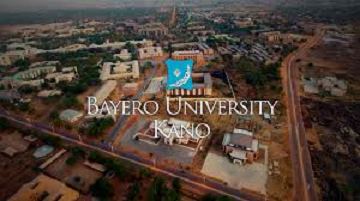
BUK Inducts 51 Doctors of Pharmacy at Its 3rd Oath-Taking Ceremony

Bayero University, Kano (BUK), has inducted 51 new Doctors of Pharmacy at its third induction and oath-taking ceremony for the 2023/2024 academic session. The event took place on Tuesday at the Mahmud Tukur Theatre, Old Campus.

The Oath of Allegiance was administered by the Pharmaceutical Council of Nigeria (PCN) through its representative, Professor Olabisi Obisesan. She congratulated the graduands and urged them to uphold professional ethics, discipline, and high standards in the discharge of their duties. EducationNGR also learnt that the induction marks the official entry of the graduates into professional pharmacy practice.

Charge to New Pharmacists

Professor Obisesan advised the new pharmacists to prepare thoroughly for their mandatory internship at PCN-accredited centres, describing the induction as a critical stage in their professional development. She reminded them that the internship period would test both their technical competence and ethical judgement.

University Management’s Remarks

Representing the Vice-Chancellor, Professor Haruna Musa, fsi, the Deputy Vice-Chancellor (Research and Development), Professor Amina Mustapha, described the ceremony as a defining milestone in the professional journey of the graduands.

She highlighted the theme of the ceremony, “Innovative Access to Medicines: The Role of Advanced Logistics and Technology in Modern Pharmacy Practice.” According to her, modern pharmacy practice increasingly depends on digital technologies, data analytics, and efficient supply-chain systems to ensure safe, timely, and affordable access to medicines.

Keynote Address on Innovation

Delivering the keynote address, Pharm. Tukur Ibrahim called on pharmacists to embrace innovation and emerging technologies to strengthen medicine distribution systems, especially in hard-to-reach and underserved communities.

He stressed that pharmacists have a vital role to play in addressing supply-chain gaps and improving healthcare delivery through technology-driven solutions, noting that innovation is no longer optional in contemporary pharmacy practice.

Best Graduating Students and Awards

Speaking on behalf of the graduands, the overall best graduating student, Pharm. Maryam Abubakar Sulaiman, expressed gratitude to her parents, lecturers, and the university management for their support throughout her academic journey. She emerged as the overall best graduating Doctor of Pharmacy with a CGPA of 4.84.

Other award recipients include:

  • Zainab Imam Sani, best graduating student in Pharmaceutical Microbiology and Biotechnology with a CGPA of 4.73

  • Lukman Adeku, best graduating male Pharm D student with a CGPA of 4.53

  • Amina Usman Umar, best graduating Pharm D student in Pharmaceutical and Medicinal Chemistry, and best student in Chemistry as well as Pharmacognosy and Herbal Medicine

Closing Remarks

The Faculty of Pharmaceutical Sciences commended the graduands for their academic excellence and urged them to serve the profession with integrity, dedication, and a strong sense of public responsibility.

The ceremony formally inducted the new pharmacists into professional practice, marking Bayero University’s third oath-taking and induction exercise for the Doctor of Pharmacy programme.

KSP
Kogi State Polytechnic 33rd Orientation and Matriculation Ceremony

The Management of Kogi State Polytechnic, Lokoja, has released the official programme for its 33rd Orientation and Matriculation Ceremonies. The announcement confirms the date, time, and venue for the event meant for newly admitted students of the institution.

According to the Polytechnic, the Rector, Prof. Salisu Ogbo Usman, speaking on behalf of the Academic Board, staff, and students, has extended an invitation to parents, guardians, education stakeholders, and members of the public. EducationNGR also learnt that the ceremony forms part of activities welcoming fresh students into the Polytechnic community.

Matriculation Ceremony Schedule

The institution shared the full details of the ceremony as follows:

  • Date: Thursday, 8 January 2026

  • Time: 10:00 a.m.

  • Venue: Kogi State Polytechnic Campus, Lokoja

Newly admitted students are advised to arrive early, as the programme is scheduled to begin promptly in the morning.

Purpose of the Matriculation Ceremony

The Polytechnic explained that the matriculation ceremony is organised to officially admit new students into the institution. It also serves to familiarise them with the academic environment and expectations.

The event is meant to:

  • formally welcome fresh students into the Polytechnic

  • explain the rules, regulations, and academic standards of the institution

  • introduce students to the culture and structure of Kogi State Polytechnic

For many students, the ceremony provides a clearer understanding of how academic life in the Polytechnic operates.

Invited Guests

The Management confirmed that attendance is not limited to students alone. The ceremony is open to:

  • parents and guardians

  • education stakeholders

  • members of the general public

This allows families and well-wishers to be part of the students’ formal entry into the institution.

Enquiries and Contact Details

For further information or clarification about the orientation and matriculation ceremonies, the Polytechnic provided the following contact numbers:

  • 08035961189

  • 08036382114

Prospective attendees are encouraged to make enquiries ahead of time to avoid unnecessary inconvenience.

Kaduna State University (KASU)
KASU Releases Approved Academic Calendar for 2025/2026

The Directorate of Academic Planning, Kaduna State University (KASU), has published the approved academic calendar for the 2025/2026 academic session. The calendar outlines major academic activities for both the first and second semesters, giving students a clear timeline to plan lectures, examinations, and breaks. EducationNGR also learnt that the schedule applies to both fresh and returning students across all faculties.

First Semester Academic Schedule (2025/2026)

Resumption, Screening, and Registration

Students are expected to resume for the new session on 5 January 2026. Screening and course registration for both fresh and returning students will run from 8 December 2025 to 23 January 2026, covering a three-week period. Students are advised not to delay registration, as portal issues are more common close to deadlines.

Lectures, Continuous Assessment, and Break

Lectures and Continuous Assessment (CA) will begin on 26 January 2026 and run until 13 March 2026, lasting seven weeks. A mid-semester break, which also serves as the add and drop period (online), is scheduled for 16 to 22 March 2026. Lectures and CA will then continue from 23 March to 8 May 2026.

Examinations and Results

First semester examinations and marking will take place from 11 to 30 May 2026. Processing of results follows from 1 to 14 June 2026, after which the Senate will consider and release results between 15 and 19 June 2026. A short first semester break is fixed for 22 to 28 June 2026, with the second semester beginning immediately after.

Second Semester Academic Schedule (2025/2026)

Resumption and Lectures

The second semester officially starts on 29 June 2026. Lectures and Continuous Assessment will run for seven weeks, from 29 June to 14 August 2026.

Mid-Semester Activities

KASU has scheduled 17 to 21 August 2026 for mock accreditation exercises, the mid-semester break, and add and drop activities. Lectures and CA will then resume from 24 August to 9 October 2026.

Students’ Union Elections

The Students’ Union election and inauguration are scheduled to hold between 12 and 16 October 2026.

Examinations, Results, and Transfers

Second semester examinations and marking will take place from 19 October to 7 November 2026. Results will be processed from 9 to 20 November 2026, while the Senate will consider and release them between 23 and 25 November 2026. Intra- and inter-university transfers are scheduled for 26 November to 20 December 2026.

The session will end with a break from 21 December 2026 to 3 January 2027, and KASU has fixed 4 January 2027 as the start date for the next academic session.

Key Dates Students Should Note

  • Resume for the session by 5 January 2026

  • Complete screening and course registration between 8 December 2025 and 23 January 2026

  • First semester add and drop period: 16 to 22 March 2026

  • First semester examinations begin 11 May 2026

  • Second semester begins 29 June 2026

  • Second semester examinations start 19 October 2026

  • New academic session starts 4 January 2027

Students are advised to keep track of these dates and act early on registrations and academic requirements to avoid unnecessary delays.

Akwa Ibom State University AKSU
Akwa Ibom State University – AKSU


About AKSU

Established in 2010 by the Akwa Ibom State Government under the administration of Governor Godswill Akpabio, Akwa Ibom State University (AKSU) was founded to expand access to quality higher education and drive human capital development within the “Land of Promise.” The university operates as a multi-campus institution, with its main campus strategically located in the serene, emerging town of Mkpat Enin and a second campus in the historic coastal community of Obio Akpa, Oruk Anam Local Government Area. AKSU was conceived from its inception to be a center of academic excellence, focusing on fields directly relevant to the economic and environmental context of the Niger Delta region, such as agriculture, engineering, and environmental sciences. Its establishment marked a significant milestone in the state’s educational advancement, providing a critical platform for intellectual growth and community engagement.

Academically, AKSU is structured into several colleges, including the College of Agriculture, Food and Natural Resources; College of Engineering; College of Science; College of Arts, Social and Management Sciences; and College of Education. The university offers a range of undergraduate and postgraduate programs designed to produce graduates equipped with both theoretical knowledge and practical skills, with a particular emphasis on research and innovation in areas like petroleum engineering, fisheries, and entrepreneurship. As a growing institution, AKSU fosters a vibrant academic community committed to its core values of knowledge, integrity, and service. Through its evolving curriculum and development initiatives, the university aims to play a pivotal role in nurturing leaders and professionals who will contribute to the sustainable development of Akwa Ibom State and Nigeria at large.

Tags: Www AKSU edu ng portal, Www AKSU edu ng admission list, AKSU admission portal Login, AKSU portal app, Www AKSU edu ng portal admission, Www AKSU edu ng portal Login, Www AKSU edu ng Student Portal, AKSU portal course registration

KSP
Kogi State Polytechnic – KSP


About KSP

Kogi State Polytechnic, located in the ancient confluence city of Lokoja, stands as the premier tertiary institution dedicated to technical and vocational education within Kogi State, Nigeria. Established in 1992 by the then state military administrator, Colonel Danladi Mohammed Zakari, the polytechnic was founded with a clear mandate to provide practical, skill-based training and produce middle-level manpower crucial for the state’s industrial and economic development. The institution operates from two main campuses: the sprawling main campus in Lokoja and a smaller campus in the central town of Osara, which primarily hosts the School of Agriculture. From its inception, the polytechnic has been pivotal in equipping students with hands-on competencies, blending theoretical knowledge with applied technology to meet the practical demands of the Nigerian workforce.

The academic structure of Kogi State Polytechnic is organized around several schools, including Engineering, Applied Sciences, Management Studies, Environmental Technology, and Information Technology. It offers a wide array of National Diploma (ND) and Higher National Diploma (HND) programs in fields such as Civil Engineering, Accountancy, Computer Science, Estate Management, and Agricultural Technology. With a philosophy centered on excellence, innovation, and service, the polytechnic fosters a practical learning environment supported by workshops, laboratories, and industrial training schemes. As a key driver of skill acquisition and technological advancement in the North-Central region, Kogi State Polytechnic continues to fulfill its mission of producing technically sound graduates who are ready to contribute meaningfully to industry, entrepreneurship, and the broader socio-economic development of Nigeria.

Tags: Kogi State polytechnic portal, KSP portal admission List, KSP portal result, Kogi State polytechnic Admission portal, Kogi State polytechnic student portal login, Kogi state polytechnic STUDENTS portal results pdf , KSP admission portal login, KSP second semester result

Kaduna State University (KASU)
Kaduna State University – KASU


About KASU

Kaduna State University (KASU) stands as a pivotal and dynamic institution of higher education in the capital of Nigeria’s former northern region. Established in 2004 by the administration of Governor Ahmed Makarfi, the university was created to expand access to quality tertiary education and drive the development of human capital within Kaduna State and beyond. Unlike older, more established universities, KASU embodies a more modern and agile academic spirit, structured across multiple campuses including its main campus in Tafawa Balewa Way, Kaduna, and other locations like Kafanchan. The university has rapidly evolved from a modest beginning into a comprehensive institution, designed to meet contemporary educational and professional demands while serving as a crucial academic pillar in a strategically important and diverse state.

Academic offerings at KASU span a wide spectrum, organized into faculties such as Arts, Social and Management Sciences, Science, Pharmaceutical Science, Engineering, Law, Medicine, and Education. It has carved a niche for itself with respected programs in fields like Law, Mass Communication, and Pharmacy, and is particularly focused on addressing local and national needs through its curricula and research. The university fosters a vibrant and growing student community, characterized by its cultural diversity reflective of Kaduna State’s unique social fabric. With a mission centered on knowledge, integrity, and service, KASU is actively engaged in community development projects and partnerships, striving to produce graduates who are not only employable but also entrepreneurial and ethically grounded contributors to society.

Tags:

KASU Student portal login password, Kaduna State University old Portal, KASU Student portal results, KASU admission Checker, Kasu result, KASU admission portal login, KASU safe record, KASU Student portal Course Registration login
Nnamdi Azikiwe University UNIZIK
Nnamdi Azikiwe University – UNIZIK


About Nnamdi Azikiwe University Awka

UNIZIK is situated in Awka, in the state of Anambra, Nigeria. Nnamdi Azikiwe University is one of the top federal universities in Nigeria and is named in memory of Nigeria’s first president. The university opened in 1992 and runs on two major campuses. These include Awka and Agulu, and it is divided into a broad spectrum of faculties such as Engineering, Health Sciences, Management Sciences, Environmental Sciences, and Arts. With the motto of “Discipline, Self-Reliance, and Excellence,”  UNIZIK provides diversified undergraduate, postgraduate, and diploma programs, which include but are not limited to disciplines such as Medicine, Law, and Engineering.

As one of the major academic hubs in southeastern Nigeria, the advent of UNIZIK promises to bring about vigor and dynamism to the face of academic pursuits not only in the region but also across the country as a whole by being at the forefront of academic excellence and contributions to society through their respective endeavors and achievements in the respective fields they choose to explore and contribute to with the help of the expertise and knowledge they have been endowed with by their illustrious namesake.